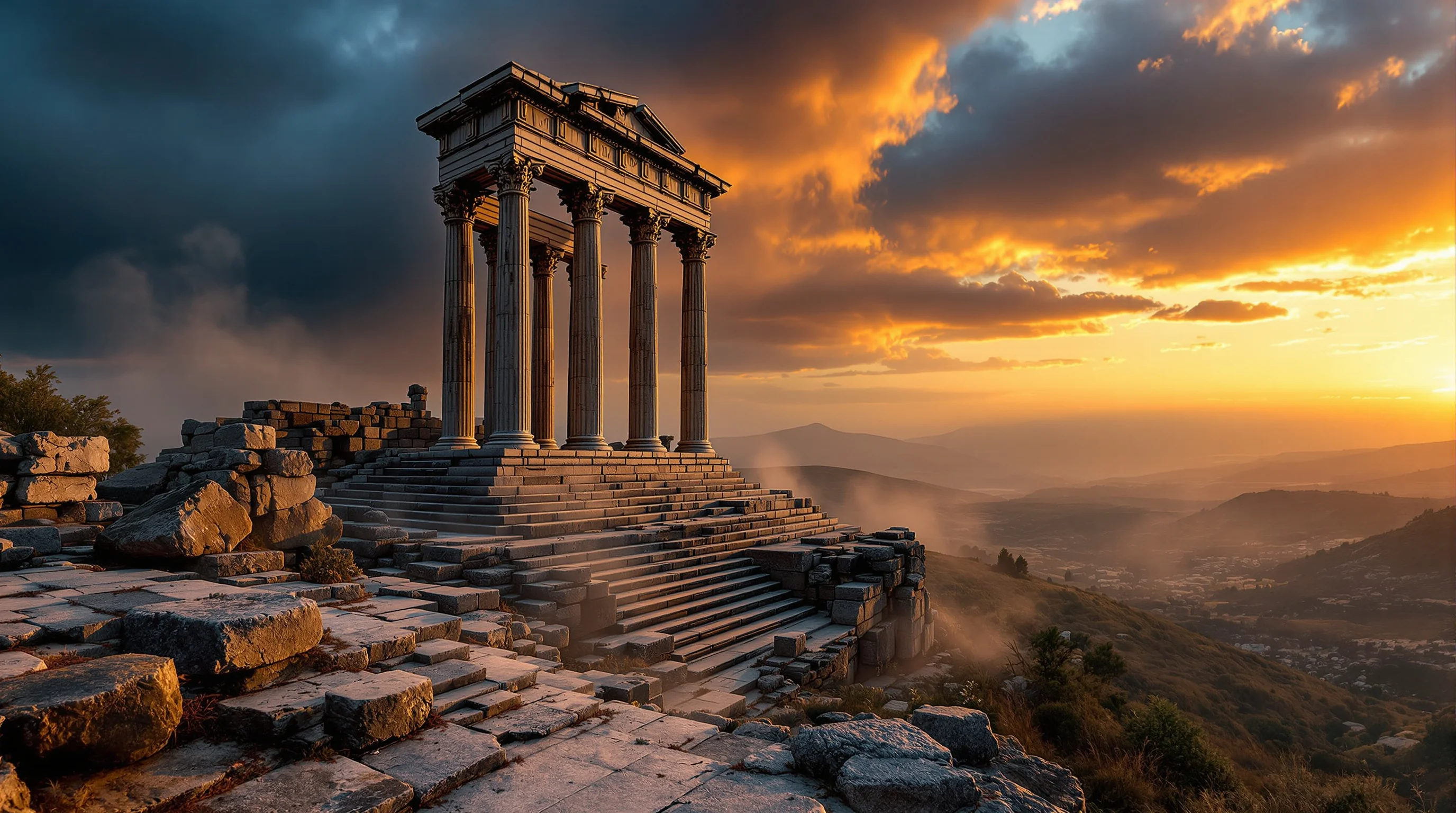
The church of Pergamum received one of the most striking letters in Revelation. Jesus introduces himself as "He who has the sharp two-edged sword" (WEB Revelation 2:12), speaking to believers in a city that served as a seat of Roman provincial authority, where the governor held the right of the sword. The church of Pergamum lived under two pressures at once: open hostility and a quieter invitation to blend into civic and religious life.
The church of Pergamum represents a congregation that stayed faithful under pressure while tolerating false teaching within its ranks. Maybe you've wondered how a church can be praised and corrected in the same letter. Faithful readers have wrestled with that question for centuries, and it's okay to find it challenging. This article looks at the city's background, the martyr Antipas, the teaching of Balaam and the Nicolaitans, and the promises of hidden manna and a white stone.
Quick Answer: The church of Pergamum is the third of the seven churches addressed in Revelation 2:12-17. Jesus praises its believers for holding firmly to his name in a city "where Satan's throne is," even after Antipas was killed, then warns them to repent of tolerating Balaam-like and Nicolaitan teaching. Overcomers receive hidden manna and a white stone.
Definition: The church of Pergamum in Revelation represents a congregation commended for enduring persecution yet corrected for tolerating idolatrous and immoral teaching within its ranks.
Key Scripture: "I know your works and where you dwell, where Satan's throne is. You hold firmly to my name, and didn't deny my faith in the days of Antipas my witness, my faithful one, who was killed among you, where Satan dwells." (WEB Revelation 2:13)
Key Evidence: Revelation 2:13 commends the believers for holding firmly to Christ's name even after Antipas, his faithful witness, was killed. Revelation 2:14-16 then ties the church's compromise to the story of Balaam in Numbers 31:16 and calls the congregation to repent.
Context: The letter belongs to the vision John received, addressed to a real first-century congregation and meant to be read by all the churches.
This letter functions as both commendation and warning. Christ sees exactly where his people live and what faithfulness costs them there. He also shows that toleration of false teaching can erode a church from within even when it withstands outside pressure. The sections below walk through the city's pagan and political background, the example of Antipas, the Balaam and Nicolaitan teachings, and the promises Christ gives to those who overcome.
Key Takeaways
- Sword of His mouth: Christ's title in Revelation 2:12 echoes Revelation 1:16 and presents his word as the final authority over the city.
- Satan's throne: Scholars propose the altar of Zeus, the imperial cult, the Asclepius cult, or Roman provincial power. The text names none of them.
- Antipas: Christ calls him "my witness, my faithful one," echoing his own title in Revelation 1:5.
- Balaam and the Nicolaitans: Both teachings drew believers toward idol feasts and sexual immorality.
- Hidden manna and white stone: Overcomers receive Christ's provision and a new name.
What Does Jesus Say to the Church of Pergamum?
The church of Pergamum receives a letter shaped by the same pattern found in all seven messages of Revelation 2-3. It includes a command to write, a title of Christ drawn from the opening vision, commendation, correction, a call to repent, the "He who has an ear" refrain, and a promise to the overcomer.
Christ identifies himself with the words, "He who has the sharp two-edged sword says these things" (WEB Revelation 2:12). This title reaches back to Revelation 1:16 and forward to Revelation 19:15, where "Out of his mouth proceeds a sharp, double-edged sword, that with it he should strike the nations" (WEB Revelation 19:15). In Revelation it becomes a symbol of decisive judgment.
Christ then commends the church: "I know your works and where you dwell" (WEB Revelation 2:13). He acknowledges the real pressure of their setting rather than minimizing it. The believers "hold firmly" to his name, a Greek term meaning to grip tightly. Reading these letters together shows a progression. Smyrna faced outside persecution (Revelation 2:8-11). Pergamum faced persecution together with compromise from within. Thyatira would soon face a compromise that was spreading unchecked (Revelation 2:18-29).
A congregation can endure persecution faithfully and still need correction for tolerating false teaching. That is the pattern the church of Pergamum shows.
Antipas, My Faithful Witness
Antipas is the only named martyr among the seven letters, though nothing is known of him beyond this one verse.
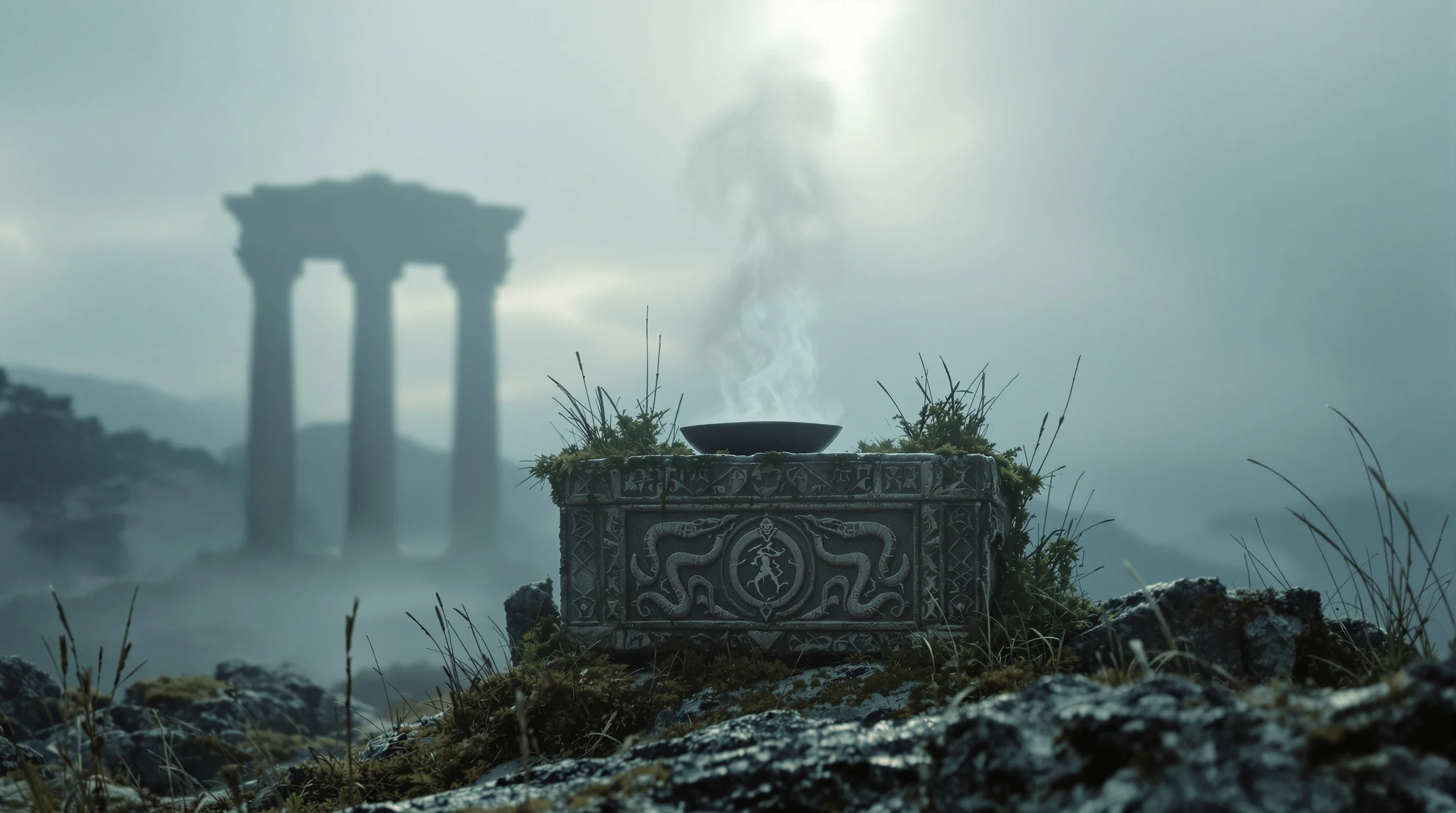
- Title: Christ calls him "my witness, my faithful one," echoing his own description as "the faithful witness" (WEB Revelation 1:5).
- Word study: The Greek martys means "witness" and was moving toward the sense of one who dies for his testimony.
- Caution: Later church traditions describe his death in detail, but these accounts come from sources too late to confirm, so they should be labeled as tradition rather than fact.
Why Was Pergamum Called the Place "Where Satan's Throne Is"?
Pergamum, known today as Bergama in Turkey, had been a Hellenistic capital before becoming an important Roman center in the province of Asia.
A steep acropolis dominated the city, crowded with temples, a theater, a library, and the great altar associated with Zeus. Pergamum also served as a center for the healing cult of Asclepius, whose serpent symbol drew pilgrims from across the region. A Christian who declined to take part in civic religious life could appear disloyal and faced real social and sometimes legal risk.
Notice how Christ mentions Satan twice within one verse, naming both a "throne" and a place where Satan "dwells" (WEB Revelation 2:13). This repetition stresses how intense the spiritual pressure of this city was.
Satan's throne in Revelation 2:13 describes Pergamum as a center of pagan worship and Roman power where faithfulness to Christ carried real danger.
Five Proposed Meanings of "Satan's Throne"
Scholars have offered several explanations for this phrase, and the text itself does not choose among them.
- Specific locations: the great altar of Zeus, the imperial cult temple, or the serpent symbolism of the Asclepius cult.
- Political power: Rome's provincial seat and the governor's right to execute, which also fits the sword imagery of the letter.
- Combined view: many readers take the phrase as a description of the city's whole spiritual atmosphere rather than one single site.
Balaam, the Nicolaitans, and the Call to Repent
Alongside commendation, Christ brings a direct charge: "But I have a few things against you, because you have there some who hold the teaching of Balaam, who taught Balak to throw a stumbling block before the children of Israel, to eat things sacrificed to idols, and to commit sexual immorality" (WEB Revelation 2:14).
This charge draws on an old story. Balaam could not curse Israel directly, but Israel was later drawn into idolatry and immorality at Peor (WEB Numbers 25:1-2), a failure Numbers 31:16 ties to "the counsel of Balaam" (WEB Numbers 31:16). The Greek word for "stumbling block," skandalon, first described the trigger of a trap before coming to mean a snare.
Christ adds, "So also you likewise have some who hold to the teaching of the Nicolaitans." (WEB Revelation 2:15). The text gives no detailed definition, but the teaching appears linked to the same Balaam-style compromise, since a parallel group appears later at Thyatira (Revelation 2:20). You can read more about this group in Who Were the Nicolaitans in Revelation?
For the original audience, this was a practical question. Could believers attend guild banquets, eat meat offered to idols, and still remain loyal to Christ? The apostles had already addressed this, calling believers to "abstain from things sacrificed to idols" (WEB Acts 15:29). Christ's response is direct: "Repent therefore, or else I am coming to you quickly, and I will make war against them with the sword of my mouth" (WEB Revelation 2:16). The sword is aimed at the false teachers, and the warning gives the whole congregation room to repent.
Balaam's teaching in Revelation 2:14 represents compromise with idolatry and immorality that defeats God's people from within.
Hidden Manna, the White Stone, and Why the Church of Pergamum Matters Today
The church of Pergamum receives a promise reserved for those who overcome: "To him who overcomes, to him I will give of the hidden manna, and I will give him a white stone, and on the stone a new name written, which no one knows but he who receives it" (WEB Revelation 2:17).
Hidden manna draws on the jar of manna laid up "before the LORD" as a memorial (WEB Exodus 16:33). Believers who refused food sacrificed to idols are promised Christ's own provision instead. You can explore this image further in What Is the Hidden Manna in Revelation?
The text says that the stone carries a new name known only to the one who receives it, echoing "The nations will see your righteousness, and all kings your glory. You will be called by a new name, which the LORD’s mouth will name." (WEB Isaiah 62:2). See What Is the White Stone in Revelation? for more detail. For readers wanting to trace how this imagery develops across Revelation's narrative, Revelation Explained: Verse by Verse examines each occurrence in its immediate context.
This letter calls for holding fast to Christ's name, repenting where compromise has entered, and weighing the commendation and the correction equally. A few missteps are worth avoiding: labeling a modern city or leader "Satan's throne," using "Nicolaitan" as a catch-all label for any disliked group, or treating this letter as a call to withdraw from society rather than remain faithful within it.
In Revelation 2:17, the white stone is a personal token of acceptance that gives each overcomer a new name and a secure identity in Christ.
How Interpreters Read the Letter
Four main approaches read this letter differently, though all of them call for repentance from compromise.
- Preterist: the letter addresses first-century Pergamum specifically.
- Historicist: Pergamum pictures the church after Constantine, though critics note the text gives no explicit signal for this reading.
- Futurist: the letter addresses a real church while describing conditions that recur until Christ returns.
- Idealist: Pergamum represents a permanent type, a church pressed by its surrounding culture.
Why This Vision Matters
Christ knows exactly where his people live and what that place costs them. Modern believers face the same quiet pressure to blend into the surrounding culture, often arriving as an invitation to a shared table rather than open hostility. The sword that corrects the church also wins the final victory described in Revelation 19:15. Overcomers are promised provision and a name given by Christ himself.
Conclusion
The church of Pergamum reminds you that faithfulness under pressure and faithfulness against compromise are both needed. Christ commended this congregation for holding firm where Satan's throne was, corrected its tolerance of Balaam-style teaching, and promised hidden manna and a white stone to those who overcome. The One who holds the sword also feeds his people and calls them by name. Take time to listen for "what the Spirit says to the assemblies" (WEB Revelation 2:17), and consider where your own faith may be asked to hold firm. You don't have to face that question alone, because the Christ who knows your setting also knows your name. For a deeper verse-by-verse exploration of Revelation's symbols and structure, see Revelation Explained: Verse by Verse by Richard French.