What is Verse-by-Verse Study of Revelation?
Most readers approach Revelation expecting special techniques to decode its symbols and visions. The actual method is more familiar than that reputation suggests.
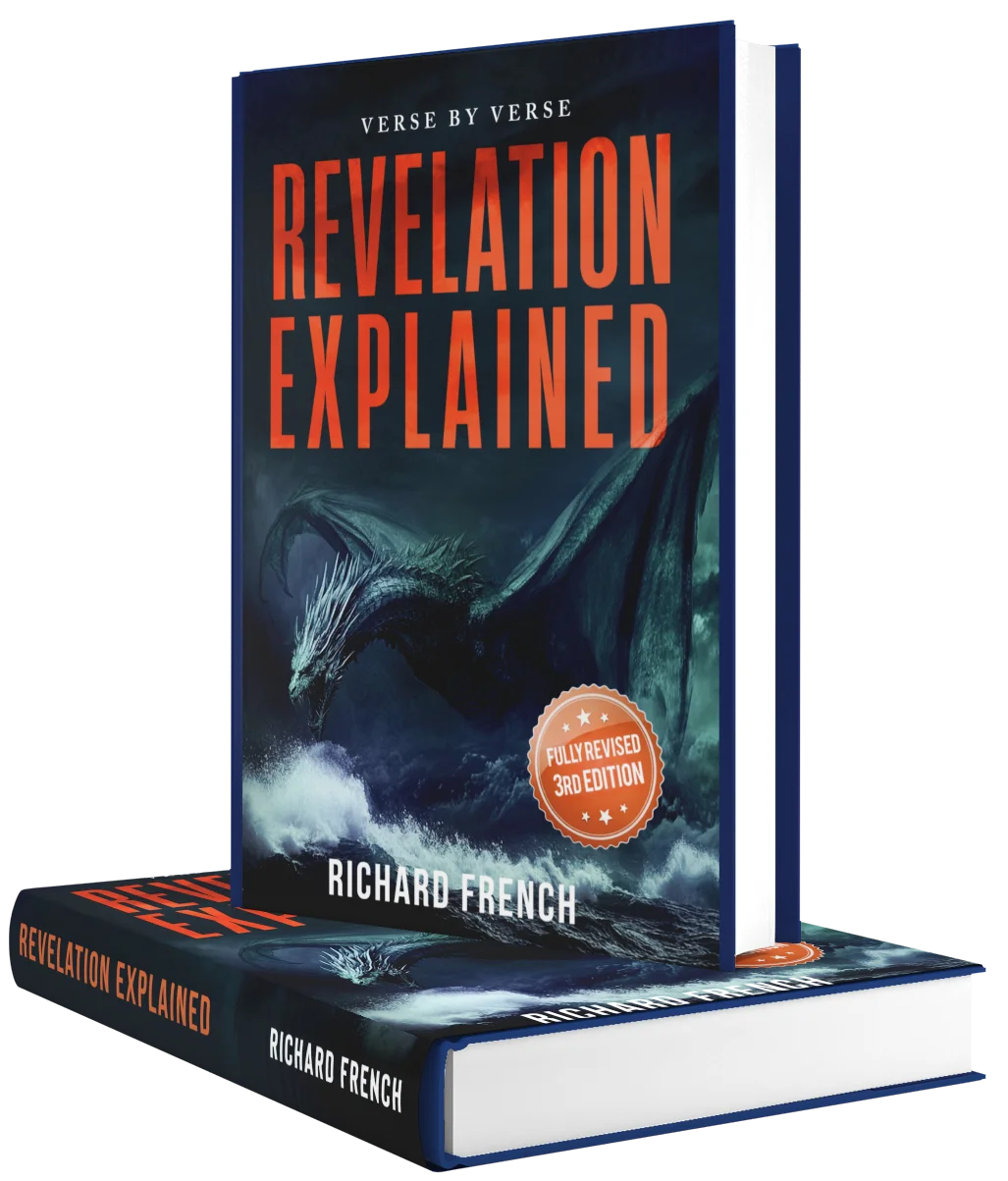
This guide draws from Revelation Explained: Verse by Verse by Richard French. The full book includes four foundation chapters, complete verse-by-verse commentary on all 22 chapters of Revelation, Old Testament foundations for each chapter, discussion questions for group study, and practical application sections.
Get the BookMost readers approach Revelation expecting special techniques to decode its symbols and visions. The actual method is more familiar than that reputation suggests.
Quick Answer
Verse-by-verse study of Revelation means examining each verse in order, connecting the symbols to their Old Testament sources, and building understanding chapter by chapter. This approach removes guesswork by letting Scripture interpret Scripture, replacing speculation with biblical foundation.
Definition
A method of reading Revelation that moves through the text one verse at a time, in order, treating each verse as part of the whole.
Why this approach
Revelation is dense, symbolic, and connected to earlier Scripture. Skipping around makes the symbols feel arbitrary. Reading in order shows how the imagery builds.
Context
John wrote for readers who knew the Old Testament. More than 500 Old Testament allusions sit beneath the surface. The verse-by-verse method surfaces them.
Revelation feels like a code you can't crack. Beasts with multiple heads. Numbers like 666 and 144,000. Colors that seem to mean something. Stars, lampstands, seals, trumpets, bowls. Where do you even start?
Here's what most readers don't realize: Revelation isn't a mysterious code requiring special knowledge. It's a book written in a biblical language you can learn. John didn't invent his symbols from thin air. He borrowed them from the Old Testament, which his readers knew intimately. What feels foreign to you would have felt familiar to them. Scholars have identified more than 500 Old Testament allusions across the book's 22 chapters.
Verse-by-verse study works because it slows you down enough to see those connections. You stop hunting for hidden meanings and start tracing them back to their source. This isn't about memorizing technical terms or becoming a prophecy scholar. It's about recognizing patterns, knowing where to look for explanations, and reading Revelation the way God intended: as a book that can be understood by ordinary believers who love Him and want to know His plan.
Revelation Explained: Verse by Verse is built on this approach. Every chapter walks through the verses in order, points back to the Old Testament source for each symbol, and builds understanding piece by piece. You can get the book if you want the full treatment, or use this guide as your starting point.
Revelation follows a clear structure that helps you know where you are at any point in the book.
John receives a vision of the glorified Christ walking among seven golden lampstands. Christ dictates letters to seven churches, addressing their specific situations with commendation, rebuke, or both. This section establishes Christ's authority and His current, active presence with His church. He's not absent or distant, He's walking among them, knowing their works, their struggles, their faithfulness, and their failures.
The prophetic visions occupy the bulk of the book. This is where John sees heaven opened and witnesses events that are, from a futurist perspective, yet to come. The throne room scene in chapters 4 and 5 establishes the foundation for everything that follows. Seven seals, seven trumpets, and seven bowls describe escalating judgment. Interludes between judgment series provide additional information and perspective. The fall of Babylon, Christ's return and reign, and the new heaven and earth all unfold in this section.
The conclusion comes at the very end of the book. Final warnings remind readers to hold fast. Promises assure them Christ is coming soon. An invitation calls people to respond. Christ's final words echo through the book: "Surely I am coming soon."
Understanding this big picture prevents you from getting lost. When you're reading about bowls of wrath, you know you're near the end of the judgment sequence. When you're reading letters to churches, you know you're at the beginning, learning about the original audience. The structure guides you through the journey.

Before any judgment falls, John sees heaven's throne room. This isn't a random detail. It's the foundation for everything that follows.
God sits on the throne in complete control. His appearance is brilliant, dazzling, beyond description. Twenty-four elders surround the throne, casting their crowns before Him in worship. Four living creatures, covered with eyes and representing all creation, declare God's holiness continuously. The scene radiates majesty, power, and sovereign authority.
Then the Lamb appears. Christ stands as if slain, bearing the marks of His sacrifice. He's worthy to open the scroll because He was slain and purchased people for God from every tribe and language and people and nation. His death wasn't a tragedy that derailed God's plan. It was the means by which He earned the right to execute judgment and establish His kingdom.
This establishes everything. God reigns despite earthly chaos. Worship continues in heaven while judgment unfolds on earth. Christ's sacrifice purchased His authority to judge. Everything that follows flows from the throne room. The seals, trumpets, and bowls aren't arbitrary disasters but divine judgments proceeding from God's sovereign will.
When earthly events overwhelm you as you read, return mentally to chapters 4 and 5. Judgment unfolds from God's throne. Chaos on earth doesn't mean chaos in heaven. The throne stands firm. God controls the story from beginning to end.
Revelation's central section describes judgment in three series of seven: seals, trumpets, and bowls. Each series intensifies the judgment.
Four horsemen ride forth representing conquest, war, famine, and death. One-fourth of earth's population dies. Martyrs under the altar cry out for justice. A great earthquake shakes the world, and cosmic signs appear. People from every level of society hide in caves, crying out for the mountains to fall on them. Before the next seal opens, an angel seals 144,000 believers from Israel's tribes for protection, and John sees a great multitude from every nation standing before the throne in white robes.
Ecological devastation strikes: one-third of vegetation burns, one-third of the sea becomes blood, one-third of fresh water turns poisonous, one-third of sun and moon and stars are darkened. Demonic creatures torment people for five months. A massive army kills one-third of humanity. An interlude in chapters 10 and 11 includes the two witnesses, who prophesy for 1,260 days, are killed, and are raised by God after three and a half days.
No interlude appears between the seventh trumpet and the bowls because the end is near. Painful sores afflict those who worship the beast. All sea life dies, not one-third but all. All fresh water becomes blood. Intense heat from the sun scorches people, yet they refuse to repent and curse God. Darkness covers the beast's kingdom. The Euphrates dries up to prepare the way for kings from the east. A massive earthquake (the greatest in human history) splits cities, collapses mountains, and levels islands. Hundred-pound hailstones fall from the sky.
Three views exist about how these series connect. Some see them as strictly sequential: seals happen, then trumpets, then bowls in chronological order. Others see recapitulation, where all three describe the same period from different angles, with each series giving more detail. A third view sees a telescopic structure: the seventh seal contains the seven trumpets, and the seventh trumpet contains the seven bowls. The position taken in Revelation Explained: Verse by Verse is progressive intensity with some overlap, where each series intensifies judgment but they may overlap chronologically.
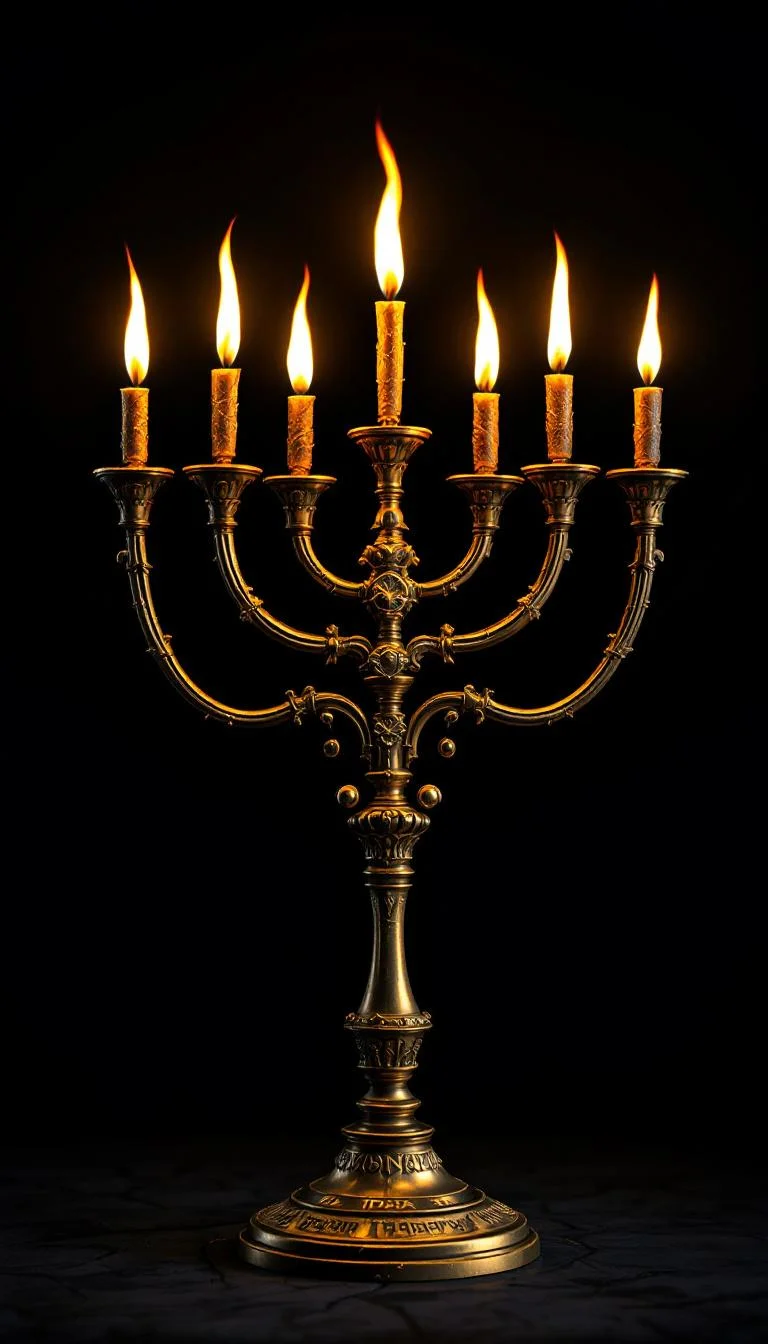
Revelation uses vivid symbolic language, but the symbols aren't arbitrary. You can decode them using Scripture itself. The golden rule is this: let Scripture interpret Scripture. When you encounter a symbol in Revelation, your first question should be where else in Scripture it appears. Most of the time, the Bible provides its own interpretation.
Consider the seven lampstands in chapter 1. John sees Christ walking among seven golden lampstands. You might wonder what lampstands could symbolize, but John doesn't leave you guessing. He explicitly states: "The seven lampstands are the seven churches." The Old Testament provides the background. The lampstand in the tabernacle gave light in the holy place. Zechariah saw a lampstand representing God's Spirit watching over everything. Jesus called His followers the light of the world. Churches are meant to be lights in darkness, so lampstands represent them.
Numbers in Revelation carry symbolic meaning beyond their quantity.
Colors carry meaning throughout Revelation.
Revelation echoes the Old Testament constantly. John wrote for readers who knew Hebrew Scripture intimately, and he alludes to imagery without always explaining it because his audience would recognize the connections.
The main sources are Daniel, Ezekiel, Isaiah, Zechariah, Exodus, and the Psalms. Daniel provides beasts, the Ancient of Days, the Son of Man, and time periods. Ezekiel gives living creatures, scrolls, Gog and Magog, and temple visions. Isaiah offers new heavens and earth, the suffering servant, and judgment oracles. Zechariah contributes lampstands, horses, and measuring Jerusalem. Exodus echoes in plagues paralleling Egypt's judgment. Psalms provide messianic prophecies and worship scenes.
The beast from the sea in chapter 13 shows the method clearly. John sees a beast rising from the sea with ten horns and seven heads. The beast looks like a leopard with bear's feet and a lion's mouth. Where does this come from? Daniel 7, where Daniel sees four beasts: a lion (Babylon), a bear (Medo-Persia), a leopard (Greece), and a terrifying beast with ten horns (Rome). John's beast combines all four into a single image of every earthly empire opposing God. Babylon works the same way, drawing on Old Testament imagery of the corrupt city that opposes God's people.
Method is easier to grasp when you see it applied. Here's a worked example from Revelation Explained: Verse by Verse, taken from Revelation 1, the same passage that opens the book's commentary.
Revelation 1:7-8 (NKJV)
"Behold, He is coming with clouds, and every eye will see Him, even they who pierced Him. And all the tribes of the earth will mourn because of Him. Even so, Amen."
"'I am the Alpha and the Omega, the Beginning and the End,' says the Lord, 'who is and who was and who is to come, the Almighty.'"
Verse 7 carries two clear Old Testament echoes. The first is Daniel 7:13, where Daniel sees "one like a son of man" coming with the clouds of heaven. The second is Zechariah 12:10, where God promises that when the Messiah comes, even those who rejected Him will recognize who He truly is. Jesus Himself prophesied this moment in Matthew 24:30: "Then the sign of the Son of Man will appear in heaven, and then all the tribes of the earth will mourn, and they will see the Son of Man coming on the clouds of heaven with power and great glory." John isn't introducing new prophecy. He's confirming Jesus' own words.
Verse 8 echoes Isaiah 44:6, where God says, "I am the First and I am the Last; Besides Me there is no God." The title "Almighty" translates the Greek pantokrator, meaning absolute power over everything.
Here's Revelation's central theme stated upfront: Jesus is coming back. And when He does, it won't be hidden or symbolic. Every eye will see Him, including those who rejected and crucified Him.
The phrase "even they who pierced Him" pulls Zechariah's prophecy into present reality. The mourning isn't sentimental regret. It's the devastating realization of having opposed God Himself. "Even so, Amen" is John's affirmation: yes, let it be so. For believers, Christ's return means rescue, vindication, and eternal joy. The certainty of His coming changes how you face today's trials.
In verse 8, in His own voice, God declares His sovereignty over all time. Alpha and Omega (the first and last letters of the Greek alphabet) mean He is the beginning and end of all things. Nothing exists outside His authority. History moves according to His plan. When chaos swirls around you, when evil seems to triumph, when you wonder if anyone's in control, remember this declaration. The One who speaks in Revelation holds all power.
That's the method in two verses: read the verse, find its Old Testament foundations, then comment on what it means. Every chapter spoke on this site follows the same pattern. The full book applies it to all 404 verses across 22 chapters.
The full book covers all 22 chapters. We've published chapter-by-chapter guides for the most-studied chapters of Revelation:
Spokes are published as they're written. If a link above goes nowhere yet, that chapter's guide is in the queue.
This guide covers method and structure. The complete book delivers four foundation chapters (Four Views, Why Futurist, Structure and Symbols, Historical Context), verse-by-verse commentary on all 22 chapters of Revelation, Old Testament Foundations sections for every chapter, theological synthesis and practical application per chapter, discussion questions designed for group study, and Common Questions sections answering what readers actually ask.
538 pages, 125,000 words, available in eBook, paperback, and hardcover.
Two free options if you want to sample the method before buying the book:
Chapter 14: The Choice and the Harvest. A complete chapter from the book, free, no payment required.
Get the Free ChapterA printable reference of the major numbers, colors, and Old Testament source images you'll meet across the book.
Get the Cheat SheetVerse-by-verse study means working through a book of Scripture one verse at a time in the order it was written, examining each verse in its context before moving to the next. For Revelation, this approach prevents you from cherry-picking dramatic passages while skipping connective material. You read everything, you connect every symbol to its Old Testament source, and you let earlier chapters inform what later chapters mean.
Most readers find Revelation confusing because they encounter the symbols without knowing where the symbols come from. Beasts, numbers, colors, and visions feel random when read in isolation. They become coherent once you see them as borrowed language from Daniel, Ezekiel, Isaiah, Zechariah, Exodus, and the Psalms. Revelation Explained: Verse by Verse traces every major image back to its Old Testament source, which removes most of the confusion.
A careful verse-by-verse walk through all 22 chapters typically takes 12 to 26 weeks at one chapter per session, depending on group pace. Personal study can move faster or slower. The book includes discussion questions per chapter for group settings and works equally well as a self-paced read.
No. The original languages add depth in places, but ordinary believers can grasp the main message of Revelation without them. The bigger requirement is familiarity with the Old Testament, since Revelation borrows almost every image and number from earlier Scripture. A good study Bible with cross-references covers most of what you need.
Some elements of Revelation are clearly symbolic, like a dragon with seven heads or a woman clothed with the sun. Others are clearly literal, like the bodily resurrection of believers and the physical return of Christ. Context, biblical pattern, and physical possibility all give clues. When John explains a symbol himself, treat it as symbolic. When he describes events that match plain biblical prophecy, read them straight.
They come from the Old Testament. Scholars have identified more than 500 Old Testament allusions in Revelation, drawn primarily from Daniel, Ezekiel, Isaiah, Zechariah, Exodus, and the Psalms. John was writing for readers who knew Hebrew Scripture intimately. He alluded to imagery without explaining it because his audience would recognize the connections immediately.
This guide is a sample of the method used in Revelation Explained: Verse by Verse. The full book applies it to every chapter of Revelation, with Old Testament foundations, theological synthesis, practical application, and discussion questions for group study.
Get the Book