Revelation 9:1-2 (NKJV)
"Then the fifth angel sounded: And I saw a star fallen from heaven to the earth. To him was given the key to the bottomless pit."
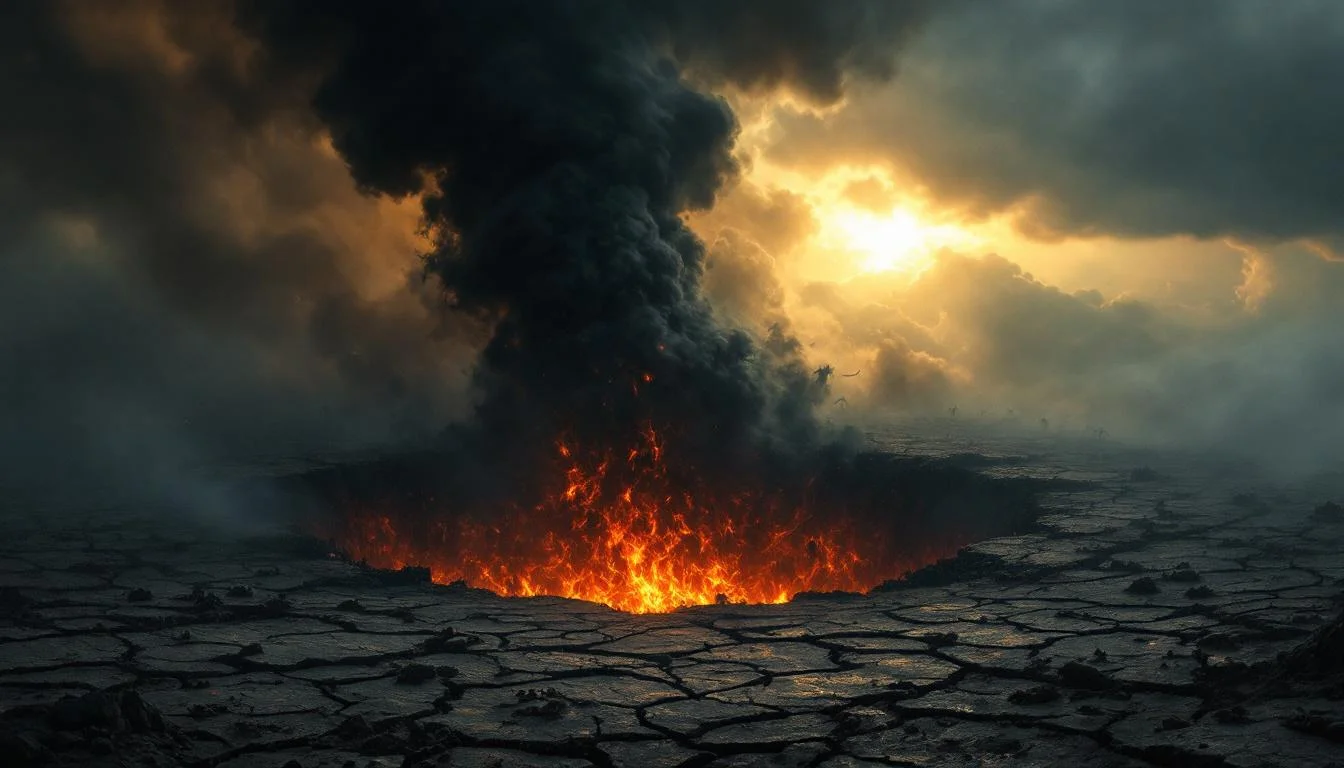
"And he opened the bottomless pit, and smoke arose out of the pit like the smoke of a great furnace. So the sun and the air were darkened because of the smoke of the pit."
Old Testament foundations for these verses
When John sees "a star that had fallen from the sky to the earth," he's witnessing something Isaiah and Ezekiel prophesied long ago. Isaiah 14:12 declares, "How you are fallen from heaven, O Lucifer, son of the morning!" Ezekiel describes an anointed guardian cherub who was cast from God's holy mountain because of pride (Ezekiel 28:14-17). This "falling from heaven to earth" is prophetic language for Satan's rebellion and divine judgment.
The smoke imagery deliberately echoes two earlier biblical scenes of judgment. When God descended on Mount Sinai, "the whole mountain quaked greatly. And the smoke of it went up like the smoke of a furnace" (Exodus 19:18). When God destroyed Sodom and Gomorrah, Abraham "saw the smoke of the land which went up like the smoke of a furnace" (Genesis 19:28). The phrase "smoke from a furnace" marks God's holy judgment.
Verse-by-verse commentary
Picture this scene: a mighty angel sounds a trumpet, and John's gaze shifts to a star that has fallen to earth. But this is no meteorite. In Scripture, stars often represent angelic beings, and this one has clearly fallen from its original place in God's presence. This fallen star represents Satan himself or one of his high-ranking demons. Jesus testified, "I saw Satan fall like lightning from heaven" (Luke 10:18). Later in Revelation 12:9, John sees Satan "hurled to the earth" after losing a war in heaven. The fallen being here is this same cast-down enemy.
Notice something crucial: he is "given" the key. Even in his rage against God, Satan can only act when permitted. His authority is delegated and temporary, serving God's ultimate purposes. The Abyss doesn't open because Satan forces it. It opens because God allows it at precisely the right moment in His plan. The trumpet judgments here parallel the seal judgments of Revelation 6: each series shows God's sovereign timing over the unfolding of history.
Scripture teaches that certain fallen angels are currently imprisoned, awaiting final judgment. Peter wrote that God "cast them down to hell and delivered them into chains of darkness, to be reserved for judgment" (2 Peter 2:4). Jude confirmed they are "kept in darkness, bound with everlasting chains for judgment" (Jude 6). The bottomless pit is this prison. What follows in Revelation 9 describes the terrifying moment when God temporarily releases these bound demons.
When the Abyss opens, thick smoke pours out and darkens the sun and sky. This smoke represents the release of forces under God's judicial authority, not chaotic evil acting independently. Even when demonic beings emerge from the Abyss, they serve His sovereign purposes in calling an unrepentant world to account. The darkening of the sun suggests both spiritual and physical consequences. Spiritually, this smoke represents deception that obscures truth. Physically, it could indicate environmental catastrophe creating literal darkness over the earth.