Revelation 5:1-4 (NKJV)
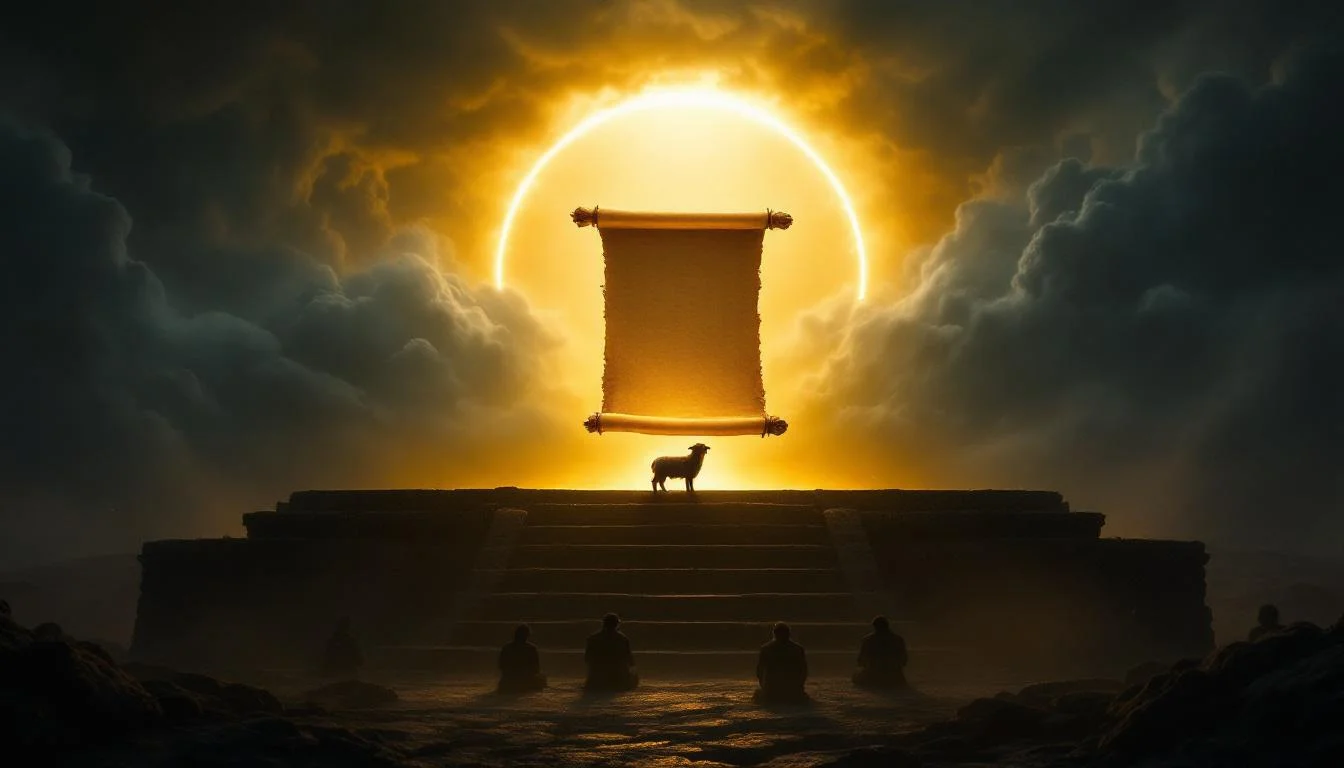
"And I saw in the right hand of Him who sat on the throne a scroll written inside and on the back, sealed with seven seals."
"Then I saw a strong angel proclaiming with a loud voice, 'Who is worthy to open the scroll and to loose its seals?'"
"And no one in heaven or on the earth or under the earth was able to open the scroll, or to look at it."
"So I wept much, because no one was found worthy to open and read the scroll, or to look at it."
Old Testament foundations for these verses
Centuries before, in Ezekiel 2:9-10, the prophet saw a scroll written on both front and back, filled with words of judgment. This detail mattered because scrolls were typically written on one side only. A two-sided scroll meant God had so much to say that one side could not contain it. Nothing was left unsaid. The message was complete and comprehensive.
But the seven seals added another layer. In Jeremiah 32, the prophet purchased a field as a prophetic sign and sealed the deed with multiple seals, following standard legal practice. In the ancient world, important documents like property deeds, wills, and inheritance claims were sealed by multiple witnesses. Seven seals represented perfect legal validity. The document could only be opened by someone with proper legal authority. What John sees is a legal document, God's title deed to the earth, His binding plan to reclaim His creation.
Verse-by-verse commentary
Picture John's perspective. He's still gazing at the magnificent throne of God described in chapter 4. Now his attention focuses on something God holds: a scroll. But this isn't just any scroll.
First, notice where it is: in God's right hand. In ancient culture, the right hand symbolized power, authority, and covenant faithfulness. When someone held something in their right hand, it meant they had full authority over it and complete power to execute it. God gripping this scroll in His right hand emphasizes His absolute sovereignty over whatever it contains.
Second, look at how it's written: on both front and back. As we saw in Ezekiel, this indicates completeness. God's plan is comprehensive. Nothing is left out. Every detail of judgment and redemption, every purpose for history's conclusion, every aspect of God's final word to humanity is recorded here.
Third, consider the seven seals. These weren't just security measures. In Roman legal practice, crucial documents like wills and property deeds required multiple seals from witnesses. Seven seals represented perfect legal validity. This scroll is God's binding legal document, His title deed to creation, His authorization to execute final judgment and complete redemption. No one can break these seals without proper legal and moral authority.
A powerful angel steps forward with an urgent proclamation. The word "worthy" is critical here. This isn't about strength or intelligence. Angels have tremendous power, but power isn't the issue. This is about worthiness, about having the moral character, the legal right, and the spiritual authority to execute what the scroll contains. The angel's loud voice underscores the urgency. This isn't a casual question. The entire future of creation hangs on finding someone worthy.
The search is exhaustive. Heaven: all the angels, all the cherubim, all the heavenly beings. Earth: all humanity, all rulers, all wise people. Under the earth: all who have died. The scope is universal. And the verdict? No one qualifies. Not even to look inside, much less to open it.
John's response is deeply emotional. He doesn't just tear up; he weeps continuously. Why? Because if no one can open the scroll, then God's promises cannot be fulfilled, justice for the oppressed cannot come, evil will continue unchecked, redemption remains incomplete, and creation stays broken. John understands what's at stake. His weeping reflects humanity's deepest longing for things to be made right, for God's kingdom to come, for the curse to be reversed. Without someone worthy, all hope dies.