Revelation names three figures in a single verse: "the dragon... the beast... and the false prophet" (NKJV Revelation 16:13). Most readers can confidently identify the first two. The third often gets absorbed into popular teaching about the beast and the antichrist, and the distinct warning Revelation attaches to religious deception gets lost along the way.
The false prophet in Revelation refers specifically to the second beast of chapter 13, a figure whose entire purpose is manufacturing worship for someone else. This article separates the three figures, identifies who the false prophet actually is, and traces what he does across Revelation 13, 16, 19, and 20.
Quick Answer: The false prophet in Revelation is the second beast of Revelation 13:11-17, later named directly in Revelation 16:13, 19:20, and 20:10. He is the religious deceiver of the unholy trinity, performing counterfeit signs, animating the beast's image, and enforcing the mark that compels worship of the first beast.
Definition: The false prophet in Revelation represents the religious enforcer of the unholy trinity, using counterfeit miracles and economic pressure to compel worship of the beast rather than God.
Key Scripture: "Then I saw another beast coming up out of the earth, and he had two horns like a lamb and spoke like a dragon" (NKJV Revelation 13:11).
Context: The figure is an agent of worship for another; he never claims worship for himself.
This vision exposes how religious deception partners with political coercion to demand allegiance that belongs to God alone. The false prophet gives spiritual cover to the beast's power, making submission look reasonable and even miraculous. Revelation's assurance is that this partnership, but convincing, faces certain judgment. If you have ever felt lost trying to sort out who is who in these chapters, you are not alone. The sections below separate the three figures of the unholy trinity, walk through what the false prophet actually does, and consider what this warning means for believers today.
Key Takeaways
- Three distinct figures: the dragon is Satan, the first beast is coercive political power, and the false prophet is the religious enforcer.
- Named three times: Revelation 16:13, 19:20, and 20:10 give this title to the earth beast introduced in chapter 13.
- Derivative authority: he exercises the first beast's authority in its presence (NKJV Revelation 13:12).
- Deception through signs: his miracles are real enough to persuade and false in their aim.
- Certain judgment: he is thrown into the lake of fire with the beast (NKJV Revelation 19:20).
Key Evidence:
- "Then I saw another beast coming up out of the earth, and he had two horns like a lamb and spoke like a dragon" (NKJV Revelation 13:11).
- "He exercises all the authority of the first beast in his presence" (NKJV Revelation 13:12).
- "He performs great signs, so that he even makes fire come down from heaven on the earth in the sight of men" (NKJV Revelation 13:13).
- "He causes all, both small and great, rich and poor, free and slave, to receive a mark" (NKJV Revelation 13:16).
- "The beast was captured, and with him the false prophet who worked signs in his presence... These two were cast alive into the lake of fire" (NKJV Revelation 19:20).
The Dragon, the Beast, and the False Prophet in Revelation Side by Side
The false prophet in Revelation is a third figure, distinct from both the dragon and the beast, though he serves both. Taken together, these three form a coordinated system of deception, but each plays a different part.
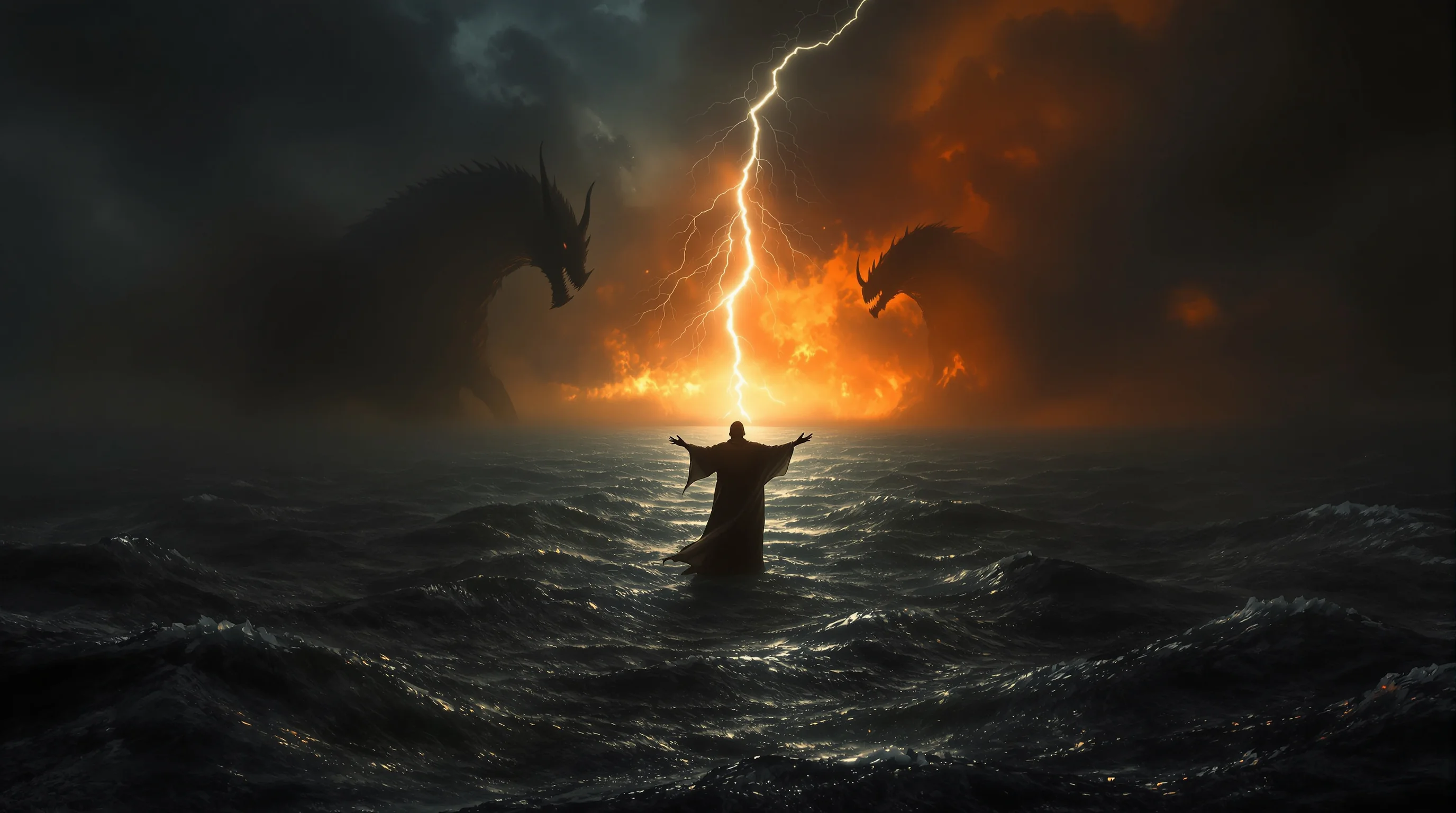
The dragon is Satan, cast down from heaven in Revelation 12:9, who wages war on those who "keep the commandments of God and have the testimony of Jesus Christ" (NKJV Revelation 12:17). The first beast is the sea beast of Revelation 13:1-10, the political and military power popularly labeled the antichrist. For a fuller picture of this figure, see what is the beast of Revelation. The false prophet is the earth beast of Revelation 13:11-17, whose two lamb-like horns and dragon-like voice mark him as a counterfeit of Christ, the true Lamb.
Grant Osborne observes that the three form a deliberate false trinity, mimicking divine authority while directing worship toward Satan's purposes. Craig Koester adds that the earth beast exercises religious power in service of political power, an unholy counterpart to true prophetic ministry. Put simply, the dragon supplies the power, the beast supplies the throne, and the false prophet supplies the pulpit. Worth noting: the word "antichrist" never appears in Revelation at all. It comes from 1 John, which is a major reason these labels blur together in popular teaching.
Why the Confusion Persists
Four factors keep readers merging the false prophet with the antichrist.
- Naming gap: chapter 13 calls him a beast; the title arrives three chapters later.
- Shared vocabulary: both beasts perform signs and receive worship-related language.
- Popular fiction: end-times novels and films often collapse the two into one villain.
What the False Prophet in Revelation Actually Does
The false prophet in Revelation exists to make worship of the beast look reasonable, miraculous, and unavoidable. Everything he does serves that single purpose.
His authority is borrowed, not original: "he exercises all the authority of the first beast in his presence" (NKJV Revelation 13:12). He performs counterfeit signs, and "makes fire come down from heaven on the earth in the sight of men" (NKJV Revelation 13:13), echoing the warning of Deuteronomy 13:1-3 that genuine signs never validate a message leading toward false worship. He gives breath to the image of the beast so it speaks, and he demands death for those who refuse to worship it (NKJV Revelation 13:14-15). He also enforces economic compliance, causing "all, both small and great, rich and poor, free and slave" to receive a mark for buying and selling (NKJV Revelation 13:16-17). For more on this specific mechanism, see the mark of the beast in Revelation.
By chapter 16, unclean spirits like frogs come from his mouth to gather kings for battle (NKJV Revelation 16:13-14). By chapters 19 and 20, he is captured with the beast and cast into the lake of fire (NKJV Revelation 19:20), still there when the dragon joins them a chapter later. G.K. Beale reads the second beast as representing false teachers and religious systems throughout church history that promote idolatrous worship of secular power. Revelation's false prophet never asks for worship himself. He manufactures it for someone else.
The Imperial Cult Background
The first readers in Asia Minor had a living reference point for this figure.
- Provincial priesthood: organized emperor festivals and sacrifices before imperial images.
- Speaking statues: ancient sources describe mechanical and ventriloquist effects, paralleling Revelation 13:15.
- Trade guilds: required cultic participation, making the mark a real economic threat.
Why the False Prophet Matters for Christians Today
Revelation teaches that the deepest threat to faith often arrives wearing lamb's clothing and speaking with spiritual authority. In context, the passage offers a discernment test: measure claims by their object of worship, not by their power (Deuteronomy 13:1-5; Matthew 24:24). It's okay to find this passage unsettling. That reaction is part of what the original audience was meant to feel too.
Interpreters read this figure differently. Preterists identify the imperial priesthood of Asia Minor. Historicists see corrupted ecclesiastical power unfolding across church history. Futurists expect a specific end-times religious leader, while idealists read a recurring pattern of religious deception appearing in every era. What this reveals, across all four views, is shared ground: the false prophet represents deceptive religious authority serving worldly power, and he faces certain judgment. If you want to trace how these interpretive traditions handle chapter 13 more fully, Revelation Explained: Verse by Verse examines each view in its immediate context.
Maybe you've wondered whether a particular leader, movement, or headline fits this description. The practical implication is worth sitting with: resist the pull to name contemporary figures, particularly when that naming becomes disguised political speculation. The text calls for endurance rather than identification. Revelation 19:20 settles the outcome before the pressure even arrives. Counterfeit power has an expiration date. Revelation does not ask believers to identify the false prophet. It asks them to be unimpressed by him.
Why This Vision Matters
Every generation faces spiritual voices that lend divine legitimacy to human power. Naming the false prophet as a distinct figure sharpens the warning: political coercion and religious persuasion work as partners, not separate threats. Revelation's assurance is that both are already judged, freeing believers to refuse compromise without fear.
Conclusion
The false prophet in Revelation is the second beast of chapter 13, the religious member of an unholy trinity, working signs and enforcing the mark so the world will worship the first beast. You don't need to solve his precise identity to obey this text. Faithful readers have wrestled with these details for centuries, and you're in good company if the specifics still feel uncertain. What matters is discernment about what any spiritual authority is asking you to worship, and confidence that his defeat is already written into the story. For a deeper verse-by-verse exploration of Revelation's symbols and structure, see Revelation Explained: Verse by Verse by Richard French.
Sources
- Revelation 12:1-17; 13:1-18; 16:12-16; 19:19-21; 20:7-10 (NKJV)
- Daniel 7:1-8; 8:1-12 (NKJV)
- Deuteronomy 13:1-5 (NKJV)
- Ezekiel 13:1-16; Jeremiah 23:16-22 (NKJV)
- Beale, G.K. The Book of Revelation: A Commentary on the Greek Text. New International Greek Testament Commentary. Eerdmans, 1999.
- Koester, Craig R. Revelation: A New Translation with Introduction and Commentary. Anchor Yale Bible. Yale University Press, 2014.
- Osborne, Grant R. Revelation. Baker Exegetical Commentary on the New Testament. Baker Academic, 2002.
- Aune, David E. Revelation 6-16. Word Biblical Commentary. Thomas Nelson, 1998.
- Mounce, Robert H. The Book of Revelation. New International Commentary on the New Testament. Eerdmans, 1997 (revised edition).