What the Bible Says About Gog and Magog
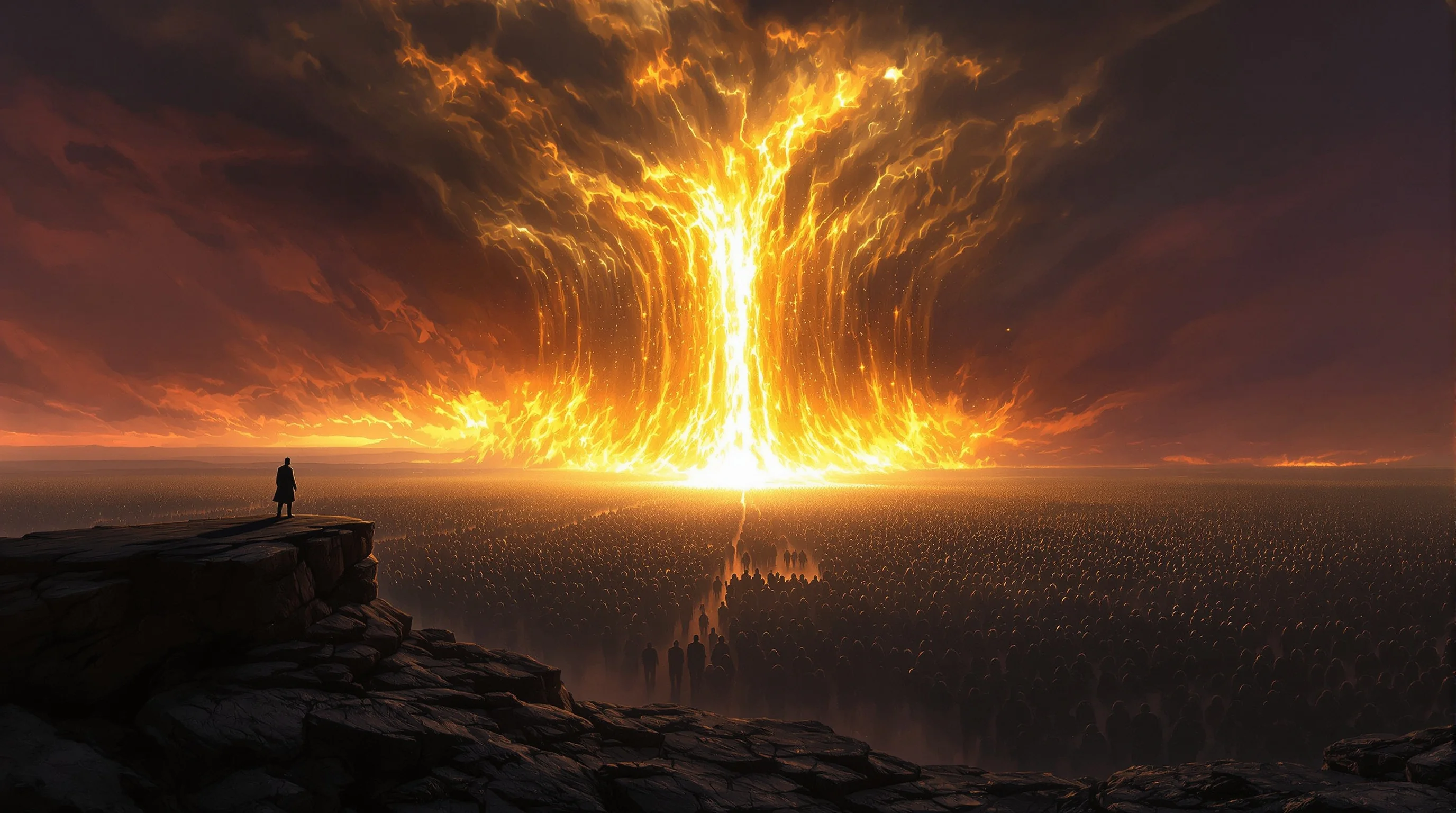
When Satan is released after the millennium, he immediately recruits an army drawn from every corner of the earth. The text calls them Gog and Magog. The rebellion looks overwhelming. It ends in a single verse.
Few names in Revelation generate more speculation than Gog and Magog. Modern readers often reach for maps and news headlines, but the text points somewhere else entirely. Gog and Magog are not a geopolitical forecast. They are one of Scripture's most powerful assurances that God holds the final word over every enemy His people will ever face.
Maybe you've encountered confident predictions connecting these names to Russia, Turkey, or Iran and wondered whether the Bible really says that. The text actually identifies Gog and Magog as apocalyptic symbols for all hostile nations gathered in final rebellion, and that meaning is far more encouraging than any geopolitical forecast.
Quick Answer: Gog and Magog in Revelation are apocalyptic symbols representing all nations gathered in final rebellion against God after the millennium. Drawn from Ezekiel 38-39, where Gog functions as an archetype of hostile power, the rebellion is instantly defeated by divine fire, confirming God's absolute sovereignty over every enemy.
Definition: Gog and Magog in Revelation symbolize the totality of Satan-deceived nations in final rebellion against God, destroyed by divine fire without a battle, representing the certain and complete defeat of all opposition to God's kingdom.
Key Scripture: "Satan will be released from his prison and will go out to deceive the nations which are in the four corners of the earth, Gog and Magog, to gather them together to battle." (NKJV Revelation 20:7-8)
Context: John draws on Ezekiel's well-known imagery to signal a climactic, cosmic fulfillment that his first-century audience would have recognized immediately as God's final answer to all hostile power.
This vision serves a pastoral purpose as much as a prophetic one. It assures believers that evil operates within divinely appointed limits, that Satan's most ambitious effort ends in permanent defeat, and that the new creation follows directly from that defeat. The sections below examine what the text says about Gog and Magog, where the imagery originates, how scholars interpret it, and why it still speaks to Christians handling a world that sometimes feels overwhelmingly hostile.
Key Takeaways
- Symbolic identity: Gog and Magog represent all hostile nations gathered against God, confirmed by the phrase "four corners of the earth," which signals totality rather than geography.
- Old Testament roots: The imagery originates in Ezekiel 38-39, where Gog is a title for an archetypal enemy of God's people, not a specific ethnic or national identity.
- Divine defeat: The rebellion ends without a battle. Fire descends from heaven and consumes the enemy, demonstrating that God's victory requires no human military effort. (NKJV Revelation 20:9)
- Satan's final end: The Gog and Magog episode leads directly to Satan's permanent defeat in the lake of fire, completing the narrative arc that began in Revelation 12. (NKJV Revelation 20:10)
- Pastoral purpose: The vision was designed to produce confidence in believers facing persecution, assuring them that evil has limits and ends in certain defeat.

Key Evidence
- Revelation 20:7-8 (NKJV): Satan gathers nations from "the four corners of the earth," identifying Gog and Magog with universal totality, not a specific geographic region.
- Revelation 20:9 (NKJV): "Fire came down from God out of heaven and devoured them." The Greek katesthiō means complete consumption. No battle occurs; divine action alone ends the rebellion.
- Ezekiel 38:2 (NKJV): Gog is introduced as a title (nāśî', "prince") over Magog, establishing the archetypal rather than ethnic character of the name from its Old Testament origin.
- G.K. Beale (NIGTC): "The names Gog and Magog have become a traditional way of referring to the archetypal enemies of God's people... John applies them here to depict the ultimate eschatological assault of Satan and his followers against the church."
- Grant Osborne (Baker Exegetical Commentary): Gog and Magog are "not specific peoples but symbolic representations of all the nations of the world in their final opposition to God and his people."
What the Text Actually Says
The passage opens with a striking declaration: "Now when the thousand years have expired, Satan will be released from his prison and will go out to deceive the nations which are in the four corners of the earth, Gog and Magog, to gather them together to battle, whose number is as the sand of the sea." (NKJV Revelation 20:7-8). The text identifies Gog and Magog with nations collectively, not a single country. The phrase "four corners of the earth" is an ancient idiom for totality. Every nation, everywhere, that stands opposed to God is gathered here.
The Greek word translated "deceive" is planaō, meaning "to lead astray, cause to wander." Satan's power over this rebellion is derivative. He deceives; he does not command. The enemy's strength depends entirely on God permitting it, which means it can be withdrawn the moment God chooses.
What happens next is almost understated: "They went up on the breadth of the earth and surrounded the camp of the saints and the beloved city. And fire came down from God out of heaven and devoured them." (NKJV Revelation 20:9). The Greek katesthiō means "to consume completely." There is no prolonged battle, no human army, no military strategy. Fire descends and the rebellion is finished.
G.K. Beale observes that "the names Gog and Magog have become a traditional way of referring to the archetypal enemies of God's people... John applies them here to depict the ultimate eschatological assault of Satan and his followers against the church." The culmination follows: "The devil, who deceived them, was cast into the lake of fire and brimstone where the beast and the false prophet are. And they will be tormented day and night forever and ever." (NKJV Revelation 20:10). The word parembolē, translated "camp," deliberately echoes Israel's wilderness community in the Septuagint, reminding readers that God's people have always been a pilgrim community under His protection, not an invincible military force.
The Name Magog in Genesis and Ezekiel
Magog appears first in Genesis as a son of Japheth, representing distant peoples at the edges of the ancient world.
- Genesis origin: "The sons of Japheth were Gomer, Magog, Madai, Javan, Tubal, Meshech, and Tiras." (NKJV Genesis 10:2). Magog designates remote nations outside Israel's covenant community.
- Ezekiel's development: Ezekiel 38:2 uses Gog as a title (Hebrew nāśî', "prince, lifted one") for an archetypal hostile ruler, moving the name toward universal symbolic meaning.
- John's synthesis: John inherits this developed symbol and applies it to the final, universal enemy of God's people.
Understanding Gog and Magog in Their Biblical Context
Revelation 20:7-10 sits between the binding of Satan (20:1-3) and the great white throne judgment (20:11-15). The Gog and Magog episode is the last act of organized rebellion before judgment is finalized and the new creation begins. It functions as a hinge in John's narrative, the final darkness before the eternal light of Revelation 21-22.
John writes within the conventions of Jewish apocalyptic literature. His original audience read symbolic numbers, cosmic battles, and prophetic imagery as theological vision, not a geopolitical timeline. Grant Osborne notes that Gog and Magog are "not specific peoples but symbolic representations of all the nations of the world in their final opposition to God and his people," with John using Ezekiel's imagery "to universalize the enemy." This matters for how we read the passage today, and it's worth knowing that faithful readers have wrestled with these names for centuries without reaching a single geopolitical conclusion.
The primary Old Testament source is Ezekiel 38-39, where God defeats Gog's invasion of restored Israel through earthquake, fire, and hailstones, with no Israelite sword raised. The nations listed there (Meshech, Tubal, Gomer, Persia, Ethiopia, Libya) represent the edges of the known world, signaling universality rather than any specific coalition. "Son of man, set your face against Gog, of the land of Magog, the prince of Rosh, Meshech, and Tubal, and prophesy against him." (NKJV Ezekiel 38:2). By the first century, Gog and Magog had become a standard symbol in Jewish apocalyptic texts, including 4 Ezra and the Sibylline Oracles, for the ultimate enemy of God's people. John's audience would have recognized the allusion immediately.
For a detailed examination of how this Old Testament imagery develops across Revelation's narrative, the verse-by-verse commentary in Revelation Explained: Verse by Verse traces these connections through each chapter. John also wrote during the reign of Domitian (81-96 AD), when Christians in Asia Minor faced economic marginalization and real persecution. The vision of encirclement and instant divine deliverance spoke directly to communities that felt surrounded by overwhelming power.
Major Interpretive Views
Scholars approach this passage through several lenses, though consensus holds on its symbolic core.
- Preterist view: Imagery describes first-century Roman persecution and God's judgment on pagan empire, with the millennium representing the church age already inaugurated by Christ.
- Futurist view: A literal future military coalition gathered before or after Christ's return; dispensationalists often link this to Ezekiel 38-39 as separate prophetic events.
- Idealist view: A timeless symbol of all anti-God opposition in every age, in the end and surely defeated by divine action.
Why Gog and Magog Matters for Christians Today
The Gog and Magog vision was designed to produce trust, not fear. It functions as both warning and comfort. It warns that organized opposition to God will reach a climactic moment. It comforts by demonstrating that God's response to that moment is immediate, total, and requires nothing from human armies. The outcome is not in doubt; it is declared in advance.
For Christians in any era who feel encircled by opposition, Revelation 20:7-10 offers a specific assurance: evil is not open-ended. Satan's release, his deception, and his gathering of nations all move within divinely appointed limits. As Beale (NIGTC) notes, the passage depicts Satan's final effort as one God permits precisely to demonstrate His sovereignty over it. The phrase "as the sand of the sea" describes the enemy's numbers, but the fire that consumes them comes from heaven. Numbers are irrelevant when God acts.
The most significant misapplication of this passage is identifying Gog and Magog with specific modern nations. Russia, Turkey, Iran, and other contemporary states have all been named in popular prophecy literature, including works by Hal Lindsey and John Hagee, but the text does not name them, and scholars including Beale and Osborne are clear on this point. Sensational predictions based on this passage have consistently undermined credible biblical study, and they miss the point entirely. The vision is about God's sovereignty, not geopolitical intelligence. If you've encountered those predictions and felt uneasy about them, that unease is well-founded. It's okay to set those predictions aside and let the text say what it actually says.
The episode leads immediately to the great white throne judgment and then to the new creation of Revelation 21-22. The "beloved city" under threat in 20:9 anticipates the New Jerusalem of 21:2. Gog and Magog is the penultimate darkness before the final light. You can also explore how this connects to the first resurrection in Revelation 20, which frames the millennium that precedes this final rebellion.
Why This Vision Matters
Gog and Magog reveals that history moves toward a fixed conclusion. Every power that opposes God is temporary; every threat to His people has a limit. The vision's theological mechanism is precise: God permits the rebellion, allows it to reach its fullest expression, and then ends it without a struggle, demonstrating that His sovereignty was never in question. Christians handling hostility, marginalization, or fear can read this passage and find not a map of geopolitics but a guarantee of divine faithfulness. The defeat of Gog and Magog clears the way for the new creation, and that sequence is the point. For more on how these themes connect to the larger question of where we stand in history, see are we in the end times?
Conclusion
Gog and Magog in Revelation are apocalyptic symbols for the totality of evil gathered in final rebellion against God. Rooted in Ezekiel 38-39 and developed through Jewish apocalyptic tradition, they represent every hostile nation and power, not any specific modern state. The rebellion is instant, total, and divinely extinguished without a battle. This passage was written to produce courage in believers who felt, and still feel, surrounded by forces beyond their control.
Whatever you are facing right now, whether it is personal opposition, cultural hostility, or simply the weight of living in a world that feels increasingly fragile, this vision speaks to you directly. The God who holds history in His hands has already determined how the story ends, and He has told you in advance. That is not a footnote to Revelation 20; it is the whole point. For a deeper verse-by-verse exploration of Revelation 20 and the passages surrounding it, see Revelation Explained: Verse by Verse by Richard French. You can also explore the meaning of Armageddon to see how these final visions connect across Revelation's closing chapters.
Sources
- Revelation 20:7 - 10 (NKJV)
- Ezekiel 38:1 - 23; 39:1 - 29 (NKJV)
- Genesis 10:2 (NKJV)
- Daniel 7:1 - 28 (NKJV)
- Revelation 19:19 - 21; 20:1 - 15 (NKJV)
- Grant R. Osborne - Revelation, Baker Exegetical Commentary on the New Testament (Baker Academic, 2002)
- G.K. Beale - The Book of Revelation, New International Greek Testament Commentary (Eerdmans, 1999)
- G.R. Beasley-Murray - The Book of Revelation, New Century Bible Commentary (Eerdmans, 1978)
- Richard Bauckham - The Theology of the Book of Revelation (Cambridge University Press, 1993)
- Daniel I. Block - The Book of Ezekiel: Chapters 25 - 48, New International Commentary on the Old Testament (Eerdmans, 1998)