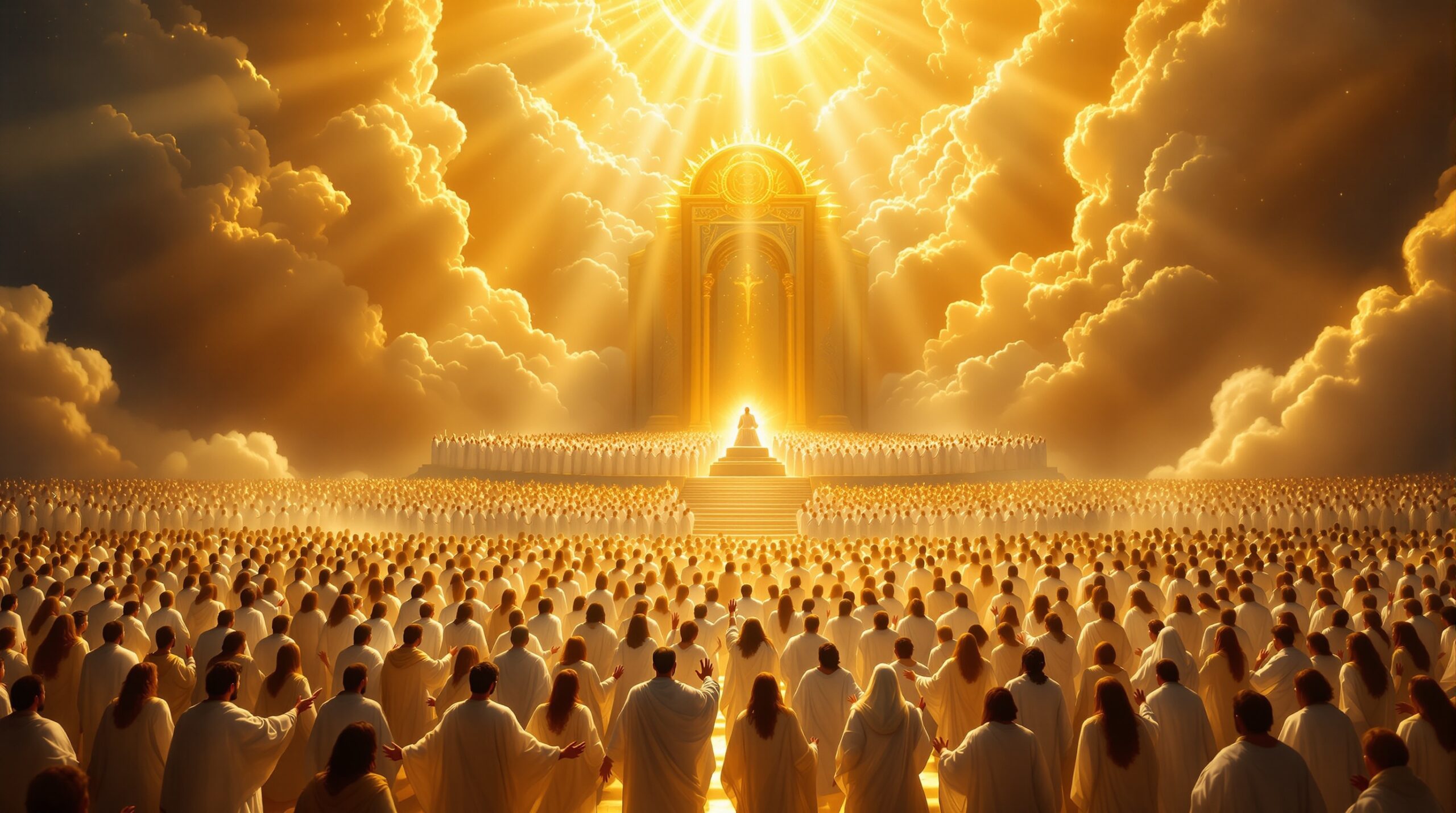
When one of the elders in Revelation asks John about the multitude in white robes, he reveals they are "the ones who come out of the great tribulation" (Revelation 7:14, NKJV)—yet most Christians today debate when this tribulation begins rather than recognizing it may already be underway. Widespread confusion about the timing stems from reading modern systematic timelines into ancient apocalyptic literature rather than understanding the text within its original context.
The great tribulation is not merely symbolic of hardship in general. It specifically represents intense persecution and suffering experienced by faithful believers throughout history, with particular intensity during certain periods of divine judgment.
This article examines why timing debates miss the biblical framework and what Scripture actually reveals about the great tribulation.
Quick Answer: The great tribulation refers to the intense persecution and suffering experienced by faithful believers throughout the church age, not exclusively a future seven-year period. Most Christians misunderstand the timing because they impose linear chronological frameworks onto Revelation's cyclical apocalyptic structure.
Definition: The great tribulation in Revelation represents the ongoing experience of God's people facing persecution and testing under divine sovereignty, culminating in their victorious emergence rather than their removal from suffering.
Key Scripture: "These are the ones who come out of the great tribulation, and washed their robes and made them white in the blood of the Lamb" (Revelation 7:14, NKJV)
Context: The present participle "come out" suggests an ongoing process rather than a single future moment.
This vision functions as both warning and comfort for believers facing persecution. It warns that suffering is real and intense for God's people, yet it also demonstrates divine sovereignty over even the most severe trials. Protection symbolized by sealing and white robes shows that tribulation serves redemptive purposes rather than indicating divine abandonment. Sections that follow will examine what Scripture actually teaches about timing, how Revelation's structure affects interpretation, and why the original audience's context changes everything about these debates.
Key Takeaways
Jesus introduced the term in Matthew 24:21, connecting it specifically to Jerusalem's destruction, not exclusively end-times events
Revelation's structure is recapitulative—the seals, trumpets, and bowls revisit the same period from different perspectives with increasing intensity
Original audience context matters—John wrote to churches already experiencing persecution, not providing distant-future puzzles
Symbolic time periods (42 months, 1,260 days) resist literal chronological mapping
Divine sealing precedes judgment—God protects His people through tribulation, not necessarily by removing them from it
What Jesus and John Actually Said About the Great Tribulation
Jesus first used this exact terminology in the Olivet Discourse: "For then there will be great tribulation, such as has not been since the beginning of the world until this time, no, nor ever shall be" (Matthew 24:21, NKJV). He connected this directly to "the abomination of desolation" standing in the holy place (v. 15)—language His Jewish audience recognized from Daniel's prophecy about temple desecration.
John echoes this same Greek phrase in Revelation 7:14, but with a revealing detail: believers "come out of" the great tribulation as victors, not victims awaiting rescue. Grammar indicates an ongoing process rather than a single future escape event.
Confusion arises because interpreters often separate these passages from their contexts. According to Grant Osborne, "The phrase 'great tribulation' does not refer to a specific seven-year period at the end of history but to the entire church age, viewed as a time of persecution and testing that intensifies as the end approaches." Original readers were already experiencing this tribulation.
Scripture presents the great tribulation as describing the experience of faithful witnesses who emerge victorious through intense suffering, showing it as a present reality for persecuted believers rather than exclusively a future event. When Revelation shows souls under the altar crying "How long, O Lord?" (6:9-10), this depicts martyrdom occurring throughout the vision sequence, not confined to one chronological section.
For readers wanting to trace how this imagery develops across Revelation's narrative, understanding the relationship between tribulation and divine judgment examines each occurrence in its immediate context.

Why Revelation's Structure Changes Everything
The most significant misunderstanding involves reading Revelation as a linear timeline when the text actually employs recapitulation—revisiting the same period from different angles with escalating intensity.
The Three Judgment Cycles
Seven seals, seven trumpets, and seven bowls don't unfold consecutively but overlap, each building to similar climaxes.
Structural parallels: Each sequence ends with cosmic disturbances, earthquakes, and theophanic elements (6:12-17, 11:13-19, 16:17-21)
The timing problem: The seventh trumpet announces "The kingdoms of this world have become the kingdoms of our Lord" (11:15, NKJV), yet bowl judgments follow afterward
Beale's insight: "The three septets should be understood as describing the same end-time events from different perspectives with an increasing degree of intensity"
An interlude in chapter 7—where the great tribulation appears—answers the question raised by the sixth seal: "Who is able to stand?" (6:17). Answer: those sealed by God. This literary placement reveals that tribulation isn't merely future to John's vision but describes God's people's experience throughout the judgment period.
Time markers (42 months, 1,260 days, "time, times, and half a time") appear repeatedly but resist literal calculation. These symbolic numbers, drawn from Daniel's prophecies, represent a divinely limited period of testing—a "broken seven" signifying incompleteness rather than a calendar prescription.
Why the Original Audience's Context Matters for Timing
Craig Keener emphasizes that "Revelation was not written as a detailed timeline for future generations to decode but as encouragement for churches facing immediate persecution." Seven churches in Asia Minor lived under mounting pressure from the Roman imperial cult, economic exclusion, and violent persecution.
Archaeological evidence reveals extensive imperial cult infrastructure in these cities. Pergamum housed a massive temple to Augustus, which Jesus calls "Satan's throne" (2:13). The "mark of the beast" preventing buying and selling (13:16-17) directly paralleled the economic consequences these Christians faced for refusing imperial worship—this was present reality, not distant speculation.
The Jerusalem Connection
The Jewish-Roman war (66-70 AD) provided the immediate backdrop for understanding tribulation language.
Temple destruction: Jerusalem's fall fulfilled Jesus's prophecy of unprecedented distress connected to the great tribulation (Matthew 24:21)
Interpretive pattern: John's audience instinctively connected tribulation language to recent or current trauma, not primarily events millennia distant
Pastoral purpose: Churches needed immediate encouragement about their present suffering, not puzzles about far-future events
Any interpretation making Revelation irrelevant to its original audience violates basic hermeneutical principles. Timing questions must account for the fact that John wrote to real churches facing real persecution who needed assurance that their suffering fit within God's sovereign plan.
This connects directly to modern questions about whether Christians experience tribulation and how rapture timing relates to these passages.
Why This Vision Matters
Understanding the great tribulation's true nature transforms how believers face suffering. Rather than debating rapture timing, Christians should recognize that tribulation is the pathway—not the obstacle—to glorification. Revelation emphasizes "patient endurance" as the required response (13:10, 14:12), assuring believers their suffering is neither meaningless nor unnoticed. Every generation faces tribulation in various forms; the question is faithfulness through present trials, not calculation of future timelines.
Conclusion
The great tribulation remains misunderstood primarily because interpreters approach Revelation as a chronological roadmap rather than apocalyptic literature addressing real persecution. Jesus connected it to Jerusalem's destruction, John described believers emerging from it victoriously, and the text's recapitulative structure resists the linear timelines imposed upon it. Original audiences understood themselves as within, not before, this tribulation—experiencing God's protection through suffering rather than removal from it.
For a deeper verse-by-verse exploration of Revelation's structure and symbolism, see Revelation Explained: Verse by Verse by Richard French.
Sources
Revelation 6:1-17; 7:1-17; 11:1-19; 13:1-18; 15:1-16:21
Matthew 24:15-31
Daniel 7:25; 9:27; 12:1-13
Jeremiah 30:7
Joel 2:1-11
Beale, G.K. The Book of Revelation: A Commentary on the Greek Text. New International Greek Testament Commentary. Eerdmans, 1999.
Osborne, Grant R. Revelation. Baker Exegetical Commentary on the New Testament. Baker Academic, 2002.
Keener, Craig S. Revelation. NIV Application Commentary. Zondervan, 2000.
Mounce, Robert H. The Book of Revelation. New International Commentary on the New Testament. Eerdmans, 1997.
Johnson, Dennis E. Triumph of the Lamb: A Commentary on Revelation. P&R Publishing, 2001.