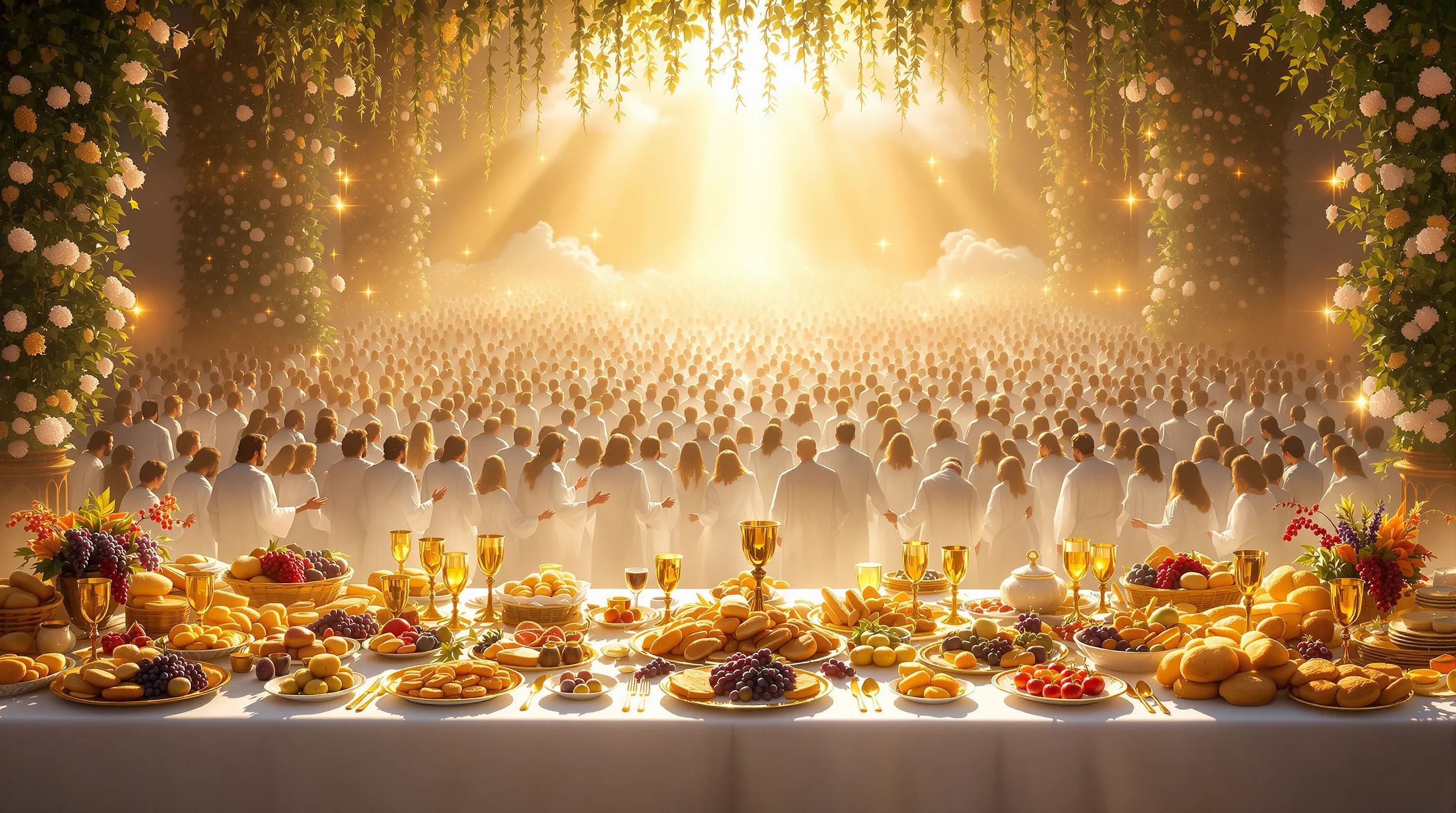
The only place in the entire New Testament where "alleluia" appears is Revelation 19, and it erupts four times in rapid succession before the announcement of the Marriage Supper of the Lamb. Heaven treats this moment as the climax of redemptive history. For believers handling persecution, compromise, and the seductive pull of Rome's imperial culture, this passage answers the most pressing question of their lives: where is history in the end heading?
Maybe you've read Revelation and found its imagery more disorienting than encouraging. That's a fair response to apocalyptic literature, and it's worth saying plainly: faithful readers have wrestled with this passage for centuries, and there's no shame in approaching it with honest questions. The Marriage Supper of the Lamb is the destination of the whole story. This article examines what Scripture says about the Marriage Supper of the Lamb, its Old Testament roots, its first-century context, and why it still speaks to believers today.
Quick Answer: The Marriage Supper of the Lamb is the culminating celebration of Christ's union with His redeemed people, announced in Revelation 19:7-9. It portrays the Church as the Bride made ready through righteous living, gathered at a feast representing the final fulfillment of God's covenantal relationship with humanity.
Definition: The Marriage Supper of the Lamb in Revelation symbolizes the consummation of Christ's eternal covenant with His redeemed people, where the Church as Bride is presented in garments of righteous acts at a feast marking the final victory of God over every opposing power.
Key Scripture: "Blessed are those who are called to the marriage supper of the Lamb!" (NKJV Revelation 19:9)
Context: The passage stands at Revelation's structural turning point, immediately following the fall of Babylon and preceding the final defeat of evil.
This vision serves as Revelation's great counterpoint to everything that came before it. Babylon's fall in chapters 17-18 exposes the emptiness of worldly systems built on seduction and exploitation. The Marriage Supper answers that emptiness with something concrete: a feast, a Bridegroom, a Bride clothed in holiness. It functions as both promise and call, assuring believers that faithfulness leads somewhere and that the Lamb, not Caesar, hosts the feast that matters. The sections that follow examine what the text says, where this imagery comes from, and what it means for how we live now.
Key Takeaways
- Divine union fulfilled: The Marriage Supper of the Lamb represents the consummation of Christ's covenant relationship with the Church, described in Revelation 19:7 using the Greek gamos, meaning wedding celebration.
- Grace and faithfulness held together: The Bride's garment of "fine linen, clean and bright" (NKJV Revelation 19:8) is both divinely granted and composed of the saints' righteous acts, holding grace and obedience together.
- A genuine beatitude: The blessing of Revelation 19:9 uses makarioi, the same Greek word as the Beatitudes in Matthew 5, confirming this is a divine guarantee, not symbolic speculation.
- Rooted in the Old Testament: The marriage metaphor fulfills a covenantal storyline running through Isaiah 54, Hosea 2, and Ezekiel 16, where God pursues His people as a faithful husband.
- A counter-imperial declaration: For original readers pressured to eat at Caesar's table, the Marriage Supper declared that the only feast of ultimate honor belongs to the Lamb.
What the Bible Says About the Marriage Supper of the Lamb
The Marriage Supper of the Lamb is announced in Revelation 19:6-9 through a hymn described as sounding like "the sound of many waters and as the sound of mighty thunderings" (NKJV Revelation 19:6). That same imagery appears in Revelation 1:15 to describe Christ's own voice, and the echo is intentional. The praise of the heavenly multitude participates in and reflects the glory of the One being celebrated.
Verse 7 declares: "Let us be glad and rejoice and give Him glory, for the marriage of the Lamb has come, and His wife has made herself ready" (NKJV Revelation 19:7). The Greek word gamos encompasses the full wedding celebration, and the aorist tense of "has come" signals a decisive, completed arrival. The waiting is over. Verse 8 then reveals the Bride's garment: "fine linen, clean and bright, for the fine linen is the righteous acts of the saints" (NKJV Revelation 19:8). The Greek word edothē, a divine passive, tells us the garment is granted by God. The word dikaiōmata, meaning righteous acts, tells us the saints' faithful living wove it. Together, these two words hold divine grace and human faithfulness in place without collapsing one into the other.
Robert Mounce observes that the marriage feast "brings together the themes of covenant faithfulness, joyful union, and ultimate victory over all that is opposed to God." The Marriage Supper of the Lamb is a feast prepared by God for those who have remained faithful to the Lamb, not a reward for perfect performance. The beatitude of verse 9 uses makarioi, identical to the Greek of Matthew 5's Beatitudes, making this the fourth of Revelation's seven beatitudes. When the angel adds, "These are the true sayings of God," the promise is sealed as divine guarantee.
Jesus Established This Imagery First
The Marriage Supper does not introduce a foreign concept into Scripture. Jesus built this expectation across His own ministry.
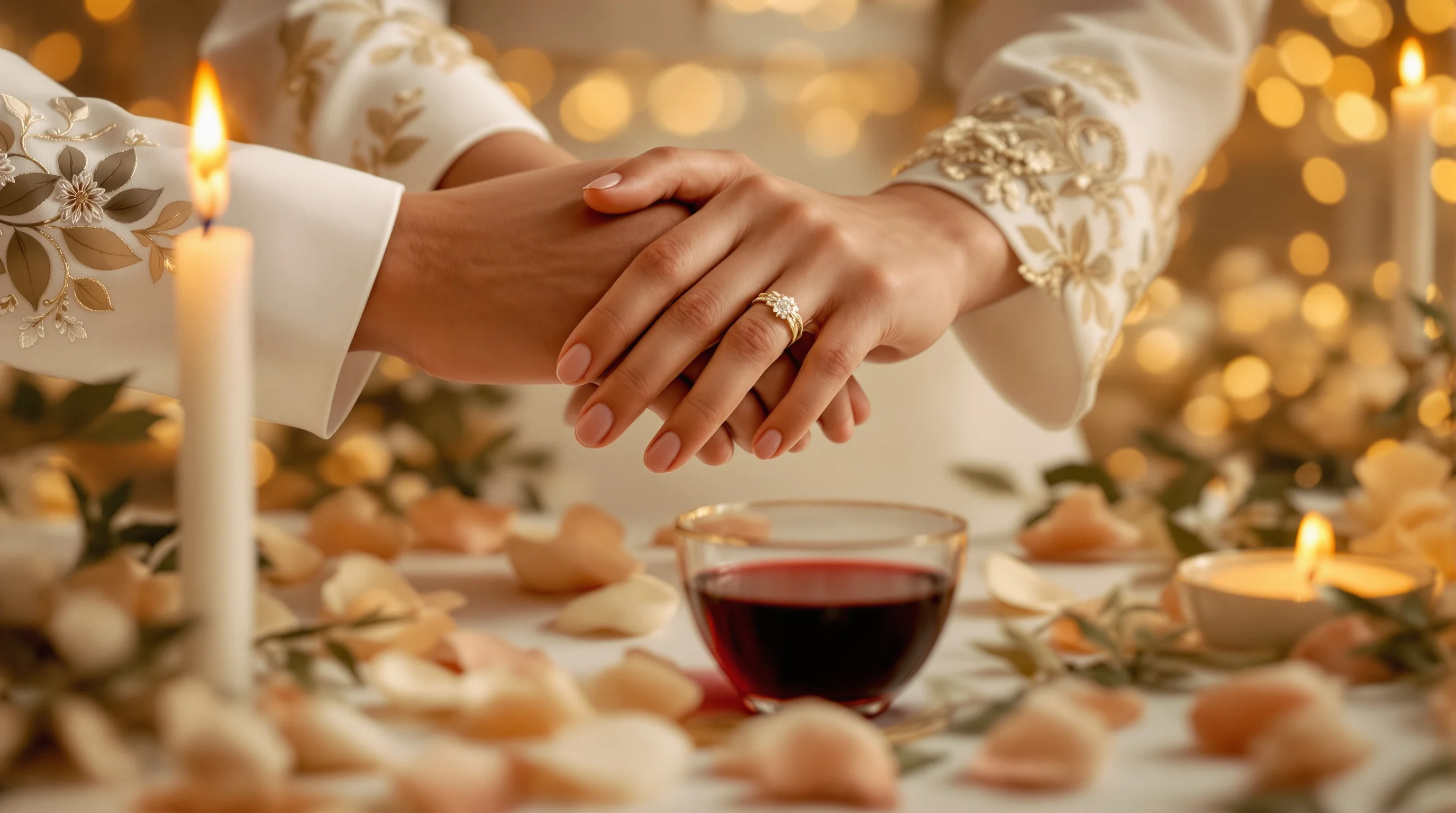
- The wedding banquet parable: In Matthew 22:2, Jesus compares the Kingdom directly to a king arranging a marriage for his son (NKJV Matthew 22:2), using homoiōthē, meaning "was likened to."
- John the Baptist's witness: "He who has the bride is the bridegroom" (NKJV John 3:29), identifying Jesus as the numphios whose arrival John's ministry announced.
- Ephesians 5:25-32: Paul explicitly frames the marriage relationship as a picture of Christ and the Church, confirming the Bride's identity across the New Testament.
Understanding the Marriage Supper in Its Biblical and Historical Context
Revelation 19 arrives at a deliberate structural contrast that rewards close attention. Babylon in chapters 17-18 wears "purple and scarlet, and adorned with gold and precious stones and pearls" (NKJV Revelation 17:4). The Bride wears "fine linen, clean and bright" (NKJV Revelation 19:8). One seduces and is destroyed; the other is sanctified and celebrated. John constructs this contrast with care, and readers are meant to feel the weight of it.
The Old Testament foundation runs deep. Isaiah 54:5 names God as Israel's husband, using the Hebrew ba'al, meaning one who possesses by covenant bond: "For your Maker is your husband, the LORD of hosts is His name" (NKJV Isaiah 54:5). Isaiah 25:6-9 presents God's eschatological banquet on Mount Zion as the basic vision of the messianic feast. Hosea 2:16-20 portrays God renewing His betrothal with unfaithful Israel. G.K. Beale writes that the marriage imagery in Revelation "expresses the covenantal relationship between God and his people, now fulfilled in Christ, anticipated throughout the Old Testament and now consummated eschatologically." Revelation 19 announces that long-promised restoration as accomplished.
The first-century context sharpens the passage further. Roman banquets, called convivium, were primary sites of patronage and imperial loyalty. Christians in Pergamum and Thyatira faced direct pressure to eat at guild feasts tied to idol worship (NKJV Revelation 2:14, 20). Domitian demanded acknowledgment as Dominus et Deus, Lord and God. Craig Keener notes that inclusion in a royal wedding banquet carried profound honor in the ancient world, making the invitation of Revelation 19:9 a statement about the ultimate vindication of those who follow the Lamb. The Marriage Supper told persecuted believers to refuse Caesar's table because a far greater feast awaited. For a detailed examination of how this counter-imperial message runs through Revelation's vision, the verse-by-verse commentary in Revelation Explained: Verse by Verse traces these Old Testament and historical connections throughout each chapter.
Four Major Interpretive Views
Scholars approach the timing of the Marriage Supper through four main lenses, though all agree it represents ultimate divine-human union.
- Preterist view: Fulfilled symbolically in first-century events, with Babylon identified as Rome or Jerusalem and the supper representing God's vindication of the persecuted church.
- Futurist view: A literal end-times event following the Tribulation, preceding the Millennial Kingdom; the dominant position in evangelical Christianity.
- Idealist view: A timeless reality experienced now in the Eucharist and in Christian worship, consummated fully at history's end.
Key Evidence
- Revelation 19:7-9 (NKJV): The primary text announces the marriage of the Lamb, describes the Bride's garment as "the righteous acts of the saints," and pronounces a beatitude using makarioi, the same Greek term as the Beatitudes in Matthew 5.
- Greek lexical data: Edothē (divine passive, "it was granted") and dikaiōmata ("righteous acts") appear together in Revelation 19:8, holding divine gift and human faithfulness in a single verse without collapsing either.
- Old Testament covenantal pattern: Isaiah 54:5, Hosea 2:16-20, and Isaiah 25:6-9 establish the husband-bride and eschatological banquet imagery that Revelation 19 fulfills, as documented by G.K. Beale in his NIGTC commentary on Revelation.
- First-century imperial context: Domitian's demand to be acknowledged as Dominus et Deus and the guild feast pressure documented in Revelation 2:14 and 2:20 give the Marriage Supper its counter-imperial force, as Craig Keener details in his commentary on Revelation.
- New Testament trajectory: Matthew 22:2, John 3:29, and Ephesians 5:25-32 confirm that Jesus and Paul both used the Bridegroom-Bride framework, making Revelation 19 the culmination of a consistent New Testament pattern rather than an isolated image.
Why the Marriage Supper of the Lamb Matters for Christians Today
The Marriage Supper of the Lamb reshapes how believers understand faithfulness, worship, and the Lord's Supper in the present. The Bride "made herself ready" (NKJV Revelation 19:7), and that readiness is active. The garments of righteous acts call believers to genuine, lived holiness rather than passive waiting. Grant Osborne, in his Baker Exegetical Commentary on the New Testament volume on Revelation, notes that this passage holds together imputed righteousness and sanctification without collapsing either into the other. Perhaps you've wondered whether ancient imagery about wedding feasts has anything practical to say about faith today. It does, and the connection is more direct than it might first appear.
For believers who feel overlooked or worn down by faithfulness that seems unrewarded, the Marriage Supper declares that history ends at a feast. The makarioi of verse 9 is personal. Readers are invited to hear their own name in that blessing. Every Lord's Supper is a foretaste of the Marriage Supper of the Lamb, a present-tense rehearsal of the feast that awaits. That connection between the communion table and the Marriage Supper is not incidental. Jesus said at the Last Supper, "I will not drink of this fruit of the vine from now on until that day when I drink it new with you in My Father's kingdom" (NKJV Matthew 26:29). The thread runs straight from that upper room to Revelation 19.
Two cautions are worth naming here. The passage provides no timeline markers, so it offers no basis for date-setting. The invitation imagery motivates evangelism rather than exclusivism. Revelation was written to churches under pressure to conform to empire, and the second coming of Christ that precedes this celebration stands as the ultimate answer to that pressure. As Robert Mounce observes in The Book of Revelation (NICNT), the Marriage Supper answers with the most powerful possible declaration: ultimate honor belongs to those who remain loyal to the Lamb. That declaration is as relevant for believers handling cultural pressure today as it was for the seven churches of Asia Minor.
Why This Vision Matters
The Marriage Supper of the Lamb is Revelation's answer to every form of worldly pressure that tempts believers to compromise their covenant loyalty. It reframes suffering, marginalization, and faithful endurance as preparation, not failure. For contemporary believers handling cultural pressure, the vision offers the same assurance it gave the seven churches: the Lamb, not Caesar, sets the final table. The new heaven and new earth that follows in Revelation 21-22 confirms that this feast opens into an eternal reality, not a single event.
Conclusion
The Marriage Supper of the Lamb is the consummation of God's covenantal relationship with His people, rooted in the Hebrew prophets, announced by Jesus in His parables, and declared in Revelation 19 as the destination of all redemptive history. Faithfulness is never wasted. The Bride's garments are being woven now, one righteous act at a time, by grace. When you read Revelation 19:9 and hear the angel say "blessed are those who are called," that blessing is meant for you. Your faithfulness today, but quiet or costly it feels, is part of what the Bride wears to the feast. The new Jerusalem awaiting the Bride confirms the permanence of what that feast inaugurates. For a deeper verse-by-verse exploration of this passage and the full sweep of Revelation's vision, see Revelation Explained: Verse by Verse by Richard French.
Sources
- Revelation 19:1 - 10 (NKJV) - Primary text
- Revelation 17:1 - 6; 18:1 - 24 - Immediate context (Fall of Babylon)
- Isaiah 25:6 - 9; 54:5 - 8 - Old Testament banquet and marriage imagery
- Hosea 2:16 - 20 - Covenantal betrothal restored
- Ezekiel 16:8 - 14 - Marriage covenant with Israel
- Matthew 22:1 - 14; 25:1 - 13 - Jesus's wedding feast parables
- John 3:29 - Jesus as Bridegroom
- Ephesians 5:25 - 32 - Marriage as metaphor for Christ and the Church
- G.K. Beale, The Book of Revelation: A Commentary on the Greek Text (NIGTC; Eerdmans, 1999)
- Robert H. Mounce, The Book of Revelation, Revised Edition (NICNT; Eerdmans, 1998)
- Craig S. Keener, Revelation (The NIV Application Commentary; Zondervan, 2000)
- Grant R. Osborne, Revelation (Baker Exegetical Commentary on the New Testament; Baker Academic, 2002)
- David E. Aune, Revelation 17 - 22 (Word Biblical Commentary, Vol. 52C; Thomas Nelson, 1998)