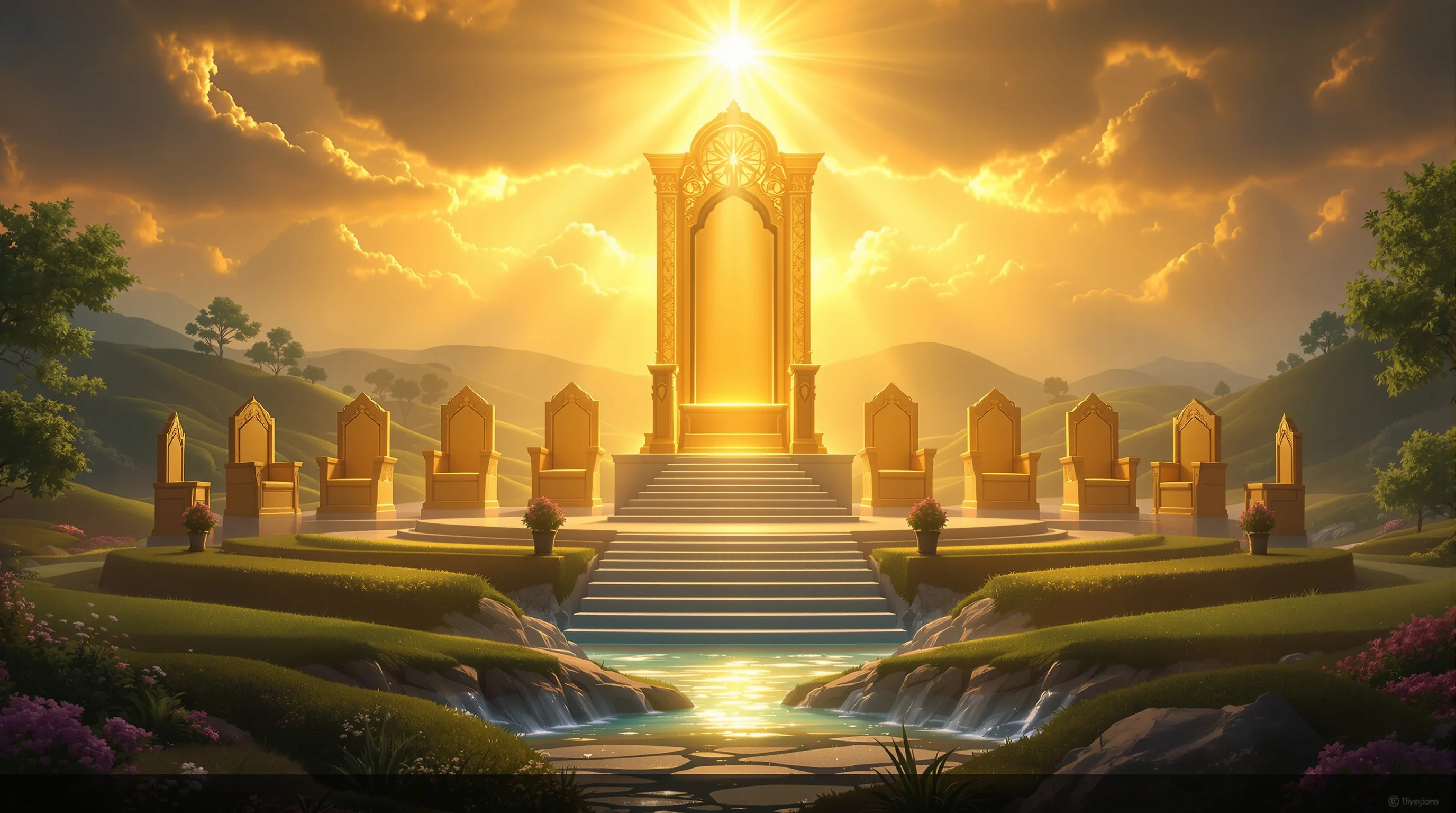
Then John sees something striking: those same martyrs seated on thrones, alive and reigning. This is the millennial kingdom, the thousand-year reign described in Revelation 20:1-10, and it remains one of the most debated passages in Scripture. If you've ever felt lost trying to sort out what these verses actually mean, you're in good company. Faithful Christians have wrestled with this chapter for centuries, and there's no shame in bringing honest questions to it.
The millennial kingdom is not a vague symbol for "the church age" that every reader interprets the same way. It specifically names Satan's binding, a first resurrection, and a limited reign, each with its own traceable wording in the Greek text. Maybe you've wondered whether the "thousand years" is literal or symbolic, or why Satan gets released at all after being bound. Let's look at what the passage actually says before turning to how Christians have understood it.
Quick Answer: The millennial kingdom is the thousand-year period described in Revelation 20:1-6, during which Satan is bound from deceiving the nations and resurrected saints reign with Christ as priests. Revelation 20:7-10 then records Satan's release, a final rebellion, and his defeat by fire from heaven.
Definition: The millennial kingdom in Revelation refers to the thousand-year reign of Christ and His resurrected saints described in Revelation 20:1-6, bracketed by Satan's restraint and his eventual release and judgment.
Key Scripture: "They lived and reigned with Christ for a thousand years" (WEB Revelation 20:4).
Context: Scholars such as G.K. Beale note that the binding specifically restrains Satan's deception of the nations rather than all satanic activity.
This vision functions as both vindication and warning. It assures suffering believers that their faithfulness is seen and rewarded by God, even when it goes unnoticed by the world around them. It also warns that no earthly arrangement, but peaceful the millennial kingdom appears, removes the need for a final judgment. The sections below walk through Revelation 20:1-10 verse by verse, noting where the text speaks plainly and where faithful Christians read the details differently.
Key Takeaways
- Binding of Satan: The restraint is defined by a stated purpose, "that he should deceive the nations no more" (WEB Revelation 20:3).
- First resurrection: Those who share in it are called "blessed and holy," and "the second death has no power" over them (Revelation 20:6).
- Martyr vindication: The ones shown reigning are specifically those "beheaded for their witness to Jesus."
- Penultimate, not final: The millennial kingdom comes before the Great White Throne judgment and the new creation of Revelation 21.
Key Evidence
- Greek verb edēsen: "bound" in Revelation 20:2, tied to a stated and limited purpose rather than total restraint of Satan.
- Greek verb ezēsan: "they lived" or "came to life" in Revelation 20:4, the term central to the first-resurrection debate.
- Ezekiel 38-39 background: supplies the Gog and Magog imagery John uses for the final rebellion in Revelation 20:8.
- Daniel 7:9-10, 22: provides the throne-and-judgment pattern behind the saints reigning in Revelation 20:4.
- Isaiah 27:1: God's judgment on Leviathan, the serpent, forms the backdrop for the dragon's binding and eventual defeat.

What Revelation 20:1-6 Says About the Millennial Kingdom
This passage unfolds in a clear sequence, and it helps to walk through it before layering on any interpretive framework. In verses 1-3, an angel holding "the key to the bottomless pit and a great chain" seizes "the dragon, the old serpent, who is the devil and Satan... and bound him for a thousand years" (WEB Revelation 20:1-2). The Greek word edēsen means to bind or restrain, and the stated effect of this binding is narrow: Satan "should deceive the nations no more until the thousand years were finished" (WEB Revelation 20:3).
Verses 4-5 shift to thrones and judgment. John sees "the souls of those who had been beheaded for their witness to Jesus and for the word of God," and these "lived and reigned with Christ for a thousand years" (WEB Revelation 20:4). The Greek ezēsan, "they lived" or "came to life," sits at the center of much of the interpretive discussion surrounding this chapter. Verse 6 pronounces those in this first resurrection "blessed and holy," immune to the second death, and appointed as "priests of God and of Christ."
Taken together, Revelation 20:1-6 describes three things in sequence: Satan restrained from deceiving the nations, the martyrs raised and enthroned, and a thousand-year reign of Christ shared with His people. For readers wanting to trace how this resurrection language connects to the rest of Revelation's narrative, What Is Premillennialism? and the related guide on What Is Amillennialism? each examine these verses from their respective frameworks.
Where Christians Differ on These Verses
The text's own wording leaves genuine room for differing views of the millennial kingdom, and this guide lays out those views side by side rather than arguing for one over the others. It's okay if you find yourself drawn to more than one view, or unsure which fits best. Thoughtful believers land in different places here, and that disagreement has never kept the church from affirming the hope these verses point toward.
- Premillennial view: A future earthly reign following Christ's return, explored in What Is Premillennialism?
- Amillennial view: A symbolic present reality spanning the church age, explored in What Is Amillennialism?
What Revelation 20:7-10 Says About Satan's Release and Defeat
This period of restraint has a defined end, and the text does not leave that end vague. Verses 7-8 state, "after the thousand years, Satan will be released from his prison and he will come out to deceive the nations" (WEB Revelation 20:7-8). This release reverses the restraint of verse 3, confirming that deception of the nations was the binding's stated limit all along.
The names Gog and Magog are drawn directly from Ezekiel 38-39, where hostile nations mount a final assault that God Himself defeats. John's original audience knew this prophetic expectation well, and its reappearance here signals a climactic, not random, conflict. Verse 9 records the armies surrounding "the camp of the saints and the beloved city," at which point "fire came down from God out of heaven and devoured them," language echoing 2 Kings 1:10 and 2 Chronicles 7:1. Verse 10 then places Satan in the lake of fire, joining the beast and false prophet already cast there in Revelation 19:20.
The millennial kingdom does not end human rebellion; Revelation 20:7-10 shows that outward peace never substitutes for final judgment and new creation. In context, Revelation 20 flows directly into the Great White Throne judgment of verses 11-15 and the new heavens and new earth of chapter 21, marking the millennium as a stage toward that goal rather than the end state itself. For a fuller look at the structural questions this raises, see Premillennial, Amillennial, or Postmillennial? The Three Views of the Millennium.
The Daniel and Ezekiel Background
Two Old Testament books shape nearly every image in this millennial kingdom passage, and recognizing them clarifies what John's readers would have expected.
- Daniel 7:9-10, 22: Thrones set and judgment given to the saints of the Most High.
- Ezekiel 38-39: Gog and Magog as the final hostile coalition God destroys.
- Isaiah 27:1: God punishing Leviathan, the fleeing serpent, background for binding the dragon.
Why the Millennial Kingdom Matters for Christians Today
What this reveals, at its core, is that faithfulness unto death is vindicated rather than forgotten. The martyrs' apparent defeat by Rome is reversed into enthronement and priestly service. For the original audience in Asia Minor, facing exclusion from trade guilds, social marginalization, and even execution for refusing emperor worship, this vision declared that Rome's power was temporary and Christ's authority ultimate.
Persecuted and discouraged Christians today receive the same assurance from the millennial kingdom's picture of vindication. No act of faithfulness is wasted, even when it goes unseen or unrewarded in this life. Readers wanting a deeper look at how this theme develops across the chapter will find it in Revelation Explained: Verse by Verse, which traces the martyr-vindication motif through the surrounding verses.
At the same time, the final rebellion in verses 7-8 guards against utopian expectations placed on any political, social, or even millennial arrangement. Hearts require genuine change, not merely external peace. It's worth noting that matching "Gog and Magog" to current headlines or setting dates misreads the passage's purpose entirely; the text calls for perseverance, not calculation. All three millennial views affirm Satan's certain defeat, Christ's reign, final judgment, and the new creation. Disagreement concerns timing and literalness, not the hope itself.
Why This Vision Matters
The millennial kingdom described in Revelation 20 places the suffering church on thrones and the dragon in chains, reordering every assumption about who actually holds power. For believers under pressure today, the passage offers the same assurance it gave John's readers: evil operates on a leash and a deadline. It connects directly to Revelation's final promise of God dwelling with His people in the new creation.
Conclusion
The millennial kingdom of Revelation 20:1-10 presents Satan bound from deceiving the nations, saints raised and reigning with Christ for a thousand years, a final rebellion, and God's decisive judgment by fire. Christians read the timing of these events differently, yet they share the passage's deeper certainties. You don't need to resolve every detail to find comfort here. Hold the specifics loosely and the hope firmly: Christ reigns, evil is temporary, and your faithfulness will be vindicated.