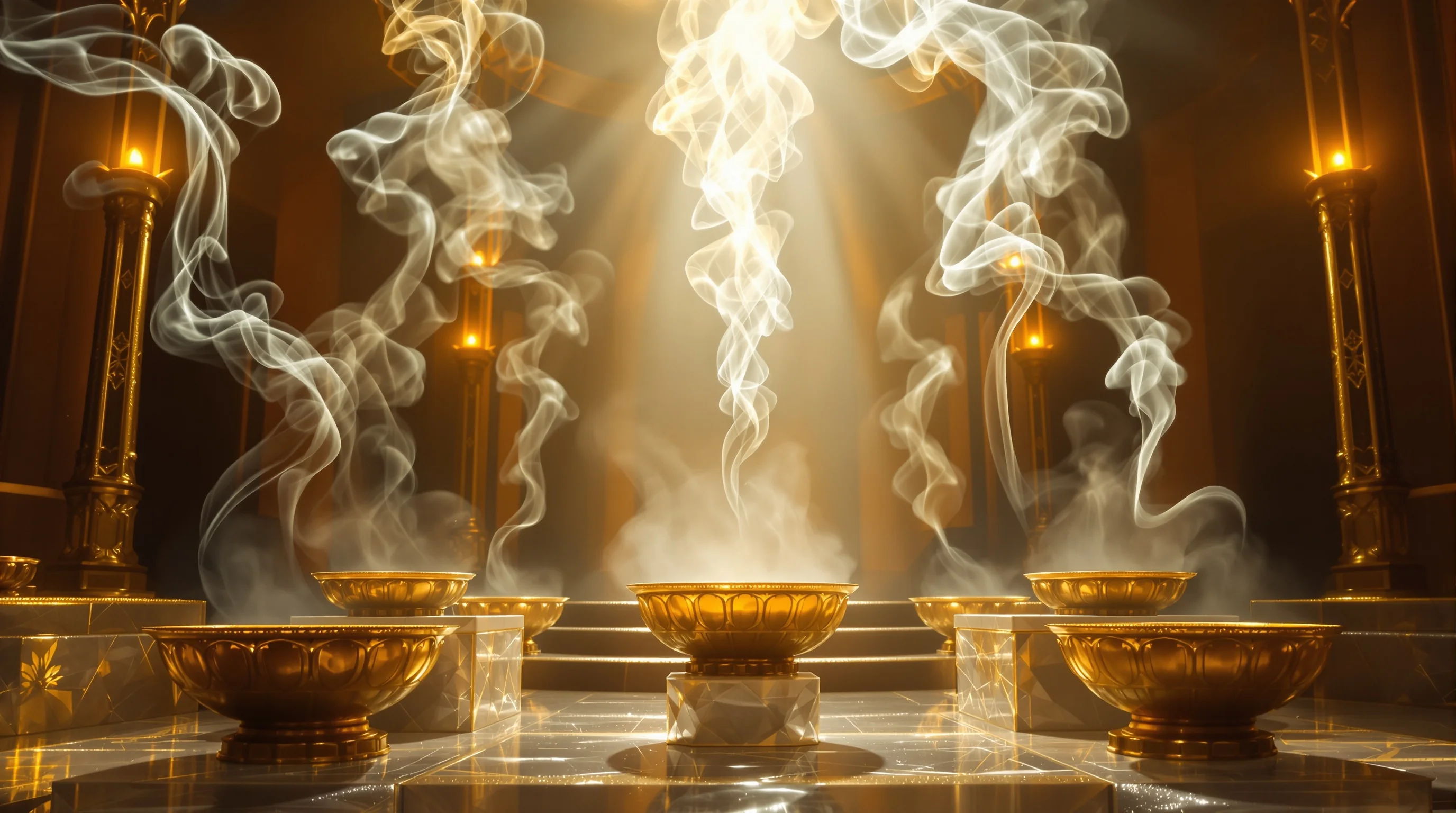
The prayers in Revelation aren't passive religious exercises—they're golden bowls of incense collected before God's throne, triggering divine judgments and connecting suffering believers on earth with heaven's sovereign purposes. Many readers skip over Revelation's prayers, missing their essential role as interpretive keys to the entire apocalypse. Maybe you've wondered whether these ancient prayers have anything practical to say about faith today, or perhaps you've felt overwhelmed by the vivid imagery surrounding them.
Prayers in Revelation aren't merely devotional moments but integral components of God's cosmic plan. They function as incense before God's throne, express legitimate cries for justice, and connect the suffering church with heaven's worship. Understanding these prayers verse by verse reveals how they model faithful Christian response to persecution and demonstrate prayer's instrumental power in God's redemptive purposes.
Quick Answer: Understanding prayers in Revelation verse by verse requires recognizing that prayers function as incense before God's throne (Revelation 5:8; 8:3-4), trigger divine judgments, express legitimate cries for justice (6:10), and connect the suffering church with heaven's worship.
Definition: The prayers in Revelation represent active participation in God's redemptive plan, functioning as both weapon and witness that connect earthly suffering with heavenly sovereignty.
Key Scripture: "And the smoke of the incense, with the prayers of the saints, ascended before God from the angel's hand" (NKJV Revelation 8:4)
Context: This verse reveals that prayer precedes divine judgment, showing believers' intercessions as instrumental in God's justice.
Revelation's vision of prayers is not merely symbolic comfort but practical theology. It comforts by demonstrating that God treasures the prayers of His people, collecting them like precious incense before His throne. Yet it challenges believers to see prayer not as passive resignation but as powerful engagement in the unfolding of God's kingdom. The sections that follow examine what these prayers represent, how first-century readers understood this imagery, and what it means for believers navigating persecution and injustice today.
Key Takeaways
Prayers as incense before God's throne show that intercessions are treasured and employed in His governance of history (Revelation 5:8; 8:3-4)
The martyrs' cry "How long, O Lord?" demonstrates that prayers for justice are biblically appropriate, echoing lament psalms rather than expressing vengefulness (Revelation 6:10)
Prayer triggers judgment—the trumpet and bowl sequences follow the offering of saints' prayers, revealing intercession's instrumental role (Revelation 8:3-5)
Worship and prayer form continuous cycles throughout Revelation, connecting earth's suffering with heaven's sovereignty and modeling faithful response to persecution
The Spirit and bride saying "Come!" encompasses both vertical longing for Christ's return and horizontal evangelistic invitation (Revelation 22:17)
What Does the Bible Say About Prayers in Revelation?
John establishes that prayers occupy a central place in Revelation's cosmic drama. When he writes, "Now when He had taken the scroll, the four living creatures and the twenty-four elders fell down before the Lamb, each having a harp, and golden bowls full of incense, which are the prayers of the saints" (NKJV Revelation 5:8), he reveals that believers' intercessions are directly connected to the Lamb's redemptive work and the unfolding of history recorded in the scroll.
The instrumental nature of prayers becomes even clearer in Revelation 8:3-4: "Then another angel, having a golden censer, came and stood at the altar. He was given much incense, that he should offer it with the prayers of all the saints upon the golden altar which was before the throne. And the smoke of the incense, with the prayers of the saints, ascended before God from the angel's hand" (NKJV). Scholars such as G.K. Beale note that "the prayers of the saints are not merely passive expressions of piety but active instruments through which God accomplishes His purposes in history."
These prayers are not generic requests but specific responses to persecution and injustice. The martyrs cry out, "How long, O Lord, holy and true, until You judge and avenge our blood on those who dwell on the earth?" (NKJV Revelation 6:10). Their prayer echoes the lament psalms, showing that longing for God's vindication represents faith in His moral governance rather than personal vengefulness. Grant Osborne observes that prayers in Revelation consistently portray the church as the community that knows the truth about history—that God, not Rome or any earthly power, is sovereign, making prayer the church's primary political act of resistance.
The Prayers That Trigger Judgment
The angel's offering of incense with prayers immediately precedes divine action throughout Revelation.

Divine response: Fire from the altar is thrown to earth, causing "noises, thunderings, lightnings, and an earthquake" (NKJV Revelation 8:5)
Sequential pattern: The trumpet judgments follow directly after the prayers ascend before God
Interpretive significance: Robert Mounce emphasizes that "the seven trumpets are not arbitrary divine wrath but answers to the prayers of suffering believers who have cried out for vindication"
Understanding the Context of Prayers in Revelation
John explicitly states he received this revelation "on the Lord's Day" (NKJV Revelation 1:10), immediately placing all the visions within a worship context. The prayers aren't isolated devotional moments but integral components of the book's theological architecture. This liturgical framework shapes our understanding of each prayer passage and reveals their function within the larger narrative.
The incense imagery deliberately echoes Old Testament tabernacle worship, where incense was offered on the golden altar (Exodus 30:1-10). David writes, "Let my prayer be set before You as incense, the lifting up of my hands as the evening sacrifice" (NKJV Psalm 141:2). The original audience, steeped in Jewish worship traditions, would immediately recognize this connection and understand that their prayers participated in true heavenly worship.
The martyrs' cry "How long, O Lord?" directly parallels lament psalms (Psalm 13:1; 94:3) and the prophet Habakkuk's question: "O LORD, how long shall I cry, and You will not hear?" (NKJV Habakkuk 1:2). This isn't impatience but covenant faithfulness appealing to God's own promises. According to Craig Keener, Christians in Asia Minor faced economic marginalization through trade guild requirements and emperor worship, making their prayers for justice address systemic evil rather than personal enemies.
With Jerusalem's temple destroyed in AD 70, Revelation answers where true worship occurs—at the heavenly throne where the Lamb serves as both sacrifice and priest. For former Jews and Gentile God-fearers, this would be both comforting and revolutionary. David Aune notes that the prayers of Revelation reveal what Rome considered worthless—the words of marginalized believers—heaven treasured as precious incense before the throne.
Why Prayers in Revelation Matter for Christians Today
The imagery of prayers collected in golden bowls before God's throne (Revelation 5:8; 8:3-4) reveals that God treasures our intercessions and employs them in His governance of history. This should motivate persistent prayer rather than prayerlessness. Our intercessions aren't futile exercises but participation in God's purposes. When believers face injustice, persecution, or suffering, we should follow the martyrs' example—bringing honest cries for vindication directly to God.
The Spirit and bride saying "Come!" (NKJV Revelation 22:17) models appropriate longing for Christ's return while maintaining faithful witness in the present. Contemporary Christianity sometimes loses this urgency, becoming overly comfortable with the present age. Revelation calls us to pray "Come, Lord Jesus" with genuine expectation, maintaining tension between faithful presence and eager anticipation of Christ's return.
When believers pray and worship, acknowledging God's sovereignty and Christ's lordship, we engage in spiritual-political resistance to all claims of ultimate authority by governments, economies, or ideologies. This doesn't mean withdrawing from society but maintaining clear theological priorities. The martyrs receive white robes and are told "to rest a little while longer" (NKJV Revelation 6:11), teaching that God's answers follow His timeline while we pray persistently for justice.
Prayer in Revelation isn't passive resignation to circumstances but powerful engagement in the unfolding of God's kingdom, connecting suffering on earth with sovereignty in heaven. Revelation Explained: Verse by Verse examines how this prayer theology develops throughout each chapter of the book.
Practical Prayer Principles from Revelation
These ancient prayers offer concrete guidance for contemporary believers facing trials.
Honest intercession: Bring genuine cries for vindication directly to God, following the martyrs' example of covenant appeal
Eschatological urgency: Pray "Come, Lord Jesus" with genuine expectation while remaining faithfully present in current circumstances
Corporate emphasis: Revelation consistently emphasizes collective prayer—"the prayers of all the saints" (NKJV Revelation 8:3)
Why This Vision Matters
Understanding prayers in Revelation transforms how we approach intercession—revealing that our prayers aren't futile exercises but participation in God's purposes. For believers facing injustice, persecution, or suffering, these passages affirm that heaven treasures what the world dismisses. Prayer becomes both weapon and witness, the means by which the church resists idolatrous powers while aligning earthly reality with heavenly truth. The connection between earthly prayers and heavenly action demonstrates God's commitment to involving His people in the cosmic drama of redemption.
Conclusion
The prayers in Revelation demonstrate that intercession is central to faithful Christian existence during the tension between Christ's first and second comings. From the incense-laden bowls before God's throne to the martyrs' cry for justice and the Spirit's invitation to "Come," these prayers model how you should respond to evil and suffering—not with despair or violence, but with persevering intercession that participates in God's redemptive plan. Your prayers matter more than you realize, connecting you to the cosmic drama of redemption unfolding throughout history. For a deeper verse-by-verse exploration of Revelation's prayers and their place in the book's overall message, see Revelation Explained: Verse by Verse by Richard French.
Sources
Revelation 5:8 (prayers as incense)
Revelation 6:10 (martyrs' cry)
Revelation 8:3-4 (angel offering incense with prayers)
Revelation 11:17-18 (elders' thanksgiving prayer)
Revelation 15:3-4 (Song of Moses and the Lamb)
Revelation 22:17 (Spirit and bride saying "Come")
Exodus 30:1-10 (incense altar background)
Psalm 141:2 (prayer as incense)
Habakkuk 1:2 ("How long?" tradition)
G.K. Beale, The Book of Revelation: A Commentary on the Greek Text (New International Greek Testament Commentary)
Grant R. Osborne, Revelation (Baker Exegetical Commentary on the New Testament)
Richard Bauckham, The Theology of the Book of Revelation (New Testament Theology)
Robert H. Mounce, The Book of Revelation (New International Commentary on the New Testament)
Craig S. Keener, Revelation (NIV Application Commentary)