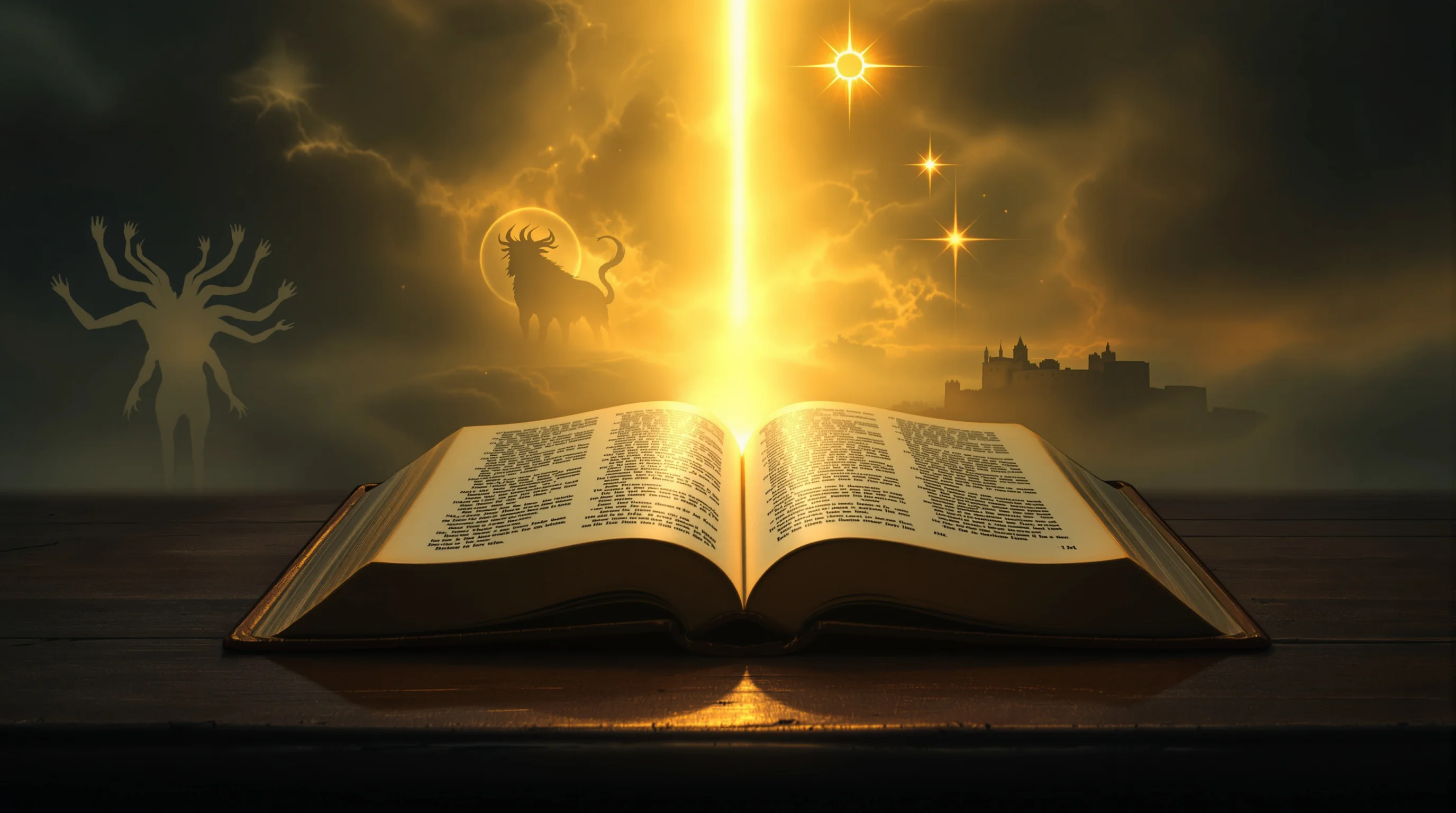
Revelation opens with a clue most readers skim past. Revelation 1:1 says God "signified" the message to John through His angel, using the Greek word semaino, meaning to communicate by signs. Scholar G.K. Beale (NIGTC) notes that this verb choice signals the entire book operates through symbolic communication from its first line onward. The book announces its own method before a single vision begins.
So is Revelation literal or symbolic? Most readers already sense the book mixes both, but the practical problem shows up verse by verse, as when a Bible study group debates whether the "thousand years" of Revelation 20 is a calendar span or a picture of complete triumph. That uncertainty is common, and it's okay to want a clearer way through it than guesswork.
Revelation cannot be labeled entirely literal or entirely symbolic. Craig Keener, writing on Revelation's background, argues the book specifically shifts between the two modes depending on textual signals the book itself provides. This article offers a four-signal test, runs it through three disputed passages, and shows where the test reaches its limit.
Quick Answer: Revelation is both literal and symbolic. The letters to seven real churches are literal address, while the visions from chapter 4 onward use symbolic imagery. A passage is symbolic when the book signals it, decodes it, echoes Old Testament prophecy, or uses pattern numbers.
Definition: Symbolic language in Revelation represents real historical and spiritual realities through sign-pictures rather than photographic description.
Key Scripture: "He sent and made known by his angel to his servant, John" (WEB Revelation 1:1).
Context: Symbols in Revelation point to genuine historical and future realities, so reading symbolically keeps the referent while dropping the wooden picture.
Key Evidence
- Revelation 1:1 uses the Greek verb semaino ("to signify by signs"), which Beale (NIGTC) identifies as a genre marker for the whole book.
- Revelation 1:20 explicitly decodes its own imagery: "The seven stars are the angels of the seven assemblies. The seven lamp stands are seven assemblies." (WEB Revelation 1:20).
- Revelation 17:9 identifies the seven heads as "seven mountains," widely understood by the original audience as Rome's seven hills.
- Craig Keener compares Revelation's imagery to ancient political cartoons, pictures the original audience recognized instantly without taking them as literal depictions.
- Robert Mounce treats the beast of Revelation 13 and 17 as representing imperial power broadly, not one isolated ruler.
This book works through layered communication rather than a single literary mode. The opening verse frames the entire text as sign-language, then chapters 2-3 shift into plain address to real congregations such as Ephesus, Smyrna, and Laodicea, before the symbolic visions resume in chapter 4. That sequencing teaches readers to expect both modes rather than force one onto the whole text. The sections below walk through four checkable signals, test them against three passages, and mark where honest readers still disagree.
Key Takeaways
- Genre signal: Revelation 1:1 labels the content as sign-communicated before a single vision begins.
- Self-decoding: The book often interprets its own images, as in Revelation 1:20 and 17:9.
- Old Testament echo: Imagery drawn from Daniel, Ezekiel, and Zechariah carries established prophetic meaning.
- Pattern numbers: Sevens, twelves, and 666 function as meaning, not measurement.
- Literal anchors: Real churches, real persecution, and Christ's return stand as plain statements.
Is Revelation Literal or Symbolic? Four Signals That Mark Symbolic Language
Asking whether Revelation is literal or symbolic works best as four checkable signals rather than a general instinct. Each signal gives readers something concrete to look for in the text itself, rather than relying on a feeling about how strange an image seems.
The first signal is genre marking. Revelation 1:1 uses semaino, "to indicate by signs," framing the visions as sign-language from the outset. The second signal is internal decoding. The text supplies its own key in places, which also teaches readers how nearby images work: "The seven stars are the angels of the seven assemblies. The seven lamp stands are seven assemblies." (WEB Revelation 1:20). The third signal is Old Testament echo. Lampstands, throne fire, and beasts come from Zechariah 4, Ezekiel 1, and Daniel 7, where they already carried symbolic weight. The fourth signal is an impossible or patterned picture, such as a Lamb with seven horns and seven eyes, or a number demanding calculation rather than a straightforward count.
A passage in Revelation reads as symbolic when it is signified, self-decoded, echoed from Old Testament prophecy, or built on pattern numbers. Craig Keener compares these images to political cartoons of the ancient world, pictures readers recognized instantly even though the pictures themselves were not literal. As a rough scoring guide, two or more signals present indicates symbolic language with confidence, while zero signals favors a plain reading. For a closer look at how the original audience decoded these images, see how to decode Revelation's symbolism verse by verse.

Running the Test Through Three Passages
Applying the same four signals to disputed passages lets the results separate cleanly rather than depending on which commentator sounds most convincing. Revelation 17:9 states, "The seven heads are seven mountains on which the woman sits" (WEB Revelation 17:9). Two signals appear here: internal decoding and an explicit call for wisdom. The result is a symbolic image fastened to a recognizable civic reality, widely understood by the original audience as Rome's seven hills.
Revelation 17:9 shows the pattern of the whole book, a symbolic picture fastened to a real political power. Robert Mounce treats this beast imagery as representing imperial power broadly rather than pointing to one isolated figure. Readers wrestling with why Revelation leans on this kind of coded speech instead of plain accusation may find it helpful to explore why Revelation's symbolism confuses so many readers. There's no shame in finding this kind of layered imagery disorienting; faithful readers have debated these details for centuries.
The Seven Lampstands, Revelation 1:20
This is the clearest case in the book because John hands over the key himself.
- Signals present: self-decoding, Old Testament echo from Zechariah 4
- Reading: lampstands represent the seven congregations in Asia
- Takeaway: a decoded symbol sets the expectation for undecoded ones nearby
The Number 666, Revelation 13:18
The verse asks readers to work out with understanding, language that rules out a plain digit search.
- Signals present: pattern number, explicit call for wisdom
- Reading: a numerical code the first audience could work out, pointing to a human imperial figure
- Takeaway: symbolic numbers carry meaning rather than measurement
Where the Test Runs Out and What Revelation States Literally
Asking whether Revelation is literal or symbolic sorts most verses, but some passages remain genuinely contested even among careful readers. Maybe you've wondered whether the thousand years in Revelation 20 means an exact span or a picture of complete triumph; even seasoned scholars land in different places here. The seven congregations named in Revelation 1:4 were literal, identifiable churches in the Roman province of Asia, facing real economic exclusion and pressure to worship the emperor. Christ's bodily return and the new creation are presented the same way, as real outcomes, but vivid the surrounding imagery (Revelation 19:11-16; 21:1-4).
Some details draw only one or two weak signals, and honest readers land differently on them: the length of the thousand years, the measuring of the temple, and the scale of the plagues. Four interpretive traditions address these timing questions. Preterists see fulfillment in first-century events. Historicists trace the symbols unfolding through church history. Futurists expect end-time fulfillment. Idealists read the conflict as timeless rather than tied to one era. Grant Osborne notes that these schools largely agree symbolic language is present; they differ on when it lands.
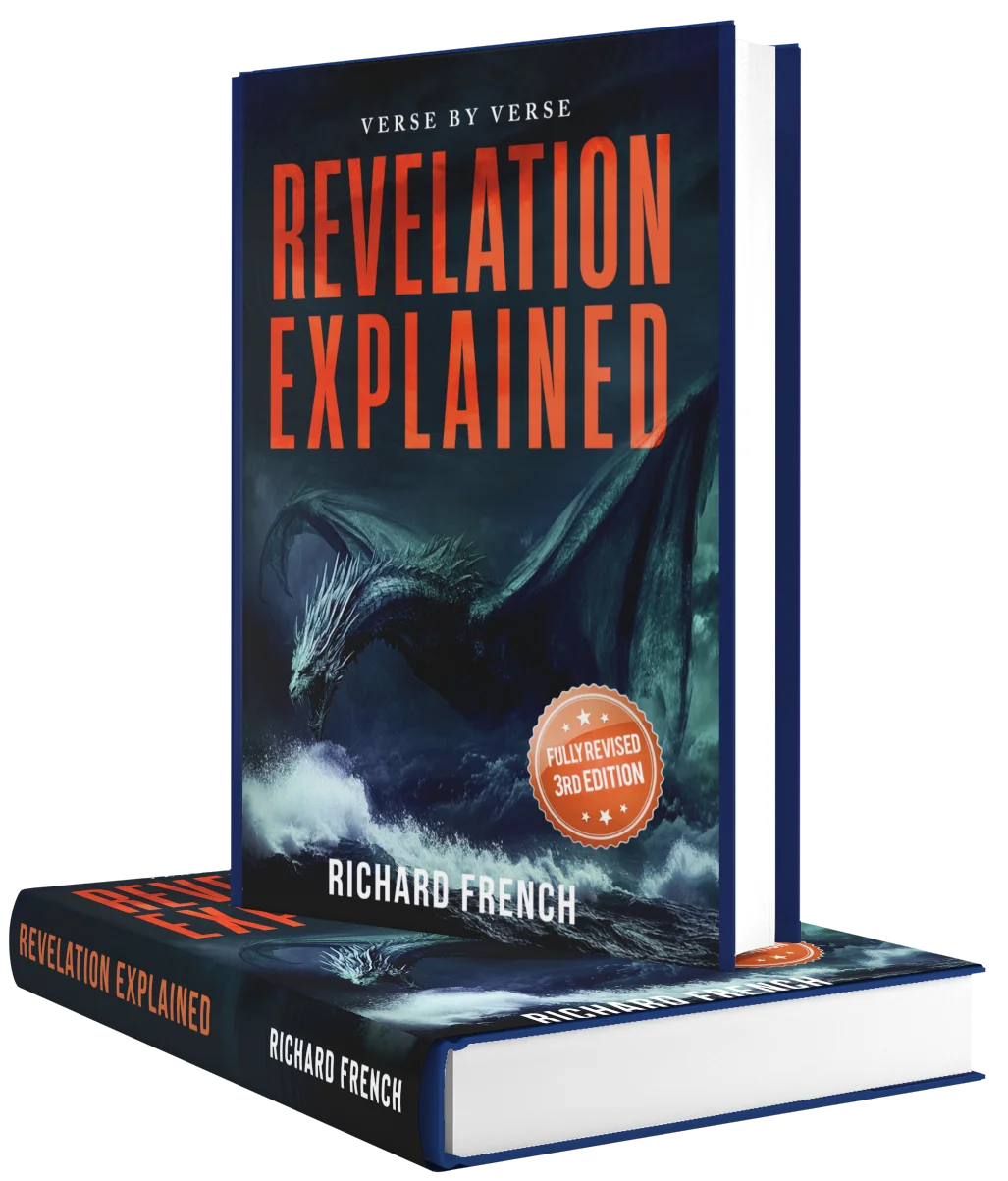
Worth naming clearly: avoid mapping symbols onto current headlines, avoid treating every number as arithmetic, and avoid emptying the book of its real historical referents. For a fuller catalog of Revelation's recurring images and what they most likely point to, this guide to Revelation's symbols and meanings walks through them individually. Revelation Explained: Verse by Verse by Richard French works through these contested passages chapter by chapter, weighing the signals against each view.
The four signals tell you whether a passage is a picture. They do not tell you when the picture is fulfilled. Hold firm conclusions where the signals are strong, and hold loose conclusions where they are thin. Uncertainty on timing is not a failure of faith; it's simply honest reading.
Why This Vision Matters
A workable test replaces anxiety with discernment, exactly what Revelation 13:18 asks of its readers. Christians today can read the visions without chasing headlines or dismissing the book as unreadable. Every symbol in Revelation, taken together, drives toward one plain promise: Christ reigns, and His victory holds for every pressured believer.
Conclusion
Whether Revelation is literal or symbolic gets settled passage by passage, not by a single rule for the whole book. Look for signified genre, internal decoding, Old Testament echo, and pattern numbers, and most verses will sort themselves out. Where timing stays uncertain, you lose nothing essential. The throne stands, the Lamb has conquered, and you're called to overcome in ordinary daily obedience. Take that confidence with you the next time a strange image in Revelation makes you pause; you don't need every detail solved to trust the One who sits on the throne. For a deeper verse-by-verse exploration of Revelation's symbols and structure, see Revelation Explained: Verse by Verse by Richard French.
Sources
- Primary Scripture Passages:* Revelation 1:1-4, 20; 4:5; 13:16-18; 17:9; Daniel 7-12; Ezekiel 1; Zechariah 1, 4
- G.K. Beale, The Book of Revelation: A Commentary on the Greek Text (NIGTC)
- Grant Osborne, Revelation (Baker Exegetical Commentary on the New Testament)
- Craig Keener, Revelation (NIV Application Commentary)
- Robert Mounce, The Book of Revelation (New International Commentary on the New Testament)
- David Aune, Revelation (Word Biblical Commentary, 3 vols.)