In Revelation 2-3, the risen Christ delivers seven prophetic messages to real churches in Asia Minor. He reveals His intimate knowledge of every congregation’s spiritual condition: their faithfulness and failures, their struggles and compromises. These letters to Ephesus, Smyrna, Pergamos, Thyatira, Sardis, Philadelphia, and Laodicea go beyond their first-century setting to address recurring spiritual conditions throughout church history. This guide examines each church’s unique strengths and weaknesses, the historical context shaping their challenges, and the timeless lessons they offer believers today.
Quick Answer: The seven churches in Revelation are actual first-century congregations in Asia Minor: Ephesus, Smyrna, Pergamos, Thyatira, Sardis, Philadelphia, and Laodicea. Christ delivered prophetic messages to them combining commendation, rebuke, and promises to overcomers. They represent universal spiritual conditions across all church history.
Key Scripture: “He who has an ear, let him hear what the Spirit says to the churches. To him who overcomes I will give to eat from the tree of life, which is in the midst of the Paradise of God” (NKJV Revelation 2:7)
Context: Each letter follows a consistent pattern establishing Christ’s authority and knowledge while addressing specific local challenges that reflect timeless spiritual realities.
- Christ's perfect knowledge: Jesus declares "I know your works" to each church, showing His complete understanding of every congregation's spiritual condition
- Historical reality: These were actual churches facing persecution, false teaching, and cultural compromise in Roman Asia Minor
- Recurring patterns: Each church's struggles represent spiritual conditions that appear throughout church history
- Call to overcome: Every letter promises eternal rewards to those who remain faithful despite opposition
- Universal application: While addressing specific congregations, these messages speak to all churches across all ages
The Seven Churches in Revelation: An Overview
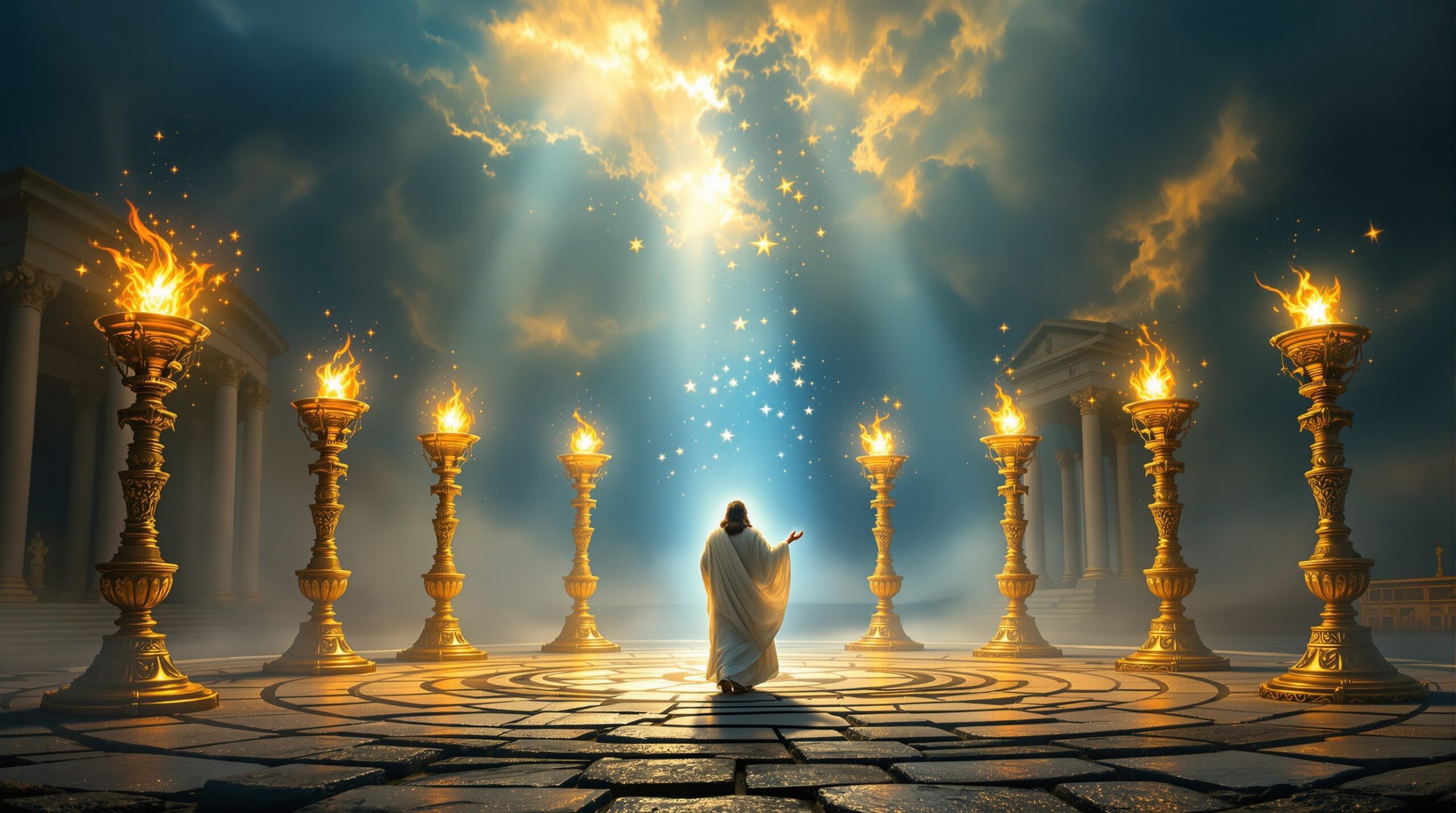
The seven churches in Revelation form a geographical circuit from Ephesus through Laodicea, following a route a messenger would travel through Asia Minor. Each letter follows a consistent seven-fold pattern: address to the angel of the church, Christ's self-identification from His throne room vision, an "I know" statement showing His complete awareness, commendation or condemnation, exhortation, a call to hear what the Spirit says, and promises to overcomers. This structured approach emphasizes both Christ's sovereign authority over all churches and the universal applicability of each message.The number seven signifies completeness in biblical literature. This suggests these churches represent the universal church rather than random selections. “To the angel of the church of Ephesus write, ‘These things says He who holds the seven stars in His right hand, who walks in the midst of the seven golden lampstands’” (NKJV Revelation 2:1). The imagery of Christ walking among the lampstands reveals His active presence and intimate involvement with every congregation. He assesses their spiritual vitality with perfect understanding.
The seven churches in Revelation represent both actual first-century congregations and complete categories of spiritual conditions that recur in churches throughout history. Christ walks among the lampstands, assessing each community’s faithfulness. The promises to overcomers build from eating from the tree of life to sitting with Christ on His throne. This creates a rising wave of hope that reaches its peak in the New Jerusalem vision.
Why These Specific Churches?
More than seven churches existed in Asia Minor during this period, including congregations at Colossae, Troas, and Hierapolis. The selection of these particular seven churches was based on their geographical circuit along major Roman roads and their symbolic completeness. Each church showed distinct spiritual conditions Christ wanted to address prophetically. Their strategic locations allowed the letter to circulate efficiently among all the churches. Each congregation would hear not only their own assessment but also the conditions and promises given to others. This created corporate accountability across the region.Examining Each Church's Strengths and Weaknesses
Ephesus demonstrated doctrinal discernment and tireless labor, testing false apostles and rejecting evil. Yet Christ declared, "Nevertheless I have this against you, that you have left your first love" (NKJV Revelation 2:4). Orthodoxy without devotion creates spiritual coldness. The church maintained correct theology while losing passionate love for Christ. This shows that hard work and doctrinal vigilance cannot substitute for fervent devotion.Smyrna received only encouragement, no rebuke. This suffering church faced poverty and persecution, with imprisonment and martyrdom threatening believers. Christ promised, “Be faithful until death, and I will give you the crown of life” (NKJV Revelation 2:10). The contrast between Smyrna’s material poverty and spiritual wealth showed that physical circumstances reveal nothing about true spiritual condition.
Pergamos held fast to Christ’s name where “Satan’s throne is.” This likely referred to the massive altar to Zeus and the first imperial cult temple in the province. Despite faithfulness under persecution that cost Antipas his life, the church tolerated false teaching promoting compromise with pagan practices. Philadelphia maintained faithful witness despite limited strength, receiving an open door for ministry that no one could shut.
Thyatira showed growing love and service, yet allowed a self-proclaimed prophetess nicknamed “Jezebel” to teach accommodation with pagan guild practices. Sardis possessed a reputation for life while spiritually dead, with incomplete works before God despite external religious activity. Laodicea’s material wealth bred spiritual lukewarmness and self-sufficient complacency, provoking Christ’s strongest language: “I will vomit you out of My mouth” (NKJV Revelation 3:16).
Each church in Revelation reveals that external circumstances (whether persecution, prosperity, or cultural pressure) expose underlying spiritual realities. These determine whether congregations maintain faithful witness or drift into compromise. For readers wanting to trace how these challenges develop in Revelation’s narrative, Revelation Explained: Verse by Verse examines each church’s condition in its immediate context.
Historical Context and Prophetic Significance
The seven churches in Revelation existed within complex religious, political, and economic pressures under Roman rule. The imperial cult demanded emperor worship as a civic duty. Refusal brought economic exclusion and legal vulnerability. Trade guilds required participation in pagan feasts and temple ceremonies, creating survival pressure to accommodate. Jewish synagogues opposed Christian claims about the Messiah, sometimes informing Roman authorities about believers refusing emperor worship.Ephesus housed the magnificent temple of Artemis and served as the center of the imperial cult. Smyrna’s crown-shaped acropolis contrasted ironically with the crown of life promised to martyrs. Pergamos held the first imperial cult temple in Asia Minor, with its massive throne-like altar to Zeus dominating the skyline. Thyatira’s powerful trade guilds made economic survival dependent on pagan participation. Sardis lived on past glories while declining into complacency. Philadelphia faced frequent earthquakes that threatened physical stability. Laodicea’s lukewarm aqueduct water from distant sources provided the perfect metaphor for spiritual mediocrity in this wealthy banking center.
Old Testament imagery fills these letters. The lampstand recalls the menorah in the tabernacle, now representing churches as light-bearers. Hidden manna echoes wilderness provision. The tree of life returns believers to Eden and forward to the New Jerusalem. Jezebel deliberately recalls Israel’s apostasy under Ahab’s notorious queen. Temple pillar imagery connects to God’s promise to establish David’s house forever. These references position the churches within salvation history’s grand narrative, calling them to fulfill Israel’s purpose as God’s witnessing people.
Understanding the historical pressures these churches faced (emperor worship, economic persecution, and cultural accommodation) reveals how Christ’s messages address recurring challenges believers encounter across cultures and centuries. Scholars recognize four interpretive approaches: preterist (historical fulfillment), historicist (church age periods), futurist (end-times conditions), and idealist (timeless principles). Most recognize layered meanings beginning with historical context, as each approach offers valid insights into how these messages apply beyond their immediate first-century setting.
Lessons for Today's Church
The seven churches in Revelation provide a divinely inspired diagnostic tool for assessing spiritual health. They call both congregations and individual believers to examine whether they maintain fervent devotion, doctrinal purity, and faithful witness despite cultural pressure. Christ's penetrating questions expose conditions we might miss: Have we abandoned first love despite maintaining religious activity? Do we tolerate false teaching for unity's sake? Have we confused reputation with reality? Does material prosperity breed spiritual complacency?Corporate accountability matters because Christ evaluates churches collectively, not just individuals. Congregations possess corporate spiritual conditions requiring communal repentance when needed. The letters show that external pressures (whether violent persecution or subtle cultural accommodation) reveal whether churches maintain faithful witness or drift into compromise. Modern believers face parallel challenges: moral flexibility for cultural acceptance, economic advantage through ethical compromise, and mixing Christianity with incompatible worldviews.
Suffering believers find comfort in Christ’s knowledge and promise that physical death cannot separate overcomers from eternal reward. The rising promises to overcomers (tree of life, hidden manna, white stone, authority over nations, white garments, temple pillar, Christ’s throne) reach their peak in New Jerusalem’s glory. These rewards assure believers that present struggles lead to eternal inheritance. The risen Christ walks among lampstands, sustaining His church despite failures and opposition. This shows that no congregation stands alone in its spiritual battle.
Warning against compromise remains urgent. The letters teach that tolerance of doctrinal error differs fundamentally from patience with struggling believers. Churches must maintain boundaries while showing compassion. Yet these messages should not fuel harsh judgmentalism. Christ alone possesses perfect knowledge to assess churches. They call for self-examination and corporate humility, not ammunition for attacking others. No denomination can claim to be exclusively a “Philadelphia church,” as every tradition shows various conditions described in these letters.
Conclusion
The seven churches in Revelation (Ephesus through Laodicea) received prophetic messages revealing Christ's perfect knowledge of their spiritual conditions, combining historical specificity with timeless application. Each congregation faced unique challenges reflecting universal patterns: persecution requiring faithfulness, prosperity breeding complacency, cultural pressure toward compromise, and the constant danger of losing first love. Christ's promises to overcomers assure believers that present struggles lead to eternal glory in the New Jerusalem.Like these first-century churches, modern congregations must hear what the Spirit says, examining their spiritual condition with honesty and responding with repentance or perseverance. The risen Christ continues walking among the lampstands, intimately knowing and actively sustaining His church across all generations. For a deeper verse-by-verse exploration of these prophetic messages and their place in Revelation’s structure, see Revelation Explained: Verse by Verse by Richard French.