Four times John writes of "the seven Spirits of God" (Revelation 1:4; 3:1; 4:5; 5:6), and the phrase lands in a greeting that otherwise names only the Father and the Son. Readers who confess one Holy Spirit understandably pause here. You might find yourself wondering whether John means seven separate spirit-beings, or something else entirely. It's a fair question, and one worth sitting with rather than rushing past.
The seven spirits of God sits inside some of Revelation's most theologically weighted passages, including the throne room vision of chapters 4 and 5. Getting this phrase wrong distorts how you read the rest of the book. The seven spirits of God is not a hint at multiple divine beings. It specifically points to the Holy Spirit described in the fullness of His work, using a number that ancient readers recognized as shorthand for completeness.
We'll look at all four occurrences, trace the Old Testament background behind the image, and see what this phrase does and doesn't tell us about the Spirit's presence among God's people. Revelation's imagery is unfamiliar to most readers at first encounter, and that's simply part of learning to read this book well.
Quick Answer: The seven spirits of God in Revelation is a symbolic title for the one Holy Spirit in the fullness and perfection of His work. Seven signals completeness in biblical numerology, and the image draws on Isaiah 11:2 and Zechariah 4, where the Spirit rests on the Messiah and burns as seven lamps before God.
Definition: The seven Spirits of God in Revelation represents the Holy Spirit portrayed in complete, perfect activity rather than seven separate spiritual beings.
Key Scripture: "Grace to you and peace from Him who is and who was and who is to come, and from the seven Spirits who are before His throne" (NKJV Revelation 1:4).
Context: Placed between the Father and the Son in John's greeting, the seven Spirits carry divine status rather than describing created beings.
This vision assures John's readers that the Spirit's power is never diminished, no matter how weak or pressured a church might feel. It functions as a bridge between the Old Testament's messianic promises and the Lamb's ongoing mission through the church. Understanding this phrase correctly protects you from two errors: treating the Spirit as fragmented, or missing the Old Testament imagery John is weaving together. The sections below walk through each of the four occurrences, the Isaiah and Zechariah background behind them, and what this phrase means for readers today.
Key Takeaways
- Four occurrences: The phrase appears in Revelation 1:4, 3:1, 4:5, and 5:6, all tied to the throne or to Christ's authority.
- Seven means completeness: The number functions as apocalyptic symbolism for perfection, rooted in the creation week.
- Isaiah 11:2 background: Isaiah describes the Spirit resting on the Messiah in a sevenfold formula.
- Trinitarian placement: John positions the Spirit between Father and Son in his greeting.
- One Spirit, not seven: Revelation elsewhere maintains a monotheistic framework.
Key Evidence
- Revelation 1:4-5: The seven Spirits are named "before His throne," positioned between the eternal Father and Jesus Christ in John's opening greeting.
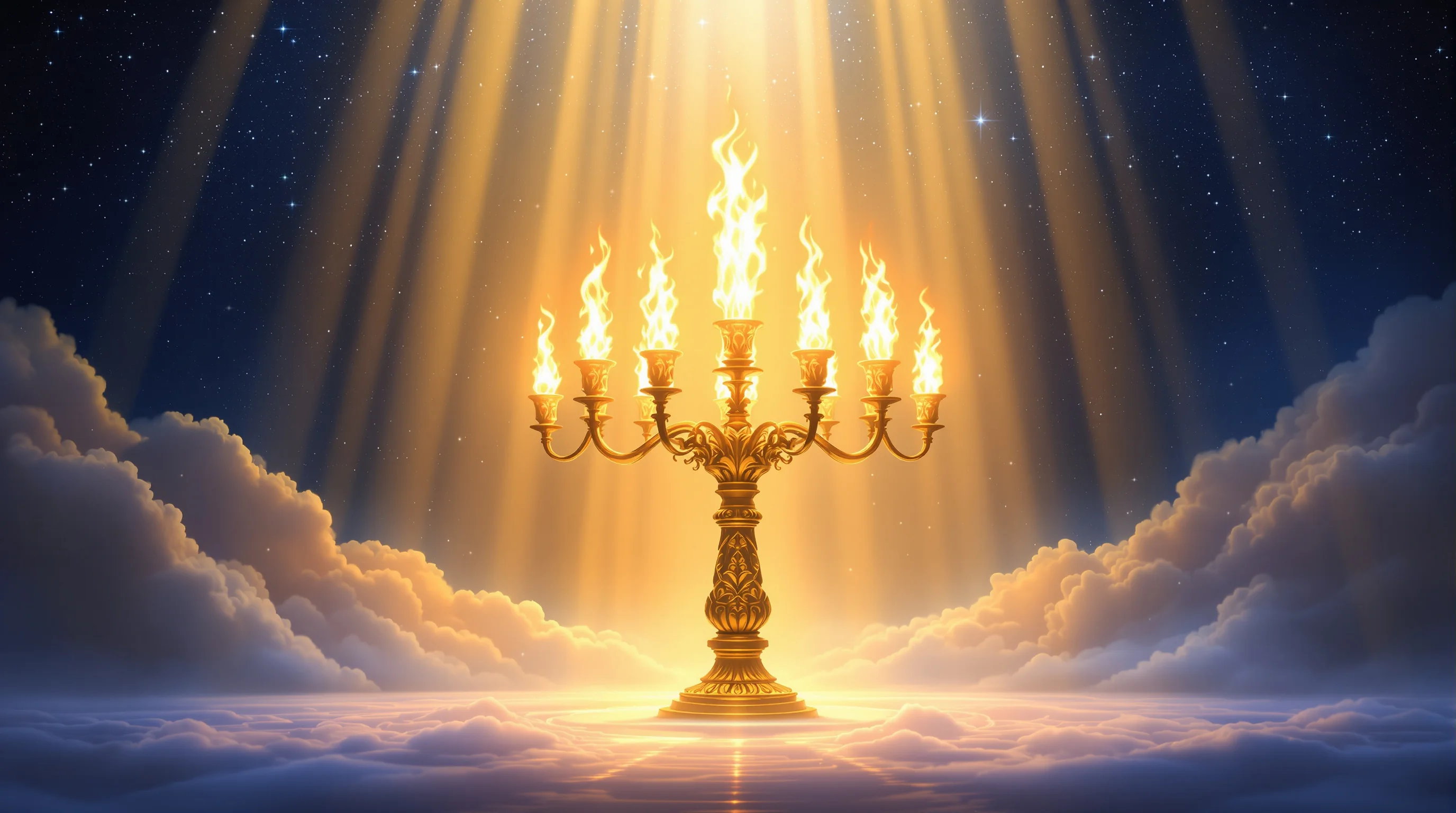
- Revelation 4:5: "Seven lamps of fire were burning before the throne, which are the seven Spirits of God," directly echoing Zechariah's golden lampstand.
- Revelation 5:6: The Lamb's seven eyes "are the seven Spirits of God sent out into all the earth," identifying the Spirit as the active agent of Christ's global mission.
- Isaiah 11:2: One Spirit is described in a sevenfold formula resting on the Messianic King, supplying the conceptual root for John's phrase.
- Zechariah 4:6, 10: The lampstand's seven lamps are called "the eyes of the LORD," and the passage's promise, "Not by might nor by power, but by My Spirit," frames the Spirit's sufficiency for a struggling remnant.
- Commentary support: Grant Osborne (BECNT), G.K. Beale (NIGTC), Robert Mounce (NICNT), and David Aune (WBC) all identify the seven Spirits as the Holy Spirit in fullness rather than as created beings.
The Four Places Revelation Names the Seven Spirits of God
The seven spirits of God appear exactly four times in Revelation, and each occurrence adds a layer to the picture. Taken together, they build a consistent profile of divine presence rather than a collection of separate ideas.
In Revelation 1:4, the greeting formula places the seven Spirits "before His throne" between the eternal Father and Jesus Christ, who is described in verse 5 as "the faithful witness, the firstborn from the dead" (NKJV Revelation 1:5). This position alone gives the phrase divine standing rather than the standing of a created intermediary.
By Revelation 3:1, Christ is "He who has the seven Spirits of God and the seven stars," addressing a church with a reputation for life yet spiritually dead. Christ holds the very vitality that Sardis lacks. For more on the imagery of the stars in that same verse, see this article on what the seven stars in Revelation represent.
Revelation 4:5 tells us "seven lamps of fire were burning before the throne, which are the seven Spirits of God," a direct echo of Zechariah's golden lampstand. Then in Revelation 5:6, the Lamb has seven eyes, "which are the seven Spirits of God sent out into all the earth," making the Spirit the active agent of the Lamb's global mission.
Across all four occurrences, the seven Spirits stand before God's throne, belong to Christ, and go out into all the earth, which is the profile of the Holy Spirit rather than of angels. Grant Osborne notes that the placement in the 1:4-5 greeting formula makes a strong case for full deity alongside Father and Son (Osborne, BECNT). If you want more background on how John frames his opening vision, this piece on what the Revelation of Jesus Christ means is worth a look.
Why the Number Seven Carries Weight
John's readers read numbers symbolically as a matter of course, so seven was never a puzzle to solve.
- Creation pattern: Seven signals completeness from Genesis 2:2-3 forward.
- Structural use: Revelation has seven churches, seals, trumpets, and bowls.
- Application here: Seven describes the Spirit's total and perfect activity, a point G.K. Beale develops in his commentary on the sevenfold pattern (Beale, NIGTC).
The Isaiah 11 and Zechariah 4 Background
The sevenfold language John uses comes from two Old Testament passages his original audience knew well. Neither passage is obscure. Both would have come to mind immediately for readers steeped in the Septuagint and Jewish apocalyptic literature.
Isaiah 11:2 reads, "The Spirit of the LORD shall rest upon Him, the Spirit of wisdom and understanding, the Spirit of counsel and might, the Spirit of knowledge and of the fear of the LORD" (NKJV Isaiah 11:2). One Spirit is described in a sevenfold formula resting on the coming Messianic King. That image supplies the conceptual root for John's phrase.
Zechariah 4:2 describes a solid gold lampstand with seven lamps, later identified in verse 10 as "the eyes of the LORD, which scan to and fro throughout the whole earth" (NKJV Zechariah 4:10). Revelation 4:5 and 5:6 reproduce both halves of that image: the seven lamps become the seven Spirits, and the roving eyes become the Lamb's seven eyes sent into all the earth.
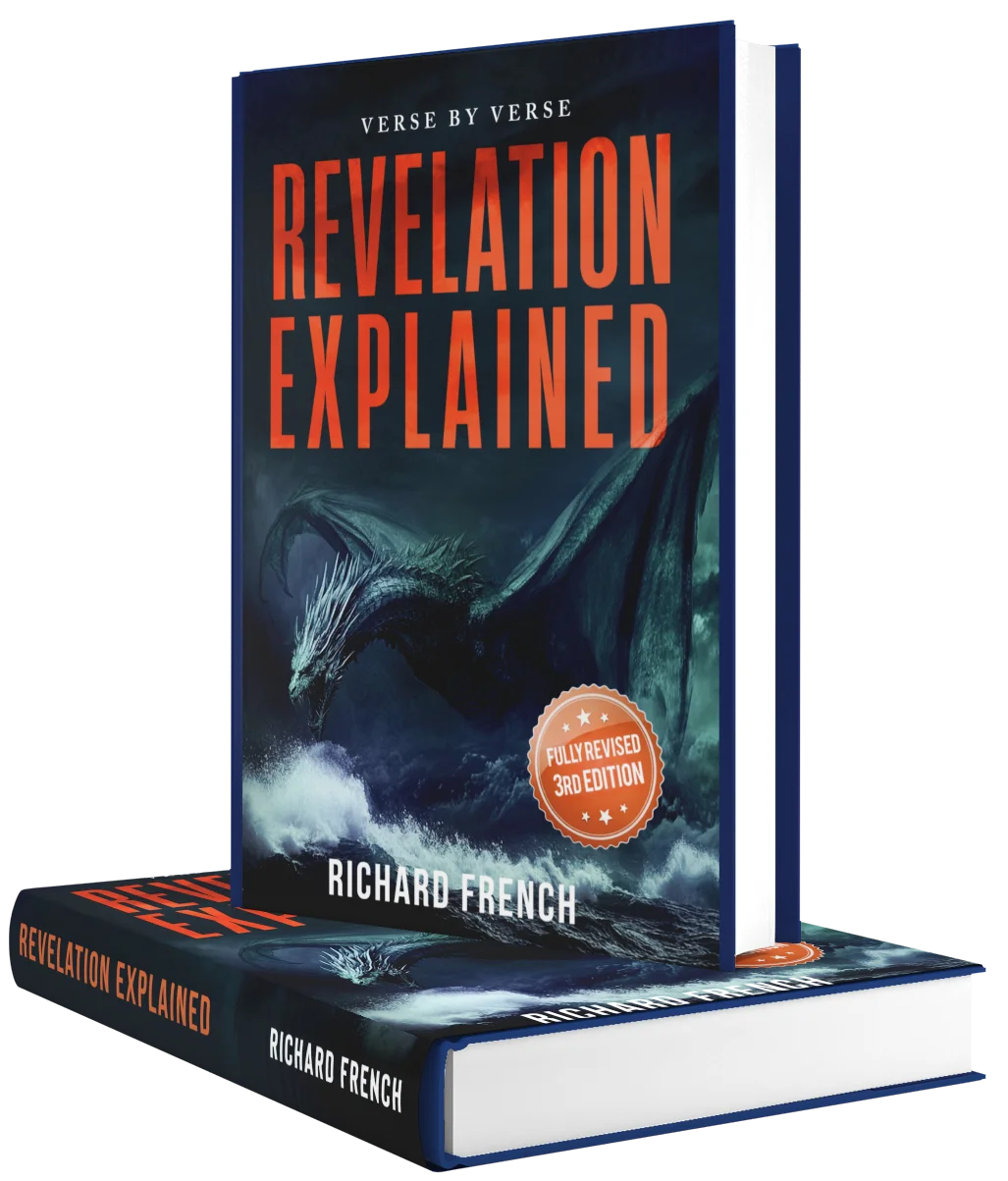
Zechariah's setting supplies the pastoral point behind the image: "Not by might nor by power, but by My Spirit, says the LORD of hosts" (NKJV Zechariah 4:6). That word encouraged a discouraged remnant rebuilding the temple after exile. John's original audience, seven congregations in Asia Minor facing imperial cult pressure and trade guild penalties, would have heard the same encouragement. Beale traces this pattern in detail, and David Aune's commentary situates the throne room within broader apocalyptic convention (Aune, WBC). For readers wanting to trace how this imagery develops across Revelation's narrative, Revelation Explained: Verse by Verse examines each occurrence in its immediate context.
What the Seven Spirits of God Are Not
Three readings run past what the text actually supports, and it helps to name them plainly.
- Not seven angels: The phrase sits inside a divine greeting formula, not among created servants.
- Not a divided Spirit: Seven describes fullness rather than partition, as Robert Mounce points out in his commentary (Mounce, NICNT).
- Not a Trinity problem: John names Father, Spirit, and Son in order, a structure that supports rather than undermines Trinitarian thought.
Why the Seven Spirits of God Matter for Christians Today
The seven spirits of God assure believers that the Spirit is present in fullness, not in reduced measure, whatever circumstances suggest. That assurance carries weight for anyone who has wondered whether God feels distant during hard seasons. Maybe you've felt that way yourself, praying into what seems like silence and wondering if the Spirit's power still reaches your situation.
The Spirit who rested on the Messiah in Isaiah 11:2 is the same Spirit sent out into all the earth by the slain and standing Lamb (NKJV Revelation 5:6). The Spirit's mission flows directly from the cross and the throne. Zechariah 4:6 remains the operating principle for churches that feel small, pressured, or overlooked, a reminder that God's work never depends on human strength.
That comfort comes with a warning attached. Sardis held a reputation for life while lacking it (NKJV Revelation 3:1). Christ possesses the Spirit fully, and congregations are called to stay responsive rather than presume upon that presence. It's okay to sit with that tension; faithful churches have wrestled with the gap between reputation and reality since the first century.
Preterist, historicist, futurist, and idealist readings all identify the seven Spirits as the Holy Spirit in fullness. They differ mainly on the timing and scope of the Spirit's "sending out" in 5:6, not on the Spirit's identity. One misapplication worth avoiding: forcing later systematic categories onto ancient apocalyptic imagery that was never meant to answer those questions directly. The seven spirits of God tell persecuted believers that God's Spirit is fully present and fully active, whatever the outward evidence suggests.
Why This Vision Matters
The throne room shows God's Spirit burning as lamps before the throne, complete and unquenched. Believers under pressure receive assurance that divine power operates independently of human circumstance. The Lamb reigns, and His Spirit is already sent out into all the earth, carrying that reign forward through ordinary, often struggling churches.
Conclusion
You don't need to resolve every question about apocalyptic numbers to trust what this vision offers. The seven spirits of God is Revelation's symbolic way of naming the one Holy Spirit in perfect fullness, drawn from Isaiah 11:2 and Zechariah 4 and placed deliberately between Father and Son. The same Spirit who anointed the Messiah stands before the throne today and goes out into all the earth on the Lamb's behalf, including into whatever circumstance you're facing right now. Whatever season you're in, that presence hasn't diminished. For a deeper verse-by-verse exploration of Revelation's symbols and structure, see Revelation Explained: Verse by Verse by Richard French.
Sources
- Revelation 1:4-5; 3:1; 4:5; 5:6 (NKJV)
- Isaiah 11:1-2 (NKJV)
- Zechariah 4:1-10 (NKJV)
- Ezekiel 1:4-28; Daniel 7:9-10 (NKJV, contextual background)
- G.K. Beale, The Book of Revelation (New International Greek Testament Commentary)
- Robert H. Mounce, The Book of Revelation (New International Commentary on the New Testament)
- Grant R. Osborne, Revelation (Baker Exegetical Commentary on the New Testament)
- David E. Aune, Revelation 1-5 (Word Biblical Commentary)
- Craig Koester, Revelation (Anchor Yale Bible Commentary)