Readers who open Revelation expecting the gentle Jesus of the Gospels meet instead a figure with blazing eyes, a sword coming from His mouth, and a face like the sun at full strength. John, the disciple who once leaned on His chest at the Last Supper, now collapses at His feet like a dead man. The vision of the Son of Man in Revelation 1 can feel strange on first read, but every detail traces back to Scripture John's audience already knew.
Most readers skip past this scene or treat it as odd symbolism without a key. The vision is not a loose collection of frightening images. It specifically draws on Daniel's throne-room visions to declare something precise about who Jesus is and what He now holds authority over.
This article walks through the vision of the Son of Man in Revelation 1 piece by piece, traces its roots in Daniel 7 and Daniel 10, explains why John fell down, and unpacks what the keys of Hades and Death mean for readers today.
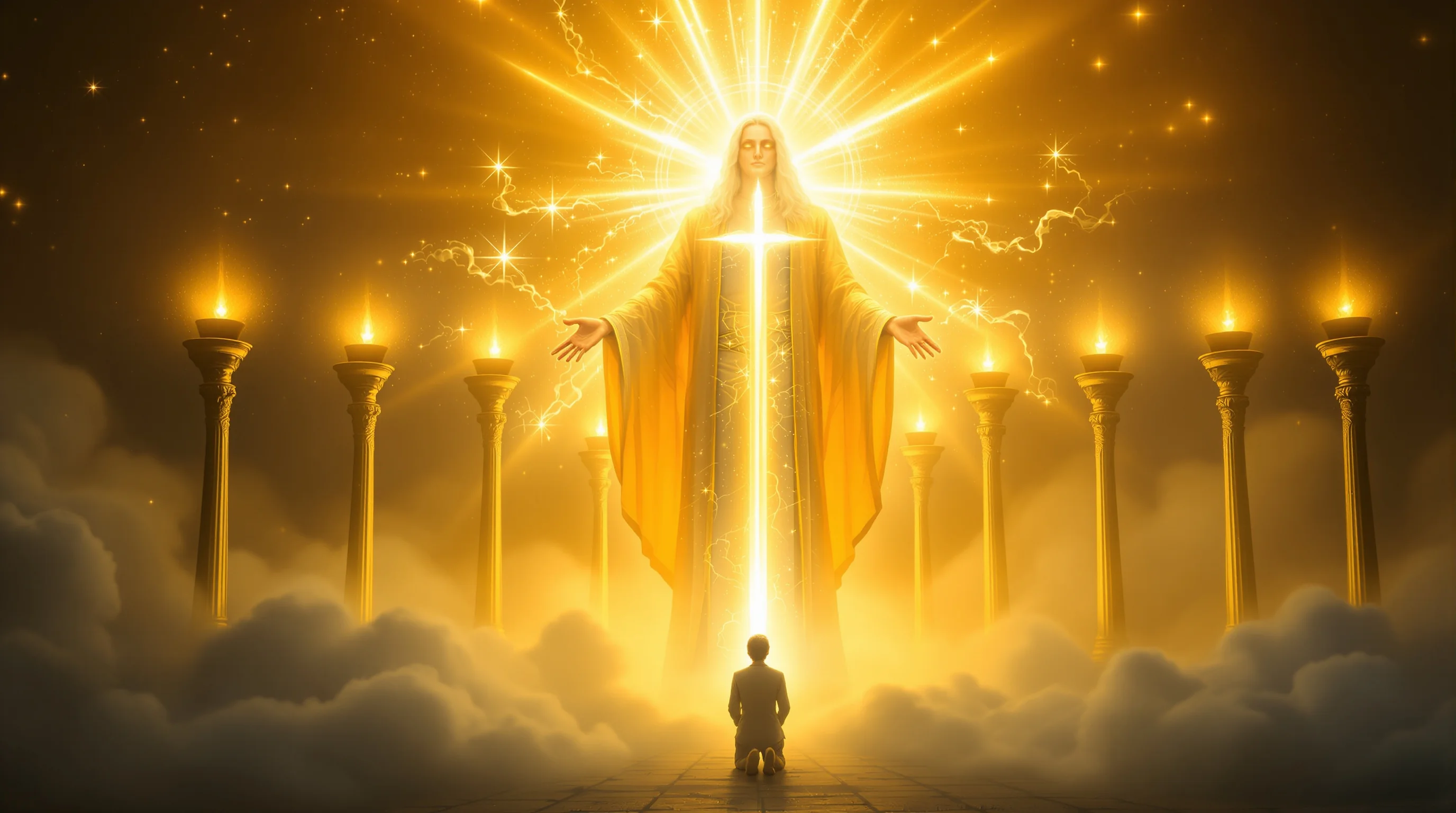
Quick Answer: The vision of the Son of Man in Revelation 1 is John's encounter with the glorified Jesus Christ among seven golden lampstands, described in imagery drawn from Daniel 7 and 10. Each feature, white hair, flaming eyes, bronze feet, and a two-edged sword, declares Christ's deity, judicial authority, and sovereign rule over His church.
Definition: The Son of Man in Revelation 1 refers to the risen Jesus Christ, portrayed with the combined attributes of Daniel's "Ancient of Days" and apocalyptic messenger figures, signaling that He shares the full authority and glory of God.
Key Scripture: "the Living one. I was dead, and behold, I am alive forever and ever. Amen. I have the keys of Death and of Hades." (WEB Revelation 1:18).
Context: The vision supplies the credentials behind the seven letters that follow, since each letter in chapters 2 and 3 reopens with a feature drawn from this portrait.
This vision exists to establish who is speaking before anything else in Revelation unfolds. It functions as John's introduction to the authority behind every seal, trumpet, and bowl that follows, grounding later judgment scenes in the character of a Christ who already reigns. For a persecuted church, that meant their Savior was not absent or defeated but present and enthroned. If some of these images feel unfamiliar or even a little intimidating, that's a natural response, faithful readers have wrestled with this chapter's density for centuries. The sections below trace each symbol to its Old Testament source, explain the keys of Hades and Death, and consider what this vision means for believers facing pressure today.
Key Takeaways
- Son of Man title: Drawn directly from Daniel 7:13, where this figure receives everlasting dominion from the Ancient of Days.
- Composite portrait: John merges Daniel 7, Daniel 10, and Ezekiel's glory imagery into one description of Christ.
- Divine attributes: White hair and the title "First and the Last" transfer descriptions of the LORD directly onto Jesus.
- Pastoral purpose: The vision was written to steady a church facing real pressure under Roman rule.
- Keys of Hades and Death: Christ holds authority over the grave, so death cannot separate believers from His rule.
Key Evidence:
- Daniel 7:13-14: the "Son of Man" comes with clouds to the Ancient of Days and receives dominion, glory, and an everlasting kingdom.
- Daniel 10:5-6: the man clothed in linen shares the bronze feet, flaming eyes, and overwhelming voice found in Revelation 1:13-15.
- Isaiah 44:6 and 48:12: the title "First and the Last" belongs to the LORD, here claimed directly by Jesus.
- Revelation 6:8 and 20:13-14: Hades and Death appear paired again, confirming their meaning as the field of the dead held under Christ's authority.
Decoding the Vision of the Son of Man in Revelation 1 Element by Element
Every feature in the vision of the Son of Man in Revelation 1 has a specific Old Testament source that defines its meaning. John is "in the Spirit on the Lord's Day" when he hears "a loud voice, as of a trumpet" behind him (Revelation 1:10), language that echoes God's voice at Sinai in Exodus 19:16. The text signals that this is no ordinary vision. It is a theophany, a direct encounter with divine glory.
Consider the details in order. The long robe and golden band (1:13) evoke priestly and royal dress, recalling Exodus 28:4. Hair "white like wool, as white as snow" (1:14) borrows directly from the Ancient of Days in Daniel 7:9, now applied to Jesus Himself. Eyes "like a flame of fire" (1:14) suggest penetrating, judicial sight drawn from Daniel 10:6. Feet "like fine brass, as if refined in a furnace" (1:15) picture stability under judgment. His voice is "as the sound of many waters" (1:15), the same description Ezekiel gives for returning divine glory in Ezekiel 43:2. A sharp two-edged sword comes from His mouth (1:16), echoing the judging power of God's word in Isaiah 49:2. His face shines "like the sun shining in its strength" (1:16), unveiled glory with nothing hidden.
Jesus interprets two symbols Himself so readers do not have to guess: the seven stars are the angels of the churches, and the lampstands are the churches (Revelation 1:20). Notice that He stands "in the midst" of the lampstands, meaning Christ is present inside the congregations He evaluates, not distant from them. For a closer look at how this scene opens the book's purpose, see what the revelation of Jesus Christ means.
Why John Falls Down as Dead
John's collapse in Revelation 1:17 follows a pattern readers may recognize from elsewhere in Scripture.

- Daniel's precedent: Daniel fell into a deep sleep before a nearly identical figure (Daniel 10:9).
- Human limitation: Unveiled holiness overwhelms mortal strength, as it did for Isaiah before the throne (Isaiah 6:5).
- Christ's response: He lays His right hand on John and says, "Don’t be afraid" (WEB Revelation 1:17).
Daniel 7, Daniel 10, and the Meaning of the Keys
The Son of Man in Revelation 1 draws its two primary sources from Daniel, and recognizing them opens the entire vision. In Daniel 7:13-14, one "like the Son of Man" comes with clouds to the Ancient of Days and receives dominion, glory, and an everlasting kingdom. John applies this coronation scene directly to the risen Jesus.
What makes this significant is the merge: attributes belonging to the Ancient of Days in Daniel, white hair in particular, now belong to the Son of Man. Scholars such as G.K. Beale note that the vision portrays Christ in language drawn from Daniel's Ancient of Days combined with the son of man figure, indicating Christ shares the same divine attributes as God the Father (Beale, NIGTC). In context, this collapses any distance between the two figures into one divine identity.
Daniel 10:5-6 supplies the second source: a man clothed in linen, face like lightning, eyes like torches, arms and feet like burnished bronze, and a voice like a multitude. The verbal overlap with Revelation 1:13-15 runs deep, and Daniel's physical collapse matches John's own. According to Robert Mounce, John weaves allusions rather than quoting directly, creating a composite portrait that readers steeped in apocalyptic literature would recognize (Mounce, NICNT).
Taken together, these sources explain the titles too. "First and the Last" belongs to the LORD in Isaiah 44:6 and 48:12, claimed here by Jesus without qualification. The keys follow the same logic: in biblical idiom, holding keys means holding authority. Christ controls access to the field of the dead because He entered death and walked out alive. The keys of Hades and of Death mean that no believer dies outside the authority of Christ. For more on the symbolism of the stars He holds, see what the seven stars represent.
What Hades Means Here
Hades carries a specific sense in Revelation's vocabulary, distinct from popular ideas of hell.
- Definition: The field of the dead, a temporary holding place rather than final punishment.
- Paired with Death: The two terms appear together again in Revelation 6:8 and 20:13-14.
- Significance: Christ's possession of the keys guarantees resurrection for His people.
Why the Son of Man in Revelation 1 Matters for Christians Today
The vision of the Son of Man in Revelation 1 reorients how believers picture Jesus right now, seated in authority rather than confined to the Gospel narratives. John wrote from exile on Patmos "because of God’s Word and the testimony of Jesus Christ" (WEB Revelation 1:9), likely under Domitian. Readers in Asia Minor faced emperor cult pressure, exclusion from trade guilds, and real social cost for refusing to compromise. Grant Osborne observes that this portrait was designed to give comfort and courage to a church facing pressure to compromise with pagan society (Osborne, BECNT).
Claiming "I am the First and the Last" directly answered imperial propaganda that styled Caesar as divine and eternal. If this vision feels unsettling in its intensity, you're reading it the way John's original audience did: as a direct challenge to every claim of ultimate power competing with Christ. There's no shame in finding that intensity hard to sit with at first.
For worship, John's reverence corrects casual familiarity with Jesus; the fitting posture before this Christ is awe followed by assurance. For the church, Christ walking among the lampstands means He sees local congregations accurately, flaws included, and remains present with them. Maybe you've wondered whether God notices the struggles of your own congregation, or felt invisible in your faith community. This image answers that directly: He stands in the midst, watching with care, not distance. For anyone facing illness, persecution, or grief, the keys of Hades and Death offer settled ground. Interpreters across preterist, futurist, and idealist readings differ on scope, yet they agree on this vision's Christological core. It's worth noting that the details here aren't a code to crack for dates or hidden identities; they communicate majesty, authority, and faithful presence. For a fuller study of this opening chapter, Revelation Explained: Verse by Verse by Richard French walks through each verse of John's vision in its immediate context.
Why This Vision Matters
The first thing Revelation shows readers is not a timeline but a person, and everything that follows depends on who He is. Believers living under pressure gain settled confidence when they see that the Savior who died now holds unlimited authority. This vision anchors Revelation's hope: the One walking among the churches is the One who will bring history to its appointed end.
Conclusion
The vision of the Son of Man in Revelation 1 presents the glorified Christ in Daniel's own imagery, declaring His deity, His judicial authority, His presence among the churches, and His mastery over death. The same hand that holds seven stars rested gently on a trembling apostle with the words "Do not be afraid." If this chapter has ever left you feeling small or unsure where to start, know that this is exactly the response John himself had, and Christ met him with a steadying hand rather than rebuke. Whenever Revelation's later chapters feel overwhelming, you can return here, because the book begins and ends with this same sovereign Christ who already holds your story in His hands. For a deeper verse-by-verse exploration of Revelation's symbols and structure, see Revelation Explained: Verse by Verse by Richard French.
Sources
- Revelation 1:9-20
- Daniel 7:9-14; 10:5-9
- Ezekiel 1:24-28; 43:2
- Isaiah 44:6; 48:12; 49:2
- Exodus 19:16; 28:4
- Beale, G.K. The Book of Revelation: A Commentary on the Greek Text. New International Greek Testament Commentary. Eerdmans, 1999.
- Osborne, Grant R. Revelation. Baker Exegetical Commentary on the New Testament. Baker Academic, 2002.
- Mounce, Robert H. The Book of Revelation. New International Commentary on the New Testament. Eerdmans, 1998.
- Koester, Craig R. Revelation. Anchor Yale Bible Commentary. Yale University Press, 2014.
- Aune, David E. Revelation 1-5. Word Biblical Commentary. Thomas Nelson, 1997.