Revelation 4 is the most vivid scene in the whole book, and most of its furniture is easy to place: the throne, the rainbow, the sea of glass, the four living creatures. But the twenty four elders in Revelation are the one detail with no clear tag on them. The text tells us exactly what they wear, where they sit, and what they sing, yet never says outright who they are.
Their identity has been debated for centuries because Revelation 4 gives so much detail about their number, seats, robes, crowns, and songs, while giving so little about their category. The elders are not merely symbolic of heavenly grandeur in general. They specifically represent a group whose function (worship, priestly intercession, interpretation) the text spells out in full, even while their exact makeup stays open.
Maybe you've felt caught between confident answers online and a nagging sense that the text itself is more careful than that. If so, you're reading it well, and faithful readers have wrestled with this question for centuries. Let's look at what Revelation 4 and 5 actually say, weigh the three leading identifications, and see why their crowns and posture may matter more than solving the puzzle.
Quick Answer: The twenty-four elders in Revelation are heavenly figures seated on twenty-four thrones around God's throne, wearing white robes and golden victor's crowns. Most interpreters identify them as representatives of the redeemed people of God, with the number twenty-four combining Israel's twelve tribes and the church's twelve apostles, though Scripture never states their identity outright.
Definition: The twenty-four elders in Revelation represent heaven's worship leaders and priestly intercessors, most likely symbolizing the complete redeemed people of God across both covenants.
Key Scripture: "Around the throne were twenty-four thrones, and on the thrones I saw twenty-four elders sitting, clothed in white robes; and they had crowns of gold on their heads." (NKJV Revelation 4:4)
Context: Scholars such as G.K. Beale note that twenty-four best reflects the twenty-four priestly and Levitical orders of 1 Chronicles 24-25, joined to the twelve tribes and twelve apostles.
This vision exists to reorient suffering believers toward a throne that is already occupied and already honored. It functions by showing heaven populated with representatives of God's people, engaged in worship no earthly power can interrupt. There is no shame in wanting more certainty than the text gives here. The sections below walk through what the elders do, the three main readings of who they are, and why their crowns and posture carry more theological weight than their names.
Key Takeaways
- Number: Twenty-four most plausibly joins the twelve tribes of Israel with the twelve apostles, a pairing Revelation 21:12-14 repeats in the New Jerusalem's gates and foundations.
- Title: The Greek word for elder is used throughout the New Testament for human leaders, never for angels.
- Crowns: They wear the victor's crown promised to faithful believers in Revelation 2:10 and 3:11.
- Function: They lead worship, hold golden bowls of the prayers of the saints, and interpret the vision for John.
- Limit: The text settles their role with precision and leaves their exact identity open.
What the Twenty-Four Elders in Revelation 4 Actually Do
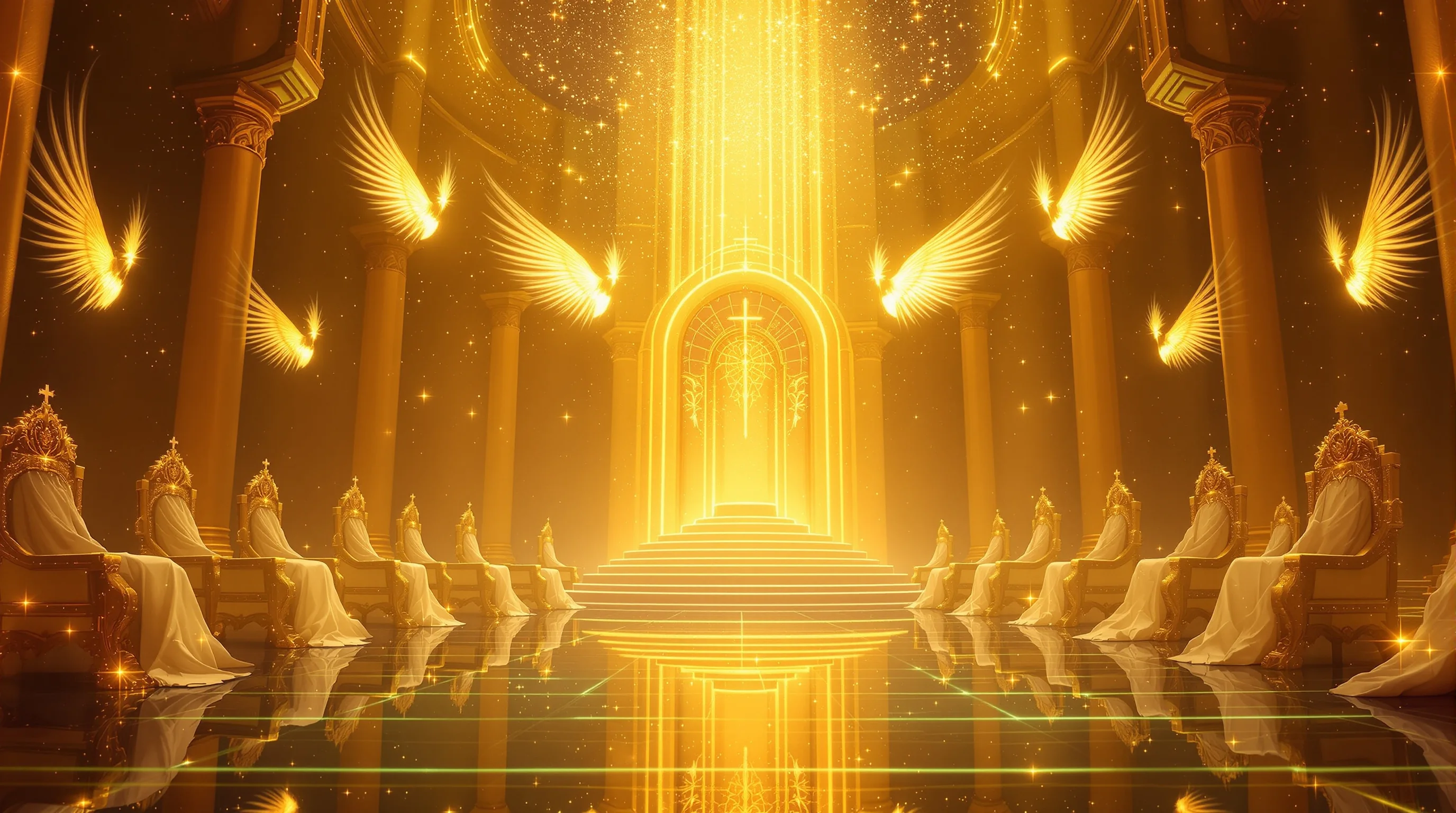
Five described actions define the twenty four elders in Revelation, and every identification argument in the commentaries rests on these details rather than a direct statement of identity. Start with their position and appearance: "Around the throne were twenty-four thrones, and on the thrones I saw twenty-four elders sitting, clothed in white robes; and they had crowns of gold on their heads" (NKJV Revelation 4:4).
Their central act is worship. They fall down, worship the One on the throne, and cast their crowns before Him, declaring, "You are worthy, O Lord, to receive glory and honor and power" (NKJV Revelation 4:10-11). In chapter 5, each elder holds a harp and "golden bowls full of incense, which are the prayers of the saints" (NKJV Revelation 5:8), tying heaven's court directly to the prayers of believers still on earth. For more on what these bowls surround, see what the scroll in Revelation 5 represents.
One elder also functions as an interpreting guide, identifying the great multitude for John (NKJV Revelation 7:13-14), a role that mirrors the interpreting angels found in Daniel and Zechariah. As Robert Mounce observes, certainty about the elders' identity eludes us, while their priestly and representative role is unmistakable. Taken together, the twenty-four elders in Revelation function as heaven's worship leaders, priestly intercessors, and interpreters, occupying seats of honor they repeatedly vacate to bow before the throne. Their placement alongside the four living creatures rounds out the throne room's structure.
Three Readings of the Twenty-Four Elders, Weighed
Three identifications of the twenty four elders in Revelation dominate the commentaries, and the evidence favors one without closing the case entirely. The first reading sees the elders as the glorified church, already enthroned in heaven, a view common among futurist interpreters who connect it to a pre-tribulation gathering of believers.
A second reading treats twenty-four as twelve plus twelve, Israel and the church together, supported by Revelation 21:12-14, where the New Jerusalem's gates bear the tribes' names and its foundations bear the apostles' names. A third reading proposes an angelic order, an exalted heavenly council serving before the throne, a case supported by the elders' interpreting function and their apparent distinction from the redeemed multitude described in Revelation 7.
The strongest evidence favors redeemed humanity in some form: the title elder is consistently used of human leaders, the crown is the specific victor's crown awarded to overcomers, and the bowls of prayer suit a priestly, representative role. Scholars such as G.K. Beale draw this conclusion directly from the numerical pattern tied to Israel's priesthood. What complicates the case is the manuscript variant at Revelation 5:9-10, where the elders may sing either "redeemed us" or "redeemed them," a genuinely contested reading that much of the argument for glorified saints has leaned on. Grant Osborne frames the elders as representative worship leaders of the redeemed community, a description broad enough to hold across this uncertainty. Scripture identifies what the elders do with precision and leaves who they are unstated, so a firm reading here deserves to be held with an open hand. It's okay to sit with that tension rather than force a verdict the text itself doesn't give.
Key Evidence for the Redeemed Humanity Reading:
- Title usage: The Greek term for elder appears throughout the New Testament for human leaders and is never applied to angels.
- The crown type: The elders wear the victor's crown (stephanos), the same reward promised to faithful believers in Revelation 2:10 and 3:11, not the royal diadem (diadema) reserved elsewhere for sovereign rule.
- The bowls of prayer: Holding "golden bowls full of incense, which are the prayers of the saints" (NKJV Revelation 5:8) fits a priestly, representative function tied to God's redeemed people.
- The numerical pattern: Twenty-four echoes both the twelve tribes and twelve apostles, a pairing Revelation 21:12-14 repeats explicitly for the New Jerusalem.
- The complicating factor: The manuscript variant at Revelation 5:9-10 ("redeemed us" versus "redeemed them") leaves room for the angelic reading and prevents the case from being fully closed.
What the Text Cannot Settle
Three questions remain genuinely open in the passage itself, and honest readers do well to name them rather than force a resolution.
- Composition: whether the elders are human, angelic, or a category the text does not divide along our lines.
- Timing: whether their enthronement is already accomplished or still anticipatory.
- The variant: whether Revelation 5:9-10 places the elders inside the redeemed song or outside it.
Why Their Crowns and Posture Matter More Than Their Names
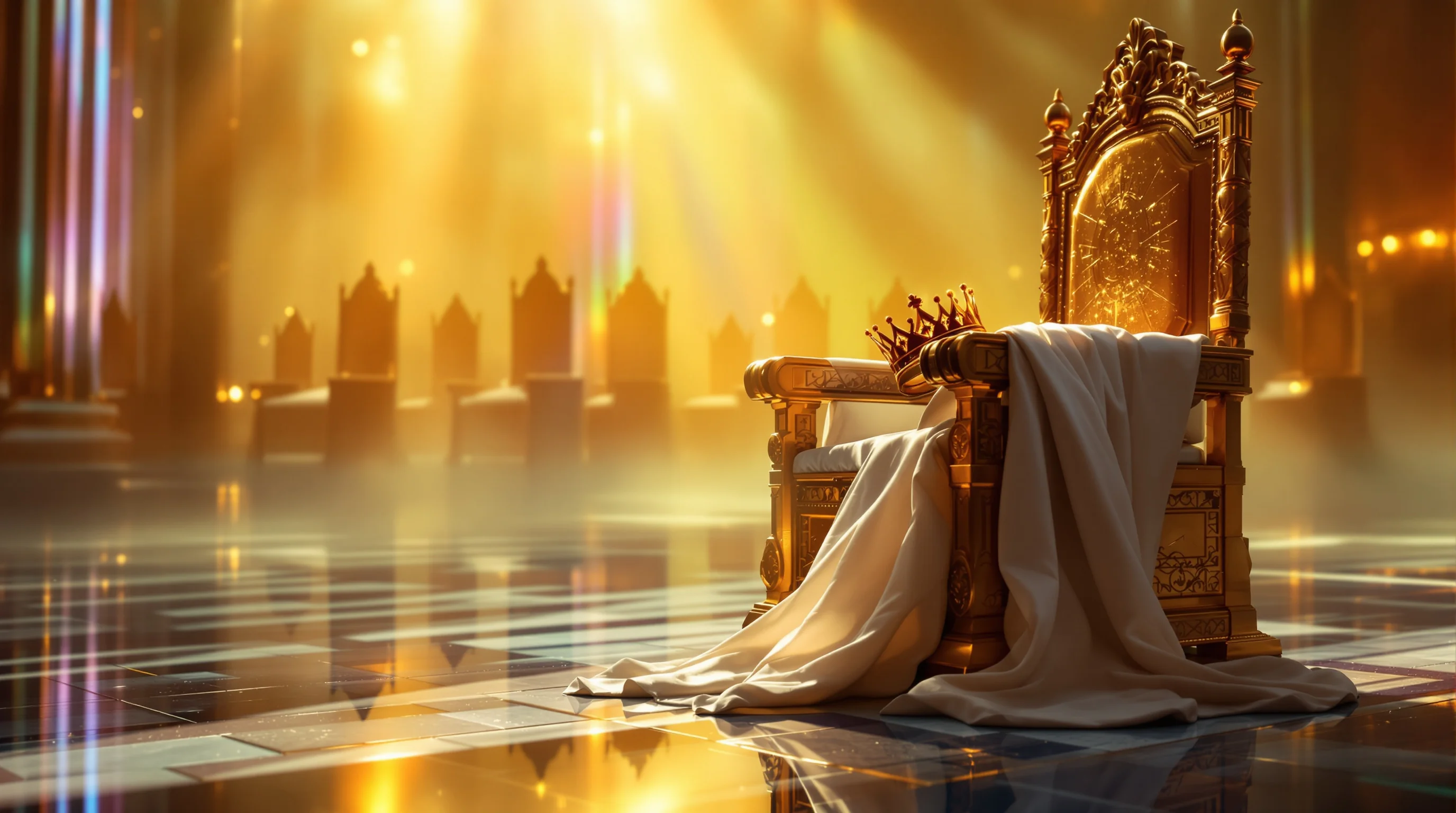
The elders hold the highest seats in the created order, and their signature act is surrendering the honor those seats represent. That reversal carries more theological weight than solving their identity. The golden crown they wear is the victor's wreath, an earned honor, which is what makes casting it down before the throne deliberate rather than merely ceremonial (NKJV Revelation 4:10).
In Roman practice, client kings offered tribute and crowns to Caesar as a sign of submission. John reassigns that homage to the one true throne, a detail Craig Keener connects to the pressure Asian churches faced under the imperial cult. For congregations excluded from trade guilds and pressed toward emperor worship, this vision showed a court where their prayers were held in golden bowls and only their God received tribute. Maybe you've wondered whether your own prayers matter in the middle of pressure or uncertainty. This scene answers that quietly: they are gathered and kept before the throne itself.
For readers wanting to trace how this imagery develops across Revelation's narrative, Revelation Explained: Verse by Verse examines each occurrence in its immediate context. The practical implication carries forward: position, achievement, and recognition are meant to be laid down in worship rather than held onto. Heaven is populated, ordered, and already worshiping while earthly events remain unresolved. The elders' posture teaches that worship is measured by what a person is willing to set down, not by what a person has been given.
A Common Misstep in Reading the Elders
The identity debate can crowd out the passage's actual purpose, and it's worth naming that risk directly.
- Misstep: treating the elders as a puzzle to solve before the scene can be worshiped through.
- Correction: the vision's stated content is worthiness, creation, and redemption, not a roster.
- Result: the elders model the response Revelation asks of every reader.
Why This Vision Matters
The throne room shows that the prayers of ordinary believers are carried in golden bowls before God. Present pressure, obscurity, and loss are set inside a court already at worship. Revelation's hope begins with a throne that is occupied and honored, whatever remains unresolved on earth.
Conclusion
You don't need a final answer on who exactly the twenty four elders in Revelation are to let this scene shape you. The strongest evidence points toward redeemed humanity, priestly in function and royal in seating, though the text stops short of naming them outright, and that honest limit is part of what makes Revelation trustworthy rather than sensational. What matters for your own faith today is the posture those elders model: crowns earned, then laid down, in front of a throne that is never empty. Whatever you're carrying into your own prayers this week, this vision reminds you that heaven is already at worship, and your prayers are already held there. For a deeper verse-by-verse exploration of Revelation's symbols and structure, see Revelation Explained: Verse by Verse by Richard French.
Sources
- Revelation 4:1-11 (NKJV)
- Revelation 5:8-14 (NKJV)
- Revelation 7:13-14 (NKJV)
- Revelation 21:12-14 (NKJV)
- 1 Chronicles 24:1-19 (NKJV)
- Ezekiel 1:1-28; Daniel 7:9-10; Isaiah 6:1-3 (NKJV)
- G.K. Beale, The Book of Revelation: A Commentary on the Greek Text (New International Greek Testament Commentary)
- Grant Osborne, Revelation (Baker Exegetical Commentary on the New Testament)
- Robert Mounce, The Book of Revelation (New International Commentary on the New Testament)
- Craig Koester, Revelation (Anchor Yale Bible Commentary)
- David Aune, Revelation 1-5 (Word Biblical Commentary)