When heaven falls silent for thirty minutes before seven angels lift trumpets to their lips, the entire universe holds its breath. What follows are judgments so severe they’re announced with three pronouncements of “woe.” The seven trumpets in Revelation 8-11 represent divinely ordained judgments that strike creation and humanity in increasing severity, calling the world to repentance before final judgment while assuring persecuted believers that God will vindicate His people and establish His kingdom. These dramatic visions blend Old Testament imagery with cosmic warfare, revealing God’s sovereignty over history and His patient restraint even in wrath.
Understanding what each trumpet brings and why they matter helps believers grasp both the seriousness of rebellion against God and the certainty of His ultimate victory. This article explains the sequence of trumpet judgments, their connections to Scripture’s prophetic patterns, and their relevance for Christians facing opposition today.

Quick Answer: The seven trumpets in Revelation 8-11 are divinely ordained judgments that strike creation and humanity in increasing severity, calling the world to repentance before final judgment while assuring persecuted believers that God will vindicate His people and establish His kingdom.
Key Scripture: “Then the seventh angel sounded: And there were loud voices in heaven, saying, ‘The kingdoms of this world have become the kingdoms of our Lord and of His Christ, and He shall reign forever and ever!’” (NKJV Revelation 11:15)
Context: These trumpet warnings intensify the seal judgments while demonstrating divine restraint through partial destruction, offering humanity time to turn from rebellion.
Key Takeaways
- Seven sequential judgments emerge from the seventh seal, intensifying God's warnings through angels who stand before His throne.
- First four trumpets strike earth's basic elements: land, sea, fresh water, and celestial bodies, affecting one-third of creation.
- Final three trumpets are announced as "woes" targeting humanity directly through demonic torment and massive armies.
- Old Testament patterns, especially the Egyptian plagues and Joel's locusts, provide the symbolic framework for understanding these judgments.
- Redemptive purpose underlies the judgments: they call people to repentance before final judgment, though many refuse to turn from sin.
What Does Each of the Seven Trumpets in Revelation Bring?
The first trumpet brings hail, fire, and blood that strike the earth, burning one-third of trees and all green grass. This judgment echoes Egypt's seventh plague but operates on a far greater scale. This opening blast establishes the pattern: divine power restrained to affect only portions of creation, leaving room for repentance.The second trumpet sends something like a great burning mountain into the sea, turning one-third of waters to blood, killing sea creatures, and destroying ships. The third trumpet follows with a great star named “Wormwood” falling on fresh waters, making one-third bitter and poisonous. The fourth trumpet strikes one-third of sun, moon, and stars, reducing both daylight and darkness by a third. These first four judgments systematically strike creation’s foundational elements in a deliberate sequence that mirrors the Egyptian plagues, yet affects only one-third of each target, demonstrating both divine power and divine restraint.
The fifth trumpet (first woe) brings a fallen star who opens the bottomless pit, releasing demonic locusts that torment the unsealed for five months. These creatures possess faces like humans, hair like women, teeth like lions, and tails like scorpions, drawing from Joel’s locust plague imagery while intensifying its terror. The sixth trumpet (second woe) releases four bound angels at the Euphrates River who lead a 200-million-strong army that kills one-third of humanity, yet survivors refuse to repent of idolatry, murder, sorcery, sexual immorality, or theft.
The seventh trumpet (third woe) announces through loud voices that God’s kingdom has prevailed: “The kingdoms of this world have become the kingdoms of our Lord and of His Christ, and He shall reign forever and ever!” (NKJV Revelation 11:15). Heaven’s temple opens, the ark of His covenant appears, and the twenty-four elders worship the One who has begun to reign.
The Pattern of Increasing Judgment
Between the fourth and fifth trumpets, an eagle flying through heaven announces "woe, woe, woe to the inhabitants of the earth, because of the remaining blasts of the sound of the three angels who are about to sound!" (NKJV Revelation 8:13). This pronouncement distinguishes the final three trumpets as especially severe, marking a shift from nature to humanity. Earlier trumpets strike creation's elements, while later trumpets target "the inhabitants of the earth," John's phrase for those who reject God and persecute His people. Even massive casualties fail to produce repentance: "They did not repent of their murders or their sorceries or their sexual immorality or their thefts" (NKJV Revelation 9:21).How the Seven Trumpets in Revelation Connect to Old Testament Imagery
The Egyptian plagues provide the primary template for understanding the seven trumpets in Revelation. Hail and fire appear in both Exodus 9:23-24 and Revelation 8:7. Water turning to blood echoes Exodus 7:17-21 in Revelation 8:8-9. Darkness afflicting Egypt (NKJV Exodus 10:21-23) reappears as celestial bodies struck in Revelation 8:12. Locusts devastating Egypt (NKJV Exodus 10:12-15) transform into demonic tormentors in Revelation 9:3-11.The trumpet itself carried multiple meanings in Scripture. At Mount Sinai, trumpet blasts announced God’s terrifying presence (NKJV Exodus 19:16). The Day of Atonement began with trumpet sound (NKJV Leviticus 25:9). Prophets warned that trumpets would announce the “Day of the LORD,” God’s intervention in judgment and salvation (NKJV Joel 2:1; Zephaniah 1:14-16). Joel’s locust plague particularly shapes the fifth trumpet’s imagery, with locusts having “faces like human faces” and making sounds “like the sound of chariots” (NKJV Revelation 9:7-9), directly paralleling Joel 2:4-5.
Ezekiel’s vision of judgment by thirds (NKJV Ezekiel 5:1-12) explains why “a third” appears repeatedly throughout the trumpet sequence: one-third destroyed by fire, one-third by sword, one-third scattered. This pattern demonstrates both severity and restraint. First-century Christians would immediately recognize these Old Testament echoes and understand that just as God judged Egypt to deliver Israel, He would judge Rome and its oppressive system to vindicate His persecuted church.
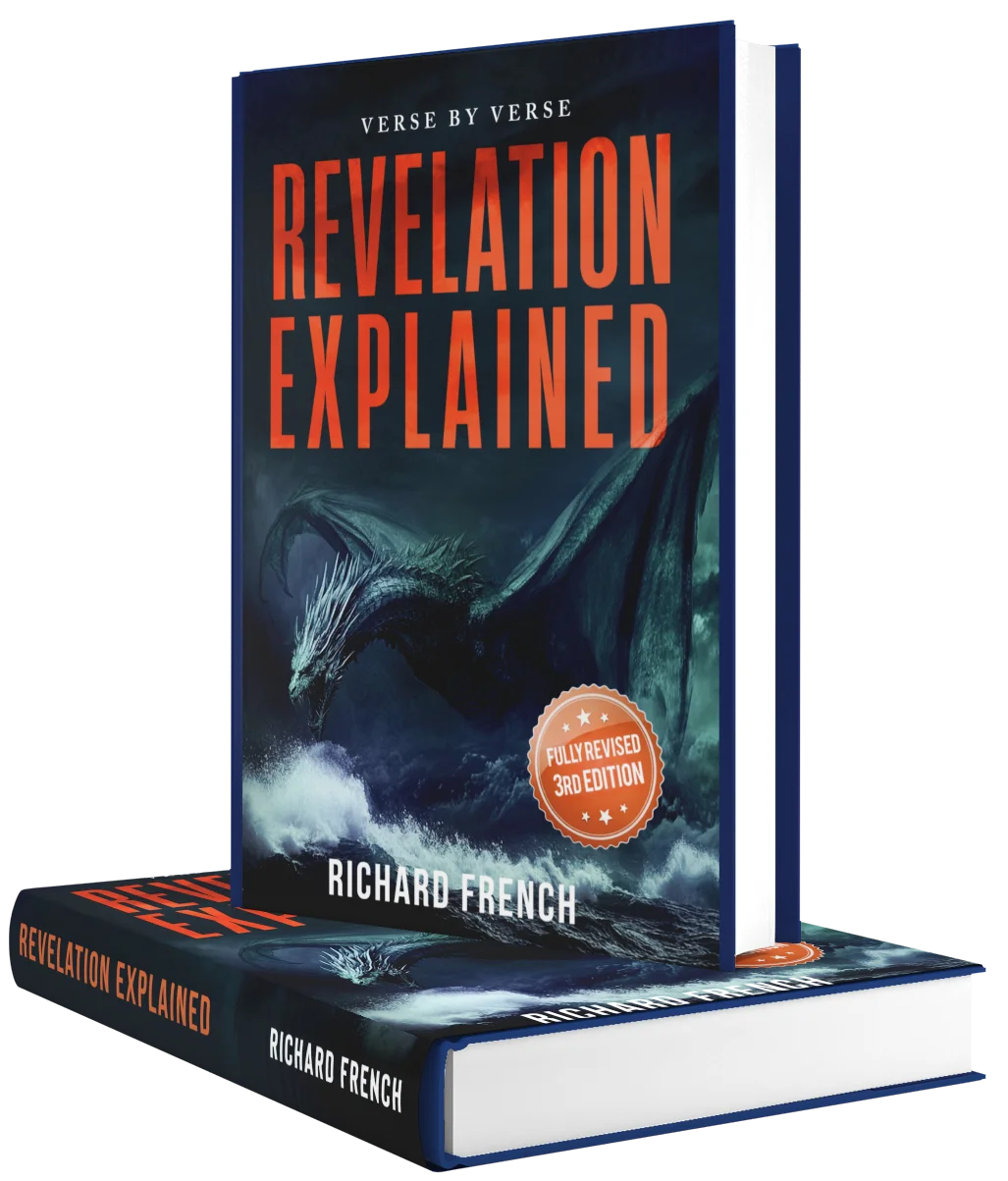
The Euphrates River boundary (NKJV Revelation 9:14) evoked Israel’s ancient enemies: Assyria and Babylon, representing forces that threatened God’s people throughout history. This deliberate scriptural layering assured the original audience that the God who acted powerfully in Israel’s past remained sovereign over their present circumstances. For a detailed examination of how these Old Testament patterns develop throughout Revelation’s narrative, see Revelation Explained: Verse by Verse by Richard French.
Why the Seven Trumpets in Revelation Matter for Christians Today
The seven trumpets in Revelation assure believers that faithfulness amid opposition matters eternally. God sees injustice and will address it, even when circumstances suggest otherwise. The connection between saints' prayers and trumpet judgments in Revelation 8:3-5 reveals that intercessory prayer holds cosmic significance. Believers aren't passive observers but active participants whose prayers mix with incense before God's throne, influencing the unfolding of divine purposes.The partial nature of judgments demonstrates both God’s patience and urgency. The repeated “one-third” pattern shows divine restraint providing opportunity for repentance, yet their certainty warns that time doesn’t extend indefinitely. Scholar Grant Osborne notes: “The purpose of the trumpet plagues is not vengeance but repentance, as seen in the stress on ‘a third’ being affected. They are intended to shock people into awareness of their rebellion against God.”
For believers experiencing persecution, economic pressure for compromising faith, or grief over rampant evil, the trumpets provide theological perspective. Present suffering isn’t meaningless: it exists within God’s sovereign plan, and He will vindicate His people. The seventh trumpet’s declaration that Christ shall reign forever represents certain reality, not wishful thinking, empowering believers to witness boldly despite apparent defeat.
The interlude between the sixth and seventh trumpets features two witnesses who prophesy faithfully before being killed and raised (NKJV Revelation 11:3-13). This represents the church’s calling: bold testimony despite cost, vindication despite temporary defeat. Application avoids misuse. The trumpets shouldn’t fuel date-setting speculation, create morbid fascination with catastrophe, or generate paralyzing fear in believers. Instead, they balance sober warning with confident hope, calling Christians to faithful witness and persistent prayer.
Conclusion
The seven trumpets in Revelation reveal God's sovereignty over history through increasing judgments that call humanity to repentance while assuring believers of ultimate vindication. From striking creation's basic elements to releasing spiritual warfare's terrifying reality, these divine warnings demonstrate both God's patience (affecting only one-third) and His certainty, culminating in His kingdom's establishment. For Christians facing opposition, economic pressure, or cultural hostility, the trumpets provide the same comfort they offered first-century believers under Rome: faithful witness matters, prayer holds cosmic significance, and apparent defeat precedes certain victory.The seventh trumpet’s declaration that Christ shall reign forever invites believers to endure hopefully and witness boldly until that day arrives. This vision transforms how we view present suffering, showing it within the larger narrative of God’s redemptive purposes. For a deeper verse-by-verse exploration of Revelation’s trumpet judgments and their place in God’s redemptive plan, see Revelation Explained: Verse by Verse by Richard French.