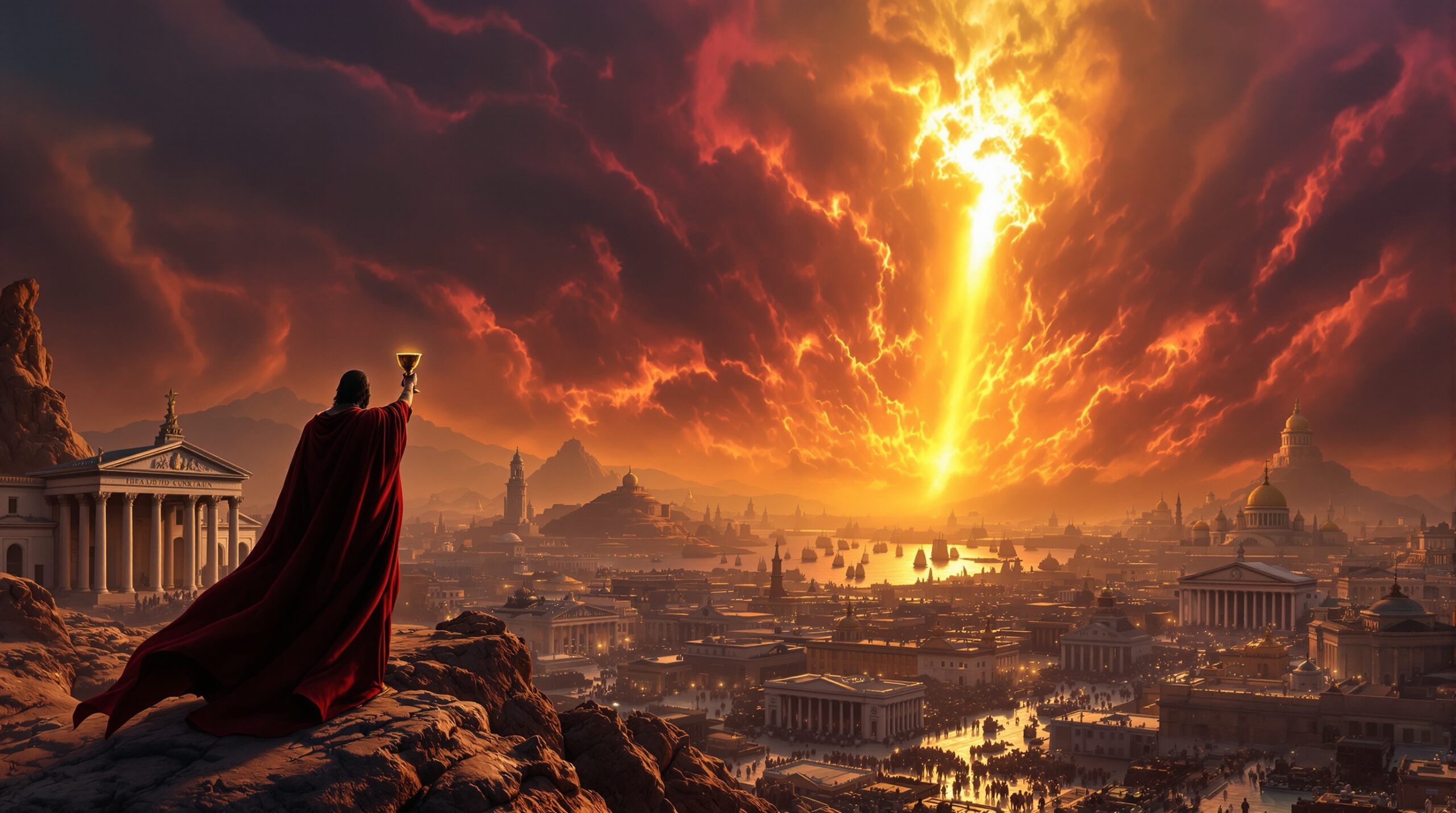
When John called a city “Babylon” in Revelation, first-century Christians immediately recognized their ancestors’ greatest enemy. But the city of Babylon, as described in the Revelation, sits on seven hills, just like Rome. The identity of Babylon in Revelation 17-18 has sparked centuries of debate because understanding who or what Babylon represents shapes how we interpret Revelation’s prophecies and apply them today. This article explores what Scripture reveals about the city of Babylon in Revelation, examining the biblical evidence, the historical context John’s audience understood, and why this mysterious city matters for Christians today.
Quick Answer: Babylon in Revelation symbolizes worldly systems—religious, political, and economic—that oppose God’s kingdom. First-century readers identified Babylon with Rome, seated on seven hills (NKJV Revelation 17:9). Yet the symbol extends beyond any single historical city to represent all human civilization organized in rebellion against God throughout history.
Key Scripture: “And on her forehead a name was written: MYSTERY, BABYLON THE GREAT, THE MOTHER OF HARLOTS AND OF THE ABOMINATIONS OF THE EARTH” (NKJV Revelation 17:5)
Context: This title identifies Babylon as both a mystery requiring interpretation and a symbol of spiritual adultery against God.
Key Takeaways
- Rome connection: The seven mountains (NKJV Revelation 17:9) point to Rome's seven hills, identifying Babylon with the empire persecuting first-century Christians
- Old Testament roots: John draws heavily from Jeremiah's prophecies against historical Babylon and Ezekiel's oracles against Tyre
- Threefold opposition: Babylon represents religious apostasy, political oppression, and economic exploitation combined
- Timeless symbol: Beyond Rome, Babylon city Revelation describes, embodies any system opposing God's kingdom throughout history
- Call to separation: Christians must discern and avoid spiritual participation in Babylon's values (NKJV Revelation 18:4)

What the Bible Reveals About Babylon City Revelation Describes
Revelation 17-18 presents Babylon city Revelation names through interconnected imagery: a harlot woman, a great city, and a corrupt system. The woman sits on "seven mountains" (NKJV Revelation 17:9), clearly identifying Rome for first-century readers. Rome was universally known as the city on seven hills. She is "drunk with the blood of the saints and with the blood of the martyrs of Jesus" (NKJV Revelation 17:6), establishing Babylon as actively persecuting God's people.The economic dimension emerges powerfully. “The merchants of the earth have become rich through the abundance of her luxury” (NKJV Revelation 18:3) reveals exploitation and materialism at Babylon’s core. The detailed cargo list in Revelation 18:11-13, ending with “slaves and souls of men,” exposes human commodification at the heart of this system.
Babylon in Revelation represents the world’s corrupt systems. Religious apostasy appears through the harlot, political oppression through persecution of believers, and economic exploitation through luxury trade built on human suffering. These three dimensions work together to present a complete picture of civilization organized against God’s purposes.
The Command to Come Out
"Come out of her, my people, lest you share in her sins, and lest you receive of her plagues" (NKJV Revelation 18:4). This call doesn't require physical relocation but demands spiritual separation from Babylon's values. God's people may live within Babylon's sphere while refusing to participate in her sins. The command acknowledges that believers exist within worldly systems while calling them to avoid spiritual complicity. This requires discernment about cultural engagement.Understanding Babylon City Revelation in Historical Context
For John's original audience facing Roman imperial pressure, Babylon imagery provided both identification and assurance. Rome enforced emperor worship through the imperial cult. Christians refusing to declare "Caesar is Lord" faced persecution, economic exclusion, and martyrdom. The name "Babylon" carried deep Old Testament significance. Historical Babylon destroyed Jerusalem and the temple, representing God's people's greatest oppressor.Jeremiah 50-51 prophesied Babylon’s fall with language John directly echoes. “Babylon is fallen, is fallen!” appears in both Isaiah 21:9 and Revelation 18:2. John also draws from Ezekiel’s oracles against Tyre (Ezekiel 26-28), another commercial power whose merchants grew rich through exploitation. The detailed trading lists and laments over fallen cities connect directly to John’s imagery.
Genesis 11:1-9 presents Babel (Babylon) as humanity’s first organized rebellion against God. This establishes Babylon as the archetypal symbol of autonomous human civilization. While Babylon clearly symbolized Rome for first-century Christians, the layered Old Testament imagery points beyond any single historical city. From Babel’s rebellion to historical Babylon’s oppression to Tyre’s commercial exploitation, John intended the symbol to transcend one generation. This broader framework allows Revelation’s message to speak across centuries.
Major Views on Babylon City Revelation Identity
The preterist view identifies Babylon city Revelation describes exclusively with first-century Rome (or alternatively Jerusalem destroyed in AD 70). Prophecies were fulfilled in historical events the original audience witnessed or anticipated. This approach stresses immediate relevance to persecuted believers facing Roman pressure. The detailed descriptions match Rome's seven hills, persecution of Christians, and vast commercial empire.The futurist view locates Babylon in a yet-future tribulation period. This could be a literally rebuilt Babylon in Iraq, a revived Roman Empire, or end-times global systems. Futurists note that the totality and suddenness of judgment in chapter 18 exceeds anything Rome historically experienced, suggesting future fulfillment.
The idealist view sees Babylon as a timeless symbol of human civilization organized in opposition to God. It manifests throughout history in various forms without requiring identification with specific historical cities. Most evangelical scholars hold a combined view: Babylon city Revelation names primarily symbolized Rome for the original audience while simultaneously representing the broader principle of godless civilization opposing God throughout history.
The debate over Babylon’s identity reflects different approaches to prophetic interpretation. But all views agree that Babylon embodies human systems organized in rebellion against God’s kingdom. Areas of agreement include: Babylon represents political power, economic exploitation, and religious apostasy combined; God will judge evil systems and vindicate His people; and the extensive Old Testament background is essential for interpretation. For readers wanting to trace how this imagery develops across Revelation’s narrative structure, Revelation Explained: Verse by Verse examines each occurrence in its immediate context.
Why Babylon's Identity Matters for Christians Today
Understanding Babylon as a symbol rather than only a past or future literal city makes Revelation's message applicable to every generation. Christians today face "Babylon" in cultural systems that seduce through materialism, demand allegiance to political powers, or pressure believers toward compromise. The command "Come out of her, my people" requires discernment: which aspects of contemporary culture embody Babylon's exploitative, idolatrous values?Economic application challenges our consumption patterns. Revelation 18’s condemnation of luxury built on human commodification questions participation in unjust economic structures. The merchants’ lament (NKJV Revelation 18:11-19) reveals they grieve lost profits, not lost people. This warns against valuing material prosperity over human dignity. This passage confronts believers about whether their economic lives reflect God’s protection of His people or Babylon’s exploitation.
For believers facing persecution or pressure to compromise, Babylon’s certain fall provides encouragement. “Strong is the Lord God who judges her” (NKJV Revelation 18:8) assures suffering saints that vindication is certain. This enables perseverance through present trials with eternal perspective. Oppressive powers exist under God’s sovereign judgment, no matter how dominant they appear.
Every generation faces its own “Babylon.” The call is to discern which systems oppose God’s kingdom and to live faithfully within those contexts without spiritual compromise. Common misapplications to avoid include escapist withdrawal from all cultural engagement, forgetting believers are called to be salt and light in the world. The prophecy calls for prophetic witness within corrupt systems while maintaining spiritual separation from those systems’ values.
Conclusion
Babylon city Revelation describes is both more and less than a single city. It is more because it represents the entire world system organized against God. It is less because no earthly power, no matter how dominant, can withstand God's judgment. For John's first-century audience, Babylon was Rome. For Christians throughout history, Babylon has manifested in successive empires and cultural systems. The prophecy offers both warning against seduction by worldly power and wealth, and hope that God will judge evil and vindicate His people.The question “What city is Babylon?” matters because it calls each generation to discernment, faithfulness, and hope in God’s victory. For a deeper verse-by-verse exploration of Revelation’s symbols and structure, see Revelation Explained: Verse by Verse by Richard French.