
Many Christians link the word “antichrist” with the book of Revelation, yet this term never appears in John’s apocalyptic vision. The disconnect comes from John’s use of “antichrist” in his letters (NKJV 1 John 2:18, 22; 4:3; 2 John 7) while describing different imagery in Revelation, particularly “the beast.” What does Revelation actually teach about opposition to Christ in the end times? Understanding the biblical text matters more than cultural assumptions or popular speculation. This article examines Revelation’s portrait of the beast from the sea, the false prophet, and their coordinated attack on God’s people, separating scriptural teaching from tradition.
Quick Answer: Revelation never uses the term “antichrist” but presents the beast from the sea as a political power that blasphemes God, persecutes believers, and demands worship, working alongside a false prophet who enforces this idolatry through deception and economic control.
Key Scripture: “Then I saw a beast rising up out of the sea, having seven heads and ten horns, and on his horns ten crowns, and on his heads a blasphemous name” (NKJV Revelation 13:1)
Context: This beast combines features from Daniel’s prophecies, representing the culmination of all earthly kingdoms opposing God.
The false prophet enforces beast worship through counterfeit miracles and religious deception
The mark (666) symbolizes economic control requiring a choice between material survival and spiritual faithfulness
Daniel’s prophecies provide the foundational template for understanding Revelation’s beast imagery
Christ’s victory is certain: both beasts are cast into the lake of fire at His return
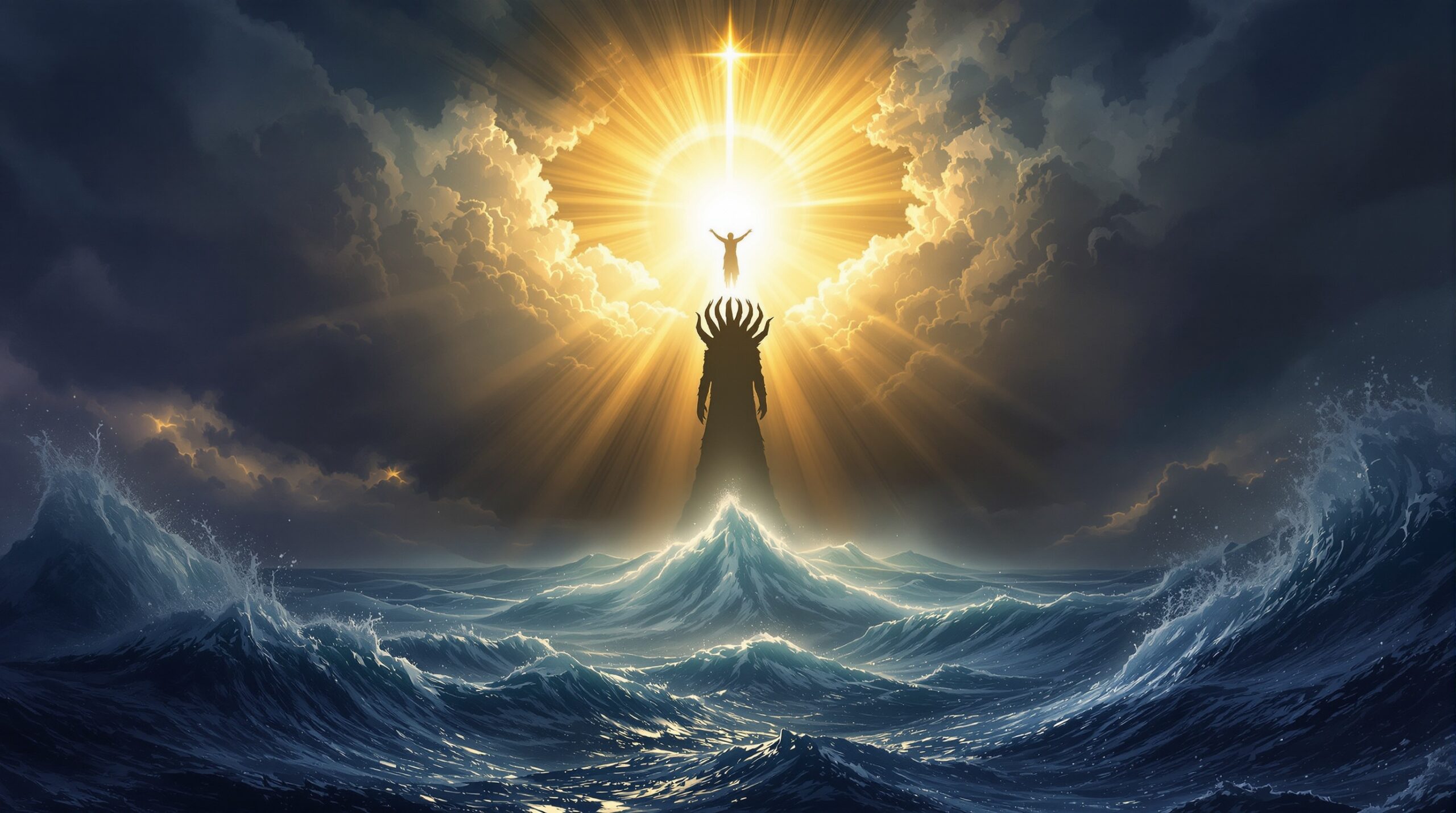
The Beast from the Sea in Revelation 13
Revelation 13:1-10 introduces the primary anti-Christian figure as a beast rising from the sea with seven heads, ten horns, and blasphemous names. The Greek word thērion means "wild beast" or "dangerous animal," pointing to its brutal character opposed to the Lamb. This composite creature combines features from Daniel 7's four beasts: leopard, bear, and lion. It represents the culmination of all anti-God political powers throughout history.The beast’s key features include receiving authority from the dragon (Satan), speaking blasphemies against God, making war against the saints, and exercising global authority. Its power operates within a divinely permitted timeframe of 42 months, or three-and-a-half years. This limited period connects directly to Daniel 7:25, where the “little horn” persecutes saints for “a time and times and half a time,” using different words for the same symbolic duration.
First-century Christians facing Roman pressure would immediately recognize this as political power demanding divine honors. The fatal wound that healed (NKJV Revelation 13:3) possibly references legends about Nero’s return or the empire’s apparent invincibility despite periodic crises. For believers today, the seven heads and ten horns serve as symbols of complete but limited earthly authority opposing Christ. The revelation antichrist figure isn’t just a future person but a pattern repeated throughout history.
The Mark and Economic Control
Revelation 13:16-17 describes how no one can buy or sell without the mark, name, or number of the beast. The Greek word charagma means "stamp" or "engraved mark," similar to Roman imperial seals and certificates. This inverts Deuteronomy 6:8, where God commanded His people to bind His words as signs on their hands and foreheads.The mark represents more than technology. It symbolizes ultimate allegiance: economic coercion forcing a choice between material survival and spiritual faithfulness. This contrasts with God’s seal on His servants in Revelation 7:3, highlighting the cosmic decision every person faces.
The False Prophet and Religious Deception
The second beast emerges from the earth in Revelation 13:11-14 with a lamb-like appearance but a dragon's voice. Later chapters call this figure "the false prophet" (NKJV Revelation 16:13; 19:20; 20:10). It enforces worship of the first beast through religious authority. It performs counterfeit signs and wonders, including making fire come from heaven, mimicking Christ while serving Satan.The two-beast structure represents coordinated opposition: political power plus religious enforcement. For John’s original audience, this mirrored the Roman imperial cult with provincial priests enforcing emperor worship. The speaking image of the beast (NKJV Revelation 13:15) possibly references statues before which offerings were made or ventriloquism tricks used by pagan priests to create illusions of divine communication.
The false prophet represents religious systems that baptize political idolatry with spiritual authority. It performs signs and wonders to deceive people into worshiping worldly power rather than the true Lamb of God. Moses warned against this pattern in Deuteronomy 13:1-5, cautioning that prophets who perform signs but lead to false worship must be rejected. The dragon, beast, and false prophet form an unholy trinity parodying the Father, Son, and Holy Spirit, with political and religious dimensions working together.
Understanding 666 and Biblical Interpretation
Revelation 13:18 invites readers with understanding to calculate the beast's number: 666. This call requires wisdom, not panic or speculation. The number likely used gematria, an ancient practice where letters served as numbers. Many scholars believe "Nero Caesar" written in Hebrew letters totals 666, identifying a specific historical figure the original audience would recognize.Symbolically, 666 represents humanity falling short of divine perfection (symbolized by seven) repeatedly. The triple repetition emphasizes complete human inadequacy without God. Biblical interpretation focuses on what the text reveals: the number identifies opposition to God, represents human limitation, and invites spiritual discernment.
Speculation, by contrast, obsessively matches current figures or technologies to 666, sets dates, and creates panic over barcodes or microchips. The number 666 represents humanity perpetually falling short of God’s perfection. It likely identified Nero for the original audience through gematria, and it invites believers in every age to exercise spiritual discernment rather than engage in speculation.
The core issue remains worship and allegiance, not identifying specific contemporary figures. While historical figures may foreshadow the pattern, they don’t exhaust the prophecy’s meaning. Jesus taught that unknown timing prevents speculation (NKJV Matthew 24:36). For deeper exploration of what 666 means in Revelation, consider how John’s original readers would have understood this symbolic number.
What This Means for Christians Today
When we read about the revelation antichrist imagery, Revelation's vision of the beast calls Christians to three specific responses. First, spiritual discernment: recognizing when systems, leaders, or ideologies demand the allegiance that belongs only to God. Second, patient endurance (NKJV Revelation 13:10; 14:12): willingness to suffer economic hardship, social marginalization, or persecution rather than compromise faith. Third, faithful worship: exclusive devotion to the Lamb, refusing to offer worship to political leaders, national identity, economic security, or any created thing.This passage comforts believers by revealing that opposition operates only within God’s permitted limits. Persecution refines authentic faith, and Christ’s victory is certain. The warning against compromise remains stark: receiving the mark leads to eternal judgment (NKJV Revelation 14:9-11).
Believers must avoid common mistakes. Technology paranoia can replace faithful presence. Speculation can distract from present obedience. Nationalistic readings can baptize political preferences with divine authority. Escapist theology can lead to withdrawal from cultural engagement.
Revelation’s vision of the beast calls Christians not to speculative fear but to faithful endurance. Any system, leader, or ideology demanding the allegiance that belongs only to God exhibits beastly characteristics, regardless of the century. Self-examination matters because recognizing beastly patterns (pride, coercion, demanding absolute allegiance) in ourselves and communities proves as important as identifying external threats.
Every generation faces pressure to compromise faith for security, prosperity, or acceptance. Revelation 19:20 assures believers that both beasts will be cast into the lake of fire without possibility of return. The verse-by-verse commentary in Revelation Explained traces these themes throughout each chapter, helping readers understand how apocalyptic imagery addresses both ancient and contemporary challenges.
Conclusion
While Revelation never uses "antichrist," it presents a vivid portrait of political and religious opposition through two coordinated beasts. One represents blasphemous authority; the other enforces idolatry through deception. Rooted in Daniel's prophecies, these symbols warned first-century Christians about Rome and continue warning believers in every age about systems demanding worship that belongs to Christ alone.The call remains constant: exercise discernment, maintain endurance, and offer exclusive worship to the Lamb. Whatever opposition appears, it operates on borrowed time with certain defeat. Christ’s return will vindicate the faithful and judge every system opposing God. For deeper verse-by-verse exploration of Revelation’s prophecies and symbols, see Revelation Explained: Verse by Verse by Richard French.