Revelation 20 is the only passage in all of Scripture that mentions a thousand-year reign, and how readers interpret it shapes their entire understanding of prophecy, the church age, and Christ's return. Amillennialism is one of the four major Christian views on the millennium, and it holds that the thousand years is symbolic of the present church age, not a future earthly kingdom. Christ reigns now from heaven, Satan is currently restrained from deceiving the nations, and the saints who have died reign with him spiritually.
Honest Christians have wrestled with Revelation 20 for two thousand years, and the difficulty of the passage is no reflection on the depth of your faith. This article explains what amillennialism teaches, what Scripture says, and why it matters for Christians today.
Quick Answer: Amillennialism is the view that the thousand-year reign in Revelation 20 is symbolic of the present church age, during which Christ reigns from heaven, Satan is restrained from deceiving the nations, and departed saints reign with Christ spiritually, concluding at his single, final return.
Definition: The millennium in Revelation 20 symbolizes the entire church age between Christ's first and second comings, during which his heavenly reign is active, Satan's power to blind the nations is restrained, and the faithful dead share in his rule.
Key Scripture: "Blessed and holy is he who has part in the first resurrection. Over such the second death has no power, but they shall be priests of God and of Christ, and shall reign with Him a thousand years." (NKJV Revelation 20:6)
Context: This interpretation has deep roots in the early church, was systematized by Augustine, and remains the majority position among Reformed and many Protestant traditions.
This vision functions as both comfort and commission. It assures suffering believers that Christ's reign is real and active right now, while calling the church to faithful witness as the defining work of this age. The sections below examine what Scripture says about amillennialism, how its historical and literary context shapes the interpretation, and what it means for Christians living today.
Key Takeaways
- Symbolic thousand years: The Greek chilia etē (thousand years) uses a number common in Jewish apocalyptic literature to denote completeness, not a precise calendar duration, consistent with Revelation's pervasive symbolic use of numbers.
- Satan's present restraint: Amillennialists connect the binding of Satan in Revelation 20:2-3 to Christ's words in Matthew 12:29 (NKJV), where binding the strong man precedes plundering his house, placing the binding at Christ's first coming.
- The first resurrection as spiritual: G.K. Beale argues the "first resurrection" refers to spiritual regeneration or the soul's entrance into heaven at death, not a future bodily resurrection at the start of a literal millennium.
- Christ's reign is already active: Psalm 110:1 (NKJV), applied to Christ's ascension more than any other Old Testament text in the New Testament, establishes his kingship as present and ongoing, not merely future.
- One final judgment: Amillennialists read Revelation 20:11-15 alongside John 5:28-29 and Matthew 25:31-46 as describing a single general resurrection and final judgment, with no intervening literal millennium separating two resurrections.
Key Evidence
- Revelation 20:4 (NKJV): John sees souls on thrones, not an embodied political kingdom, pointing to a heavenly and spiritual reality consistent with the amillennial reading.
- Matthew 12:29 (NKJV): Jesus uses binding language identical to Revelation 20:2-3, indicating that Satan's restraint began at Christ's first coming, not at a future return.
- Psalm 110:1 (NKJV): Quoted or alluded to more than any other Old Testament verse in the New Testament (Matthew 22:44; Acts 2:34-35; Hebrews 1:13), establishing Christ's present kingship from the ascension onward.
- Daniel 7:9-10, 22 (NKJV): Thrones set up and saints possessing the kingdom, language echoed directly in Revelation 20:4 and recognized by scholars such as G.K. Beale as the primary Old Testament background for John's vision.
- John 5:24-25 (NKJV): Jesus applies resurrection language to present spiritual reality, supporting the amillennial reading of the "first resurrection" as spiritual rather than a future bodily event.

What the Bible Says About Amillennialism
Revelation 20 is the only passage in Scripture that mentions a thousand-year reign, and its placement within a book saturated with symbolic numbers makes a purely literal reading of chilia etē contextually inconsistent. The vision in Revelation 20:4 (NKJV) describes souls on thrones reigning with Christ, pointing to a heavenly and spiritual reality rather than an embodied political kingdom on earth. When the text identifies these souls, the detail is striking: they are those "who had been beheaded for their witness to Jesus" (NKJV Revelation 20:4). The apparent losers of history are enthroned.
Satan's binding in Revelation 20:2-3 (NKJV) restricts him so that he "should deceive the nations no more." Jesus uses identical binding language in Matthew 12:29 (NKJV), asking how anyone can plunder a strong man's house "unless he first binds the strong man." Amillennialists read this as Christ himself announcing that his ministry inaugurated that restraint, placing Satan's binding at the first coming rather than at a future return.
G.K. Beale argues in his commentary on Revelation that the "first resurrection" refers to spiritual regeneration or the soul's entrance into heaven at death, not a future bodily resurrection at the start of a literal millennium. This reading connects with John 5:24-25 (NKJV), where Jesus speaks of the spiritually dead hearing his voice and living, using resurrection language for present spiritual reality. Psalm 110:1 (NKJV), "The LORD said to my Lord, 'Sit at My right hand, till I make Your enemies Your footstool,'" is applied to Christ's ascension more than any other Old Testament passage in the New Testament (Matthew 22:44; Acts 2:34-35; Hebrews 1:13), confirming that Christ's kingship is active now.
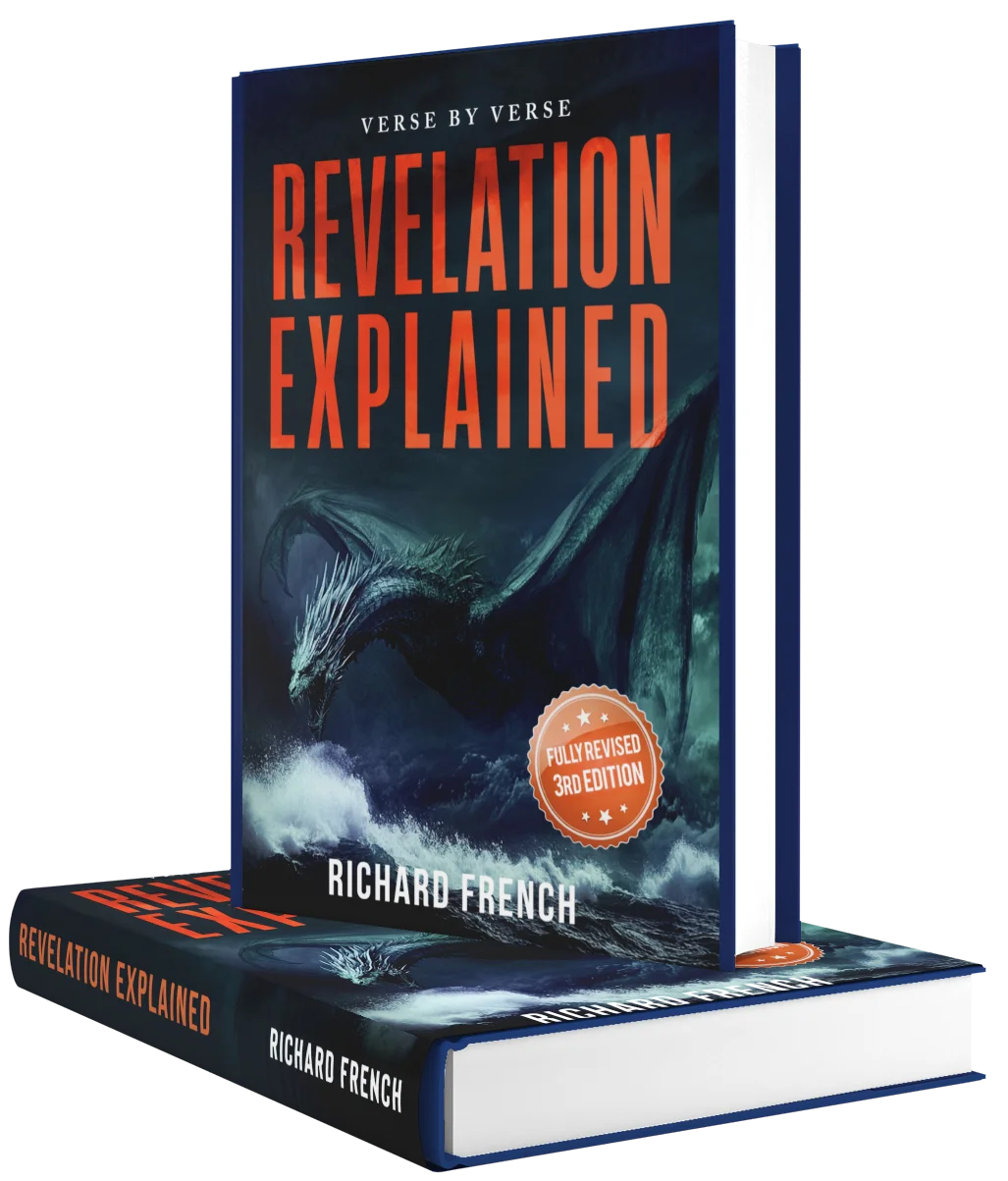
For readers wanting to trace how this imagery develops across Revelation's narrative, Revelation Explained: Verse by Verse by Richard French examines each occurrence in its immediate context.
The Great Commission and Satan's Binding
The positive counterpart to Satan's restraint is the global advance of the gospel.
- Matthew 28:19 (NKJV) commands making disciples of panta ta ethnē, all the nations, a mission impossible if Satan retained full power to blind every people group.
- Satan's restraint enables global witness: His inability to deceive the nations creates the opening through which the gospel spreads to every corner of the earth.
- The church age as the millennium: Gospel proclamation to all nations is the defining activity of this age, making the Great Commission and the millennium two sides of the same reality.
Understanding Amillennialism in Its Biblical and Historical Context
Revelation 20 does not follow chapter 19 chronologically in the amillennial reading. The book uses a literary device called recapitulation, revisiting the same church-age period from different vantage points rather than unfolding as a strict timeline. Consider what this means in practice: chapter 20 begins again at the binding of Satan at the cross and resurrection, not after the return of Christ depicted in chapter 19. The sequence is thematic, not chronological.
Old Testament background saturates the passage. Isaiah 24:21-22 (NKJV) uses cosmic imprisonment language for God's defeat of spiritual powers, providing a direct template for John's vision of Satan being cast into the bottomless pit. Daniel 7:9-10, 22 (NKJV) describes thrones being set up and the saints possessing the kingdom, language echoed directly in Revelation 20:4. The Gog and Magog imagery in Revelation 20:7-9 draws from Ezekiel 38-39, where a final assault on God's people is decisively defeated. The original audience, steeped in these texts, would have recognized that John was drawing on established prophetic imagery, not inventing new geography.
Michael Wilcock observes that "John's vision is not a calendar but a canvas," painting the church age in its fullness to comfort those who suffer and warn those who would compromise. For the seven persecuted churches of Asia Minor, this mattered immediately. Those beheaded for their witness were not defeated. They were enthroned. The millennium described their present reality under Roman pressure, not a golden age requiring centuries of waiting. Faithful readers across many traditions, from Augustine's City of God to Anthony Hoekema's The Bible and the Future, have found this reading both historically grounded and pastorally sustaining.
Recapitulation in Revelation's Structure
Scholars across interpretive traditions recognize that Revelation revisits the same era repeatedly rather than unfolding as a strict timeline.
- Each vision cycle: The seals, trumpets, and bowls each cover the period from Christ's first coming to his return, approaching the same era from a different angle.
- Revelation 20 as summary: Chapter 20 functions as a final summary of the church age, not a new dispensation inserted after the return of Christ in chapter 19.
- Evangelical recognition: This structural pattern is widely recognized across evangelical scholarship as a feature of apocalyptic literature, not a novelty of amillennial interpretation.
Why Amillennialism Matters for Christians Today
Amillennialism calls believers to faithful endurance now. If the millennium is the present age, then Christ is reigning, Satan is restrained, and the mission of global gospel proclamation is the defining work of this moment. Every act of faithful witness participates in Christ's ongoing victory. This is active participation in the age already underway, not passive waiting for a better one.
Revelation 20:4 (NKJV) names those on thrones as people who were beheaded for their witness. What appeared to be defeat was, in the economy of God, coronation. The second death has no power over those united to Christ. Believers handling cultural pressure or genuine persecution receive the same word the seven churches of Asia Minor received, carrying the same weight across every generation. You can explore how this connects to the first resurrection in Revelation 20 for a deeper look at what this promise means.
Amillennialism does not promise that the world will improve steadily before Christ returns. It promises that Christ is already reigning and that his church advances his kingdom through faithful witness, even through suffering. Anthony Hoekema's framing in The Bible and the Future captures the pastoral heart of the view: the church age is the era of Christ's redemptive advance, and believers participate in that advance as priests and co-regents with the risen King.
The view also guards against two specific misreadings. Identifying current nations or political movements with the millennium or with Gog and Magog imposes a geopolitical grid the text does not support. Passivity is equally unwarranted. The text consistently ties Christ's reign to the endurance and witness of his church, not to its withdrawal from the world. The vision of the New Jerusalem that follows in Revelation 21-22 confirms that the goal is renewal, not escape.
Why Amillennialism Matters
Amillennialism anchors Christian hope in Christ's present reign rather than a distant future timetable. For believers handling cultural pressure, economic hardship, or outright persecution, the message of Revelation 20 is the same as it was for the seven churches: the one who was crucified is enthroned, and those who suffer with him will reign with him. Present stability may be uncertain, but Christ's faithfulness is not.
Conclusion
Amillennialism holds that the thousand-year reign of Revelation 20 is the present church age, marked by Christ's heavenly reign, Satan's restraint from deceiving the nations, and the souls of the faithful reigning with Christ until his single, final return and the general resurrection. This view does not diminish hope. It locates hope exactly where the New Testament places it: in the risen and reigning Christ, whose victory is already secured.
You are living in the age of his reign right now. Whatever you face today, whether doubt about these prophecies, pressure from the culture around you, or simply the honest difficulty of reading Revelation, the same word that steadied the seven churches of Asia Minor is available to you. Christ is not waiting to begin his rule. He is ruling. And that changes how you read every headline, endure every hardship, and carry out every act of faithful witness. For a deeper verse-by-verse exploration of these themes, see Revelation Explained: Verse by Verse by Richard French.
Sources
- Revelation 20:1 - 12 (NKJV) - Core millennial text
- Psalm 110:1 (NKJV) - Christ's present heavenly reign
- Matthew 12:29; 28:19 (NKJV) - Satan's binding and global mission
- Daniel 7:9 - 10, 22 (NKJV) - Thrones and saints reigning
- Ezekiel 38 - 39 (NKJV) - Gog and Magog background
- Isaiah 24:21 - 22 (NKJV) - Cosmic imprisonment imagery
- John 5:24 - 29 (NKJV) - Resurrection language in John's Gospel
- G.K. Beale, The Book of Revelation: A Commentary on the Greek Text (NIGTC; Eerdmans/Paternoster, 1999)
- Anthony Hoekema, The Bible and the Future (Eerdmans, 1979)
- Michael Wilcock, The Message of Revelation (Bible Speaks Today; IVP, 1975)
- Dennis E. Johnson, Triumph of the Lamb: A Commentary on Revelation (P&R Publishing, 2001)
- Vern S. Poythress, The Return of Christ: A Guide to the Last Days (Crossway, 2000)