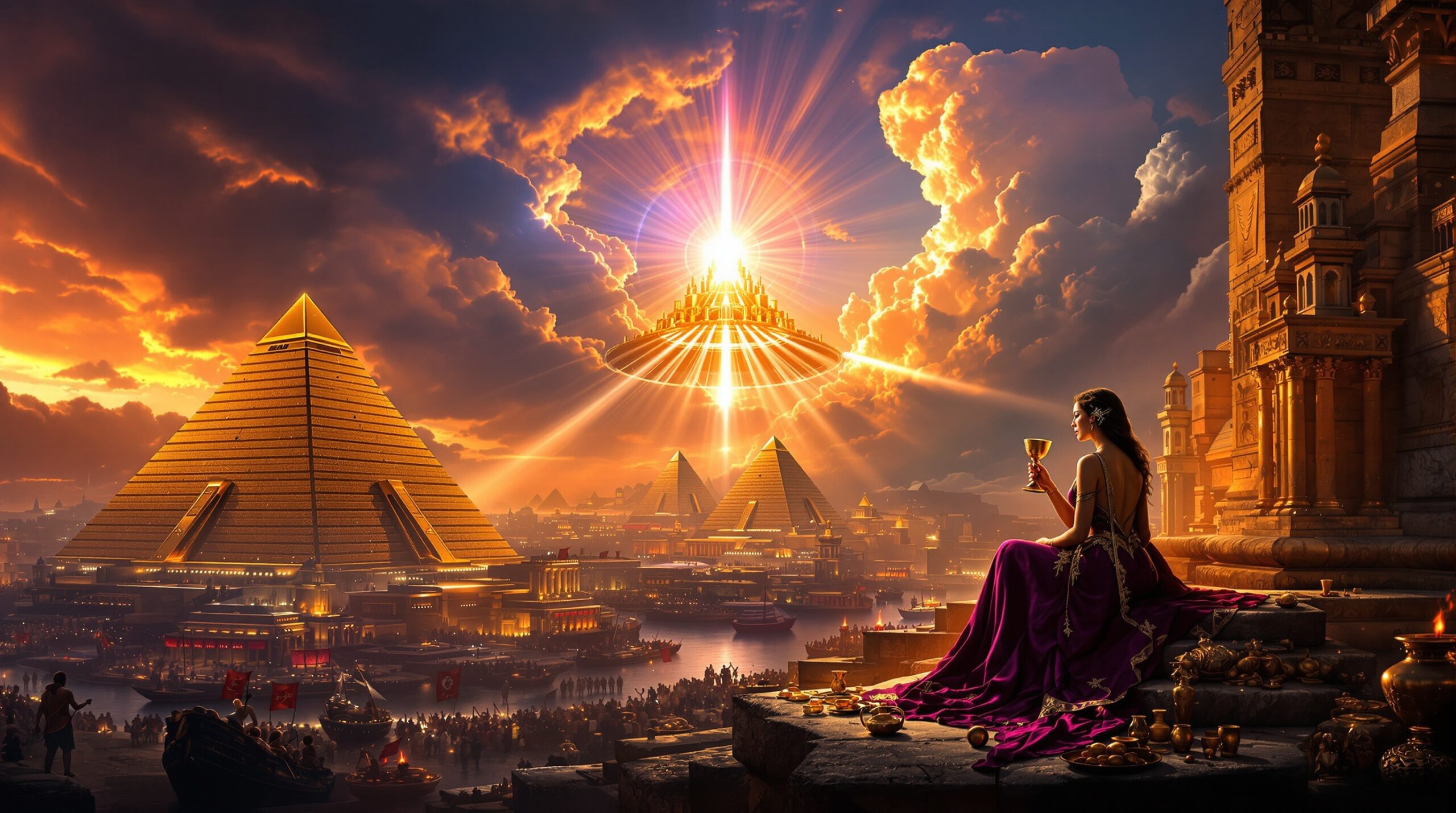
When John saw a woman “drunk with the blood of the saints,” sitting on a scarlet beast with the name “BABYLON THE GREAT” written on her forehead, his first-century readers would have understood the cryptic reference right away. Yet the full meaning of Babylon in Revelation extends far beyond any single empire or era. Babylon in Revelation represents human civilization organized in opposition to God, showing religious apostasy, economic exploitation, and political oppression. Throughout Revelation 17-18, this powerful symbol reveals both historical realities and timeless patterns that confront every generation of believers.
This article explores what Babylon represents in Revelation, examining the biblical evidence, Old Testament connections, and practical implications for believers navigating worldly systems today.
Quick Answer: Babylon in Revelation is a symbolic representation of human civilization organized in opposition to God, embodying religious apostasy, economic exploitation, and political oppression. Drawing from Old Testament imagery of historical Babylon, it primarily referred to first-century Rome but represents any world system that requires complete allegiance belonging only to God.
Key Scripture: “And on her forehead a name was written: MYSTERY, BABYLON THE GREAT, THE MOTHER OF HARLOTS AND OF THE ABOMINATIONS OF THE EARTH” (NKJV Revelation 17:5)
Context: This symbolic name reveals Babylon’s essential character as spiritual unfaithfulness that seduces nations into idolatry.
- The great harlot: Babylon represents spiritual adultery through idolatry and covenant-breaking that seduces all nations.
- Economic dominance: The system enriches elites through exploitation while requiring participation in idolatrous commerce.
- Persecutor of saints: Babylon actively opposes God's people, described as "drunk with the blood of the martyrs."
- Old Testament roots: The symbol draws from historical Babylon's destruction of Jerusalem and the Tower of Babel narrative.
- Certain judgment: Despite apparent invincibility, Babylon faces sudden, complete divine destruction at God's appointed time.
Understanding Babylon in Revelation: The Biblical Portrait
Revelation 17-18 presents Babylon through two complementary images that reveal different sides of the same reality. The great harlot (chapter 17) emphasizes spiritual-religious corruption. This is a system of unfaithfulness that seduces "all nations" into idolatry. "I saw the woman, drunk with the blood of the saints and with the blood of the martyrs of Jesus" (NKJV Revelation 17:6). This shocking image reveals violent persecution as essential to Babylon's character, showing she finds pleasure in destroying faithful witnesses.The great city (chapter 18) emphasizes economic-political power. Merchants, kings, and shipmasters lament her sudden fall. “The merchants of the earth have become rich through the abundance of her luxury” (NKJV Revelation 18:3). The Greek term strēnos means “excessive luxury” or “wanton excess.” This points to wealth concentrated through exploitation rather than honest labor.

The “seven mountains” detail (NKJV Revelation 17:9) provides geographical grounding. First-century readers would recognize Rome, famous for its seven hills, though the symbolism extends to represent complete worldly power. Babylon in Revelation 17-18 combines religious apostasy with economic exploitation and political oppression, creating a comprehensive picture of civilization organized against God’s kingdom.
Most significantly, God’s command to “Come out of her, my people” (NKJV Revelation 18:4) requires deliberate separation to avoid both moral complicity and divine judgment.
The Contrast Between Two Women
Revelation presents two feminine figures: Babylon the harlot (chapters 17-18) and the Bride of Christ (chapters 19, 21-22). This stark contrast reveals competing allegiances. One system seduces through wealth, power, and sensuality. The other calls to costly faithfulness and purity. The positioning emphasizes choice: every person serves either Babylon or the Lamb.Old Testament Roots and Historical Context
Historical Babylon destroyed Jerusalem in 586 BC and carried God's people into exile. This was the defining trauma of Israel's history. Prophetic books contain extended oracles against Babylon using language John echoes: "Babylon is fallen, is fallen" (NKJV Revelation 18:2) mirrors "Babylon is fallen, is fallen!" (NKJV Isaiah 21:9). These connections would resonate with John's first readers, who knew the scriptures well.The Tower of Babel (Genesis 11) represents humanity’s first organized rebellion. Babylon thus symbolizes the archetypal expression of civilization unified in prideful opposition to God. Ezekiel’s vision of Jerusalem as an unfaithful wife (Ezekiel 16, 23) provides the template for Babylon as harlot. What applied to apostate Jerusalem now describes Rome and the world system it represents.
For John’s original audience (Christians in Asia Minor around AD 95), Rome showed Babylon’s characteristics. Military domination secured the empire’s borders. Emperor worship required citizens to declare “Caesar is Lord,” which contradicted Christian confession. Economic exploitation flowed through trade networks controlled by guilds requiring participation in idolatrous festivals. Rome’s apparent invincibility made compromise tempting for believers facing social ostracism and economic pressure.
Just as historical Babylon destroyed Jerusalem and epitomized human pride, John’s Babylon reveals Rome as the latest manifestation of civilization organized against God. This pattern recurs throughout history until Christ’s return. The symbolism transcends specific historical identification while addressing immediate pastoral needs.
For deeper exploration of these Old Testament connections throughout Revelation’s structure, Revelation Explained: Verse by Verse traces how John weaves prophetic imagery into his vision.
Coming Out of Babylon: What It Means for Christians Today
The command "Come out of her, my people" (NKJV Revelation 18:4) requires identifying contemporary expressions of Babylonian seduction. These are systems promising security, prosperity, or meaning apart from God. This call requires discernment rather than simple withdrawal from society.The economic dimension warns against consumerism and materialism. Babylon in Revelation cautions against complicity in exploitative systems where luxury comes at others’ expense. The merchants’ lament (NKJV Revelation 18:11-19) shows the folly of finding identity or security in economic prosperity rather than God’s kingdom. Coming out means practicing intentional simplicity, ethical consumption, and resisting the cultural pressure to accumulate wealth as proof of success.
The political dimension recognizes that every nation risks becoming “Babylon” when requiring absolute loyalty or promising salvation through human effort. Christians maintain dual citizenship: honoring governing authorities while reserving final allegiance for Christ. When systems call for what belongs only to God, believers must courageously say no, even at personal cost.
The religious dimension exposes syncretism wherever Christian faith accommodates cultural idols. Nationalism, sexual autonomy, or ideological tribalism can seduce churches away from prophetic distinctiveness. The harlot imagery warns against religious institutions that blend truth with cultural accommodation for the sake of acceptance or influence.
Coming out of Babylon doesn’t mean cultural withdrawal but vigilant discernment. This means refusing final allegiance to any earthly system while maintaining distinct Christian identity and engaged witness.
Babylon’s apparent invincibility is temporary. Sudden reversal comes when God judges all opposition (NKJV Revelation 18:8). This encourages perseverance when faithfulness brings economic loss, social marginalization, or suffering. Avoid using Babylon imagery to demonize specific nations or justify isolationism rather than costly, prophetic engagement with the world around us. For information on the mark of the beast and economic pressure, see our related guide.
Conclusion
Babylon in Revelation represents the recurring reality of human civilization organized in opposition to God. It reveals religious apostasy, economic exploitation, and violent persecution of God's people. Whether understood as first-century Rome, subsequent empires throughout history, or an eschatological future system, Babylon's essential characteristics remain constant: seduction through wealth and power, calls for complete allegiance, and hostility toward faithful witnesses.The promise of Babylon’s sudden, certain destruction provides hope for persevering believers facing worldly pressure to compromise. Christians are called to discerning faithfulness: living as citizens of New Jerusalem while “coming out” of Babylon’s systems, maintaining prophetic witness until Christ returns to establish His eternal kingdom. For a deeper verse-by-verse exploration of Babylon’s fall and the hope of Christ’s triumph, see Revelation Explained: Verse by Verse by Richard French.