Most people first encounter eschatology through sensational headlines or end-times novels. Yet the Greek word behind it, eschatos, meaning "last things," points to something far more grounded: a theology of hope rooted in the character of God. Eschatology is not fringe theology. It sits at the center of the New Testament's message and shapes every vision in the Book of Revelation.
Revelation is eschatology's most concentrated biblical expression, yet it is one chapter in a story running from Genesis to the new creation. This guide defines eschatology, distinguishes its personal and cosmic dimensions, and explains why prophecy was given to strengthen believers rather than frighten them.
At its core, eschatology is about who God is and what He has promised. That distinction matters more than most readers initially realize.
Quick Answer: Eschatology is the branch of Christian theology concerned with last things, covering personal destiny (death, the intermediate state, resurrection, and individual judgment) and cosmic destiny (Christ's return, the millennium, final judgment, and the renewal of all creation). It is the Bible's answer to where history is going and why that matters now.
Definition: Eschatology in Revelation refers to God's sovereign plan for the ultimate destiny of individuals and all creation, revealed through Christ's death and resurrection and consummated at His return.
Key Scripture: "I am the Alpha and the Omega, the Beginning and the End, says the Lord, who is and who was and who is to come, the Almighty." (NKJV Revelation 1:8)
Context: Revelation is Christocentric from its opening verse: it is an unveiling of Jesus as Lord over history, not a calendar of predictions.
This vision of last things serves a purpose that goes beyond satisfying curiosity. Revelation's eschatology functions as pastoral language, written to sustain believers under pressure and orient them toward what is certain. It grounds personal suffering in a larger story that ends with God's victory. The sections that follow examine what eschatology actually covers, how its original audience understood it, and what it means for believers living in the present.
Key Takeaways
- Eschatology covers two dimensions: Personal eschatology addresses what happens to individuals at death, through the intermediate state, resurrection, and judgment. Cosmic eschatology addresses the second coming, the millennium, final judgment, and the new heaven and new earth.
- Revelation is one voice in a larger chorus: Daniel, Ezekiel, and Isaiah provide the Old Testament roots from which Revelation's imagery grows, making it the consummation of Israel's prophetic story recentered on Christ.
- The Greek word kainos matters: The new heaven and new earth (NKJV Revelation 21:1) use kainos, meaning new in quality, signaling renewal and change of creation, not its abandonment.
- Prophecy was given for pastoral strength: Craig Keener observes that "eschatology in Revelation is never mere prediction, it is always pastoral," written to sustain faith in suffering communities.
- Date-setting misuses the text: The phrase "must shortly take place" (NKJV Revelation 1:1) uses the Greek dei, indicating divine necessity, not a precise chronological timetable.
Key Evidence
- G.K. Beale (NIGTC commentary on Revelation): Revelation's purpose is "to show that the kingdom of God has already been inaugurated through Christ's death and resurrection and that it will be consummated at his return," grounding eschatology in realized and future hope together.
- Craig Keener (The NIV Application Commentary: Revelation): "Eschatology in Revelation is never mere prediction, it is always pastoral," written specifically to sustain faith in communities facing Roman imperial pressure.
- Grant Osborne (Revelation, Baker Exegetical Commentary): "Revelation was written to be understood, not to mystify," and its symbols were drawn from a reservoir of images familiar to first-century readers steeped in Jewish apocalyptic tradition.
- NKJV Revelation 20:6: "Blessed and holy is he who has part in the first resurrection. Over such the second death has no power, but they shall be priests of God and of Christ, and shall reign with Him a thousand years," directly linking personal eschatology to cosmic vindication.
- 1 Corinthians 15 (Paul): The resurrection is called the cornerstone of Christian hope, providing the theological anchor for personal eschatology across both Testaments.

What Eschatology Actually Covers: Personal and Cosmic
Eschatology, drawn from the Greek eschatos meaning "last things," is Christian theology's account of ultimate destiny, both for individuals and for all of creation. Two distinct but inseparable stories run through it: what happens to you, and what happens to everything.
Personal eschatology traces four events in sequence. Physical death comes first, followed by the intermediate state, the condition of the soul between death and bodily resurrection. Then comes the resurrection itself, which Paul calls the cornerstone of Christian hope in 1 Corinthians 15. Individual judgment follows, where each person stands before God. These are not abstract doctrines. They are the framework that gives death its proper weight and hope its proper ground.
Cosmic eschatology covers what happens to history and creation as a whole. Revelation presents four climactic events: the return of Christ as conquering King (NKJV Revelation 19:11-16), the millennium (NKJV Revelation 20:1-6), the final judgment at the great white throne including the Book of Life (NKJV Revelation 20:11-15), and the new heaven and new earth (NKJV Revelation 21:1). The beatitude of Revelation 20:6 connects these two dimensions directly: "Blessed and holy is he who has part in the first resurrection. Over such the second death has no power, but they shall be priests of God and of Christ, and shall reign with Him a thousand years" (NKJV Revelation 20:6). Personal hope and cosmic vindication are inseparable.
G.K. Beale's observation frames both dimensions well: Revelation's purpose is "to show that the kingdom of God has already been inaugurated through Christ's death and resurrection and that it will be consummated at his return." Eschatology shapes how believers live now, anchored in what Christ has already accomplished.
Where Revelation Fits in the Larger Biblical Story
Revelation is the Bible's most concentrated eschatological text, but it is one book within a theme spanning both Testaments.
- Old Testament roots: Daniel 7:13-14 supplies the Son of Man imagery; Isaiah 65:17 supplies the new creation language; Ezekiel 47:1-12 supplies the river of life flowing from God's throne.
- Consummation, not invention: Revelation completes what the prophets began, bringing Israel's prophetic story to its conclusion in Christ.
Understanding Eschatology in Its Biblical and Historical Context
John wrote to seven churches in the Roman province of Asia, most likely during the reign of Emperor Domitian (81-96 AD). These were communities facing real pressure: imperial cult demands, economic coercion, and localized persecution. For them, eschatology was survival language.
The imperial cult required worship of Caesar as divine, and it was embedded in the civic and economic life of cities like Ephesus, Smyrna, and Pergamum, all named in Revelation 2-3. Refusing to honor Caesar carried social and economic consequences. The beast imagery of Revelation 13, particularly the mark associated with buying and selling, spoke directly to that experience: "He causes all, both small and great, rich and poor, free and slave, to receive a mark on their right hand or on their foreheads" (NKJV Revelation 13:16). John himself was exiled to Patmos "for the word of God and for the testimony of Jesus Christ" (NKJV Revelation 1:9). For the original audience, eschatology was the ground of present endurance, not abstract speculation.
The genre of apocalyptic literature was familiar to Jewish readers through texts like Daniel and 1 Enoch: vivid symbolic visions communicating heavenly certainty in times of earthly oppression. Revelation appropriates this genre and recenters it entirely on the risen Christ. Grant Osborne notes that "Revelation was written to be understood, not to mystify," and that its symbols were drawn from a reservoir of images familiar to first-century readers. Perhaps you've encountered Revelation and felt overwhelmed by its imagery. That response is entirely understandable, and it's worth knowing that even first-century readers needed the same grounding in context that we do. There is no shame in approaching these passages with honest questions.
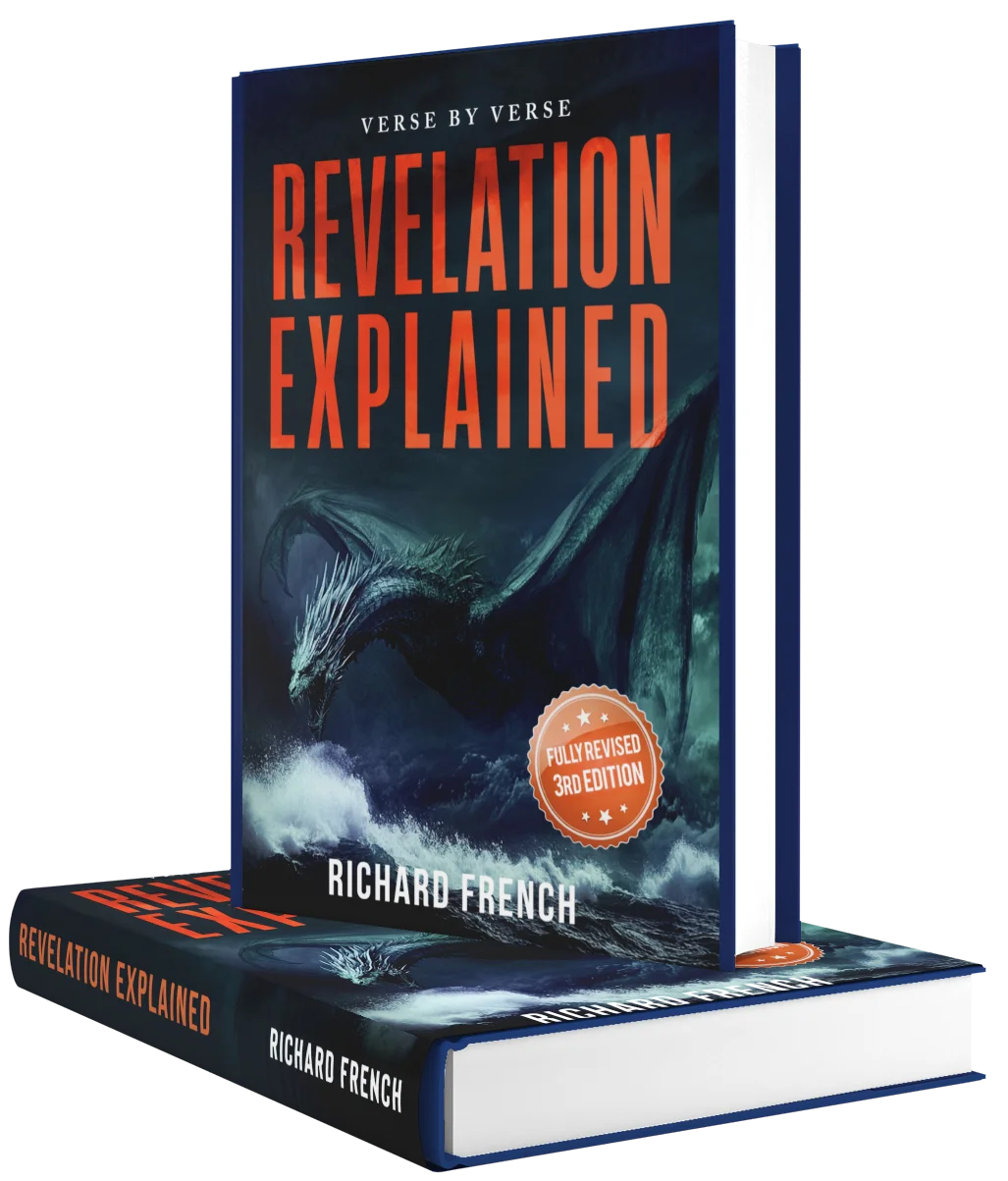
For readers wanting to trace how this imagery develops across Revelation's narrative, Revelation Explained: Verse by Verse examines each occurrence in its immediate context, connecting the symbols to both their Old Testament roots and their first-century setting.
The Four Major Interpretive Views
Evangelical scholars read Revelation's eschatology through four frameworks, each offering genuine insight into the text.
- Preterist: Most prophecies were fulfilled in the first century, particularly during the Jewish-Roman War of 66-70 AD.
- Historicist: Revelation's symbols map successive epochs of church history from the apostolic age to the second coming.
- Futurist: Chapters 4-22 await literal future fulfillment, including a coming tribulation and physical return of Christ.
- Idealist: A timeless portrayal of cosmic conflict between good and evil, applicable to every generation of believers.
Why Eschatology Matters for Believers Today
Eschatology in Revelation was given to orient and strengthen believers, not to fuel date-setting or fear. Craig Keener's observation holds across every generation: the book "sustains faith in suffering communities" (Keener, The NIV Application Commentary: Revelation). That pastoral purpose is built into its structure from the first verse.
Personal eschatology provides comfort precisely where we need it most: at the point of death and grief. The resurrection hope of 1 Corinthians 15 and the blessing of Revelation 20:6 assure believers that physical death is not the final word. The intermediate state means the believer is with Christ. Resurrection means the body itself is redeemed. Paul's argument in 1 Corinthians 15:17 is direct: "if Christ has not been raised, your faith is futile," grounding courage in a historical claim, not a sentiment.
Cosmic eschatology reframes present difficulty as temporary. Knowing that Christ returns as conquering King, that final judgment is real and just, and that the new creation is kainos (qualitatively renewed, not discarded) changes the weight of present circumstances. Romans 8:21 and Revelation 21:1 together declare that God's final word is restoration. The goal of eschatology, rightly understood, is doxology: a life of worship and faithfulness anchored in what God has promised and Christ has secured.
Common misapplications deserve a direct word. Using eschatology to set dates or decode current political events misreads the dei of Revelation 1:1, which signals divine necessity, not a chronological timetable. Fear-driven eschatology contradicts the peace the text is designed to produce. The seven beatitudes scattered through Revelation, including "Blessed is he who reads" (NKJV Revelation 1:3), "Blessed are the dead who die in the Lord" (NKJV Revelation 14:13), and "Blessed is he who keeps the words of the prophecy of this book" (NKJV Revelation 22:7), all point toward active, enduring discipleship. Passive waiting and fearful speculation both miss the point. For a fuller look at how these themes connect across Revelation's chapters, exploring the meaning of the Book of Revelation as a whole provides essential grounding.
Why Eschatology Matters
Eschatology is the theological framework that holds together suffering, justice, hope, and the character of God. For believers in any century, knowing that history moves toward a God-ordained conclusion transforms how they live today. Revelation's eschatology calls its readers to faithful endurance, anchored in the risen Christ who holds the last word. This is not a subject for specialists. It is the story every believer is living inside.
Conclusion
Eschatology covers two inseparable dimensions: what happens to each person (death, the intermediate state, resurrection, individual judgment) and what happens to all things (Christ's return, the millennium, final judgment, and the new creation). Revelation is the Bible's most vivid expression of this hope, drawing on a prophetic tradition stretching from Isaiah to Daniel. If you've found this material difficult or disorienting, you are in good company. Faithful readers have wrestled with these passages for two thousand years, and the wrestling itself is part of what the text invites. The God who calls Himself Alpha and Omega holds every moment of history in His hands, including yours. Prophecy was given to anchor you in that confidence, not to overwhelm you with uncertainty. For a deeper verse-by-verse exploration of Revelation's symbols and structure, see Revelation Explained: Verse by Verse by Richard French. You can also explore whether we are in the end times and what preterism teaches as natural next steps in understanding these themes.
Sources
- Revelation 1:1, 1:8, 1:9 - 10; 20:6, 20:11 - 15; 21:1; 22:7 (NKJV)
- Daniel 7:13 - 14; 12:1
- Ezekiel 40 - 48; 47:1 - 12
- Isaiah 65:17; 66:22
- Exodus 32:32; Psalm 69:28
- 1 Corinthians 15; Romans 8:21
- G.K. Beale - The Book of Revelation: A Commentary on the Greek Text (New International Greek Testament Commentary, Eerdmans, 1999)
- Grant R. Osborne - Revelation (Baker Exegetical Commentary on the New Testament, Baker Academic, 2002)
- Craig S. Keener - Revelation (NIV Application Commentary, Zondervan, 2000)
- Richard Bauckham - The Theology of the Book of Revelation (Cambridge University Press, 1993)
- Gordon Fee and Douglas Stuart - How to Read the Bible for All Its Worth, 4th ed. (Zondervan, 2014) - for genre and interpretive method