When the Lamb who was slain received all authority in heaven and on earth, something decisive happened to Satan's power. Postmillennialism is built on that conviction. It holds that Christ will return after a long era of gospel flourishing, during which the church progressively advances God's kingdom throughout the earth. If you've felt lost in the competing noise of end-times systems, you're not alone. This framework offers a way through the confusion.
The postmillennial view draws from a serious reading of Revelation, the Psalms, Daniel, and the New Testament letters. This article explains what postmillennialism teaches, what the Bible says in its support, and why it matters for Christian confidence and mission today. Faithful readers have wrestled with these questions for centuries, and there's no shame in approaching them with honest questions of your own.
Quick Answer: Postmillennialism is the biblical view that Christ will return after a long era of gospel flourishing, during which the Spirit-empowered church progressively advances God's kingdom throughout the earth, culminating in the discipling of nations before the second coming.
Definition: Postmillennialism in Revelation represents the interpretive framework that the millennium of Revelation 20 is a present, ongoing era of gospel triumph rooted in Christ's finished work, not a future earthly political reign awaiting his return.
Key Scripture: "The kingdoms of this world have become the kingdoms of our Lord and of His Christ, and He shall reign forever and ever!" (NKJV Revelation 11:15)
Context: Postmillennialism understands Christ's binding of Satan in Revelation 20 as a completed action at the cross, freeing the gospel to reach every nation throughout the current age.
This vision answers the question every suffering believer asks: Is the gospel actually winning? Postmillennialism says yes, grounding that confidence in Christ's present reign at the Father's right hand, the decisive limitation of Satan's power, and the guaranteed success of the Great Commission. The sections below examine what the Bible says about postmillennialism, how its literary and historical context shapes our reading, and what it means for Christians living and laboring today.
Key Takeaways
- Postmillennialism defined: Christ returns after, not before, a golden age of gospel advance in which the church disciples nations through Spirit-empowered proclamation.
- Satan's binding is present: The Greek aorist edesen ("he bound") in Revelation 20:2 points to a decisive, completed action at the cross, freeing the gospel to reach all nations.
- The millennium is ongoing: Anthony Hoekema notes the millennium "begins with the resurrection of Christ and ends with his return," making it a present reality rather than a future dispensation.
- The Great Commission guarantees success: The command to "make disciples of all the nations" (NKJV Matthew 28:19) carries Christ's promise of abiding presence, implying a guaranteed, effectual outcome.
- Historic theological pedigree: Postmillennialism was held by Jonathan Edwards, Charles Hodge, and B.B. Warfield, making it a scripturally grounded position within Reformed Christianity.
Key Evidence
- Revelation 20:2: The Greek aorist edesen ("he bound") indicates a completed, decisive action, which G.K. Beale's NIGTC commentary identifies as pointing to Satan's limitation at the cross rather than a future event.
- Matthew 28:19: The aorist imperative matheteusate ("make disciples") carries Christ's promise of presence "even to the end of the age," implying the commission will succeed comprehensively across all nations.
- Psalm 2:8 applied in Acts 13:33 and Hebrews 1:5: The Father's promise to give the nations as the Son's inheritance is treated by New Testament authors as a present, ongoing reality tied to Christ's resurrection and exaltation.
- Daniel 2:44: The kingdom set up by the God of heaven "shall break in pieces and consume all these kingdoms, and it shall stand forever" (NKJV), pointing to a reign that grows from Christ's first coming until it fills human civilization.
- Psalm 110:1: "Sit at My right hand, till I make Your enemies Your footstool" (NKJV) establishes Christ's present session as the engine driving kingdom advance throughout the church age.

What the Bible Says About Postmillennialism
Postmillennialism draws its confidence from a cluster of passages depicting Christ's present reign, Satan's decisive limitation, and the unstoppable advance of the gospel. These texts, taken together, build a framework that is less about predicting the future and more about trusting what Christ has already accomplished.
Revelation 20:2 records that Satan was bound "for a thousand years" using the Greek aorist edesen, a completed action. G.K. Beale's analysis of this verb confirms its decisive, punctiliar force, pointing to a specific moment rather than an ongoing process. Postmillennialists interpret this binding as Christ's limitation of Satan's power at the cross, enabling the gospel to go freely to all nations. Before Christ, the Gentile world lay largely in spiritual darkness. After the cross, that barrier was broken, and the missionary advance of the early church confirmed it.
Matthew 28:19 commands believers to "make disciples of all the nations" using matheteusate, an aorist imperative indicating urgent, commanded action with ongoing results. Christ's promise to be present "even to the end of the age" implies the commission will succeed comprehensively. Psalm 2:8 reinforces this: "Ask of Me, and I will give You the nations for Your inheritance, and the ends of the earth for Your possession" (NKJV Psalm 2:8). The New Testament applies this promise to Christ's resurrection and present exaltation in Acts 13:33 and Hebrews 1:5, indicating the inheritance is being realized now, not merely awaited.
Daniel 2:44 adds another layer: "the God of heaven will set up a kingdom which shall never be destroyed... it shall break in pieces and consume all these kingdoms, and it shall stand forever" (NKJV Daniel 2:44). This points to a kingdom that grows from Christ's first coming until it fills all of human civilization. Postmillennialism is confidence grounded in Christ's finished work and the Father's promise that the nations belong to his Son.
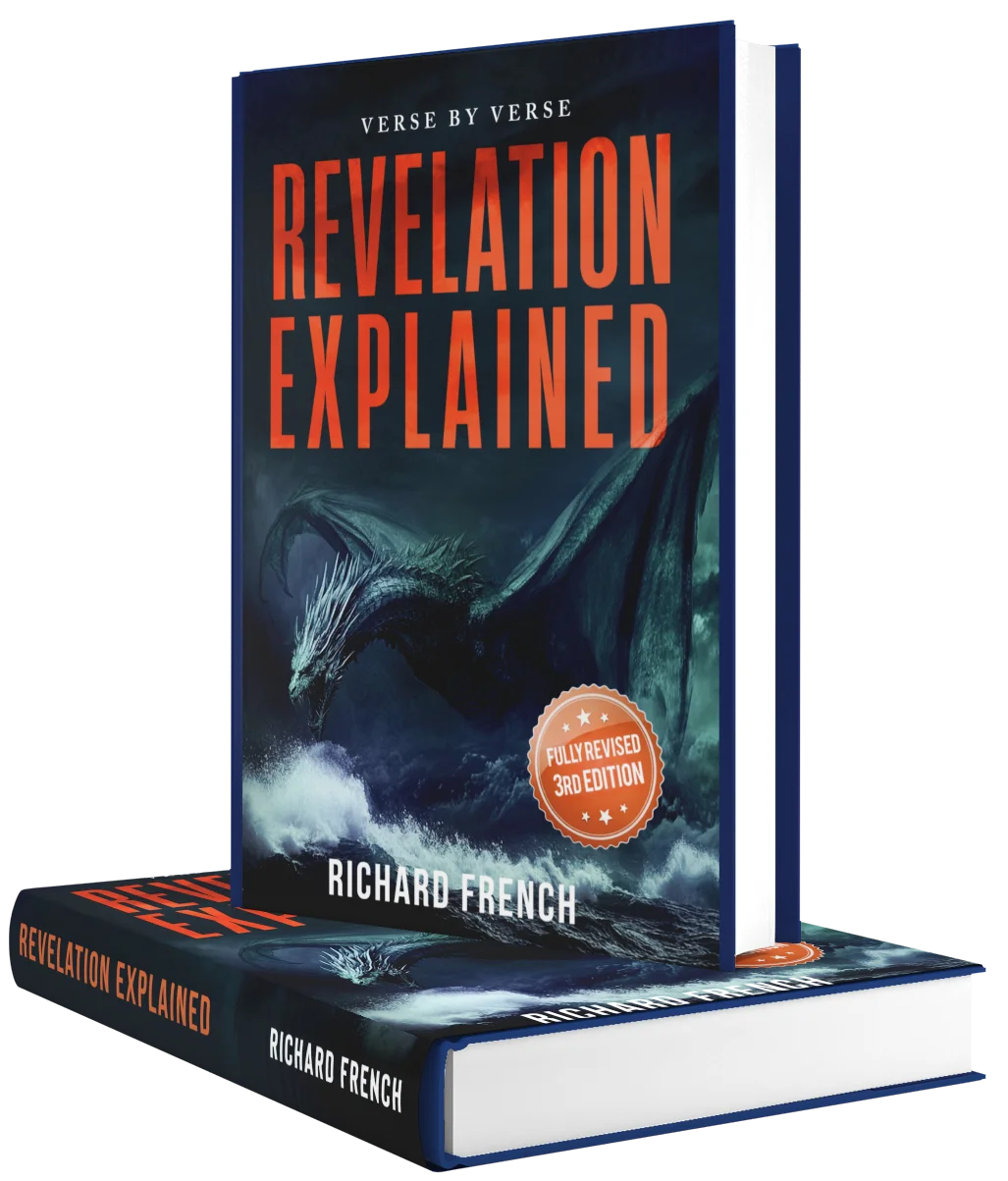
For readers wanting to trace how this kingdom imagery develops across Revelation's narrative, Revelation Explained: Verse by Verse examines each occurrence in its immediate context.
Understanding Postmillennialism in Its Biblical Context
Revelation 20 does not arrive in isolation. Its literary setting and Old Testament background shape how the millennium should be read, and both point toward a kingdom that grows rather than simply arrives. Maybe you've wondered why the millennium appears so late in the book, or what it has to do with the visions that precede it. The structure of Revelation itself helps answer that question.
The entire book of Revelation uses a technique scholars call recapitulation, in which the same redemptive-historical period is revisited from multiple angles. Revelation 20 follows the fall of Babylon in chapters 17 and 18, the victory hymns of chapter 19, and the vision of Christ as the conquering rider. Rather than following chapter 19 chronologically, chapters 20 to 22 likely recapitulate the period between the two advents. G.K. Beale's commentary on Revelation documents this structural pattern in detail, noting that the throne-room visions throughout the book present heavenly realities corresponding to earthly events, not cinematic previews of sequential history.
The Old Testament background deepens this reading. Daniel's stone cut without hands grows into a mountain filling the whole earth (NKJV Daniel 2:35), and the Son of Man receives dominion over all peoples (NKJV Daniel 7:13-14). Jewish Christians steeped in these texts would have heard a kingdom that grows. Isaiah 2:2-4 envisions nations streaming to Zion, which postmillennialists apply to the gospel-era gathering of peoples. Psalm 110:1 establishes the engine: "Sit at My right hand, till I make Your enemies Your footstool" (NKJV Psalm 110:1). Christ reigns now, and that reign drives kingdom advance throughout the church age.
You can explore how these interpretive traditions approach specific passages in our overview of preterism and our article on the first resurrection in Revelation 20.
The First-Century Setting
The original audience of Revelation faced imperial pressure, economic exclusion, and social marginalization under Roman rule. Their burning question was visceral, not abstract: Is Caesar winning, or is Christ?
- Immediate relevance: A message that Christ had already bound Satan and received the nations as his inheritance answered that question with force, grounding confidence in the Lamb's finished work rather than political reversal.
- Symbolic numbers: Ancient literature used large round numbers to communicate completeness and abundance, not precise chronological measurement, which cautions against reading "a thousand years" as a literal figure.
Why Postmillennialism Matters for Christians Today
Postmillennialism is, at its heart, a theology of hope in action. It calls believers toward active, expectant engagement rather than passive waiting for history to wind down. If you've ever felt that Christian faithfulness is swimming against an unstoppable tide, this framework offers a different way of seeing the present moment.
Iain Murray observes in The Puritan Hope that postmillennialism was the eschatology of the Puritan era, held by Jonathan Edwards, Charles Hodge, and B.B. Warfield, grounding it in centuries of serious exegetical tradition. This is worth noting: the view that the gospel will succeed in discipling the nations was not born from cultural optimism. It was forged in eras of suffering, persecution, and social marginalization, much like the first-century church itself.
Because Christ is reigning now and Satan is already limited in his ability to deceive the nations, Christians labor with the assurance that their work matters eternally. Revelation 11:15 declares it plainly: "The kingdoms of this world have become the kingdoms of our Lord and of His Christ" (NKJV Revelation 11:15). That change happens through the gospel, not through political power alone. The word "overcome" (nikao, conquer) appears repeatedly in Revelation 2 to 3, calling every believer to active faithfulness, bold proclamation, and discipleship across every area of life. Whether you find this view persuasive or are still working through it, the call to faithful engagement in the present age belongs to every Christian regardless of millennial position.
Common Misapplications to Avoid
Postmillennialism is sometimes misread in ways that undermine its biblical foundation. Three patterns deserve attention.
- Triumphalism: The millennium in Revelation 20 includes martyrs. Gospel advance does not exclude suffering, and postmillennialism has never promised a painless path to kingdom progress.
- Secular confusion: Kingdom progress runs on the Holy Spirit and the Word, not human optimism or political legislation. The engine is divine, not cultural.
- Date-setting: The "thousand years" is symbolic. Scripture consistently resists chronological timelines, and no postmillennialist should claim to identify when a golden age begins or ends.
Why This Vision Matters
This framework replaces confusion about competing end-times systems with confidence in Christ's sovereign rule. The Lamb who was slain holds all authority, and his kingdom advances with certainty across every generation. Paul grounds this assurance in 1 Corinthians 15:58, calling believers to labor abundantly because their work in the Lord is never without effect. That confidence rests on the Father's promise to the Son, written across both Testaments, and it shapes how you pray, how you serve, and how you persevere when progress feels slow.
Conclusion
This view holds that Christ reigns now, Satan is decisively bound, and the Great Commission will succeed in discipling the nations before Christ's return. Grounded in the finished work of Christ, the promises of the Father, and the witness of Scripture from Daniel to Revelation, postmillennialism carries serious exegetical weight and a long, distinguished history within Reformed Christianity. It is not the only position held by faithful Christians, but it deserves careful consideration. Let this vision produce bold, patient, joyful faithfulness in your own life. You are not laboring in vain. The kingdoms of this world are becoming his, and you are part of that story. For a deeper verse-by-verse exploration of Revelation's kingdom vision, see Revelation Explained: Verse by Verse by Richard French.
Sources
- Revelation 20:1 - 6 (NKJV)
- Revelation 11:15 (NKJV)
- Matthew 28:19 - 20 (NKJV)
- Psalm 2:8 (NKJV)
- Psalm 110:1 (NKJV)
- Daniel 2:44 (NKJV)
- Isaiah 2:2 - 4; 65:17 - 25 (NKJV)
- Acts 2:33 - 36 (NKJV)
- Kenneth L. Gentry Jr., He Shall Have Dominion: A Postmillennial Eschatology (Dominion Press, 1992)
- Anthony Hoekema, The Bible and the Future (Eerdmans, 1979)
- Iain Murray, The Puritan Hope: A Study in Revival and the Interpretation of Prophecy (Banner of Truth, 1971)
- G.K. Beale, The Book of Revelation: A Commentary on the Greek Text (NIGTC; Eerdmans, 1999)
- Loraine Boettner, The Millennium (P&R Publishing, 1957)