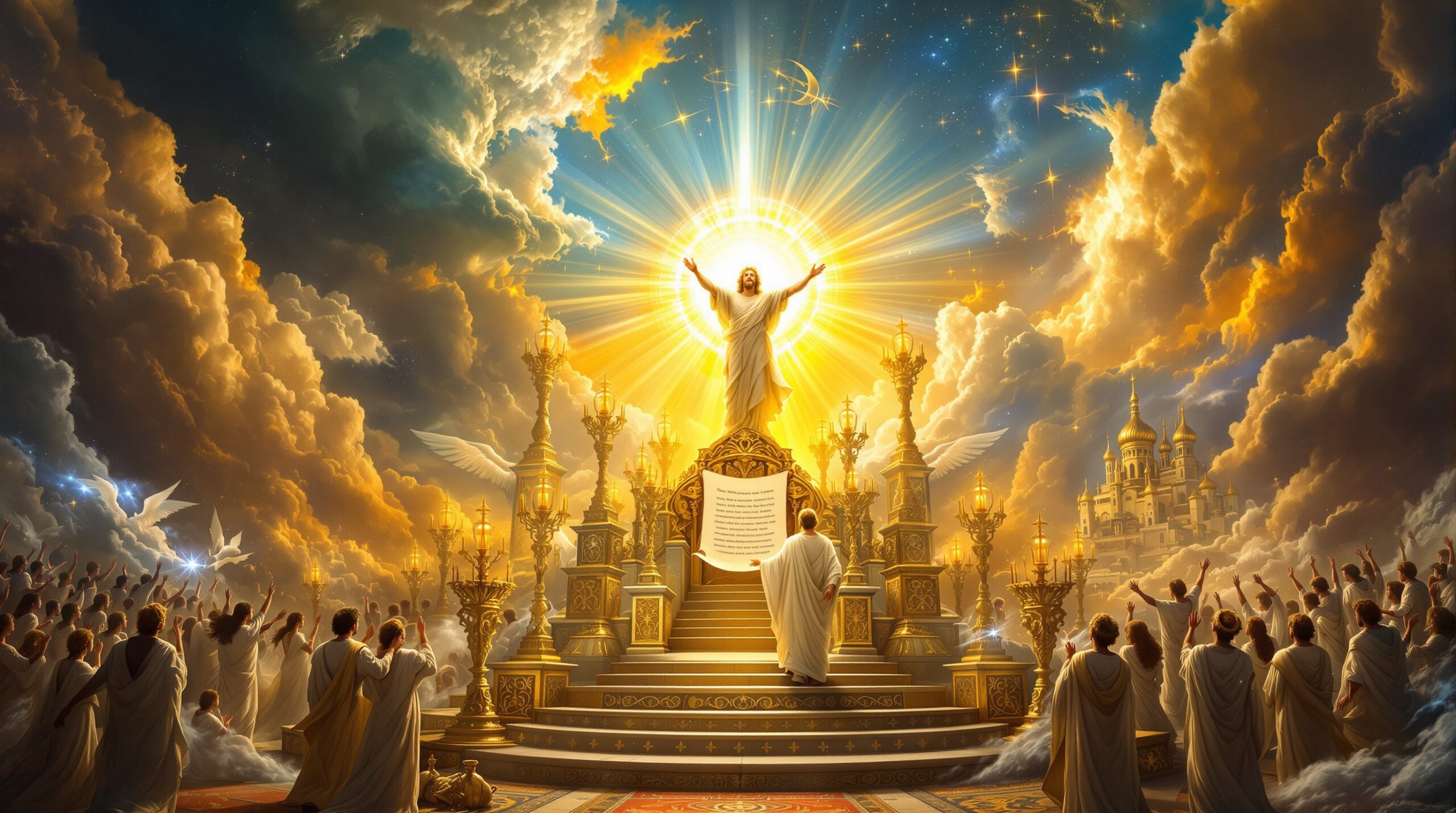
The Book of Revelation is Scripture’s most mysterious and misunderstood text. Many reduce it to cryptic predictions about the future. Yet its original audience needed immediate encouragement, not just information about distant events. Understanding what the Book of Revelation is about changes how Christians face persecution, handle cultural pressure, and maintain hope amid apparent chaos.
Revelation is not a divine puzzle for predicting dates and identifying contemporary figures. Instead, it unveils cosmic realities that empower faithful witness in every generation. This article explores Revelation’s central message—the unveiling of Jesus Christ’s victory. It examines the book’s purpose for first-century believers facing Rome’s hostility. And it applies this vision to Christians today.
Quick Answer: The Book of Revelation is about Jesus Christ’s ultimate victory over evil and His return to complete God’s redemptive plan. Written to encourage persecuted first-century believers, it unveils cosmic spiritual realities through prophetic symbolism. It reveals that Christ has already conquered through His death and resurrection, and will return to judge His enemies and dwell eternally with His people.
Key Scripture: “The Revelation of Jesus Christ, which God gave Him to show His servants—things which must shortly take place” (Revelation 1:1, NKJV)
Context: Revelation is fundamentally a disclosure of Jesus Christ given by God the Father, not merely predictions about future events.
- Christ's victory is central—Revelation portrays Jesus as the slain Lamb who conquers through sacrificial death, redefining power and victory throughout the book.
- Encouragement amid persecution—The book addresses seven specific churches facing Roman imperial pressure, providing hope that their suffering has cosmic significance and certain vindication.
- Symbolic language rooted in the Old Testament—With over 500 Old Testament allusions, Revelation weaves prophetic imagery from Daniel, Ezekiel, Isaiah, and Zechariah into its visions.
- Spiritual warfare unveiled—The book exposes the supernatural dimension behind earthly conflicts, showing that Christ's cross and resurrection broke Satan's authority.
- New creation promised—Revelation climaxes not with escape from earth but with heaven coming to earth as God dwells with resurrected humanity in renewed creation.
The Revelation of Jesus Christ: Source and Central Focus
What the Book of Revelation is about begins with its very first verse: "The Revelation of Jesus Christ, which God gave Him to show His servants—things which must shortly take place" (Revelation 1:1, NKJV). The Greek term apokalypsis means "unveiling" or "disclosure." This is not primarily about concealing information but revealing previously hidden realities—specifically unveiling Jesus Christ Himself.Revelation is fundamentally a disclosure of Jesus Christ given by God the Father to believers. It offers more than predictions about future events disconnected from His person and work. The book presents Christ in multiple roles that demonstrate His complete authority and redemptive purpose. He appears as the faithful witness who conquered through death (1:5), the slain Lamb possessing all authority (5:6), the Word of God riding in judgment (19:11-16), and the Alpha and Omega, Beginning and End (22:13).

The connection to John’s other writings reveals theological continuity across his work. The Gospel of John presents Jesus as incarnate Logos bringing eternal life. The Epistles address threats to this confession. Revelation completes this trajectory by showing Christ’s cosmic victory over all opposition.
The Paradox of the Conquering Lamb
The central image in Revelation 5:6 presents a profound paradox: "A Lamb as though it had been slain, having seven horns and seven eyes." This symbol combines vulnerability with complete power. Seven horns represent perfect strength. Seven eyes signify complete knowledge.This paradoxical symbol redefines victory throughout Revelation. Christ conquers through sacrificial death, not military might. Believers overcome by “the blood of the Lamb and by the word of their testimony” (12:11), conquering through faithful witness even unto death. This pattern inverts worldly assumptions about power. It establishes martyrdom as triumph rather than defeat.
"The Testimony of Jesus Is the Spirit of Prophecy"
Revelation 19:10 establishes an interpretive principle that prevents misuse of the book: "The testimony of Jesus is the spirit of prophecy." All true prophecy centers on bearing witness to Jesus Christ rather than satisfying curiosity about future timelines.The book’s visions ultimately testify to Christ’s person and work rather than providing merely chronological predictions. This Christ-centered focus keeps readers anchored in worship and obedience rather than speculative code-breaking disconnected from transformed living. Every symbol, judgment, and promise points back to the Lamb who was slain and now reigns.
Why Revelation Was Written: Addressing Persecution and Compromise
Seven churches in Asia Minor faced intense pressure from Roman imperial cult worship, economic exclusion through guild requirements, and social ostracism for refusing participation in pagan practices. Cities like Pergamum housed emperor temples—described as "where Satan's throne is" (2:13). Smyrna competed through enthusiastic emperor worship to gain Rome's favor.Imperial worship created immediate threats for Christians. Citizens demonstrated loyalty by offering incense to the emperor’s genius (divine spirit) and participating in festivals honoring Roman deities. Economic pressure compounded these challenges. The mark of the beast preventing buying and selling (13:16-17) reflects guild membership requirements that demanded participation in pagan temple feasts.
Revelation addresses real believers facing genuine threats—social ostracism, economic destitution, imprisonment, and execution—for refusing to compromise Christian confession with cultural idolatry. The book’s vivid imagery gave persecuted believers language to interpret their suffering within God’s sovereign purposes. They could see themselves as part of a cosmic drama rather than victims of meaningless oppression.
The Letters to the Seven Churches Reveal Specific Challenges
Each letter diagnoses particular spiritual conditions while establishing patterns that apply across generations. Ephesus had lost its first love despite doctrinal orthodoxy (2:1-7). Smyrna faced intense persecution and Jewish opposition (2:8-11). Pergamum compromised with pagan practices (2:12-17), while Thyatira tolerated false teaching promoting immorality (2:18-29).Sardis maintained reputation for life while spiritually dead (3:1-6). Philadelphia remained faithful despite little strength (3:7-13). Laodicea showed spiritual complacency—wealthy but spiritually poor, lukewarm in devotion (3:14-22). These specific historical situations provide pastoral addresses while establishing patterns that recur throughout church history.
Comfort and Warning for Suffering Churches
Revelation provides comfort by revealing that apparent earthly chaos unfolds under divine sovereignty. The sealed scroll represents God's redemptive plan that only Christ can execute (chapter 5). This assures believers that history follows divine purpose rather than random violence.The book also warns against complacency and compromise. Laodicea’s self-assessment as “rich and wealthy” contrasts sharply with Christ’s evaluation: “wretched, miserable, poor, blind, and naked” (3:17). Martyrs under the altar (6:9-11) receive assurance of vindication. Their deaths become purposeful witness rather than meaningless tragedy. This dual message of comfort and warning pervades the entire book.
What Is the Book of Revelation About? The Unveiling of Cosmic Spiritual Warfare
Beyond addressing immediate persecution, what the Book of Revelation is about includes revealing the spiritual dimension behind earthly conflicts that believers face. Revelation 12:7-9 reveals cosmic conflict: "War broke out in heaven: Michael and his angels fought with the dragon; and the dragon and his angels fought, but they did not prevail... So the great dragon was cast out, that serpent of old, called the Devil and Satan, who deceives the whole world."Revelation exposes that Christians face supernatural opposition from Satan and his agents. But Christ’s death and resurrection have fundamentally broken Satan’s authority, limiting his time and ensuring his ultimate defeat. The book identifies specific spiritual enemies operating behind persecution.
The dragon (Satan) appears as the ancient serpent, deceiver, and accuser of believers (12:9-10). The beast from the sea represents political power demanding worship, given authority by the dragon (13:1-10). The beast from the earth functions as false prophet, performing signs to promote the first beast’s worship (13:11-18). Babylon the prostitute symbolizes seductive corrupt systems—drunk on saints’ blood while directing commerce (17:1-18).
How Believers Conquer in Spiritual Warfare
Victory is defined paradoxically in Revelation 12:11: "They overcame him by the blood of the Lamb and by the word of their testimony, and they did not love their lives to the death." Christian conquest means maintaining faithful witness even unto death, not escaping suffering or achieving earthly dominance.The Greek term nikao (“to conquer”) appears repeatedly in letters to churches (2:7, 11, 17, 26; 3:5, 12, 21). It emphasizes overcoming through faithfulness rather than force. Studying Revelation’s pattern reveals that apparent defeat through martyrdom is actually victory in God’s economy, since believers share Christ’s resurrection life.
The Timing of Satan's Defeat
Satan's casting down from heaven connects directly to Christ's death and resurrection: "Now salvation, and strength, and the kingdom of our God, and the power of His Christ have come, for the accuser of our brethren, who accused them before our God day and night, has been cast down" (12:10).The devil’s “great wrath” stems from knowing “he has a short time” (12:12). His authority is broken though his activity continues until final judgment. This “already but not yet” reality grounds Christian hope. Decisive victory has been accomplished through the cross, while complete manifestation awaits Christ’s return. Believers live between Satan’s defeat and his destruction.
The Structure of Revelation: From Letters to New Creation
The architectural progression of Revelation mirrors temple movement from outer courts to Holy of Holies to Eden-temple restoration. The structure begins with earthly churches (chapters 1-3), proceeds to God's throne room (chapters 4-5), and culminates in restoration of creation as God's dwelling place (chapters 21-22).The seven-cycle structure reflects Hebrew completion symbolism through repeated patterns. Seven letters address the churches (chapters 2-3). Seven seals are opened (chapters 6-8). Seven trumpets sound (chapters 8-11). Seven bowls are poured out (chapters 15-16). Interludes provide interpretive keys—chapter 7’s sealed saints, chapters 10-11’s prophetic commission, and chapters 12-14’s explanation of cosmic conflict.
Scholars debate whether the seals, trumpets, and bowls represent successive chronological periods or recapitulative visions of the same realities from different angles. But the literary pattern clearly intensifies judgment while interrupting with explanatory visions that prevent merely chronological reading.
Old Testament Foundations Throughout Revelation
Over 500 Old Testament allusions appear without a single direct quotation. John weaves prophetic imagery into new tapestry. Primary sources include Daniel's visions of the Ancient of Days, beasts representing kingdoms, the Son of Man receiving dominion, and resurrection. Revelation draws heavily on Daniel 7-12.Ezekiel contributes throne-chariot visions, commissioning through scroll-eating, Gog and Magog, temple measurements, and the river of life. Isaiah supplies servant songs, new creation language, and God dwelling with His people. Zechariah offers lampstands, horsemen, and Satan as accuser. The Exodus narrative pervades Revelation through plagues on God’s enemies, sea-crossing redemption, and tabernacle imagery.
Original audiences steeped in Scripture through synagogue and church worship would immediately recognize these patterns. When John describes “a new heaven and a new earth” (21:1), they would recall Isaiah 65:17-25 and understand creation’s restoration rather than annihilation.
Covenant-Lawsuit Literature Pattern
Like Old Testament prophets calling Israel to account using covenant curses from Deuteronomy, John portrays the Lamb opening covenant documents (the sealed scroll) and executing judgment on covenant-breakers while vindicating the faithful remnant.The pattern follows prophetic lawsuit structure: indictment of rebellion, announcement of judgment, and promise of restoration for those who remain faithful. This framework connects Revelation to the entire biblical storyline from creation through fall, redemption, and consummation, showing Christ as the executor of God’s covenant purposes.
Different Views on Interpreting Revelation's Prophecy
Four major interpretive frameworks have developed throughout church history. Each offers insights while facing limitations. Understanding these approaches helps readers work through disagreements among commentators while recognizing areas of broad consensus.Preterist Interpretation
The preterist view sees Revelation primarily addressing first-century events, particularly Rome's persecution and Jerusalem's destruction (AD 70). Preterists identify the beast with Roman emperors (often Nero), Babylon with Rome itself, and the tribulation with suffering under imperial opposition.This approach excels at explaining immediate relevance to the original audience and grounding interpretation in historical context. However, full preterists claim complete fulfillment by AD 70. Critics argue this minimizes prophetic elements about Christ’s future return. Partial preterists maintain that chapters 20-22 remain unfulfilled.
Historicist Interpretation
The historicist perspective interprets Revelation as outlining church history from John's time until Christ's return. Medieval Reformers often adopted this view, identifying the papacy with the beast or Babylon, Islamic powers with apocalyptic threats, and historical persecutions with tribulation periods.This approach takes seriously that Revelation addresses the entire church age. Critics note the arbitrary nature of historical correlations and point to this view’s declining popularity due to its speculative associations that vary dramatically among different interpreters.
Futurist Interpretation
Futurists see Revelation 4-22 as describing events immediately preceding and including Christ's second coming. Most identify a future seven-year tribulation, literal Antichrist, rebuilt Jewish temple, and Christ's millennial reign. Dispensational futurism adds a pre-tribulation rapture while distinguishing Israel and the church.This approach emphasizes unfulfilled prophecy, maintains expectation of Christ’s return, and accounts for connections to Daniel’s prophecies. Critics argue it disconnects the book from its original audience and sometimes imports modern geopolitical concerns into ancient text. For readers wanting detailed examination of how futurist interpretation approaches specific passages, Revelation Explained: Verse by Verse traces these perspectives throughout each chapter.
Idealist (Symbolic) Interpretation
The idealist perspective sees Revelation presenting timeless spiritual truths through symbolic imagery applicable to all generations. Rather than predicting specific historical events, the book unveils cosmic realities—good versus evil, God's sovereignty, and saints' vindication. Every generation faces "beast" systems demanding ultimate loyalty and "Babylon" cultures seducing compromise.This approach avoids dating controversies and maintains contemporary relevance across centuries. Critics contend it empties prophecy of concrete meaning and minimizes hope for Christ’s actual return in space-time history.
Most evangelical scholars combine elements of these views, adopting “modified futurist” positions that acknowledge relevance to first-century readers while maintaining ultimate fulfillment remains future. Broad agreement exists that Revelation addresses real historical churches facing genuine persecution, Christ will physically return in victory, symbolic imagery requires careful interpretation rather than wooden literalism, and the book intends pastoral encouragement alongside prediction.
Why What the Book of Revelation Is About Matters for Christians Today
Understanding what the Book of Revelation is about changes how contemporary Christians perceive suffering, resist cultural compromise, and maintain hope for Christ's return. Revelation doesn't minimize persecution's reality but reveals that apparent earthly defeats are actually part of Christ's sovereign victory already secured through His death and resurrection.When Christians grasp that the slain Lamb has already conquered and that earthly powers are finite and doomed, they can resist cultural pressure to compromise without fear or retaliation. This perspective empowers believers to maintain faithful witness regardless of earthly consequences, knowing that eternal realities matter more than temporal comfort.
Practical Applications for Contemporary Believers
Patient endurance and steadfast witness define Christian response to Revelation's message. The repeated command "He who has an ear, let him hear what the Spirit says to the churches" (2:7, 11, 17, 29; 3:6, 13, 22) emphasizes responsive obedience over speculative curiosity about prophetic timetables.Resistance to idolatry flows from recognizing that any system—political, economic, or cultural—demanding ultimate allegiance belongs to “beast” or “Babylon” categories. Believers give worship to God alone, refusing to grant any institution or ideology the devotion reserved for the Creator. Worship becomes a countercultural act, with more space devoted to heavenly worship scenes than tribulation judgments. Singing “Worthy is the Lamb” (5:12) defies idolatrous claims of earthly powers.
Hope grounds itself in certain promises rather than uncertain predictions. God will “wipe away every tear” (21:4), dwell with His people (21:3), and make all things new (21:5). These guarantees sustain believers through present trials.
Common Misapplications to Avoid
Date-setting for Christ's return contradicts clear biblical prohibition (Matthew 24:36; Acts 1:7). Identifying contemporary political figures as the Antichrist based on current events rather than textual criteria reflects the same error repeated across centuries as different generations have wrongly identified their opponents as fulfillment of prophecy.Treating Revelation as satisfying curiosity about future events rather than demanding present transformation misses the book’s purpose. Emphasizing judgment while neglecting grace ignores the book’s pervasive worship scenes and invitation “Come!” (22:17) that balance justice with mercy.
Reading Revelation in isolation from Old Testament context and the rest of New Testament theology produces distorted interpretation. The book assumes readers understand biblical patterns from Genesis through Malachi and fits within the complete witness to Christ found throughout Scripture.
The ultimate goal centers on new creation rather than escape. History’s consummation is not flight from creation but its restoration and renewal as God’s dwelling place (21:1-4), reversing all effects of the Fall and fulfilling the covenant promise “I will be their God.”
Conclusion
What the Book of Revelation is about centers on Jesus Christ's ultimate victory over evil through His sacrificial death and certain return in glory. Written to encourage believers facing persecution, it reveals cosmic realities that change how Christians perceive present circumstances. Faithful witness, even through suffering, is true conquest because the Lamb has already secured victory.Rather than generating fear or obsessive speculation about prophetic timelines, Revelation calls believers to worship the Lamb, resist idolatrous cultural pressures, and maintain patient hope for new creation when God will dwell eternally with His people, wiping away every tear. The book invites responsive obedience today while assuring certain vindication tomorrow.
For a deeper verse-by-verse exploration of Revelation’s rich symbolism and practical application, see Revelation Explained: Verse by Verse by Richard French.