What Does the Bottomless Pit (Abyss) Mean in Revelation?
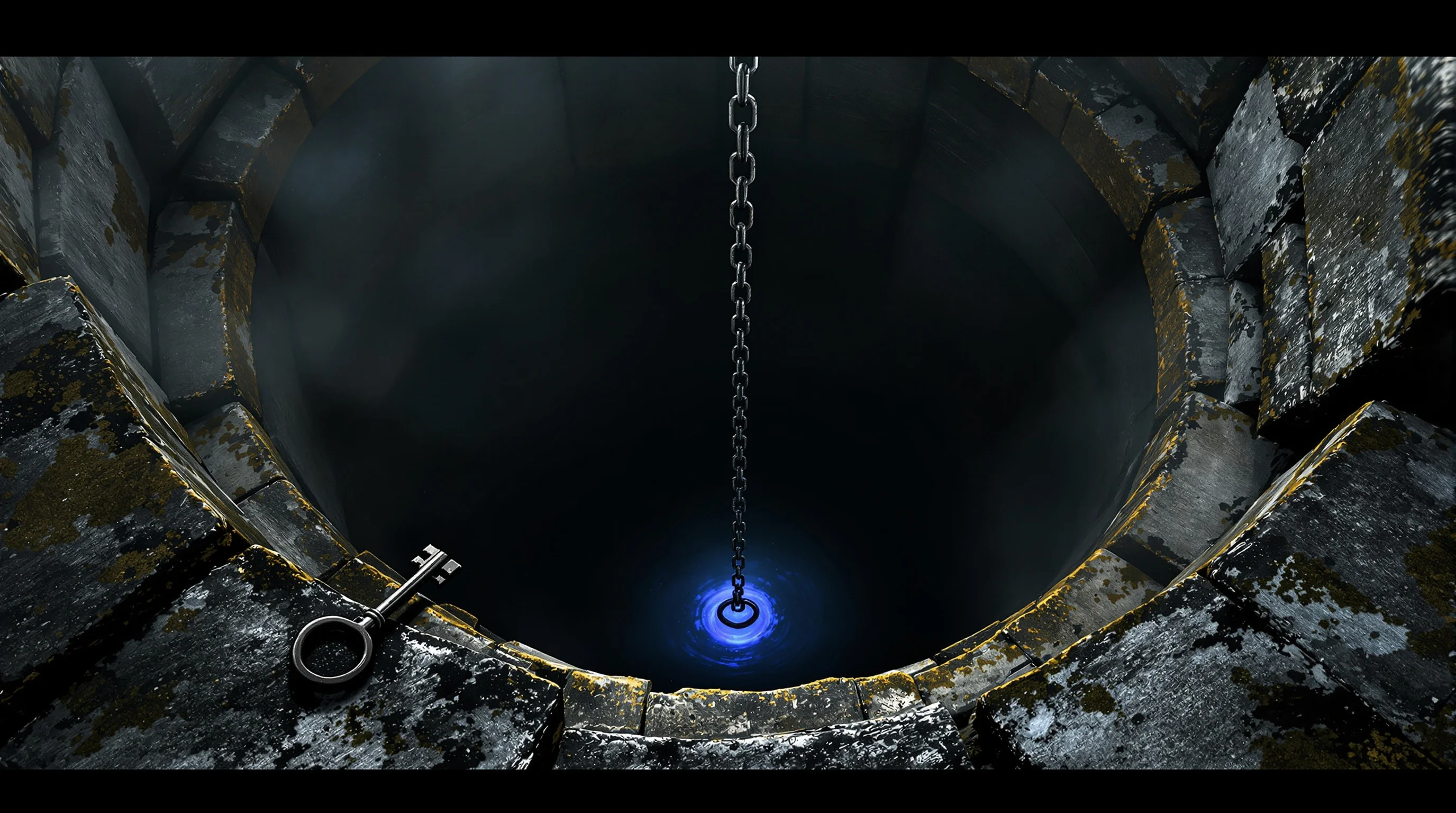
The Greek word abyssos appears seven times in Revelation, and every single appearance is paired with an image of restraint: a central point, a lock, a chain, or a seal. The bottomless pit is never presented as a place of unchecked chaos. That pattern is deliberate, and it changes everything about how we read this imagery.
Many readers encounter the bottomless pit and feel dread rather than clarity. If that's where you are, you're in good company. Faithful Christians have wrestled with these passages for two thousand years, and the difficulty is real. It's okay to approach this imagery with honest questions. What the text actually offers, once we look at it verse by verse, is a theological statement about who holds authority over the darkest forces in the universe.
The bottomless pit is not a symbol of chaos beyond God's reach. It specifically represents a sealed domain of demonic confinement, controlled entirely by divine authority. This article examines what Scripture says about it, where the imagery comes from, and why it matters for believers today.
Quick Answer: The bottomless pit (Greek abyssos) is a sealed, subterranean field of demonic confinement in Revelation. It is the prison of destructive spiritual forces, the origin of the beast, and the final holding place of Satan. Every appearance in Scripture emphasizes that God holds its central point and controls what enters or exits.
Definition: The bottomless pit in Revelation symbolizes a divinely sealed prison for demonic forces, opened and closed only under God's authority, from which the beast originates and into which Satan is in the end bound.
Key Scripture: "He laid hold of the dragon, that serpent of old, who is the Devil and Satan, and bound him for a thousand years; and he cast him into the bottomless pit, and shut him up, and set a seal on him." (NKJV Revelation 20:2-3)
Context: The abyss functions throughout Revelation as a theological statement about divine sovereignty over evil, not a symbol of chaos beyond God's reach.
This vision serves a pastoral purpose for believers under pressure. It functions in Revelation's message by establishing that demonic forces are prisoners operating on a limited, divinely permitted lease, not free agents acting independently. The implication for believers is clear: what appears to be overwhelming darkness has a ceiling. The sections that follow examine what Scripture says about the bottomless pit, where the imagery originates, and what it means for Christians living in a world that can feel chaotic and evil-dominated.
Key Takeaways
- The bottomless pit is a real domain of confinement: Scripture consistently presents it as a sealed prison for demonic forces, not a vague metaphor for evil.
- God holds the central point: The angel descending with the central point in Revelation 20:1 mirrors Christ's declaration in Revelation 1:18 that He holds "the centrals point of Hades and of Death."
- The beast originates from the abyss: Revelation 17:8 connects the supreme anti-God power directly to this demonic field, signaling that organized opposition to God's kingdom has a subterranean, demonic source.
- Demonic activity from the abyss operates within strict limits: The locusts of Revelation 9 cannot harm the sealed servants of God and are restricted to five months, demonstrating bounded divine permission.
- Satan's final binding in the abyss is total and complete: Revelation 20:1-3 uses four deliberate acts (binding, casting, shutting, and sealing) to communicate complete restraint, not partial limitation.
What Does the Bible Say About the Bottomless Pit?
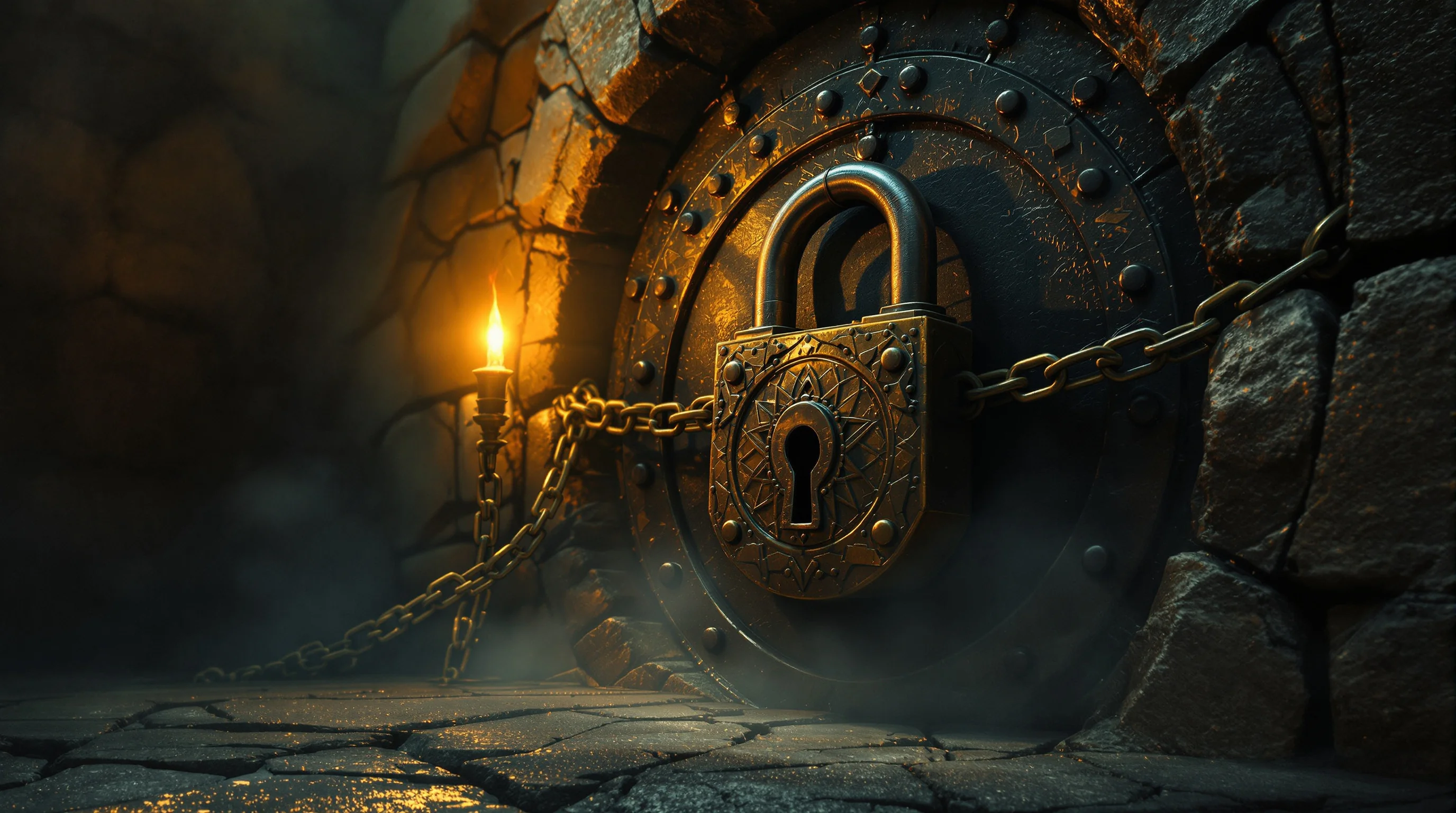
The Greek term abyssos is a compound of a- (without) and byssos (bottom or depth), meaning "the unfathomable depth" or "boundless place." From its first appearance in Revelation, the text establishes it as a locked domain. "And he opened the bottomless pit, and smoke arose out of the pit like the smoke of a great furnace. So the sun and the air were darkened because of the smoke of the pit." (NKJV Revelation 9:2). The very act of opening requires a central point, which means something holds it shut.
Grant Osborne, in his Baker Exegetical Commentary, observes that "evil cannot act until God allows it, and when he does allow it, it is purposeful and limited." That purposeful limitation shows up in the details. The abyss has an assigned ruler: "And they had as king over them the angel of the bottomless pit, whose name in Hebrew is Abaddon, but in Greek he has the name Apollyon." (NKJV Revelation 9:11). Abaddon means "destruction" in Hebrew; Apollyon means "Destroyer" in Greek. The dual naming across both covenant languages signals that this figure was known within established Jewish and early Christian tradition, not invented for Revelation alone. For a deeper look at this figure, see the guide to Abaddon in Revelation 9.
The beast of Revelation also carries this origin. "The beast that you saw was, and is not, and will ascend out of the bottomless pit and go to perdition." (NKJV Revelation 17:8). The abyss is the source of organized, anti-God power in the world. Then, in Revelation 20:1-3, Satan himself is cast into it with four cumulative acts: bound, cast, shut, and sealed. The bottomless pit in Revelation is a sealed prison for demonic forces, opened and closed only under divine authority, never operating beyond the boundaries God permits.
Key Evidence:
- Revelation 9:2: The bottomless pit requires a central point to open, establishing it as a locked domain under divine control.
- Revelation 9:4-5: Locusts from the abyss are explicitly forbidden from harming God's sealed servants and are limited to five months, demonstrating bounded divine permission.
- Revelation 9:11: The abyss has an assigned ruler, Abaddon/Apollyon, a figure recognized across Jewish and early Christian tradition before Revelation was written.
- Revelation 17:8: The beast ascends from the bottomless pit, connecting organized anti-God power directly to this demonic domain.
- Revelation 20:1-3: Satan is bound, cast, shut, and sealed into the abyss using four cumulative acts, communicating total rather than partial restraint.
- Romans 10:6-7: Paul's use of abyssos outside Revelation confirms a shared New Testament understanding of the term as the domain of death Christ conquered.
Paul's Use of the Abyss
The term abyssos appears outside Revelation in Romans 10:6-7, where Paul uses it as a parallel for the field of death that Christ descended into and conquered.
- Old Testament link: Paul draws on Deuteronomy 30:12-13, reframing the abyss as the domain of death Christ overcame at the resurrection.
- Theological implication: New Testament readers already shared a consistent understanding of abyssos before reaching Revelation, giving John's imagery immediate weight.
Understanding the Bottomless Pit in Its Biblical and Historical Context
The imagery draws directly from the Hebrew tehom, the "deep" of Genesis 1:2: "The earth was without form, and void; and darkness was on the face of the deep." (NKJV Genesis 1:2). The Septuagint, the Greek translation of the Hebrew Scriptures, consistently rendered tehom as abyssos. G.K. Beale notes in his NIGTC commentary that "John's use of abyssos draws directly on LXX usage of the term for the primordial deep, connecting cosmic evil to pre-creation chaos now restrained by Christ's authority." What was once the untamed depth of creation has become, in Revelation's framework, a prison under the authority of the Creator.
Abaddon's name carries its own deep roots. Job 26:6 and Proverbs 15:11 pair Abaddon with Sheol, the field of the dead. Psalm 88:11 places it in parallel with "the grave." By the time Revelation's original audience encountered this name, it carried centuries of resonance as a personification of the destructive underworld. The connection between the bottomless pit and Hades in Revelation runs through this shared Old Testament background.
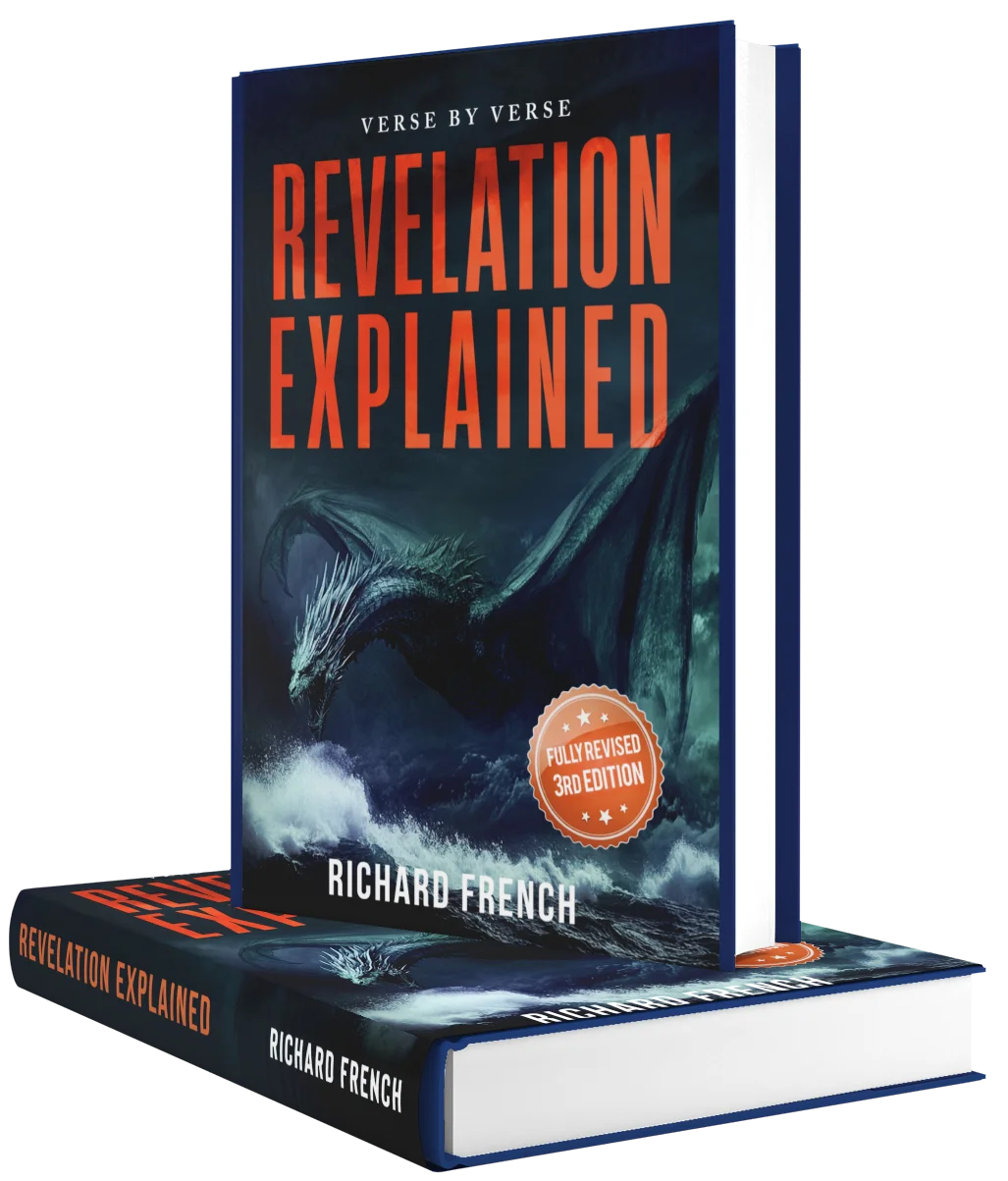
Second Temple Jewish literature reinforced this framework. First Enoch 10:4-6 describes the binding of the watcher-demon Azazel in a pit of darkness, sealed until judgment. Jude 6 and 2 Peter 2:4 confirm this tradition was active in early Christian thought. John's readers recognized the abyss within an established theological structure, not as a new invention. For the churches John addressed under Domitian (81-96 AD), handling emperor worship and imperial pressure, the beast ascending from the abyss rather than from heaven carried a direct counter-narrative: Rome's power originates below, not above. The sealed pit declared that imperial power operated within limits it could not exceed. Readers wanting to trace how this imagery connects to Revelation's broader structure will find Revelation Explained: Verse by Verse by Richard French examines each occurrence in its immediate context.
The Trumpet Judgments and the Abyss
The bottomless pit first appears in Revelation 9, within the fifth trumpet judgment, where it shifts the character of divine judgment from natural creation to demonic activity.
- Structured permission: Locusts from the abyss cannot harm God's sealed servants (NKJV Revelation 9:4) and are limited to five months (NKJV Revelation 9:5).
- Literary pattern: Each judgment in chapters 8-9 remains bounded, reinforcing that even escalating horror operates within divine governance.
Why the Bottomless Pit Matters for Christians Today
Every appearance of the abyss in Revelation is paired with an image of restraint. The most terrifying forces in Scripture are prisoners, not sovereigns. Robert Mounce states it plainly in his NICNT commentary: "Evil does not run loose in the universe; it is subject to the authority and control of God." That observation holds across all four major interpretive views. Preterists, historicists, futurists, and idealists disagree on timing and degree of literalism, but they share this conclusion: God controls what the abyss contains and releases.
Practical weight falls on details we might otherwise skip. The five-month restriction on locust torment (NKJV Revelation 9:5) and the exemption of sealed servants (NKJV Revelation 9:4) are the pastoral core of the passage. What appears to be unchecked darkness operates on a limited, divinely permitted lease. Maybe you've looked at the world and wondered whether the darkness has any ceiling at all. Scripture tells us it does, and it tells us who set it there.
One caution worth naming: abyss imagery is sometimes used to speculate about specific modern political figures as fulfillments of the beast. Scripture warns against the spirit behind such figures in every age, not a single identifiable individual in any one generation. That kind of speculation tends to generate heat without producing the confidence this passage was written to give.
In the end, the bottomless pit points to what is not bottomless: God's authority, Christ's victory, and the protection sealed over those who belong to Him. As Mounce observes, the same Christ who holds "the centrals point of Hades and of Death" (NKJV Revelation 1:18) governs the abyss. You can also explore how the abyss relates to Revelation's final judgment in the guide to the lake of fire in Revelation.
Why This Vision Matters
Among Revelation's most reassuring images for believers under pressure is the bottomless pit. It declares that evil has a ceiling. Demonic forces are confined, the beast's power is borrowed, and Satan's end is sealed. For any generation facing what feels like overwhelming darkness, the abyss imagery anchors faith in God's unbreakable governance over every dark power. Faithful readers across every century have found here not a reason for fear, but a foundation for endurance.
Conclusion
Scripture presents the bottomless pit (Greek abyssos) consistently as a sealed field of demonic confinement, the origin of the beast, and the final prison of Satan, a domain under God's sovereign control, opened and closed only by divine permission. The four cumulative acts of Revelation 20:1-3 (binding, casting, shutting, and sealing) leave no room for partial restraint.
Whatever pressure you're carrying right now, whatever darkness feels unconquerable in your own experience, this vision speaks directly to that fear. The powers behind it are prisoners. The keyholder is Christ. You are not at the mercy of forces beyond God's reach. That is the word Revelation offers you here, and it is worth holding onto. For a deeper verse-by-verse exploration of these themes, see Revelation Explained: Verse by Verse by Richard French.
Sources
- Revelation 9:1 - 11 (NKJV) - Fifth Trumpet; the abyss opened
- Revelation 11:7 (NKJV) - Beast from the abyss and the two witnesses
- Revelation 17:8 (NKJV) - Beast's origin in the abyss
- Revelation 20:1 - 3 (NKJV) - Satan bound and cast into the abyss
- Romans 10:6 - 7 (NKJV) - Paul's use of abyssos in relation to death
- Genesis 1:2 (NKJV) - Tehom, the primordial deep
- Job 26:6; 28:22 (NKJV) - Abaddon in Old Testament wisdom literature
- Grant R. Osborne, Revelation, Baker Exegetical Commentary on the New Testament (Grand Rapids: Baker Academic, 2002)
- G.K. Beale, The Book of Revelation, New International Greek Testament Commentary (Grand Rapids: Eerdmans, 1999)
- Robert H. Mounce, The Book of Revelation, New International Commentary on the New Testament, Revised Edition (Grand Rapids: Eerdmans, 1997)
- Colin Brown, ed., New International Dictionary of New Testament Theology, Vol. 2 - entry on abyssos (Grand Rapids: Zondervan, 1976)
- David E. Aune, Revelation 6 - 16, Word Biblical Commentary, Vol. 52B (Nashville: Thomas Nelson, 1998)