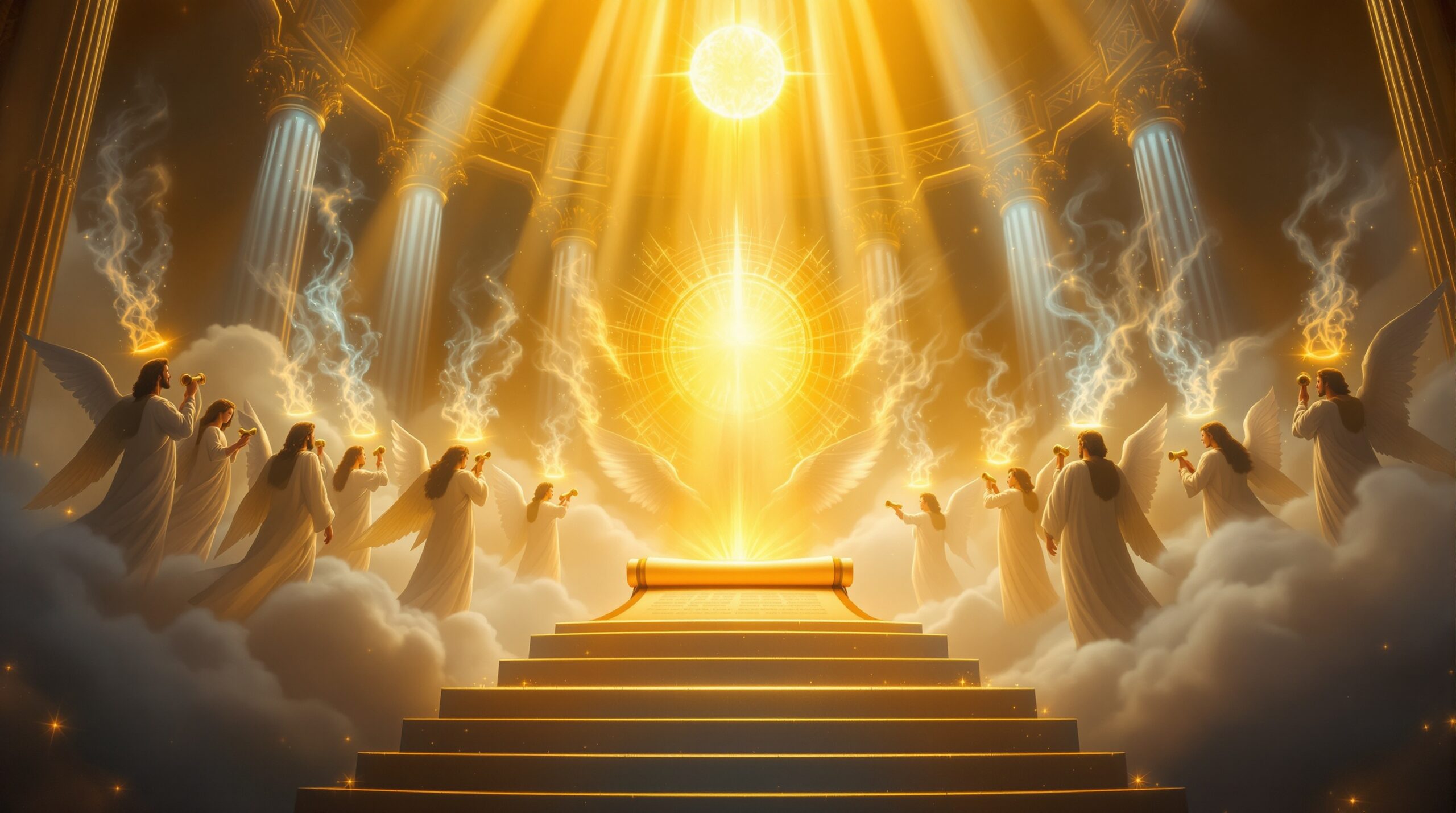
When Christ opens the seventh seal in Revelation 8:1, heaven doesn’t erupt with catastrophe. It falls silent. For thirty minutes, the ceaseless worship stops, the angels pause, and all heaven holds its breath. This remarkable silence marks one of Scripture’s most dramatic moments, yet many readers rush past it toward the trumpet judgments that follow, missing its profound significance. The seventh seal in Revelation reveals critical truths about God’s justice, the power of believers’ prayers, and how this climactic moment structures Revelation’s unfolding vision. We’ll examine the biblical text directly, understand its context in Revelation’s architecture, and discover why this sacred pause matters for Christians today.
Quick Answer: The seventh seal in Revelation 8:1 is the final seal Christ opens on God’s redemptive scroll, marked by thirty minutes of heavenly silence before introducing the seven trumpet judgments. Rather than a single catastrophic event, this seal contains and releases the trumpet series, showing Revelation’s telescoping structure while connecting believers’ prayers with God’s sovereign response.
Key Scripture: “When He opened the seventh seal, there was silence in heaven for about half an hour” (NKJV Revelation 8:1)
Context: This silence contrasts sharply with heaven’s continuous worship and signals the solemnity of God’s final judgments.
- The silence in heaven represents an extraordinary pause before God's intensified judgments, emphasizing their gravity and inviting reverent contemplation.
- Telescoping structure: The seventh seal contains the seven trumpet judgments, showing progressive intensification of divine response to evil.
- Prayer's power: Believers' intercessions ascend with incense before God's throne and directly precede judgment's execution.
- Divine sovereignty: God controls history's conclusion with deliberate timing, not haste or delay.
- Comfort for believers: The same passage revealing judgment also confirms God protects and vindicates His faithful people.
The Seventh Seal in Revelation 8:1: Heaven's Dramatic Pause
After six seals bring conquest, war, famine, death, martyrdom, and cosmic upheaval in Revelation 6, and after chapter 7's interlude showing God's people sealed and protected, Christ opens the final seal. The text declares: "When He opened the seventh seal, there was silence in heaven for about half an hour" (NKJV Revelation 8:1). The Greek word for silence, sigē, means complete stillness, a cessation of all sound. This silence is remarkable because Revelation 4:8 describes heaven's worship as continuous, with living creatures proclaiming God's holiness "day and night." The silence marks a dramatic interruption in eternity's ceaseless praise.The seventh seal in Revelation functions as heaven’s solemn pause before intensified judgment. Thirty minutes of silence underscores that divine justice is measured, deliberate, and infinitely weighty. Immediately following the silence, John sees “the seven angels who stand before God, and to them were given seven trumpets” (NKJV Revelation 8:2). This establishes that the seventh seal introduces rather than parallels the trumpet series. Unlike seals 1-6, which each brought specific judgments, the seventh seal opens to reveal an entirely new judgment series, showing Revelation’s telescoping architecture where each sequence flows from and intensifies the previous.
While “about half an hour” may seem brief, in the context of eternity and unceasing worship, this pause stretches with anticipation. Ancient readers familiar with Temple worship would recognize this as the reverent hush before the High Priest entered the Holy of Holies on Yom Kippur, the Day of Atonement and judgment. The silence invites contemplation of what follows and reminds us that God’s justice is not hasty but measured with perfect wisdom.
The Telescoping Structure of Revelation's Judgments
Seals, trumpets, and bowls don't occur sequentially but nest within each other. The seventh seal contains seven trumpets; the seventh trumpet (11:15-19) announces Christ's kingdom but leads to seven bowl judgments. Each series intensifies: seals affect one-fourth of earth (6:8), trumpets one-third (8:7-12), and bowls are complete and final (16:1-21). This structure shows both God's restraint, giving opportunity for repentance, and the certainty of final justice.Prayers of the Saints and Divine Justice
The scene following the silence directly connects believers' prayers with divine action. "Then another angel, having a golden censer, came and stood at the altar. He was given much incense, that he should offer it with the prayers of all the saints upon the golden altar which was before the throne" (NKJV Revelation 8:3). This imagery answers the fifth seal in Revelation 6:9-11, where martyred saints cry out, "How long, O Lord, holy and true, until You judge and avenge our blood on those who dwell on the earth?" Now their prayers ascend mixed with incense before God's throne.“And the smoke of the incense, with the prayers of the saints, ascended before God from the angel’s hand” (NKJV Revelation 8:4). The Greek word anabainō emphasizes upward movement, showing prayers reaching God’s presence. This imagery comes directly from the Tabernacle’s golden altar of incense in Exodus 30:1-10, placed before the veil separating the Holy Place from God’s presence. Psalm 141:2 declares, “Let my prayer be set before You as incense,” connecting worship and intercession with the rising smoke that reaches heaven.
Revelation 8:3-5 reveals that believers’ prayers are not merely heard but instrumental in heaven’s operations. The smoke of intercession ascends before God’s throne immediately before judgment descends to earth. “Then the angel took the censer, filled it with fire from the altar, and threw it to the earth. And there were noises, thunderings, lightnings, and an earthquake” (NKJV Revelation 8:5). The dramatic casting signifies God’s direct response to prayer. This passage shows prayer’s effectiveness without diminishing God’s sovereignty. He ordains that His people’s intercessions become means by which His will unfolds in history.
The theophanic signs of thunder, lightning, and earthquake echo Mount Sinai in Exodus 19:16-19, confirming divine presence and covenant action. God responds to His people’s cries with the same authority He displayed when giving the Law. The connection between the martyrs’ question “How long?” and this scene of answered prayer provides comfort: our intercessions matter eternally, and God’s timing is perfect. For a detailed examination of how prayer functions throughout Revelation’s narrative, the connection between worship and divine response becomes even clearer.
Why the Seventh Seal Matters for Christians Today
The silence teaches that God acts deliberately, not hastily or tardily. When justice seems delayed, He measures response with perfect wisdom, fulfilling Habakkuk 2:3's promise that "the appointed time" will come. Trust in God's sovereign timing means resting in His control even when we cry "How long, O Lord?" The seventh seal in Revelation affirms that no prayer goes unheard and no injustice escapes His notice.Since believers’ prayers connect directly with divine action in Revelation 8:3-5, we should maintain persistent intercession for justice, mercy, and God’s kingdom. Prayer isn’t merely therapeutic but instrumental in releasing God’s ordained purposes. This passage refutes the notion that prayer only changes us. It shapes divine response to evil while calling the world to repentance. Your prayers ascend as incense before God’s throne, and He will answer with justice tempered by patience for the lost to repent.
The seventh seal in Revelation calls believers to trust God’s perfect timing in executing justice, to persist in prayer knowing it shapes divine action, and to live with confident hope rather than fearful speculation about the future. God holds the scroll, opens seals according to His timetable, and orchestrates all events toward redemptive ends. Even in suffering, nothing escapes His sovereign oversight. Whether one interprets these events as past (preterist), ongoing (historicist/idealist), or future (futurist), the seventh seal affirms that history moves toward Christ’s revealed kingship. Believers should invest in kingdom priorities over temporal concerns.
The silence itself teaches reverence before mystery. Approach prophecy with humility: avoid date-setting, fear-mongering, and unhealthy speculation. Interpret apocalyptic literature within its genre, recognizing symbolic elements without dismissing real fulfillment. The passage reveals judgment’s reality without creating paralyzing anxiety. For those in Christ, these visions confirm ultimate vindication and should inspire faithful endurance, not terror. When facing personal injustice or watching evil seemingly triumph in the world, Christians can rest in the certainty that God’s justice will prevail. For readers wanting to trace how this theme of divine timing develops across Revelation’s narrative, Revelation Explained: Verse by Verse examines each occurrence in its immediate context.