Will Christians Go Through the Tribulation? What Revelation Actually Shows
Few questions divide sincere Christians more sharply than this one. Some believe the church is gathered to Christ before the tribulation begins. Some place that gathering at the midpoint. Some place it just before God's wrath falls. Some place it at the very end. Every one of these camps is full of people who love Scripture and have studied it with care.
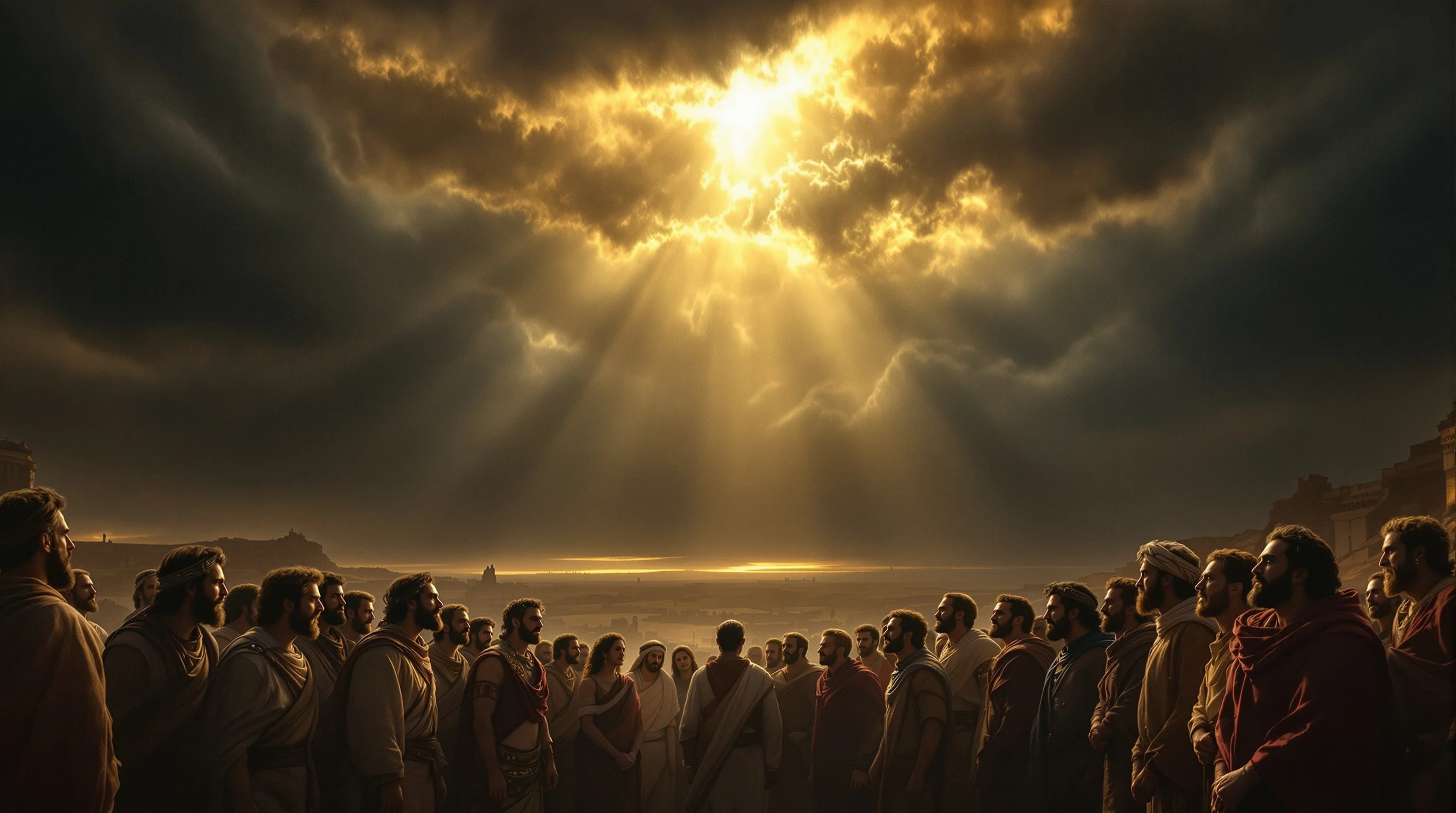
Here is what Revelation shows plainly. Saints are present during the tribulation. They are persecuted. Some of them are killed. The fifth seal reveals souls "slain for the word of God" (Revelation 6:9, NKJV). The beast is granted authority "to make war with the saints" (Revelation 13:7, NKJV). Those who refused his mark are described as "beheaded for their witness to Jesus" (Revelation 20:4, NKJV).
Every major view agrees that saints are present during that period. The disagreement lies elsewhere. It concerns who those saints are, and when the church is gathered to Christ. Revelation never states that timing directly, which is why faithful readers have landed in different places for a very long time.
What Revelation does state clearly is the part that matters most for anyone reading it today. God's people are preserved. They are shielded from His wrath. They are called to endure. That much is settled, whichever view proves right.
Quick Answer: Revelation consistently shows saints present during the tribulation, enduring persecution from the beast's system while being shielded from God's wrath. Who those saints are, and when the church is gathered to Christ, is the point where faithful readers divide. Revelation does not settle that timing explicitly.
Definition: The question of whether Christians go through the tribulation asks when the church is gathered to Christ in relation to the tribulation period. The four main answers place that gathering before the tribulation, at its midpoint, before the outpouring of God's wrath, or at the very end.
Key Scripture: "These are the ones who come out of the great tribulation, and washed their robes and made them white in the blood of the Lamb" (Revelation 7:14, NKJV)
Context: The Greek uses a present participle, which suggests a continuous stream of believers emerging from the tribulation rather than a single moment. The passage tells us where this multitude has come from without stating who they were before it began.
This vision works as both warning and comfort. It warns that earthly systems will turn against God's people, and it shows the cost of faithful witness. It also displays God's sovereignty over that persecution, preserving His people through it while shielding them from His wrath. The sections that follow examine what Revelation shows about believers during tribulation, how persecution differs from wrath, where the four main views divide, and what all of it asks of you today.
Key Takeaways
Saints are present - Revelation places believers within the tribulation narrative, under the seals, under the beast's reign, and among the martyrs
Tribulation and wrath are different words - thlipsis describes persecution from the world, orgē describes God's judgment on rebellion
Protection follows the Exodus pattern - preservation through judgment rather than absence from the place where it falls
Identity is the dividing question - the saints in view may be sealed Israel, people who come to faith during the period, or the church, depending on the view held
Revelation never states the timing - the gathering of the church is nowhere placed on the calendar of the seven years, which is why sincere readers reach different conclusions
Endurance is commanded regardless - the call to patient endurance appears in the text no matter which view you bring to it
What Revelation Actually Shows About Believers in the Tribulation
The fifth seal reveals souls "slain for the word of God and for the testimony which they held" (Revelation 6:9, NKJV). These martyred believers cry out for vindication. Their presence tells us that saints are on the earth and suffering while the seals are being opened. The passage establishes that they are there. It stops short of telling us who they are.
The great multitude of Revelation 7:9-14 stands before the throne, and the elder identifies them as those who came out of the great tribulation. The Greek here uses a present participle, which suggests continuous emergence, a stream of believers arriving rather than one group appearing at one moment. What the passage does not do is tell us who these people were before the tribulation started. Readers who hold to a gathering before the tribulation understand this multitude as those who came to faith afterward. Readers who place the gathering at the end understand them as the church itself. The text supports the question more than it settles it.
Revelation 13:7 states that the beast was "granted to him to make war with the saints and to overcome them" during his forty-two months (NKJV). Warfare against saints requires saints to be present. The following chapter calls for "the patience of the saints; here are those who keep the commandments of God and the faith of Jesus" (Revelation 14:12, NKJV), which describes people enduring a trial rather than watching one from a safe distance.
George Eldon Ladd read Revelation 13:7 as decisive, arguing that a beast who makes war on the saints requires saints on earth to make war against. John Walvoord read the same verse as describing those who come to faith during the tribulation, a group he held distinct from the church gathered earlier. Both men were careful readers working from the same text. The verse establishes that saints are present. It does not name them, and the section below sets out how each of the four views answers that question.
Revelation 20:4 raises a question worth sitting with. The martyrs who refused the mark take part in the first resurrection, which follows the tribulation. Anyone holding to an earlier gathering has to explain how the resurrection of believers unfolds in more than one stage. Answers exist, and thoughtful people have offered them. It remains one of the harder places in this discussion, and honest readers on every side should feel its weight.
The Important Distinction Between Tribulation and God's Wrath
Scripture promises believers deliverance from "the wrath to come," using the Greek term orgē (1 Thessalonians 1:10; Romans 5:9). That word points to God's judgment against sin and rebellion. Getting it right shapes everything else in this discussion.
Tribulation (thlipsis) describes pressure and persecution that comes from worldly powers and systems. Wrath (orgē) describes God's judgment poured out on rebellion. When Revelation speaks of God's wrath falling (6:16-17; 11:18; 16:19), it has the second in view. The persecution believers face from the beast's system belongs to the first category.
The plagues of Egypt give us the pattern. Israel remained in the land while the judgments fell, and God distinguished between Egyptian and Israelite households as the plagues intensified. His people were preserved inside the place where judgment landed.
The sealing of the 144,000 before the trumpet judgments follows that same pattern. In Ezekiel 9:4-6 the faithful in Jerusalem receive a mark before the destroying angels pass through the city. They stay where they are. They are protected inside it. Revelation 7 shows the same divine habit, with twelve thousand sealed from each of the named tribes of Israel. Whatever else this scene teaches, it establishes that God identifies and preserves His own before judgment falls.
G.K. Beale argues along similar lines, holding that God's people feel the indirect effects of the plagues while being kept from experiencing them as expressions of divine wrath. Protection of this kind means preservation through difficulty rather than exemption from it.
The promise to Philadelphia has carried weight in this debate for a long time. Christ says He will keep them from the hour of trial (Revelation 3:10). The Greek construction, tēreō ek, will genuinely bear two meanings, and the grammar alone will not decide between them. The only other place the New Testament uses it is John 17:15, where Jesus prays that His disciples be kept from the evil one while remaining in the world, which favors preservation in place. Readers who hold to an earlier gathering point out that the trial in view is global, and that removal is the plainest way to be kept from an hour rather than from a danger. Both readings are available. Anyone who tells you the grammar settles it has overstated the case.
Jesus was direct with His disciples about what to expect: "In the world you will have tribulation; but be of good cheer, I have overcome the world" (John 16:33, NKJV). Whatever the timing proves to be, His people are shielded from the wrath that falls on rebellion.
What Protection Actually Means
Biblical protection means preservation through difficulty with God's provision holding.
Exodus pattern: Israel remained in the land while the plagues fell and was shielded from their effects
Seal of protection: the 144,000 are marked before the trumpets, showing God identifying His own ahead of judgment
Wilderness provision: the woman is kept safe for 1,260 days in a place God prepared for her
Where Faithful Christians Divide
All four positions below hold that Christ returns, that His people are preserved, and that God's wrath falls on rebellion. They differ on one question: when is the church gathered to Christ?
Gathered before the tribulation (pre-tribulational)
The church is taken to Christ before the seven years begin. The saints who appear in Revelation 6 through 19 are sealed Israel and people who come to faith after the church is gone.
Strongest support: Christ's promise to Philadelphia to keep them from the hour of trial (Revelation 3:10). Paul's statement that God has not appointed us to wrath (1 Thessalonians 5:9). The church is addressed directly in chapters 2 and 3, then goes unmentioned as a body until chapter 19.
Hardest question: Revelation 20:4 places tribulation martyrs in the first resurrection, which requires the resurrection of believers to happen in more than one stage.
Held by: John Walvoord, Dwight Pentecost, Charles Ryrie, and much of American evangelicalism.
Gathered at the midpoint (mid-tribulational)
The church is taken halfway through the seven years, when the beast breaks his covenant and the worst of the trouble begins.
Strongest support: Revelation divides the period cleanly into two halves of 1,260 days. The two witnesses are called up to heaven at the seventh trumpet (Revelation 11:12), which some read as the pattern for the church.
Hardest question: No passage clearly attaches a gathering of the church to the midpoint. The seventh trumpet announces judgment without describing believers being taken.
Held by: A smaller group, including Gleason Archer.
Gathered before the wrath (pre-wrath)
The church endures the beast's persecution, then is gathered before the bowl judgments, which are understood as God's wrath proper.
Strongest support: It takes the difference between persecution and wrath seriously and applies it to the timeline. Jesus places the gathering of the elect after the tribulation of those days (Matthew 24:29-31).
Hardest question: It requires a specific dividing line inside the seven years that Revelation does not draw explicitly.
Held by: Marvin Rosenthal and Robert Van Kampen.
Gathered at the end (post-tribulational)
The church goes through the whole period and is gathered when Christ returns in glory.
Strongest support: Matthew 24:29-31 places the gathering after the tribulation. Revelation calls those the beast wars against "saints" with no qualifier (13:7). The martyrs share in the first resurrection (20:4).
Hardest question: It has to account for the promise to Philadelphia in Revelation 3:10, and for why Paul describes the gathering in 1 Thessalonians 4 in language that reads like its own distinct event.
Held by: George Eldon Ladd, Douglas Moo, and the historic premillennial tradition.
What All Four Views Agree On
Set the four side by side and the shared ground turns out to be larger than the disagreement.
Saints are present on earth during the tribulation and they suffer
Believers are shielded from God's wrath, whatever form that protection takes
The beast's system applies pressure through economic exclusion
Endurance and faithful witness are commanded
Christ returns, judges, and reigns, and His people share in that victory
Every one of those is stated plainly in the text. The timing is the part Revelation leaves for careful readers to weigh. If you want the wider picture of how Christians have read this book across the centuries, start with the four views of Revelation.
What This Means for You Either Way
Set the timing question down for a moment and look at the cost of being wrong in each direction.
Suppose you prepare for endurance and the church is gathered before the tribulation begins. You have lost nothing. You spent your years building spiritual discipline, deepening your knowledge of Scripture, strengthening your church community, and settling in advance that Christ is worth suffering for. Every one of those is a good in itself. None of it was wasted.
Now suppose you prepare for escape and the trouble arrives first. You face the hardest test of your life having been taught you would never see it. That is a difficult place to stand.
The asymmetry is worth noticing. Preparing for endurance costs nothing if you turn out to be wrong, and it is the posture Revelation actually commands. The call to "the patience of the saints" (Revelation 14:12, NKJV) sits in the text no matter which timing view you carry to it.
There is also the practical shape of the pressure. The mark of the beast works through economic exclusion, shutting people out of buying and selling for refusing to compromise (Revelation 13:16-17). Believers may face career limits, business restrictions, or closed doors for declining to participate in a system set against Christ. Faithfulness under that kind of squeeze gets built long before the squeeze arrives, through spiritual discipline, strong community, settled theological footing, and a willingness to suffer for what you believe.
Why This Mattered to the First Readers
John identifies himself to the seven churches as their "brother and companion in the tribulation and kingdom and patience of Jesus Christ" (Revelation 1:9, NKJV). Smyrna is warned that it "will have tribulation ten days" (2:10, NKJV). Antipas had already been killed at Pergamos (2:13, NKJV). The comfort in this book was immediate for the people who first held it.
That immediacy follows the pattern Old Testament prophecy sets, where a word lands on its first hearers and finds a fuller answer later. Robert Mounce observes that the martyrs' cry for vindication shows God's final judgment still waiting, while their suffering is real and present. Revelation steadied churches under Rome, and it still points ahead to a greater trial and a greater deliverance.
Why This Vision Matters
Understanding that Revelation places saints inside the tribulation with divine protection changes how we prepare. It removes the two errors that sit on either side of this question. Presumption expects immunity from every difficulty on the strength of promises that specifically address God's wrath. Despair assumes God has abandoned His people when persecution intensifies. The biblical pattern answers both, showing God's people present while judgment falls and preserved from experiencing it as His wrath. That is the same faithfulness that carried martyrs through every century of church history, and it anchors hope in God's sovereign protection and the certain vindication of His witnesses.
Conclusion
Revelation shows saints present through the tribulation, enduring persecution while shielded from God's wrath. It does not tell us plainly when the church is gathered, and anyone insisting otherwise, in either direction, is asking the text to say more than it says. The timing questions that divide churches pale beside what Revelation asks of us plainly. Endure. Hold the testimony. Trust the God who brought Israel through Egypt's plagues to bring His people through whatever comes.
That is a reason for confidence rather than fear. Your faithfulness matters more than your comfort, and the outcome was settled before the first seal was ever opened. For deeper verse-by-verse exploration of Revelation's structure and symbols, see Revelation Explained: Verse by Verse by Richard French.
Sources
Revelation 1:9; 2:10, 13; 3:10; 6:9-11; 7:3-14; 11:12; 12:6, 11, 17; 13:7-10, 16-17; 14:9-12; 20:4-6
Daniel 7:21-25; 12:1
Ezekiel 9:4-6
Matthew 24:15-31
John 16:33; 17:15
1 Thessalonians 1:10; 4:13-5:11
Romans 5:9
Archer, Gleason L., Paul D. Feinberg, Douglas J. Moo, and Richard R. Reiter. Three Views on the Rapture. Zondervan, 1996.
Beale, G.K. The Book of Revelation (New International Greek Testament Commentary). Eerdmans, 1999.
Ladd, George Eldon. A Commentary on the Revelation of John. Eerdmans, 1972.
Mounce, Robert H. The Book of Revelation (New International Commentary). Eerdmans, 1977.
Osborne, Grant R. Revelation (Baker Exegetical Commentary on the New Testament). Baker Academic, 2002.
Pentecost, J. Dwight. Things to Come: A Study in Biblical Eschatology. Zondervan, 1958.
Rosenthal, Marvin. The Pre-Wrath Rapture of the Church. Thomas Nelson, 1990.
Ryrie, Charles C. The Basis of the Premillennial Faith. Loizeaux Brothers, 1953.
Thomas, Robert L. Revelation: An Exegetical Commentary. Moody Press, 1992.
Walvoord, John F. The Revelation of Jesus Christ. Moody Press, 1966.