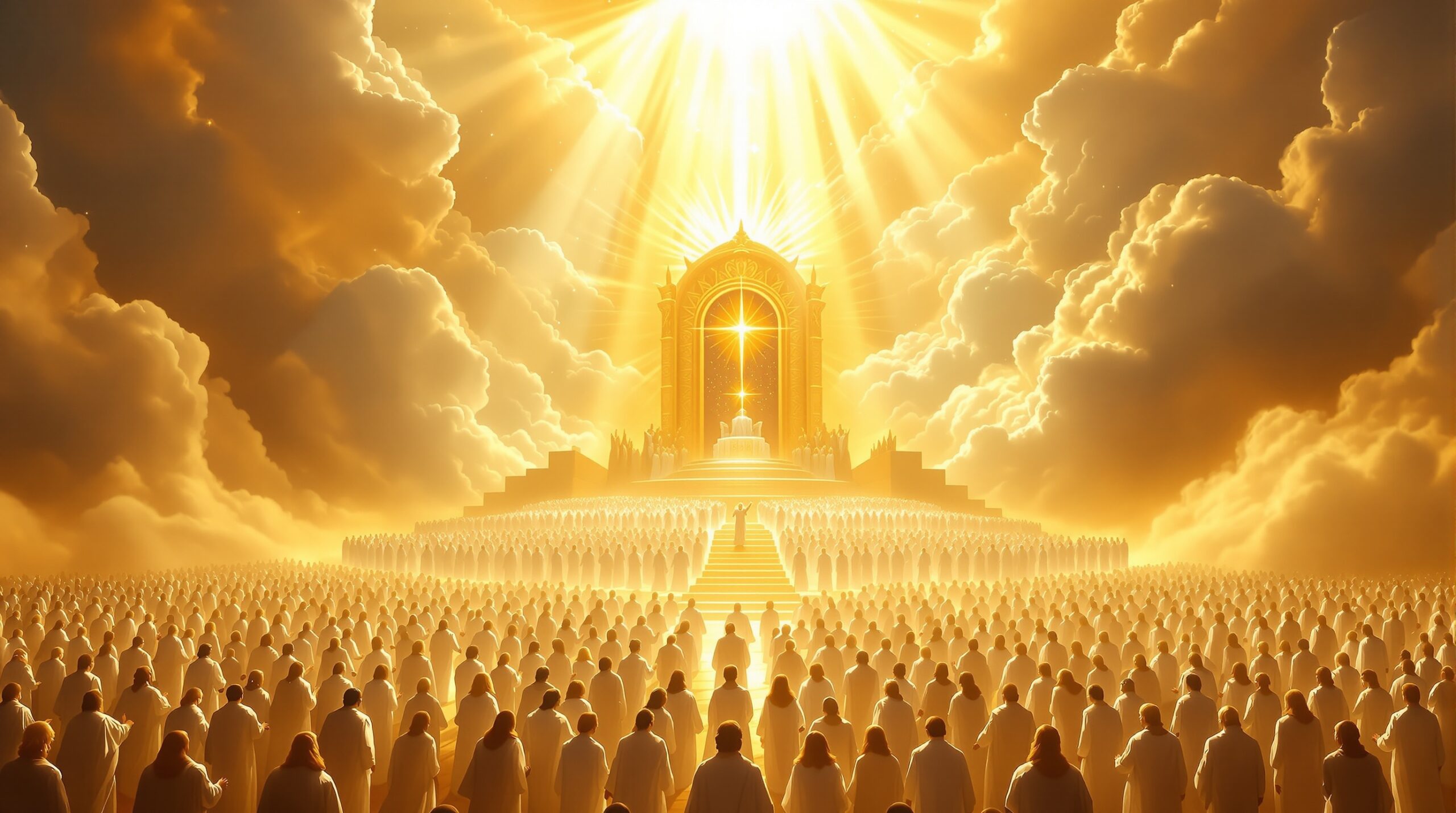
The 144,000 sealed servants of God in Revelation has sparked more debate than almost any other prophetic symbol. Some claim it’s a literal number of Jewish evangelists, others see it as symbolic of all believers, and still others identify it with specific religious groups. This mysterious group appears twice in Revelation (chapters 7 and 14), each time with distinctive characteristics that provide clues to their identity.
Understanding this passage matters because it addresses questions every believer faces during difficult times: Does God protect His people? How does divine preservation work during suffering? What marks those who belong to God? The 144,000 in Revelation is not merely a random number or abstract concept. It specifically represents God’s preserved people who remain faithful during tribulation and receive divine protection for His purposes.
Quick Answer: The 144,000 in Revelation are God’s sealed servants marked for protection and divine purpose—described as 12,000 from each of Israel’s twelve tribes who remain faithful during tribulation and stand victorious with Christ on Mount Zion.
Definition: The 144,000 in Revelation represents God’s faithfully preserved people who bear His seal of ownership, remain pure from worldly compromise, and are protected through judgment for His redemptive purposes.
Key Scripture: “Then I heard the number of those who were sealed: 144,000 from all the tribes of Israel” (NKJV Revelation 7:4)
Context: Whether understood literally as Jewish believers or symbolically as the complete church, this group represents those whom God preserves through judgment for His redemptive purposes.
Key Takeaways:
- Divine sealing: The 144,000 receive God's mark of ownership and protection on their foreheads before judgment falls
- Tribal specificity: Revelation lists twelve tribes by name with 12,000 from each, emphasizing intentional selection
- Complete devotion: They are characterized by purity, truthfulness, and following the Lamb wherever He goes
- Victorious destiny: They stand with Christ on Mount Zion, singing a new song only they can learn
- Protected purpose: The sealing preserves them through tribulation, not from it, to fulfill God's mission
What Does the Bible Say About the 144,000 in Revelation?
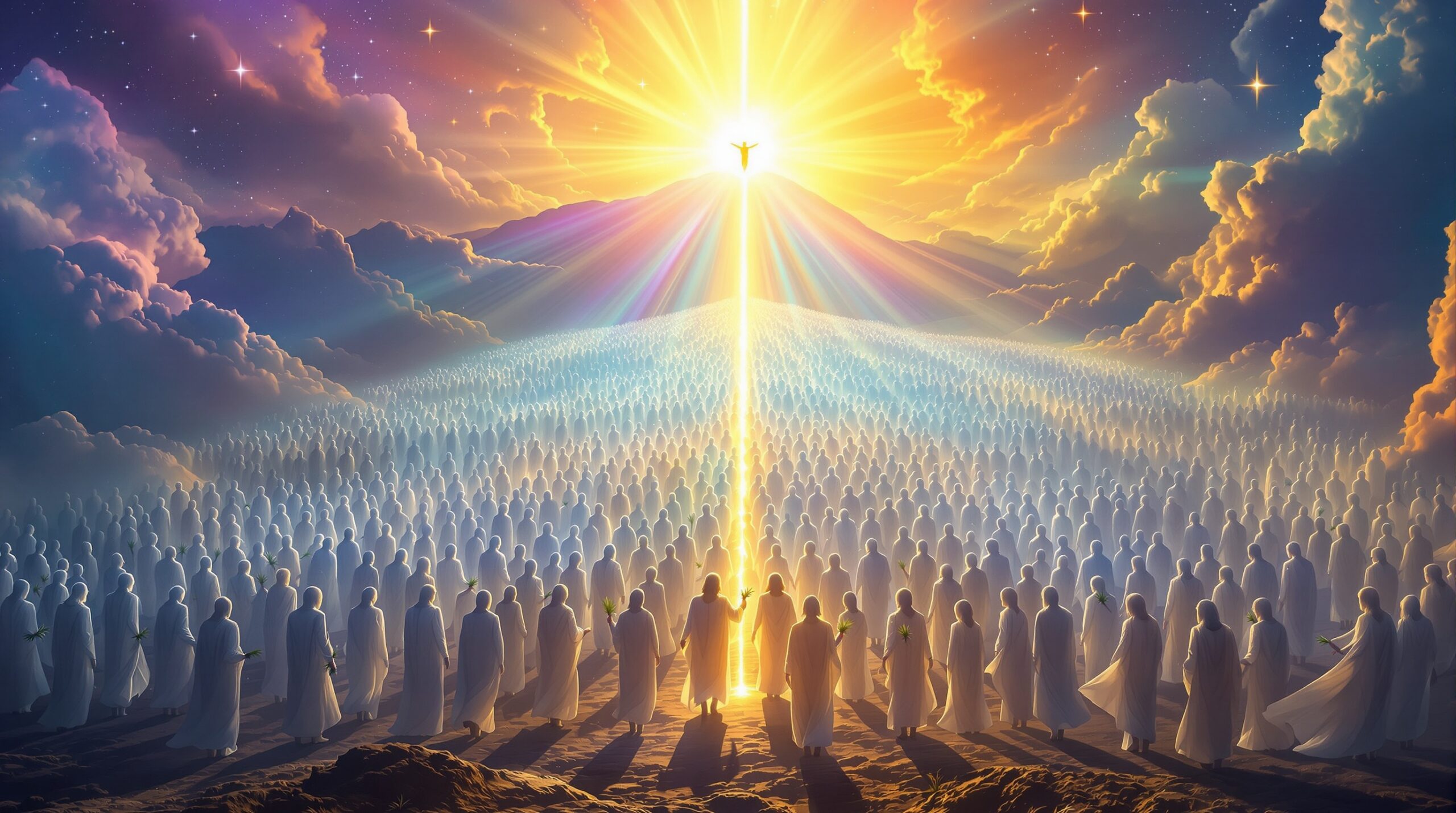
The 144,000 first appears in Revelation 7:1-8, where an angel seals God's servants before judgment begins. Scripture tells us exactly what happens: "Then I saw another angel ascending from the east, having the seal of the living God. And he cried with a loud voice to the four angels to whom it was granted to harm the earth and the sea, saying, 'Do not harm the earth, the sea, or the trees till we have sealed the servants of our God on their foreheads'" (NKJV Revelation 7:2-3).Sealing occurs on their foreheads using God’s seal, marking ownership and protection. This imagery draws directly from Ezekiel 9:4-6, where the faithful in Jerusalem receive a mark before judgment falls on the city. Scholars such as Grant Osborne note that the sealing protects these individuals during tribulation, not from tribulation, so they can complete their divine mission.
Revelation lists twelve tribes by name with exactly 12,000 from each: Judah, Reuben, Gad, Asher, Naphtali, Manasseh, Simeon, Levi, Issachar, Zebulun, Joseph, and Benjamin. Specific enumeration emphasizes God’s intentional selection rather than random or symbolic grouping.
This group reappears in Revelation 14:1-5, standing with the Lamb on Mount Zion. Now they bear “His Father’s name written on their foreheads” (NKJV Revelation 14:1), contrasting sharply with those bearing the beast’s mark. Character descriptions reveal complete consecration: they are pure, follow the Lamb completely, are “firstfruits to God,” have no deceit, and stand “without fault before the throne of God” (NKJV Revelation 14:4-5).
The 144,000 in Revelation represents God’s answer to humanity’s question “Who is able to stand?” in the face of divine judgment—those whom God Himself has sealed and preserved. The number itself—twelve tribes multiplied by twelve thousand—emphasizes completeness, divine order, and covenant fulfillment in biblical numerology.
Understanding the Identity of the 144,000
The tribal list contains significant variations from standard Old Testament genealogies that provide important clues. Dan is omitted, possibly due to associations with idolatry in Judges 18. Manasseh appears alongside his father Joseph, creating thirteen names from twelve tribes. Levi is included despite traditionally being separate from tribal territory allocations.These variations signal that John is describing something beyond mere ethnic genealogy. According to G.K. Beale, the point of identifying the church with Israel’s tribes is to show that the church has become true Israel. Whether this represents God’s reconstituted Israel or the church as spiritual Israel, the symbolism points to covenant fulfillment.
Old Testament background saturates this passage. Ezekiel’s vision of Israel’s twelve tribes reunited and restored (Ezekiel 37), Jeremiah’s new covenant written on hearts (Jeremiah 31), and Isaiah’s promise of God’s name written on His people (Isaiah 44:3-5) all find fulfillment here. Mount Zion as their gathering place fulfills prophecies in Joel 2:32, Obadiah 17, and Isaiah 24:23 about deliverance and God’s reign from Zion.
Whether interpreted as literal Jewish believers in a future tribulation or as symbolic representation of the complete church, the core message remains consistent—God preserves a people for Himself through tribulation. Emphasis falls not on ethnic identity but on faithfulness, consecration, and divine protection.
The Sealing's Purpose and Timing
Sealing happens before the four angels harm earth and sea (Revelation 7:2-3), indicating protection for divine mission during judgment, not removal from tribulation. Timing is essential—protection comes before destruction, but within the context of remaining on earth during catastrophic events.In first-century context, this seal offered profound comfort to Christians facing economic pressure and persecution for refusing emperor worship. God’s mark guaranteed spiritual protection even if physical persecution continued, contrasting with Caesar’s mark of approval needed for commerce and social acceptance.
Why the 144,000 Matters for Christians Today
The 144,000 in Revelation provides essential truths for contemporary believers. Just as this sealed group bears God's mark, all Christians are "sealed with the Holy Spirit of promise" (NKJV Ephesians 1:13-14). This sealing guarantees eternal security and divine ownership, though not necessarily exemption from present suffering or trials.Descriptions of purity and following the Lamb “wherever He goes” challenge halfway commitment in contemporary Christianity. These sealed believers demonstrate undivided devotion that refuses compromise with competing systems. Believers today must examine where cultural pressure tempts allegiance to materialism, nationalism, or any ideology demanding ultimate loyalty alongside or instead of Christ.
The 144,000 stand “without fault” not through human perfection but through the Lamb’s redemptive work. This produces both humility—recognizing we stand only through grace—and confidence that God completes what He begins. Robert Mounce observes that this blameless status comes through redemption, not moral achievement.
The “new song” that only the redeemed can sing (Revelation 14:3) encourages believers that personal experience of God’s deliverance creates unique testimony. Every believer’s story of redemption contributes irreplaceable notes to heaven’s worship, based on individual experience of divine faithfulness through specific trials and circumstances.
The 144,000 in Revelation assures Christians that God marks, knows, and preserves His people through chaos and judgment for ultimate victory with Christ. This passage isn’t about identifying a literal elite group alive today or promoting fear about physical marks or technology, but about spiritual allegiance and worship that remains faithful regardless of external pressure.
Why This Vision Matters
The 144,000 matters because it answers the fundamental question every suffering believer asks: Does God know and protect His people? The answer is definitively yes. This vision demonstrates that divine protection operates through tribulation, not around it. God's covenant faithfulness extends to every generation facing pressure to compromise their allegiance to Christ.Conclusion
The 144,000 in Revelation—whether understood as literal Jewish believers or symbolic of the complete church—represents God's faithfully preserved people who bear His seal, remain pure from worldly compromise, and stand victorious with Christ. This passage answers Revelation 6:17's haunting question "Who is able to stand?" with divine assurance: those whom God has sealed and protected for His purposes.Every believer in Christ shares the security, calling, and destiny pictured in this passage. You are marked by God, preserved through tribulation, and destined for Mount Zion’s victory celebration. The 144,000 in Revelation offers profound comfort that God’s people are never forgotten, never abandoned, and never left without divine protection for His redemptive purposes.
For a deeper verse-by-verse exploration of this passage and its context within Revelation’s complete message, see Revelation Explained: Verse by Verse by Richard French.
Sources
- Revelation 7:1-8 (the sealing of the 144,000)
- Revelation 14:1-5 (the 144,000 with the Lamb)
- Ezekiel 9:1-6 (marking the faithful before judgment)
- Exodus 12:1-13 (Passover protection)
- Ephesians 1:13-14 (sealed with the Holy Spirit)
- Beale, G.K. The Book of Revelation: A Commentary on the Greek Text. New International Greek Testament Commentary. Eerdmans, 1999.
- Osborne, Grant R. Revelation. Baker Exegetical Commentary on the New Testament. Baker Academic, 2002.
- Mounce, Robert H. The Book of Revelation. New International Commentary on the New Testament. Eerdmans, 1997.
- MacArthur, John. Revelation 1-11: The MacArthur New Testament Commentary. Moody Publishers, 1999.
- Johnson, Dennis E. Triumph of the Lamb: A Commentary on Revelation. P&R Publishing, 2001.