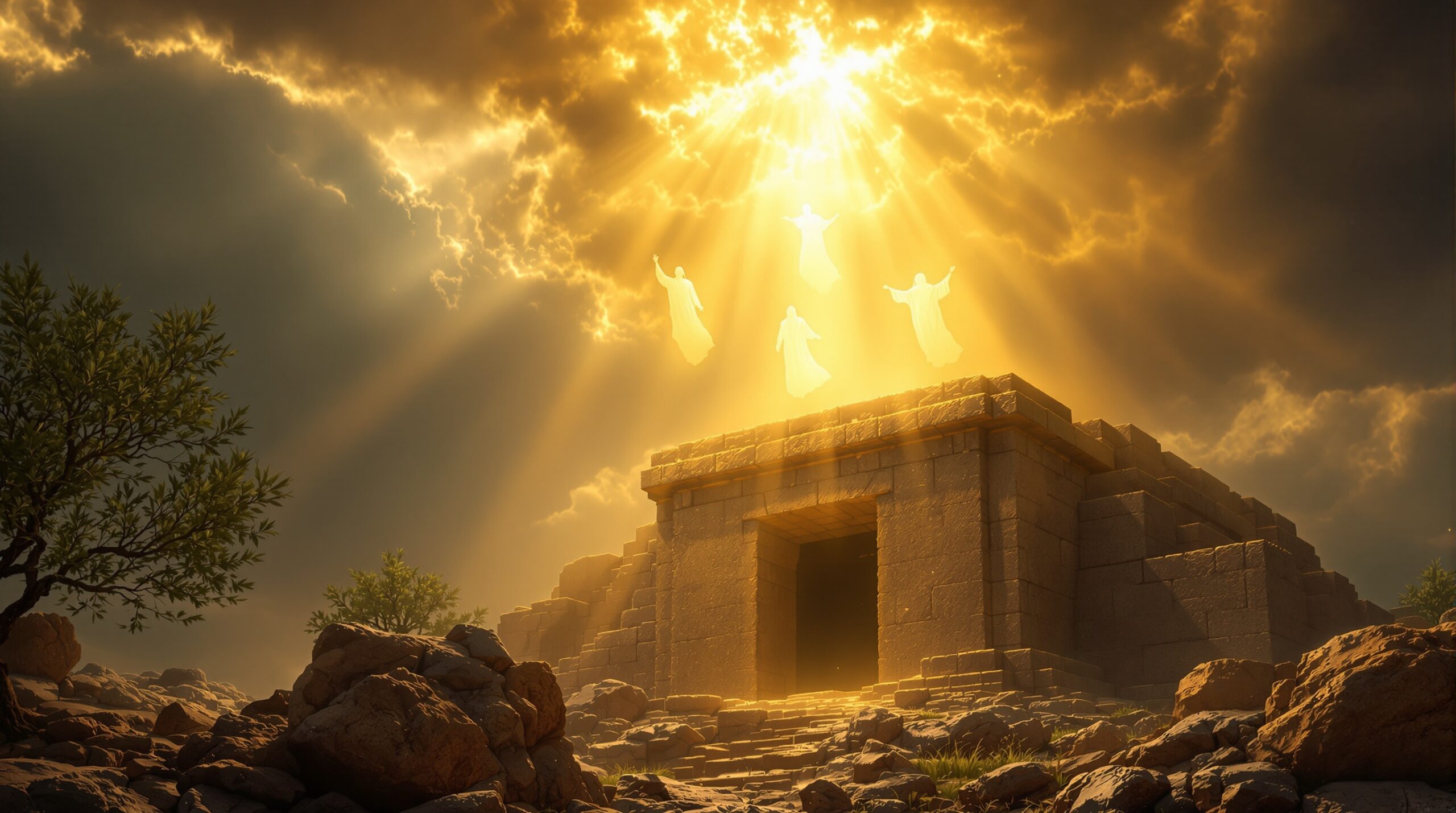
Many believers wonder what happens to faithful Christians after death, especially those who suffered for their testimony. Revelation 20:5-6 explicitly numbers a resurrection as “first,” immediately raising the question: if there’s a first, what comes second, and who participates in each? For believers facing persecution in John’s day and Christians today wrestling with mortality, understanding this promise matters deeply.
The first resurrection in Revelation is not merely about chronological sequence or eschatological timing. It specifically represents God’s vindication of those who maintained faithful witness to Jesus, even when it cost them everything. This article examines what Scripture reveals about the first resurrection in Revelation, who participates in it, and why this promise should encourage believers today.
Quick Answer: The first resurrection in Revelation 20:4-6 refers to the resurrection of believers who will reign with Christ for a thousand years, blessed with immunity from the second death and priestly service to God—a vindication of faithful witnesses who refused to compromise even unto death.
Definition: The first resurrection in Revelation represents the blessed resurrection of believers who maintained faithful witness to Jesus, distinguished from a later resurrection of all the dead at final judgment.
Key Scripture: “Blessed and holy is he who has part in the first resurrection. Over such the second death has no power, but they shall be priests of God and of Christ, and shall reign with Him a thousand years” (NKJV Revelation 20:6)
Context: This resurrection is distinguished from a second, later resurrection of “the rest of the dead” at the final judgment.
Key Takeaways
- Two resurrections: Revelation 20 distinguishes between the "first resurrection" of believers and a later resurrection of all the dead at final judgment
- Blessed immunity: Participants in the first resurrection have no fear of the second death (eternal separation from God)
- Priestly honor: Those resurrected first serve as priests of God and reign with Christ
- Martyrs vindicated: The passage specifically honors those beheaded for faithful witness to Jesus
- Practical hope: This promise encourages believers to maintain faithful witness regardless of earthly cost
What Does the Bible Say About the First Resurrection?
Revelation 20:4-6 explicitly identifies this resurrection when John sees souls of martyrs and faithful witnesses who "lived and reigned with Christ for a thousand years." The first resurrection in Revelation appears when the text declares "This is the first resurrection" (NKJV Revelation 20:5)—one of Revelation's rare interpretive comments within the vision itself. Participants include those "beheaded for their witness to Jesus" and those who "had not worshiped the beast or his image" (NKJV Revelation 20:4).Greek terminology clarifies the meaning: anastasis means “standing up again,” referring to bodily resurrection, while prōtē means “first” in order. The key promise follows: “Over such the second death has no power” (NKJV Revelation 20:6)—immunity from eternal condemnation. Scholars such as Grant Osborne note that the first resurrection in Revelation grants believers resurrection life, priestly access to God, and authority to reign with Christ, while protecting them from the second death described as the lake of fire.
This connects to Jesus’s teaching in John 5:28-29 about two resurrection outcomes—“resurrection of life” versus “resurrection of condemnation” (NKJV). Paul’s sequence in 1 Corinthians 15:23-24 describes resurrection in ordered stages: “Christ the firstfruits, afterward those who are Christ’s at His coming” (NKJV). G.K. Beale observes that the text presents clear chronological progression, though interpreters debate whether this describes literal future events or spiritual realities already occurring.

The Second Death Explained
Revelation 20:14-15 defines the second death as the lake of fire—eternal separation from God. This represents final judgment for "anyone not found written in the Book of Life" (NKJV). First resurrection participants are explicitly protected from this fate, making participation in Christ's resurrection the ultimate security against eternal condemnation.Understanding the First Resurrection in Context
Revelation 20 appears immediately after Christ's victorious return in chapter 19, continuing the sequence of final judgments. The passage follows the defeat of the beast and false prophet, then describes Satan's binding, the millennial reign, and ultimately the great white throne judgment. Examining how the original audience would have understood this promise illuminates its meaning.First-century Christians faced mounting persecution under Roman imperial cult worship. Refusing to worship Caesar or participate in trade guild religious ceremonies meant economic marginalization and potential execution. The first resurrection in Revelation addresses this reality directly: the text’s emphasis on “beheading” reflects the Roman execution method for citizens—a detail that would resonate powerfully with believers facing this threat. The promise that martyrs would “reign” with Christ directly reversed their earthly powerlessness and poverty.
Jewish resurrection hope deeply shaped how John’s audience understood this promise—bodily resurrection wasn’t metaphor but expected physical reality. Old Testament background matters: Daniel 12:2 prophesied dual-outcome resurrection (“some to everlasting life, some to shame”), while Isaiah 26:19 promised “your dead shall live” (NKJV). Robert Mounce explains that the imagery draws from these prophetic texts to establish continuity between Hebrew Scripture and John’s vision.
The first resurrection represents God’s vindication of faithful witnesses who suffered under oppressive earthly powers, granting them authority in His kingdom after they lost everything for faithful testimony. This reversal—from earthly victim to heavenly victor—forms the core message for believers facing costly faithfulness.
Different Views on the First Resurrection
Evangelical scholars agree on bodily resurrection and final judgment but differ on whether the first resurrection in Revelation describes a literal future event, spiritual reality, or symbolic representation. These differences stem from varying approaches to interpreting Revelation's apocalyptic imagery.Futurist interpretation, dominant in contemporary evangelicalism, takes this as a literal, future, physical resurrection of believers at Christ’s return, preceding a literal thousand-year earthly reign. Idealist interpretation sees the first resurrection as believers’ spiritual victory over death through union with Christ—already “raised with Christ” (NKJV Colossians 3:1) and seated with Him in heavenly places. Some preterist interpreters view this as spiritual resurrection from death in sin to new life in Christ; others see it as vindication of martyrs through the church’s triumph over pagan Rome.
Debate centers on whether “they lived” (NKJV Revelation 20:4) describes physical resurrection or spiritual exaltation of martyred souls already in heaven. Craig Keener observes that the text’s chronological structure suggests sequential events, though the symbolic nature of Revelation’s numbers remains debated among scholars.
Areas of agreement cross these boundaries: God honors faithful witness even unto death, resurrection life belongs exclusively to those in Christ, and participants are secure from final condemnation. David Aune notes: “That there are two resurrections is not in question. The issue is whether both are physical or whether the first is spiritual and the second physical.” What matters most isn’t resolving every interpretive detail but grasping the core promise: faithful witnesses receive vindication through resurrection and share Christ’s victory.
Why the First Resurrection Matters for Christians Today
The first resurrection in Revelation calls for unwavering faithfulness regardless of earthly cost, grounded in confidence that death cannot separate believers from Christ's victory. This means choosing faithful witness over survival when the two conflict. While most Western believers won't face literal martyrdom, the principle applies to career decisions, social pressure, and cultural accommodation. When faithfulness to Christ conflicts with worldly success or acceptance, believers must choose witness over advancement.Promise that the second death “has no power” over participants eliminates anxiety about final condemnation for those united to Christ. This confidence should produce bold witness, generous sacrifice, and joyful service, freed from fear of losing eternal life. First Peter 2:9 already declares believers “a royal priesthood” (NKJV)—meaning we possess privileged access to God and mediatorial ministry to the world now, not just in the future resurrection.
For believers enduring persecution, economic hardship for faith, or social marginalization, this passage provides necessary perspective: earthly loss isn’t final. God sees, remembers, and vindicates faithful witnesses through resurrection. The martyrs under the altar crying “How long?” (NKJV Revelation 6:10) receive this passage as their answer.
The first resurrection promise calls believers to value participation in Christ’s resurrection above all earthly goods, knowing that what the world counts as loss, God counts as faithful witness worthy of eternal honor. This doesn’t minimize present suffering but contextualizes it within God’s larger purposes. For detailed examination of how this promise develops throughout Revelation’s end times vision, readers can trace the connection between faithful witness and ultimate vindication.
Why This Vision Matters
The first resurrection matters because it answers the question every suffering believer asks: Is God in control when faithful witness costs everything? Yes, He is. This vision reminds believers that apparent defeat through martyrdom or costly faithfulness becomes eternal victory through resurrection. Present loss is not ultimate reality—God's vindication through resurrection is.Conclusion
The first resurrection in Revelation 20 stands as Scripture's promise that faithful witnesses to Jesus will be vindicated through resurrection life, priestly service, and reign with Christ. Whether understood as future literal event or present spiritual reality, the core message remains: those who belong to Christ through faithful witness are secure from the second death.This promise encouraged first-century believers facing martyrdom and continues encouraging Christians today who sacrifice for faithful testimony. Connection between tribulation suffering and resurrection vindication runs throughout Revelation’s message. The question isn’t primarily “when” or “how” but “whose”—will we belong to the first resurrection in Revelation through faithful witness to Jesus, regardless of cost?
For readers seeking to understand how this promise fits within Revelation’s broader resurrection teaching, the verse-by-verse commentary in Revelation Explained: Verse by Verse by Richard French traces these themes throughout each chapter. The first resurrection in Revelation ultimately calls us to faithful witness, assured that participation in Christ’s victory guarantees our own.
Sources
- Revelation 20:1-15 (particularly verses 4-6)
- John 5:24-29
- 1 Corinthians 15:20-26, 51-54
- 1 Thessalonians 4:13-18
- Daniel 12:1-3
- Isaiah 26:19
- Ezekiel 37:1-14
- Beale, G.K. The Book of Revelation: A Commentary on the Greek Text. New International Greek Testament Commentary. Eerdmans, 1999.
- Osborne, Grant R. Revelation. Baker Exegetical Commentary on the New Testament. Baker Academic, 2002.
- Mounce, Robert H. The Book of Revelation. New International Commentary on the New Testament. Eerdmans, 1997.
- Bauckham, Richard. The Theology of the Book of Revelation. New Testament Theology. Cambridge University Press, 1993.
- Ladd, George Eldon. A Commentary on the Revelation of John. Eerdmans, 1972.