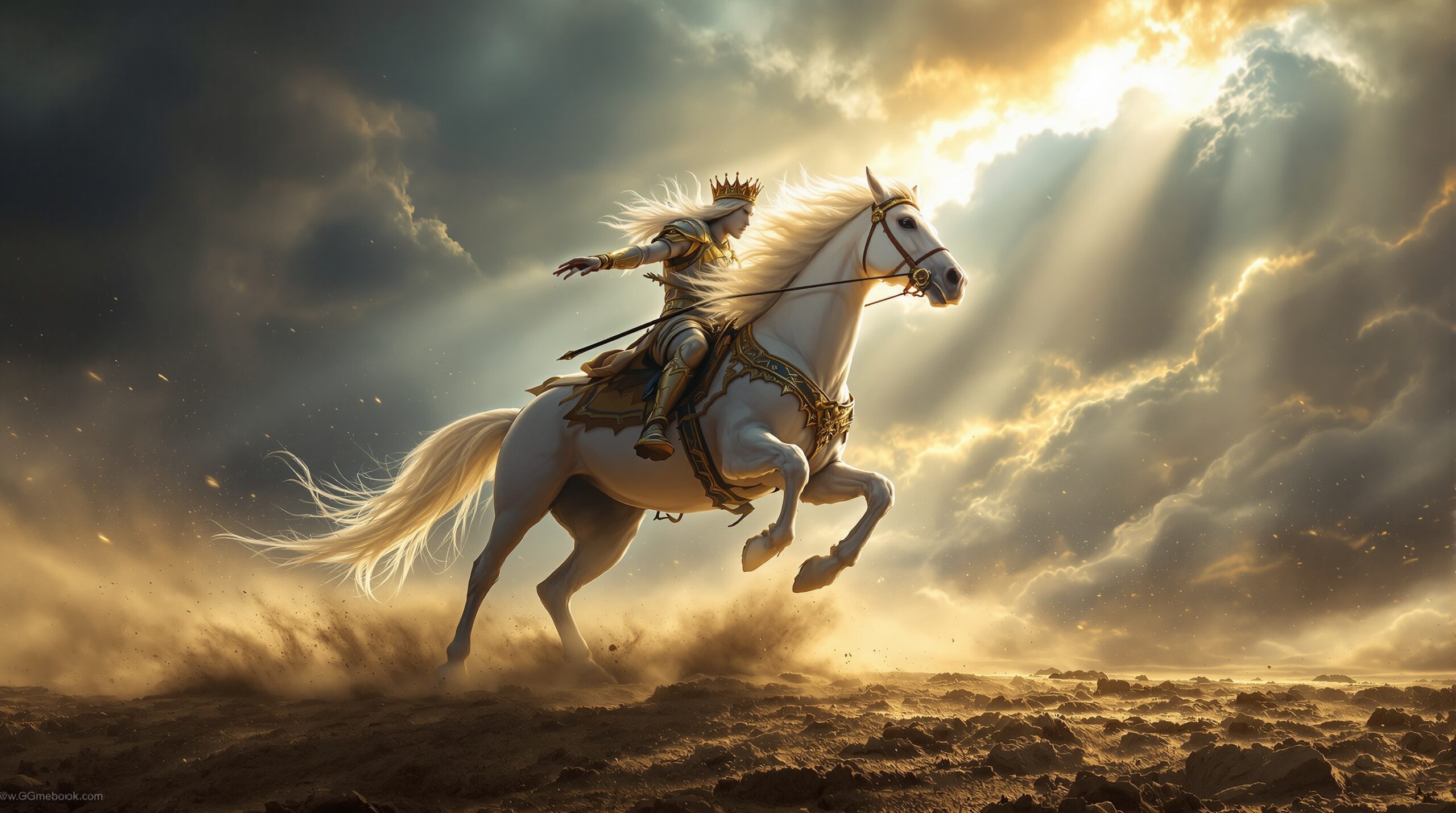
When the Lamb opens the first of seven seals in Revelation 6, a mysterious rider on a white horse appears—carrying a bow, wearing a crown, and going forth “conquering and to conquer.” This enigmatic figure has sparked centuries of debate among Bible scholars. The first seal in Revelation is not merely symbolic of hardship in general. It specifically represents conquest under divine authority, whether through Christ’s gospel victory, the rise of a deceptive world leader, or military conquest as a recurring pattern throughout history.
Understanding the first seal is essential because it initiates the sequence of judgments that unfold throughout Revelation and sets the pattern for interpreting God’s sovereignty over human history. This article examines what Scripture reveals about the first seal, its symbolic meaning, and why it matters for Christians today.
Quick Answer: The first seal in Revelation 6:1-2 depicts a rider on a white horse who goes forth conquering, representing either Christ’s victorious gospel advance, the rise of a deceptive Antichrist figure, or conquest as a recurring pattern throughout history—all under the Lamb’s sovereign control.
Definition: The first seal in Revelation represents the beginning of divine judgments executed through conquest, initiated by Christ’s exclusive authority to open the sealed scroll.
Key Scripture: “Now I saw when the Lamb opened one of the seals; and I heard one of the four living creatures saying with a voice like thunder, ‘Come and see.’ And I looked, and behold, a white horse. He who sat on it had a bow; and a crown was given to him, and he went out conquering and to conquer” (NKJV Revelation 6:1-2)
Context: Only Christ, the slain Lamb, possesses authority to open the seals, establishing that whatever this seal represents occurs under His sovereign control.
Key Takeaways
- The Lamb's authority: Christ alone can open the seven seals, ensuring nothing happens outside God's sovereign control
- Conquest imagery: The white horse, bow, and crown symbolize victorious conquest, though scholars debate whether this represents Christ, Antichrist, or human warfare
- Old Testament roots: Zechariah's vision of colored horses provides the template for understanding Revelation's four horsemen
- Historical context: First-century Christians would have understood conquest through their experience of Roman imperial power
- Timeless relevance: The first seal warns against misplaced trust in earthly kingdoms while assuring believers of God's ultimate authority
What Does the Bible Say About the First Seal in Revelation?
Scripture introduces a rider on a white horse carrying a bow and wearing a stephanos (victor's crown), who goes forth "conquering and to conquer" (NKJV Revelation 6:1-2). This seal can only be opened by "the Lion of the tribe of Judah, the Root of David" who "has prevailed" (NKJV Revelation 5:5)—establishing Christ's exclusive authority over these events. The vision draws from Zechariah 6:1-8, where colored horses represent divine agents executing God's judgment throughout the earth.Scholars such as Grant Osborne note that the stephanos crown indicates earned victory rather than inherited royalty, suggesting authority granted through conquest or achievement. This type of crown distinguishes the first rider from Christ in Revelation 19:11, who wears “many crowns” representing absolute sovereignty. The first seal in Revelation depicts a conquering rider whose identity—whether Christ advancing His gospel, the Antichrist offering false peace, or military conquest as a historical pattern—remains debated, but whose appearance under the Lamb’s authority demonstrates God’s sovereignty over all earthly powers.
Important scriptural connections include Christ’s own appearance on a white horse in Revelation 19:11 and Jesus’ prediction in Matthew 24:6-7 that “wars and rumors of wars” would characterize the age before His return. The parallel with Christ’s white horse creates interpretive tension—some see the first rider as Christ beginning His conquest through the gospel, while others view the similarities as deceptive imitation.
The Significance of the White Horse
White horses featured prominently in Roman triumphal processions, symbolizing military victory and imperial power.
- Purity symbolism: White represents righteousness and divine victory throughout Revelation
- Deceptive imitation: The color may indicate counterfeit righteousness masquerading as genuine
- Cultural recognition: First-century audiences immediately understood white horses as conquest symbols
Understanding the First Seal in Its Biblical Context
Revelation 5 establishes the dramatic setup: no one in heaven or earth proves worthy to open the sealed scroll until the slain Lamb appears. The scroll represents God's redemptive plan and coming judgment, sealed until the appointed time. Four living creatures who summon each horseman serve as heavenly representatives of creation, indicating these judgments affect the entire created order.Beginning with conquest, the four horsemen form a distinct unit (conquest, war, famine, death) that characterizes human existence under sin. Old Testament warrior imagery portrays God riding forth to victory (NKJV Psalm 45:3-5), and the bow may recall Habakkuk 3:8-9 where God’s bow represents divine judgment. Original audiences in Asia Minor faced persecution under Roman imperial power while witnessing Christianity’s rapid expansion despite opposition.
They would have understood conquest through both lenses: Rome’s military dominance and the gospel’s spiritual victory. According to Robert Mounce, the bow’s mention without arrows has led some scholars to suggest conquest through diplomacy or deceptive peace rather than overt warfare. The giving of the crown (“a crown was given to him”) indicates authority granted by a higher power, reinforcing that this conquest occurs under divine permission rather than independent human ambition.
For readers wanting to trace how this imagery develops across Revelation’s narrative, Revelation Explained: Verse by Verse examines each occurrence in its immediate context.
Why the First Seal in Revelation Matters for Christians Today
Believers find profound comfort knowing that no earthly power—no empire, ideology, or conquering movement—operates outside God's sovereign control. This assurance proves especially valuable during political upheaval, military conflict, or when worldly powers appear invincible. Progression from conquest through war, famine, and death (the four horsemen) demonstrates that human attempts to establish peace through power ultimately fail.Christians are called to citizenship in a different kingdom, advancing through sacrificial love rather than coercive force. If the rider represents Christ’s gospel conquest, believers participate through faithful witness and enduring suffering—the way of the Lamb who conquers through sacrificial death. If the rider represents Antichrist or deceptive conquest, the passage warns believers to test all claims of peace and security against Scripture’s truth.
G.K. Beale observes that the first seal challenges Christian nationalism and holy war theology—the text describes divine judgment, not commands for believers to take up arms. Whether viewed as Christ’s victory or end-times deception, the vision emphasizes that God controls history’s unfolding rather than human powers determining their own fate. Divine authority over history means no conquest, persecution, or suffering occurs apart from Christ’s redemptive purposes.
Appropriate responses combine patient endurance, discerning wisdom, faithful witness, and confident hope in the Lamb’s ultimate victory. Understanding all four horsemen together provides the complete picture of how conquest leads to the broader pattern of judgment.
Why This Vision Matters
The first seal matters because it exposes the illusion that any earthly power possesses ultimate authority. Military conquest, political dominance, and imperial systems are never final. This vision reminds believers that God's sovereignty extends over empires, governments, and human ambition. Present stability is temporary, but divine authority is eternal.Conclusion
The first seal in Revelation 6:1-2 opens the sequence of judgments that unfold throughout the book, depicting a conquering rider whose identity scholars continue to debate. Whether understood as Christ's triumphant gospel, the Antichrist's deceptive rise, or conquest as a recurring historical pattern, the seal establishes one truth: the Lamb controls history's unfolding.For Christians facing uncertain times, this vision offers both warning and comfort—warning against misplaced trust in earthly kingdoms, comfort that God remains sovereign over all powers. The first seal calls believers to discernment, faithful endurance, and confident hope in Christ’s ultimate victory. For a deeper verse-by-verse exploration of Revelation’s seals and their meaning for today’s church, see Revelation Explained: Verse by Verse by Richard French.
Sources
- Revelation 5:1-14; 6:1-2; 19:11-16
- Zechariah 1:7-11; 6:1-8
- Matthew 24:3-14
- Daniel 2:31-45; 7:1-28
- Psalm 45:3-5; Habakkuk 3:8-9
- G.K. Beale, The Book of Revelation: A Commentary on the Greek Text (New International Greek Testament Commentary), Eerdmans, 1999
- Grant R. Osborne, Revelation: Baker Exegetical Commentary on the New Testament, Baker Academic, 2002
- Robert H. Mounce, The Book of Revelation: New International Commentary on the New Testament, Eerdmans, 1997
- Craig S. Keener, Revelation: NIV Application Commentary, Zondervan, 2000
- Richard Bauckham, The Theology of the Book of Revelation, Cambridge University Press, 1993