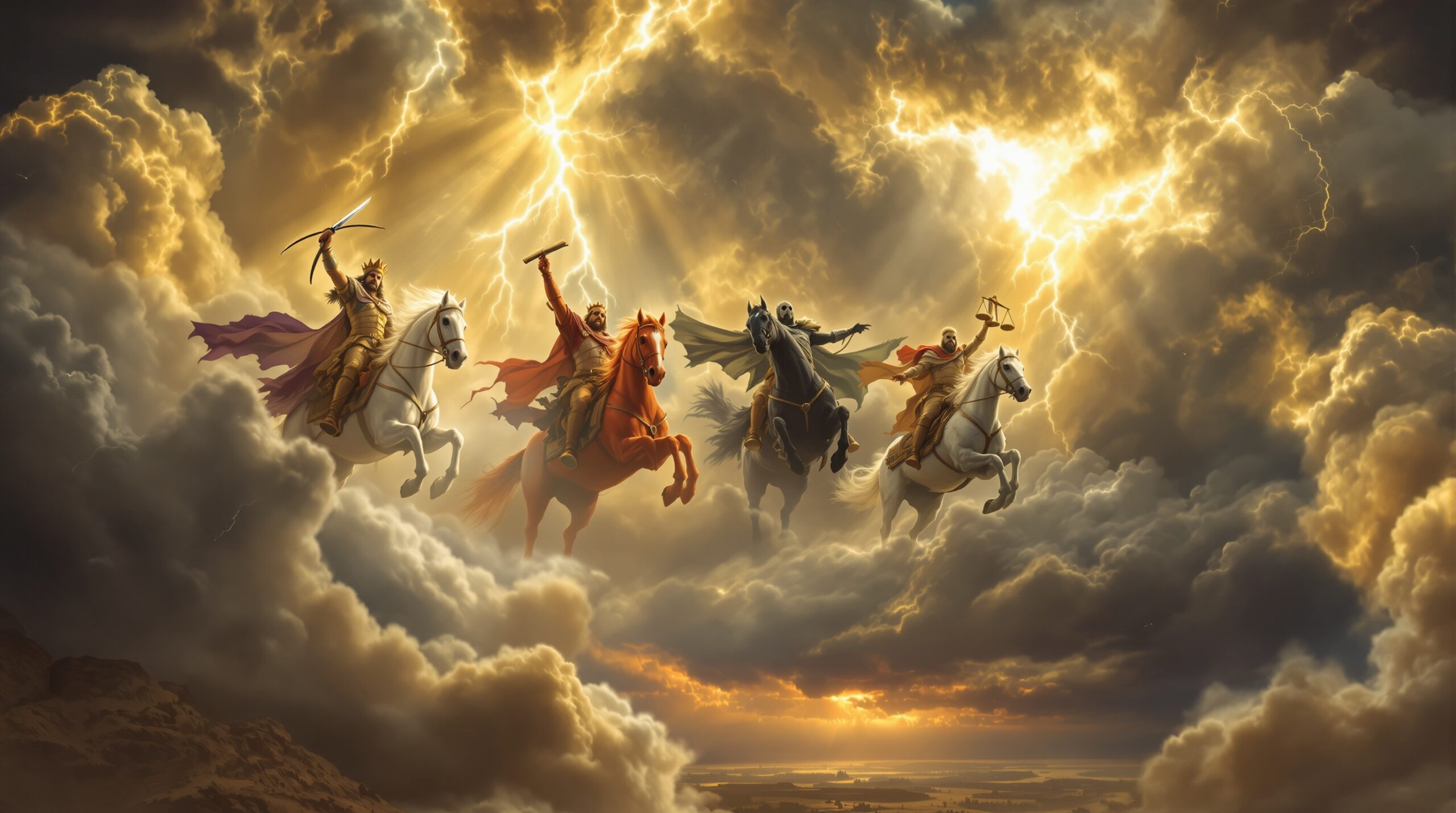
The four horsemen of the apocalypse represent conquest, warfare, famine, and death. These are sequential judgments that Christ releases in Revelation 6:1-8 as He opens the first four seals of a mysterious scroll. These aren’t random disasters spiraling out of control but carefully orchestrated events under the Lamb’s authority. Each horseman appears when one of four living creatures surrounding God’s throne commands, “Come,” summoning judgment upon a rebellious world. The vivid imagery of colored horses (white, red, black, and pale green) draws directly from Old Testament prophets like Zechariah and Ezekiel, connecting these end-times judgments to God’s historic pattern of warning before final reckoning.
Understanding the horsemen requires seeing how they fit within Revelation’s broader vision. Chapters 4-5 establish the heavenly throne room where Christ alone proves worthy to open the seven-sealed scroll representing God’s plan for history’s culmination. When the Lamb begins breaking these seals in chapter 6, He starts judgments that will grow stronger through trumpet and bowl judgments before His triumphant return. The horsemen launch this sequence, representing what Jesus called “the beginning of sorrows” in His Olivet Discourse.

Quick Answer: The four horsemen of the apocalypse represent the first four seal judgments that Christ releases in Revelation 6:1-8. The white horse symbolizes conquest or deceptive peace, the red horse brings warfare and bloodshed, the black horse depicts famine and economic collapse, and the pale horse embodies death itself.
Key Scripture: “So I looked, and behold, a pale horse. And the name of him who sat on it was Death, and Hades followed with him” (NKJV Revelation 6:8)
Context: These judgments are opened by the Lamb, demonstrating His sovereign authority over history’s darkest moments.
- Christ's authority: The Lamb alone opens the seals, establishing that even catastrophic judgments serve His redemptive purposes rather than representing chaos beyond divine control.
- Growing severity: The horsemen represent building judgments where conquest leads to war, war produces famine, and famine ends in widespread death through a logical cause-and-effect sequence.
- Symbolic colors: White, red, black, and pale green each communicate specific aspects of judgment with deep biblical meaning rooted in ancient cultural understanding.
- Old Testament roots: The vision echoes Zechariah's colored horses and Ezekiel's four severe judgments, connecting New Testament prophecy to established patterns of divine warning.
- Limited scope: Even in wrath, God shows restraint as the fourth horseman's power extends only to one-fourth of earth's population, not total destruction.
The Four Horsemen in Revelation 6: Who Are They?
The four horsemen of the apocalypse appear as Christ opens the first four of seven seals on a scroll representing God's judgment plan for human history. Each seal's opening follows the same pattern: the Lamb breaks the seal, one of four living creatures commands "Come," and John witnesses a horseman riding forth with specific authority to carry out judgment. This structured repetition creates mounting tension as each horseman brings more devastating consequences than the previous one.The first horseman rides a white horse, carries a bow, wears a crown, and goes forth “conquering and to conquer.” Scholars debate whether this represents Christ’s victorious gospel spreading throughout the world or a deceptive counterfeit: a false peace or conquering power that mimics righteousness while bringing destruction. The Greek word stephanos describes a victor’s crown rather than a royal diadem, suggesting triumphant conquest rather than legitimate kingship.
When the second seal opens, a rider on a fiery red horse receives authority “to take peace from the earth” with a great sword. This horseman represents warfare and civil violence that follows initial conquest. The Greek word machaira indicates an instrument of slaughter. The text specifically notes this power was “granted”: warfare doesn’t erupt randomly but under divine permission as judgment upon rebellion.
The third horseman rides a black horse while holding scales, and a voice announces inflated grain prices: “A quart of wheat for a denarius, and three quarts of barley for a denarius.” This depicts economic devastation where a full day’s wages buys only enough grain for personal survival, with nothing left for family or other necessities. Yet the voice adds, “do not harm the oil and wine,” suggesting luxury goods remain available to the wealthy, highlighting the severe inequity accompanying famine judgments.
The fourth horseman rides a pale greenish horse. The Greek chloros describes the sickly ashen color of a corpse. Named Death, with Hades following to collect souls, this rider kills one-fourth of humanity through combined means: sword, hunger, plague, and wild beasts. These four methods directly echo Ezekiel 14:21, where God lists His “four severe judgments” against Jerusalem. For a detailed examination of how these judgments connect to Revelation’s seal sequence, scholars trace the progression through the complete vision. For the full verse-by-verse treatment of every horseman alongside the fifth and sixth seals, see Revelation 6: The Four Horsemen and the Seven Seals.
The Meaning of Each Horseman's Color
White typically symbolizes purity and righteousness throughout Scripture, but here represents deceptive peace or false righteousness: the rider appears as a legitimate deliverer while bringing conquest and destruction. Red universally represents blood and violence, perfectly matching this horseman's mission to remove peace through warfare. Black symbolizes famine, death, and the darkness of starvation across Mediterranean cultures. The pale greenish hue describes the color of death itself, the ashen complexion of a corpse, communicating disease and mortality.How the Four Horsemen Fit in Revelation's Timeline
Revelation 4-5 sets the heavenly stage where John witnesses God's throne surrounded by twenty-four elders, four living creatures, and countless angels. A scroll sealed with seven seals rests in God's right hand, and a dramatic search begins for someone worthy to open it. No one in heaven, earth, or under the earth qualifies until the Lamb appears, bearing marks of slaughter yet standing alive. He takes the scroll amid universal worship, and immediately in chapter 6, begins opening the seals that release the horsemen.The horsemen launch the seal judgments but represent only the beginning of tribulation, not its climax. After the fourth horseman comes the fifth seal, revealing martyred believers under heaven’s altar crying out for justice. This indicates growing persecution accompanies the horsemen’s devastation. The sixth seal brings cosmic upheaval: earthquakes, a darkened sun, blood-red moon, falling stars. These signs terrify earth’s inhabitants into recognizing the Day of the Lord has arrived.
Following a pause where 144,000 from Israel’s tribes receive divine sealing for protection, the seventh seal opens in Revelation 8:1 to profound silence in heaven. This silence gives way to seven trumpet judgments bringing even more severe devastation. The trumpets are followed by bowl judgments in Revelation 16 that increase God’s wrath before Christ’s victorious return. Understanding how the trumpets build upon the seals helps readers grasp Revelation’s building pattern.
Old Testament Connections to the Horsemen
Zechariah 1:8-11 and 6:1-8 describe colored horses sent throughout earth as God's agents of judgment and reconnaissance. John's vision directly echoes these prophecies, showing continuity between Old Testament promises and New Testament fulfillment. Ezekiel 14:21 lists four severe judgments God sends: sword, famine, wild beasts, and plague (precisely the means the pale horse uses). These connections demonstrate the horsemen fulfill long-standing prophetic expectations rather than introducing novel symbols disconnected from Scripture's broader testimony.Why the Four Horsemen Matter for Christians Today
The four horsemen of the apocalypse call believers to confident trust in Christ's sovereignty over history's most chaotic moments. When international conflicts erupt, economic systems collapse, pandemics spread, or violence grows, these events don't signal that God has lost control or that evil has won. Instead, they remind us that human rebellion against divine order brings inevitable consequences under God's governance. The text repeatedly emphasizes that authority was "granted" or "given" to each horseman, establishing that even judgment serves redemptive purposes within Christ's plan.The passage calls us to spiritual vigilance and faithful endurance despite pressure to compromise when facing economic hardship or social hostility. First-century Christians who first heard this prophecy lived under Roman persecution, economic sanctions for refusing emperor worship, and constant pressure to abandon costly discipleship. The vision affirmed God’s sovereign control over their circumstances: even Rome’s intimidating power remained subordinate to the Lamb’s authority. Believers today face similar pressures through materialism, ideological conformity, and various forms of persecution that tempt us toward comfortable compromise.
The horsemen should generate humble urgency in evangelism without slipping into sensationalism or date-setting errors. These judgments aim partially at provoking repentance before final judgment, meaning believers bear responsibility to proclaim the gospel clearly while opportunity remains. We must balance sobering warnings about coming wrath with genuine gospel hope available through Christ. Yet Revelation’s purpose was strengthening persecuted believers for faithful living, not satisfying curiosity about end-times timelines or enabling speculation about current events.
The horsemen reveal that earthly powers, however intimidating, remain subordinate to the Lamb’s authority. This calls believers to faithfulness regardless of circumstances, knowing Christ directs all things for His glory and our good. This truth should create compassionate activism regarding warfare, hunger, and injustice. While recognizing these as divinely permitted judgments on human sin, believers shouldn’t remain passive observers. We’re called to demonstrate Christ’s mercy by actively addressing the very needs these judgments create: feeding the hungry, pursuing peace, promoting justice, caring for victims of violence.
For readers wanting to trace how Revelation’s judgment patterns develop across the entire book, Revelation Explained: Verse by Verse examines each occurrence within its immediate literary context and connection to Old Testament prophetic imagery.
Conclusion
The four horsemen of the apocalypse stand as sobering reminders that human rebellion brings consequences, yet even in judgment, Christ remains sovereign over every detail. These aren't forces of random chaos spiraling beyond control but instruments in the Lamb's hands, serving His redemptive purposes as He moves history toward its appointed end. The careful structure (each seal opened by Christ, each horseman summoned by a living creature representing all creation) emphasizes that judgment flows from divine authority and holy purpose rather than arbitrary catastrophe.For believers facing uncertain times marked by conflict, economic instability, pandemics, or various threats, the horsemen offer unexpected comfort. The One who opens the seals also conquered death itself, rose victorious, and promises triumph over all evil. Our calling isn’t anxious speculation about prophetic timelines but faithful endurance, confident hope, and active compassion as we await His return. The colors, sequence, and Old Testament connections all point to one truth: God keeps His promises, executes justice, and will make all things right. For a deeper verse-by-verse exploration of Revelation’s prophetic structure and symbolic language, see Revelation Explained: Verse by Verse by Richard French.