In Revelation 4:6, John looks through an open door into heaven and sees four living creatures surrounding the very throne of God, crying "Holy, holy, holy" without ceasing. These beings have fascinated and puzzled readers for centuries. Maybe you've encountered them and wondered whether they are angels, symbols, or something else entirely. That uncertainty is completely understandable, and you're in good company.
The four living creatures appear at the structural heart of Revelation, before any seal breaks or any judgment falls. Understanding them replaces confusion with awe. These are heavenly realities rooted in Scripture's oldest prophetic traditions, and they carry a message every believer needs to hear. The four living creatures are not science-fiction curiosities. They specifically represent the fullness of all created life gathered in perpetual worship before God's throne.
Quick Answer: The four living creatures are exalted heavenly beings stationed around God's throne in Revelation 4-5. Representing the fullness of created life through their four faces (lion, calf, man, eagle), they serve as heaven's perpetual worship leaders, ceaselessly declaring God's holiness and initiating the adoration of all heaven.
Definition: The four living creatures in Revelation symbolize the fullness of created life gathered in perpetual worship before God's throne, drawing from Ezekiel's cherubim and Isaiah's seraphim to portray heaven's highest angelic attendants in their primary role: declaring God's absolute holiness.
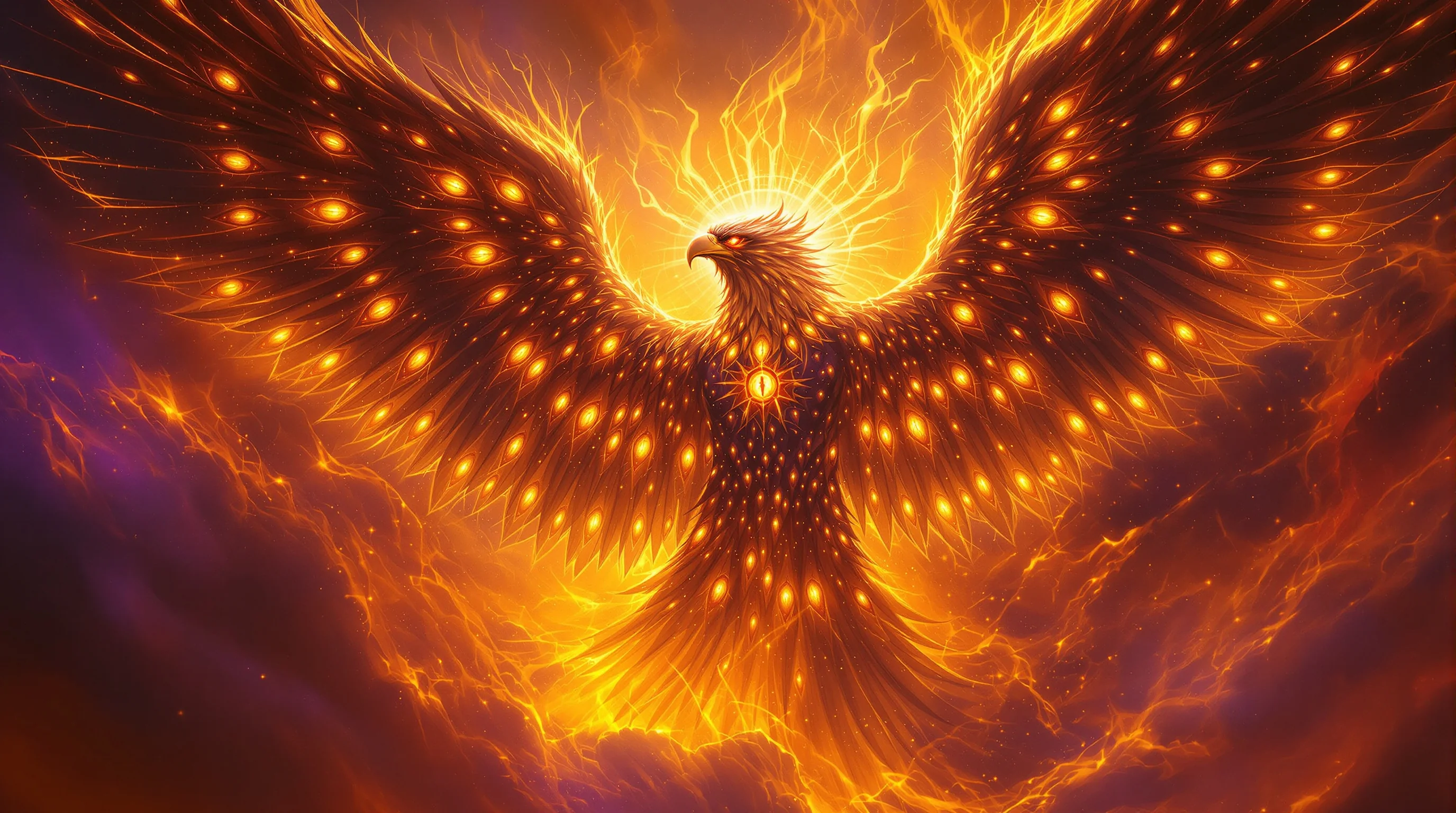
Key Scripture: "The four living creatures, each having six wings, were full of eyes around and within. And they do not rest day or night, saying: 'Holy, holy, holy, Lord God Almighty, who was and is and is to come!'" (NKJV Revelation 4:8)
Context: Their Old Testament roots in Ezekiel's cherubim and Isaiah's seraphim confirm they belong to a long scriptural tradition depicting the attended throne of Israel's God.
This vision serves as the theological foundation for everything that follows in Revelation. Before any seal opens or any bowl pours out, John is shown a throne that is already occupied, already surrounded by worship, and already sovereign over all creation. The four living creatures anchor that reality, functioning as heaven's permanent worship leaders whose cry never stops. The sections below examine what Scripture says about these beings, trace their Old Testament roots, and explore why this vision matters for believers handling a world that constantly competes for their devotion.
Key Takeaways
- Heavenly identity: The four living creatures are exalted angelic beings, designated by the Greek term zoa ("living ones"), stationed in closest proximity to God's throne (NKJV Revelation 4:6).
- Fourfold symbolism: Their four faces (lion, calf, man, eagle) represent the pinnacle creatures of each field, forming a symbolic portrait of creation's fullness gathered in worship before its Creator.
- Ceaseless worship: Their unending trisagion, "Holy, holy, holy," mirrors Isaiah 6:3 and establishes that heaven's worship of God has never paused, regardless of earthly circumstances.
- Old Testament roots: Ezekiel explicitly identifies similar beings as cherubim (NKJV Ezekiel 10:20), linking the four living creatures to Israel's temple tradition and the guardian attendants of God's presence.
- Trinitarian worship: The four living creatures worship both the Father in Revelation 4 and the Lamb in Revelation 5, affirming the full divinity of Christ alongside the Father.
Key Evidence
- Primary text: Revelation 4:6-9 introduces the four living creatures surrounding God's throne, describing their faces, wings, and ceaseless trisagion (NKJV).
- Old Testament parallel: Ezekiel 1:10 records the same fourfold faces (lion, ox, man, eagle), and Ezekiel 10:20 explicitly identifies these beings as cherubim.
- Isaiah's seraphim: Isaiah 6:2-3 describes six-winged beings crying "Holy, holy, holy," matching Revelation's portrait precisely and confirming the composite tradition John draws from.
- Scholarly consensus: Robert Mounce, Grant Osborne, and G.K. Beale each identify the four living creatures as exalted angelic throne-room attendants whose primary function is leading creation in worship.
- Trinitarian structure: The creatures worship the Father in Revelation 4 and fall before the Lamb in Revelation 5:8, providing a central point textual basis for affirming Christ's full divinity within the throne room vision.
What Does the Bible Say About the Four Living Creatures?
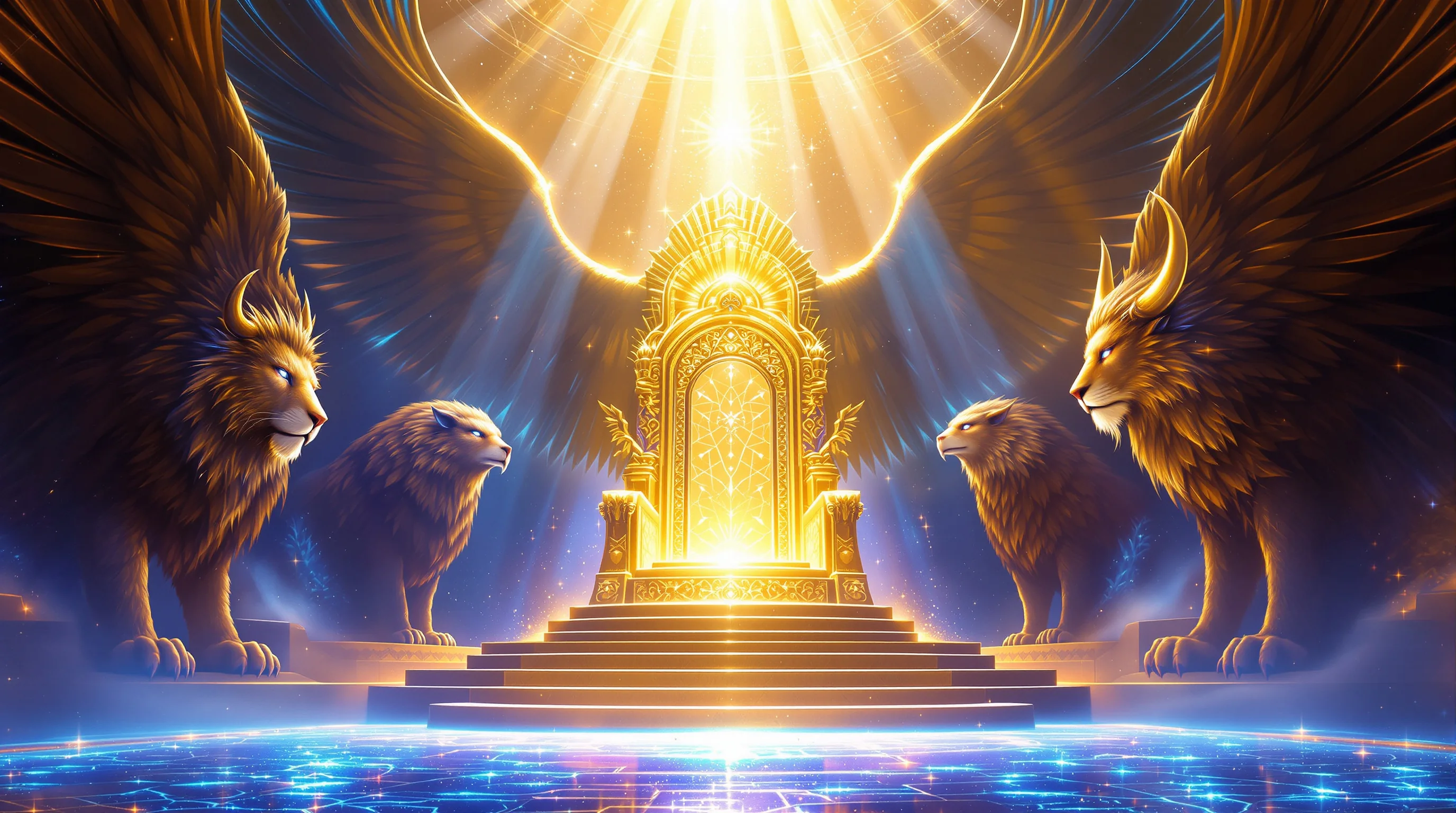
The text introduces these beings with striking clarity. "Before the throne there was a sea of glass, like crystal. And in the midst of the throne, and around the throne, were four living creatures full of eyes in front and in back" (NKJV Revelation 4:6). The Greek term John uses is zoa, from zao, meaning "to live." This word choice matters: these are not mere animals but beings animated with heavenly life, of a higher order than anything on earth.
Their four faces appear in the following verse: "The first living creature was like a lion, the second living creature like a calf, the third living creature had a face like a man, and the fourth living creature was like a flying eagle" (NKJV Revelation 4:7). The four faces of the living creatures form a symbolic portrait of creation's highest representatives gathered before the throne of God. The lion leads among wild beasts, the calf (or ox) among domesticated animals, the eagle among birds, and man above all creation. Taken together, they represent the totality of the created order in worship before its Creator.
Robert Mounce describes them as "an exalted order of angelic beings whose primary responsibility is to lead creation in its adoration of the Creator." That liturgical function becomes clear in Revelation 4:9-10, where "whenever the living creatures give glory and honor and thanks to Him who sits on the throne," the twenty-four elders fall in worship. The four living creatures initiate heaven's praise, and all of heaven responds.
Worship of the Son follows in the same passage. When the Lamb takes the scroll in Revelation 5, "the four living creatures and the twenty-four elders fell down before the Lamb, each having a harp, and golden bowls full of incense, which are the prayers of the saints" (NKJV Revelation 5:8). The same beings who worship the Father in chapter 4 worship the Lamb in chapter 5, affirming Christ's full divinity within the Trinitarian structure of heaven's throne room.
How the Four Living Creatures Appear in Ezekiel
Ezekiel's vision provides the direct Old Testament source for Revelation's portrait of these beings.
- Matching faces: "Each of the four had the face of a lion on the right side, each of the four had the face of an ox on the left side, and each of the four had the face of an eagle" (NKJV Ezekiel 1:10), using the Hebrew chayyot ("living creatures").
- Cherubim identified: Ezekiel 10:20 explicitly names these beings as cherubim, linking them to the guardian attendants of the ark of the covenant and Israel's temple tradition.
Understanding the Four Living Creatures in Context
Revelation 4-5 forms what scholars consistently identify as the throne room vision, the structural and theological heart of the entire book. John sees no seal opened, no judgment falling, no earthly event unfolding until he first passes through an open door into heaven and witnesses the sovereign God enthroned in absolute glory. This sequencing is deliberate. Everything that follows in Revelation flows from this basic vision of divine sovereignty.
Chapter 4 centers on worship of God as Creator, while chapter 5 pivots to worship of the Lamb as Redeemer. The four living creatures anchor both movements. Their presence before and after the Lamb takes the scroll signals that they are central participants in the drama of cosmic redemption, not background scenery. For a detailed examination of how the scroll and the Lamb's worthiness connect in this vision, see the scroll in Revelation 5.
Grant Osborne observes that "John has combined the cherubim of Ezekiel 1 with the seraphim of Isaiah 6 to create his portrait of the throne-room attendants, and the original readers would have recognized both streams of imagery immediately." The seraphim of Isaiah 6 cry the same trisagion and possess six wings, matching Revelation's description precisely. Rather than distinguishing between separate categories of beings, John draws both traditions together into a composite vision. The verse-by-verse commentary in Revelation Explained traces these Old Testament connections throughout each chapter.
The first-century urgency of this vision deserves attention. The seven churches of Asia Minor faced real pressure from the imperial cult under Domitian, around AD 95. In cities like Ephesus and Smyrna, civic life was deeply tied to emperor worship. Against that backdrop, four living creatures crying "Holy, holy, holy, Lord God Almighty, who was and is and is to come" was a thunderous counter-declaration. The throne they surround belongs to God alone, not Caesar.
The Jewish Apocalyptic Background
John's original audience recognized the throne room vision as belonging to an honored literary tradition in Jewish Scripture.
- Prophetic genre: Daniel 7, Isaiah 6, and Ezekiel 1 all share the apocalyptic throne room form. First-century Jewish Christians would have placed John's vision within this tradition immediately.
- Interpretive result: The four living creatures read as heavenly realities described through a scripturally grounded symbolic vocabulary, not as codes for modern nations or political powers.
Why the Four Living Creatures Matter for Christians Today
The four living creatures model the most fundamental posture of all created life before God: worship. Their ceaseless trisagion declares that heaven's adoration of God has never paused. G.K. Beale's observation that the creatures represent "the fullness of the animate world bringing praise to God" carries a striking implication: human worshipers are not spectators of this scene but participants in its cosmic reality. When we worship, we join something that has been happening since before time and will continue beyond it.
Perhaps you've read Revelation and felt more anxious than encouraged. This vision offers a direct answer to that anxiety. Before any seal breaks, God is already seated. Before any judgment falls, worship is already filling heaven. Beale's commentary on Revelation (NIGTC) identifies this priority of worship as the passage's central pastoral function: reassuring believers that divine sovereignty frames every trial they face. The four living creatures remind every generation that heaven's worship of God precedes every earthly trial and outlasts every earthly power.
The most common misapplication of this passage is forcing the four faces into a cipher for modern nations or geopolitical timelines the text never suggests. Osborne's Revelation (Baker Exegetical Commentary) notes that the symbolism consistently points to creation and heavenly worship rather than to political entities. Readers who spend more energy identifying the creatures than responding to the One they worship have missed the passage's actual invitation. Understanding who the Lion of Judah is, for instance, matters far more than cataloging the living creatures' features in isolation.
Every competing claim on human devotion meets its answer in this throne room scene. What the four living creatures declared to churches under Caesar's shadow, they declare to every generation: there is one throne, one worthy of unceasing worship, one who "was and is and is to come." That declaration has not grown quieter. To explore what the book of Revelation means as a whole, this vision is the place to begin.
Why This Vision Matters
Standing as heaven's permanent testimony, the four living creatures declare that God's holiness, sovereignty, and worthiness of worship are not seasonal or circumstantial realities. For believers handling pressure, confusion, or fear, this vision anchors faith in what is eternally true: the throne is occupied, worship is unceasing, and the Lamb has prevailed. No earthly power has ever silenced that cry, and none ever will.
Conclusion
The four living creatures are exalted heavenly beings surrounding God's throne, whose fourfold faces represent all creation gathered in perpetual worship, whose roots run deep into Ezekiel and Isaiah, and whose ceaseless trisagion declares the absolute holiness of the God they attend. There is no shame in finding these images initially strange; faithful readers have wrestled with them for two thousand years. When Revelation feels overwhelming, return to this vision. Heaven is ordered and full of worship. The throne is occupied and sovereign. Worship is already happening, and it has never stopped. Your own worship, offered in whatever circumstances you face, joins a chorus that began before creation and will outlast everything you see around you. For a deeper verse-by-verse exploration of Revelation's symbols and structure, see Revelation Explained: Verse by Verse by Richard French.
Sources
- Revelation 4:6 - 9 (NKJV) - Primary description of the four living creatures
- Revelation 5:6 - 14 (NKJV) - Living creatures in worship of the Lamb
- Revelation 6:1 - 8 (NKJV) - Living creatures announcing the four horsemen
- Ezekiel 1:4 - 28 (NKJV) - Old Testament chayyot vision
- Ezekiel 10:1 - 22 (NKJV) - Identification of living creatures as cherubim
- Isaiah 6:1 - 7 (NKJV) - Seraphim and the trisagion
- Numbers 2:1 - 34 (NKJV) - Four tribal divisions of Israel's camp
- G.K. Beale, The Book of Revelation: A Commentary on the Greek Text (NIGTC; Eerdmans/Paternoster, 1999)
- Robert H. Mounce, The Book of Revelation (NICNT; Eerdmans, revised 1997)
- Grant Osborne, Revelation (BECNT; Baker Academic, 2002)
- David E. Aune, Revelation 1 - 5 (WBC; Word, 1997)
- G.B. Caird, A Commentary on the Revelation of St. John the Divine (Harper & Row, 1966)