
The phrase “Lord’s Day” appears only once in all of Scripture—Revelation 1:10—yet it marks the moment when John received Christianity’s most dramatic prophetic vision. This seemingly simple time marker has sparked centuries of discussion among biblical scholars and believers alike.
Was John referring to Sunday worship, or was he transported to the future Day of the Lord’s return? The lord’s day in revelation is not merely a symbolic reference to the end times. It specifically refers to Sunday, the weekly day when early Christians gathered for worship to commemorate Christ’s resurrection.
Understanding what “the Lord’s Day” means shapes how we read Revelation—as a letter rooted in weekly Christian worship or as pure apocalyptic vision disconnected from ordinary church life. The answer reveals that even Revelation’s most extraordinary prophecies remain anchored in the regular rhythms of Christian community.
Quick Answer: The lord’s day in revelation refers to Sunday, the weekly day when early Christians gathered for worship to commemorate Christ’s resurrection. John received his vision during this day of corporate worship, grounding Revelation’s extraordinary prophecies in the ordinary rhythms of Christian community.
Definition: The lord’s day in revelation represents Sunday worship when first-century believers assembled to encounter the risen Christ through Word, prayer, and fellowship.
Key Scripture: “I was in the Spirit on the Lord’s Day, and I heard behind me a loud voice, as of a trumpet” (NKJV Revelation 1:10)
Context: The Greek phrase kuriakē hēmera means “the day belonging to the Lord,” connecting to liturgical language like “Lord’s Supper” in 1 Corinthians 11:20.
Key Takeaways
- Sunday worship: The lord's day in revelation refers to the first day of the week when Christians assembled to honor Christ's resurrection
- Unique phrase: This expression appears nowhere else in Scripture, making Revelation 1:10 the sole biblical reference
- Worship context: John's vision occurred during corporate worship, connecting prophecy to gathered Christian community
- Early church practice: Post-apostolic writings confirm Christians called Sunday "the Lord's Day" from the earliest times
- Lordship claim: Calling Sunday "the Lord's Day" declared Christ's ownership of time in a culture where emperors claimed divinity
What Does the Bible Say About the Lord's Day in Revelation?
Revelation 1:10 provides the only biblical use of the exact phrase "Lord's Day" (kuriakē hēmera in Greek). The text tells us John was "in the Spirit"—under prophetic control of the Holy Spirit—when he heard a trumpet-like voice behind him. This phrase describes John's supernatural state for receiving divine revelation, the same expression used in Revelation 4:2, 17:3, and 21:10 to mark major visionary transitions.The adjective kuriakē (belonging to the Lord) appears elsewhere only in 1 Corinthians 11:20 describing the “Lord’s Supper.” This creates a liturgical connection between the day and the meal, both belonging specifically to Christ. Scholars such as G.K. Beale note that this parallel suggests both the supper and the day have special association with Christ’s lordship and the church’s worship practices.
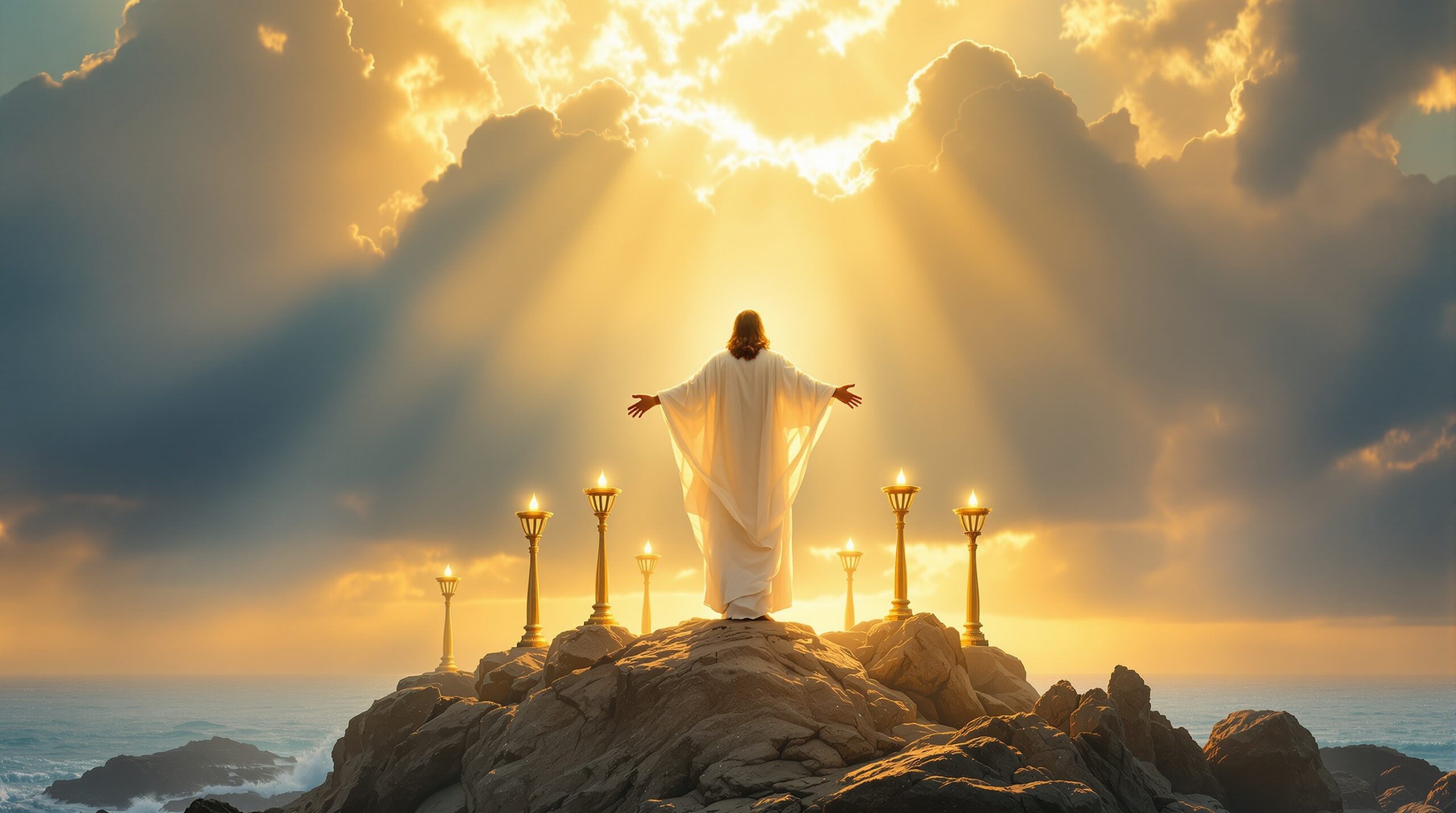
The vision immediately shows seven golden lampstands representing churches (1:20), linking John’s experience to gathered Christian assemblies. Acts 20:7 establishes that early Christians met “on the first day of the week” to break bread, providing key context for understanding John’s reference. The lord’s day in revelation grounds the book’s extraordinary visions in the weekly worship practice of first-century churches, where believers gathered on Sunday to encounter the risen Christ.
The phrase differs grammatically from “the Day of the Lord” (hēmera tou kuriou) used elsewhere for God’s final judgment in passages like 1 Thessalonians 5:2 and 2 Peter 3:10. This linguistic distinction supports the Sunday interpretation over an eschatological reading, though some scholars see potential for layered meaning.
Understanding the Lord's Day in Historical Context
First-century Christians distinguished themselves from Jews by gathering on Sunday rather than observing the Saturday Sabbath. Sunday commemorated Christ's resurrection (NKJV John 20:1, 19) and His post-resurrection appearances to disciples. This shift represented more than scheduling preference—it declared that Christ's victory over death had inaugurated a new era of worship.Early Christian writings confirm this practice with notable consistency. The Didache (late first century) instructs believers to “gather together” on “the Lord’s Day.” Ignatius of Antioch (AD 110) contrasts those “living according to the Lord’s Day” with “keeping the Sabbath.” The Letter of Barnabas (AD 130) calls Sunday “the eighth day” because Jesus rose from the dead on it. Justin Martyr (AD 150) describes detailed Sunday assemblies for Scripture reading, preaching, and Eucharist.
In Roman Asia Minor, calling Sunday “the Lord’s Day” carried political implications. Emperors like Domitian claimed divine honors and demanded worship as “lord and god.” Christians’ Sunday assemblies were conspicuous and sometimes viewed with suspicion by Roman authorities who valued public religion and civic participation in imperial festivals.
John’s exile on Patmos “for the word of God and for the testimony of Jesus” (NKJV Revelation 1:9) reflects the cost of refusing imperial worship. According to Robert Mounce, Patmos served as a place of political banishment where John was forcibly separated from his pastoral ministry as punishment for Christian witness. Yet even in forced separation from his churches, John participates in worship “on the Lord’s Day” through his vision.
When John called Sunday “the Lord’s Day,” he made a political claim in a world where Caesar demanded ultimate allegiance—time itself belongs to Christ, not the emperor. This countercultural declaration would have encouraged believers facing pressure to conform to Roman religious expectations.
The Connection Between Worship and Prophecy
John's prophetic experience occurs during the day of Christian assembly, suggesting gathered worship was particularly conducive to receiving revelation. The vision of Christ walking among lampstands (churches) during the lord's day in revelation worship emphasizes Christ's active presence with assembled believers. Revelation was meant to be read aloud in Sunday worship gatherings (NKJV Revelation 1:3), connecting prophecy directly to liturgical practice and community edification.Why the Lord's Day Matters for Christians Today
John's experience models what should happen every Lord's Day—believers encounter the risen Christ in gathered worship. Sunday assembly isn't mere religious obligation but the appointed time for meeting the Lord who conquered death. This calls for expectancy and reverence when Christians gather, recognizing that worship creates space for divine encounter.Protecting Sunday for worship witnesses to Christ’s lordship in cultures that recognize no day as sacred. Modern pressures from work demands, entertainment, commerce, and recreation constantly encroach on gathered worship. Maintaining Sunday as distinct demonstrates that time belongs ultimately to Christ, not to economic or social systems claiming priority.
The lord’s day in revelation offers weekly encouragement that Christ remains present with His churches regardless of external opposition or persecution. John received specific messages for churches (chapters 2-3) on the Lord’s Day, reminding believers that Christ still speaks through Scripture, preaching, and prophecy when they gather. The recurring phrase “He who has an ear, let him hear what the Spirit says to the churches” (NKJV Revelation 2:7, 11, 17, 29) calls for active listening, not passive attendance.
Every Lord’s Day, believers participate in what John experienced on Patmos—the presence of the One who was dead but is alive forevermore, walking among His churches. This weekly appointment has sustained Christians through centuries of opposition, comforted exiles and prisoners, and challenged cultural powers claiming ultimacy.
Common misapplications to avoid include treating Sunday worship as optional or casual when Christ promises to meet His assembled people on this day. The lord’s day in revelation celebrates resurrection freedom, not legalistic restriction, while calling for reverence toward Christ’s promised presence. As the seven churches in Revelation discovered, corporate worship remains the context where Christ addresses His people most directly.
Why This Vision Matters
The lord's day in revelation matters because it reveals that extraordinary encounters with God happen within ordinary Christian practices. John's vision didn't occur during mystical retreat but during regular Sunday worship. This encourages believers that gathered worship—not just private devotion—creates space for meeting the risen Christ. Present faithfulness in corporate assembly prepares hearts for whatever revelations God chooses to give.Conclusion
The lord's day in revelation 1:10 refers to Sunday, the weekly day when early Christians gathered to worship the risen Christ. This simple time marker carries profound significance: it grounds Revelation's visions in the ordinary practice of Christian worship and declares Christ's lordship over time itself.John’s experience encourages believers facing opposition—the Lord who walks among His lampstands meets His people faithfully every Sunday, regardless of circumstances. Understanding the lord’s day in revelation helps readers approach Revelation not as disconnected speculation but as a message emerging from and speaking to gathered Christian communities across all ages. The book’s extraordinary prophecies remain rooted in the weekly rhythm of believers assembling to encounter God’s revelation through Word and Spirit.
For a deeper verse-by-verse exploration of Revelation’s worship themes and prophetic visions, see Revelation Explained: Verse by Verse by Richard French.
Sources
- Revelation 1:9-20 (inaugural vision and Lord's Day reference)
- 1 Corinthians 11:20 (Lord's Supper, parallel usage of kuriakē)
- Acts 20:7 (first day of the week gathering)
- John 20:19, 26 (resurrection appearances on first day)
- Exodus 19:16-19 (Sinai theophany with trumpet)
- Ezekiel 2:2; 3:12 (being in the Spirit)
- Daniel 7:13 (Son of Man vision)
- Isaiah 2:12; 13:9 (Day of the LORD tradition)
- G.K. Beale, The Book of Revelation: A Commentary on the Greek Text (New International Greek Testament Commentary), Eerdmans, 1999
- Robert H. Mounce, The Book of Revelation (Revised) (New International Commentary on the New Testament), Eerdmans, 1997
- Grant R. Osborne, Revelation (Baker Exegetical Commentary on the New Testament), Baker Academic, 2002
- Didache 14.1 (late first century)
- Ignatius of Antioch, Letter to the Magnesians 9.1 (circa AD 110)
- Letter of Barnabas 15.9 (circa AD 130)
- Justin Martyr, First Apology 67 (circa AD 150)
- kuriakē hēmera (Revelation 1:10) - adjective meaning "lordly/belonging to the Lord" + "day"
- en pneumati (Revelation 1:10) - "in/by the Spirit"
- hēmera tou kuriou - standard New Testament construction for "Day of the Lord" (1 Thessalonians 5:2; 2 Peter 3:10)