When John wrote Revelation, Christians in Asia Minor faced a stark choice: honor Caesar as lord and savior, or face economic exclusion, social ruin, and death. The vision of a new heaven and new earth answered that pressure with a declaration that has echoed through every generation of suffering believers since: Caesar's world is not the final word.
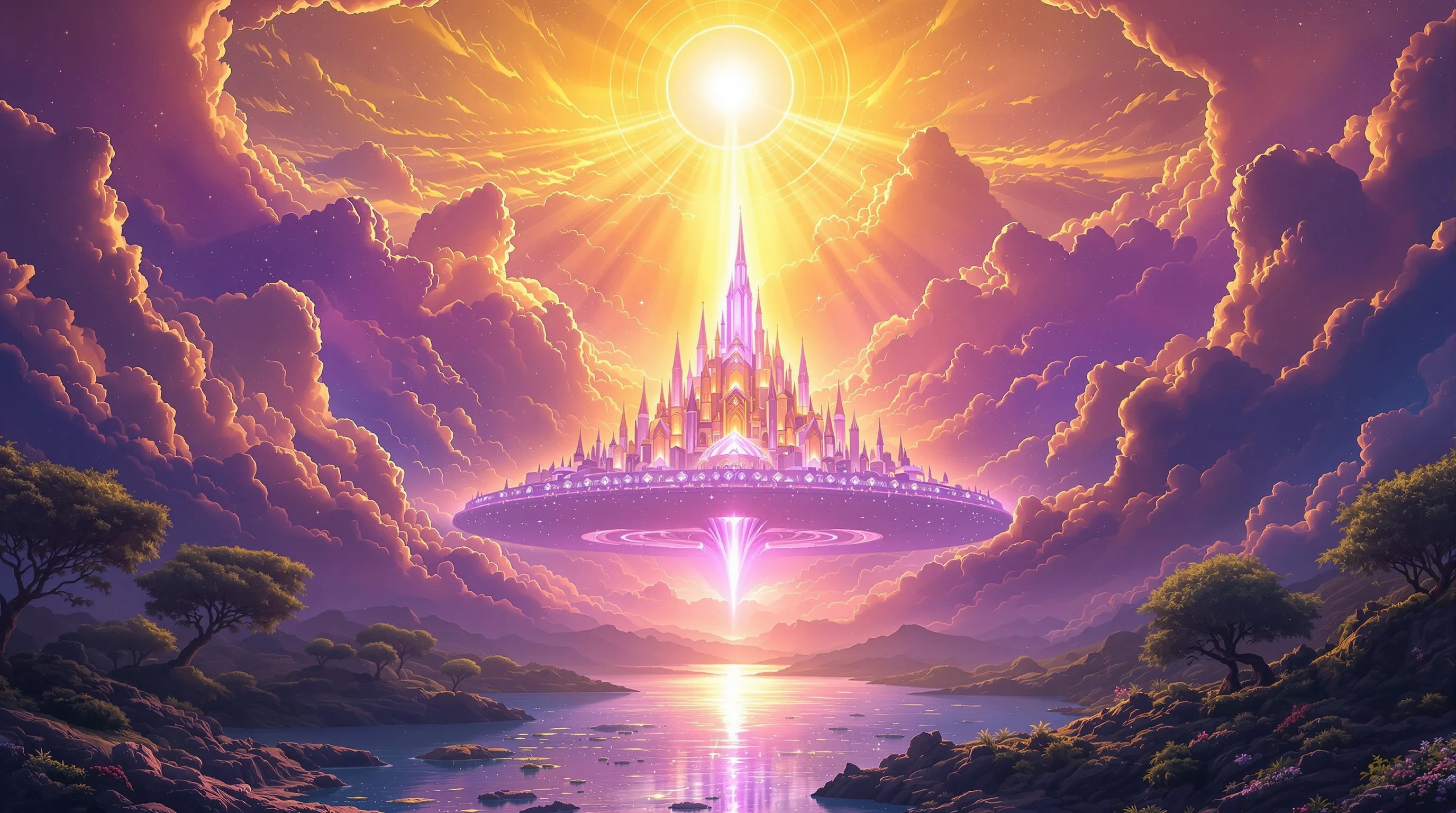
Revelation 21 stands as the climactic resolution of the entire biblical story, from the garden of Genesis 3 to the last verses of Scripture. If you've ever felt that Revelation is more confusing than comforting, these chapters may surprise you. The imagery here is the most hopeful vision in all of Scripture.
This article examines what the new heaven and new earth actually are, what the original text reveals verse by verse, and why this vision matters for Christians living in a world that still feels broken. It's entirely reasonable to approach these chapters with honest questions, and faithful readers have wrestled with them for centuries.
Quick Answer: The new heaven and new earth in Revelation is the transformed, renewed creation God establishes after the present order passes away. It is the permanent dwelling place of God with his redeemed people, where death, sorrow, and suffering are removed forever and every covenant promise God made is fulfilled.
Definition: The new heaven and new earth in Revelation symbolizes the qualitative change of all creation, where God dwells with humanity without barrier, death, or separation, fulfilling every covenant promise from Genesis to Revelation.
Key Scripture: "Now I saw a new heaven and a new earth, for the first heaven and the first earth had passed away. Also there was no more sea." (NKJV Revelation 21:1)
Context: Revelation 21 fulfills Isaiah 65:17, where God promised to create new heavens and a new earth using the same Hebrew verb bara found in Genesis 1:1, binding this vision to the full sweep of biblical prophecy.
This vision serves as the theological destination of everything Revelation has been building toward. It functions as the answer to the oldest human questions: Will God make things right? Will suffering have the last word? The sections below examine what the original text says, how it connects to the biblical story, and what it calls believers to do today.
Key Takeaways
- Qualitative renewal, not annihilation: The Greek word kainos ("new in quality") signals that the new creation is a transformed and perfected cosmos, not a discarded one. (Beale, NIGTC)
- God descends to dwell with humanity: The New Jerusalem comes down from heaven as a divine gift, not a human achievement, completing the covenant promise that God will dwell among his people.
- The curse of Genesis 3 is fully reversed: Death, sorrow, crying, and pain are permanently removed because the fall's consequences are completely undone in the new creation.
- Old Testament prophecy reaches its fulfillment: Isaiah 65:17, Ezekiel 47, and Zechariah 14 all find their final resolution in Revelation 21 and 22.
- Patient endurance is the appropriate response: The vision was given to suffering believers as concrete hope, calling them to faithful living in light of God's guaranteed future. (Bauckham, Theology of Revelation)
Key Evidence:
- G.K. Beale (NIGTC) argues that kainos in Revelation 21:1 denotes qualitative renewal, not replacement, supporting continuity between the present cosmos and the new creation.
- Grant Osborne identifies the covenant formula in Revelation 21:3 as a direct fulfillment of Leviticus 26:12, Jeremiah 31:33, and Ezekiel 37:27, demonstrating that John deliberately draws the entire Old Testament covenant tradition to its final resolution.
- Richard Bauckham (Theology of Revelation) documents that the New Jerusalem vision was constructed as a counter-narrative to Roman imperial claims, with the Lamb replacing Caesar as the ultimate lord and savior.
- Isaiah 65:17 uses the Hebrew verb bara, the same word as Genesis 1:1, signaling that the new creation is a fresh act of divine power equal in scope to the original creation.
What the Bible Reveals About the New Heaven and New Earth
The text opens with a declaration that reorients everything: "Now I saw a new heaven and a new earth, for the first heaven and the first earth had passed away. Also there was no more sea." (NKJV Revelation 21:1). That final detail, the absence of the sea, is easy to misread as geography. In context, it carries Old Testament symbolic weight. The sea in Scripture represents chaos, danger, and separation from God (see Genesis 1 and Isaiah 57:20). Its removal signals that every force of disorder and division has been permanently ended.
The Greek word John uses for "new" is kainos, meaning "new in quality or nature," as distinct from neos, which simply means "new in time." G.K. Beale notes that this distinction supports change rather than annihilation of the present cosmos: the old creation is renewed and purified, not discarded and replaced from nothing. The new heaven and new earth in Revelation is the change of creation, not its disposal.
Revelation 21:2 adds the next layer: "Then I, John, saw the holy city, New Jerusalem, coming down out of heaven from God, prepared as a bride adorned for her husband." (NKJV Revelation 21:2). The Greek participle katabainousan ("coming down") emphasizes ongoing, visible descent. The city arrives as a gift from above, not a human construction reaching upward. This directly counters any reading that reduces future hope to human progress. The bridal image connects to the marriage supper of the Lamb announced in Revelation 19:7-9, marking the consummation of God's covenant with his people.
The theological heartbeat of the entire vision arrives in verse 3: "Behold, the tabernacle of God is with men, and He will dwell with them, and they shall be His people. God Himself will be with them and be their God." (NKJV Revelation 21:3). Grant Osborne observes that this covenant formula, drawn from Leviticus 26:12, Jeremiah 31:33, and Ezekiel 37:27, brings the entire Old Testament covenant tradition into its final, consummate fulfillment. The Greek word skene ("tabernacle") echoes the Hebrew mishkan, Israel's wilderness sanctuary where God's presence dwelt among his people. What was partial and mediated in the wilderness becomes complete and immediate in the new creation.
Understanding the New Heaven and New Earth in Context
Revelation 21 does not arrive in isolation. It comes immediately after the defeat of Satan, the Great White Throne judgment, and the casting of death and Hades into the lake of fire (NKJV Revelation 20:11-15). The new creation appears only after the old order is fully and finally dealt with. John is not presenting this vision as an escape from history but as history's change. The sequence matters: judgment clears the way for renewal.
Chapters 21 and 22 together form a deliberate reversal of Genesis 1 through 3. The curse is lifted (NKJV Revelation 22:3), the tree of life returns (NKJV Revelation 22:2), and unmediated access to God is restored (NKJV Revelation 22:4). The biblical narrative moves from garden to city to glorified garden-city, with each step carrying forward what came before rather than discarding it. For readers wanting to trace how this reversal pattern develops across Revelation's narrative, Revelation Explained: Verse by Verse examines each occurrence in its immediate context.
The Old Testament Foundation
Revelation 21 draws from centuries of prophetic hope, making the Old Testament background essential for reading it well.
- Isaiah 65:17 uses the Hebrew verb bara ("to create"), the same word as Genesis 1:1, establishing the new creation as a fresh act of divine power equal to the original.
- Ezekiel 47:1-12 provides the river of life imagery, surpassed in Revelation 22:1-2 where the river flows from the throne itself rather than from a temple, because in the new creation there is no temple: God and the Lamb are its temple (NKJV Revelation 21:22).
- Zechariah 14 contributes the imagery of no more night and the universal reign of God, both fulfilled in Revelation 21:25 and 22:5.
Richard Bauckham observes that this vision was designed to relativize the present order, including the Roman Empire and all its claims to permanence, by setting it against the horizon of God's new world. Roman propaganda called Caesar kyrios and soter (lord and savior) and presented Rome as the eternal city. The New Jerusalem descending from God was a direct counter-narrative: the Lamb, not Caesar, holds the final word. That counter-narrative carries the same force today for any system that presents itself as ultimate and permanent.
Why the New Heaven and New Earth Matters for Christians Today
Revelation 21:4 catalogs what the new creation removes: "And God will wipe away every tear from their eyes; there shall be no more death, nor sorrow, nor crying. There shall be no more pain, for the former things have passed away." (NKJV Revelation 21:4). This list covers the full spectrum of suffering introduced by the Genesis 3 curse. The new creation is a transformed physical reality where suffering has no place, not merely a spiritual state of inner peace. Bodily resurrection and physical existence in the age to come are affirmed throughout these chapters.
Perhaps you've wondered whether ancient prophetic visions have anything concrete to say about grief, loss, or the suffering you see around you. Revelation 21:4 speaks directly to that question. Every tear God wipes away is a real tear. Every death removed is a real death. The specificity of the list is pastoral, not decorative.
Verse 5 adds the Father's own voice, one of only two places in Revelation where God the Father speaks directly: "Behold, I make all things new." And then: "Write, for these words are true and faithful." (NKJV Revelation 21:5). The Greek word pistos means trustworthy. Bauckham (Theology of Revelation) notes that this direct divine speech functions as a formal seal of guarantee, placing the full weight of God's character behind the promise. For suffering believers then and now, that word "faithful" carries the full weight of God's character behind it. You can read more about how the sea's symbolism throughout Revelation prepares for its final removal in chapter 21.
Common Misapplications to Avoid
Several misreadings of this passage are worth addressing directly.
- Purely spiritual reading: The text describes a physical city with physical dimensions. Bodily resurrection and physical existence in the age to come are affirmed throughout Revelation 21 and 22, not spiritualized away.
- Literal sea removal: "No more sea" carries Old Testament symbolic meaning (chaos, separation, danger) rather than a statement about ocean geography in the age to come.
- Date-setting: Revelation 21 is a vision of ultimate hope and a call to faithful living, not a prophetic timetable for mapping current events.
Why This Vision Matters
The new heaven and new earth stands as the final answer to every human experience of loss, injustice, and death. For believers in every generation, it reorients the imagination away from the permanence of present suffering toward the guaranteed future of God's renewed creation. It calls for holy living, patient endurance, and confident worship in the present. Given to people under real pressure, this vision speaks with equal force to anyone who wonders whether God's purposes will hold.
Conclusion
The new heaven and new earth in Revelation describes the qualitative change of all creation, the permanent removal of death and suffering, and the unbroken, eternal dwelling of God with his redeemed people. This is where the biblical story has been heading from Genesis 3 forward. Whatever pressures you face today, the vision of Revelation 21 declares that God's redemptive purposes cannot fail. The Lamb holds the final word over every power that has ever claimed permanence. The text calls this promise faithful and true, words that carry the full weight of God's own character. For a deeper verse-by-verse exploration of Revelation's symbols and structure, see Revelation Explained: Verse by Verse by Richard French.
Sources
- Revelation 21:1 - 22:5 (NKJV) - Primary text
- Isaiah 65:17 - 25; 66:22 (NKJV) - Old Testament prophecy background
- Ezekiel 40 - 48; 47:1 - 12 (NKJV) - Temple vision and river of life
- Genesis 1 - 3 (NKJV) - Creation and fall background
- Zechariah 14 (NKJV) - Eschatological Jerusalem imagery
- 2 Peter 3:10 - 13 (NKJV) - New creation parallel in epistolary literature
- Leviticus 26:12; Jeremiah 31:33; Ezekiel 37:27 (NKJV) - Covenant formula background
- G.K. Beale, The Book of Revelation: A Commentary on the Greek Text (NIGTC; Eerdmans/Paternoster, 1999)
- Grant Osborne, Revelation (Baker Exegetical Commentary on the New Testament; Baker Academic, 2002)
- Richard Bauckham, The Theology of the Book of Revelation (New Testament Theology; Cambridge University Press, 1993)
- Robert H. Mounce, The Book of Revelation (NICNT; Eerdmans, revised 1997)
- Craig Keener, Revelation (NIV Application Commentary; Zondervan, 2000)