According to a 2021 Pew Research study, 73% of Americans believe in heaven, yet most cannot describe what Scripture actually teaches about eternity. The book of Revelation provides specific, detailed answers about the New Jerusalem that go far beyond vague cultural images of streets of gold.
When the Apostle John witnessed a massive city descending from heaven, measuring 1,400 miles in each direction and glowing with God's glory, he saw the culmination of every promise God ever made to dwell with His people. For first-century Christians facing Roman persecution and temple destruction, and for believers today navigating a broken world, the New Jerusalem in Revelation 21-22 represents the ultimate answer to humanity's separation from God since Eden. This vision reveals our final destination.
Understanding this holy city matters because it addresses the deepest human longing for home, security, and unbroken relationship with our Creator. The New Jerusalem represents God's perfected dwelling place with redeemed humanity, where every barrier between Creator and creation is permanently removed. This is concrete hope grounded in specific divine promises.
Quick Answer: The New Jerusalem in Revelation is the holy city descending from heaven to the new earth, where God dwells permanently with His redeemed people in perfect holiness, eliminating death, pain, and separation forever.
Definition: The New Jerusalem in Revelation represents God's renewed covenant community, perfected and glorified, functioning as both the eternal dwelling place of believers and the manifestation of complete divine-human fellowship.
Key Scripture: "Then I, John, saw the holy city, New Jerusalem, coming down out of heaven from God, prepared as a bride adorned for her husband" (NKJV Revelation 21:2).
Context: This city appears after the final judgment, representing the consummation of God's redemptive plan where heaven and earth unite.
This vision serves both warning and comfort. It warns that material systems will fail under divine judgment, exposing the fragility of earthly security. It also demonstrates God's sovereignty over history, with the promise that suffering believers will inherit a city beyond imagination. The sections that follow examine what this holy city represents, how its design reveals God's purposes, and what it means for Christians facing present struggles.
Key Takeaways
Divine origin: The New Jerusalem descends from heaven, entirely God's creation, never the work of human construction.
God's dwelling: The city's central purpose is God's permanent, unmediated presence among His people.
Perfect dimensions: The 1,400-mile cube echoes the Holy of Holies, signifying complete holiness throughout.
Eden restored: The tree of life and river of life reverse Genesis 3's curse.
No temple needed: God and the Lamb themselves are the temple.
Light without sun: God's glory and the Lamb provide constant illumination, with no night ever falling.
Defined entry: Only those whose names appear in the Lamb's Book of Life enter the city.
The New Jerusalem Descending from Heaven
"Then I, John, saw the holy city, New Jerusalem, coming down out of heaven from God, prepared as a bride adorned for her husband" (NKJV Revelation 21:2). This opening description establishes the city's divine origin. The Greek word kainē means "qualitatively new" or "unprecedented." This is God's entirely new creation, set apart from any restored or renovated version of earthly Jerusalem.
Bridal imagery connects the city to the redeemed community. John sees both architectural structure and spiritual reality. The New Jerusalem is simultaneously a place and a people. Grant Osborne notes, "The New Jerusalem is the eternal dwelling place of the people of God, and it takes on the characteristics of those who dwell in it."
This vision appears in the context of "a new heaven and a new earth" (NKJV Revelation 21:1), where "the former things have passed away." The city descends to creation renewed, never to the current fallen world. Throughout Revelation, this holy city stands in stark contrast to Babylon the Great. Two cities represent two destinies, two ways of organizing human life under God's reign versus human rebellion.
The New Jerusalem originates entirely from God's initiative, descending from heaven to earth as both a place and a people, the bride of Christ perfected and glorified. This descent fulfills every Old Testament promise about God dwelling with His people, in dimensions that surpass earthly Jerusalem entirely.
God's Dwelling with Humanity
Revelation 21:3 reveals the city's central purpose using tabernacle imagery from Exodus.
Permanent presence: "The tabernacle of God is with men" fulfills Exodus 25:8's original intention for divine dwelling.
Complete elimination: God "will wipe away every tear." Death, sorrow, crying, and pain are abolished forever.
Unmediated access: No priests, sacrifices, or barriers separate humanity from God's direct presence.
This passage fulfills the covenant promise repeated throughout Scripture (Leviticus 26:12, Jeremiah 31:33). God has always intended to dwell among His people. Sin created separation. The New Jerusalem removes that barrier forever.
The City's Dimensions, Materials, and Design
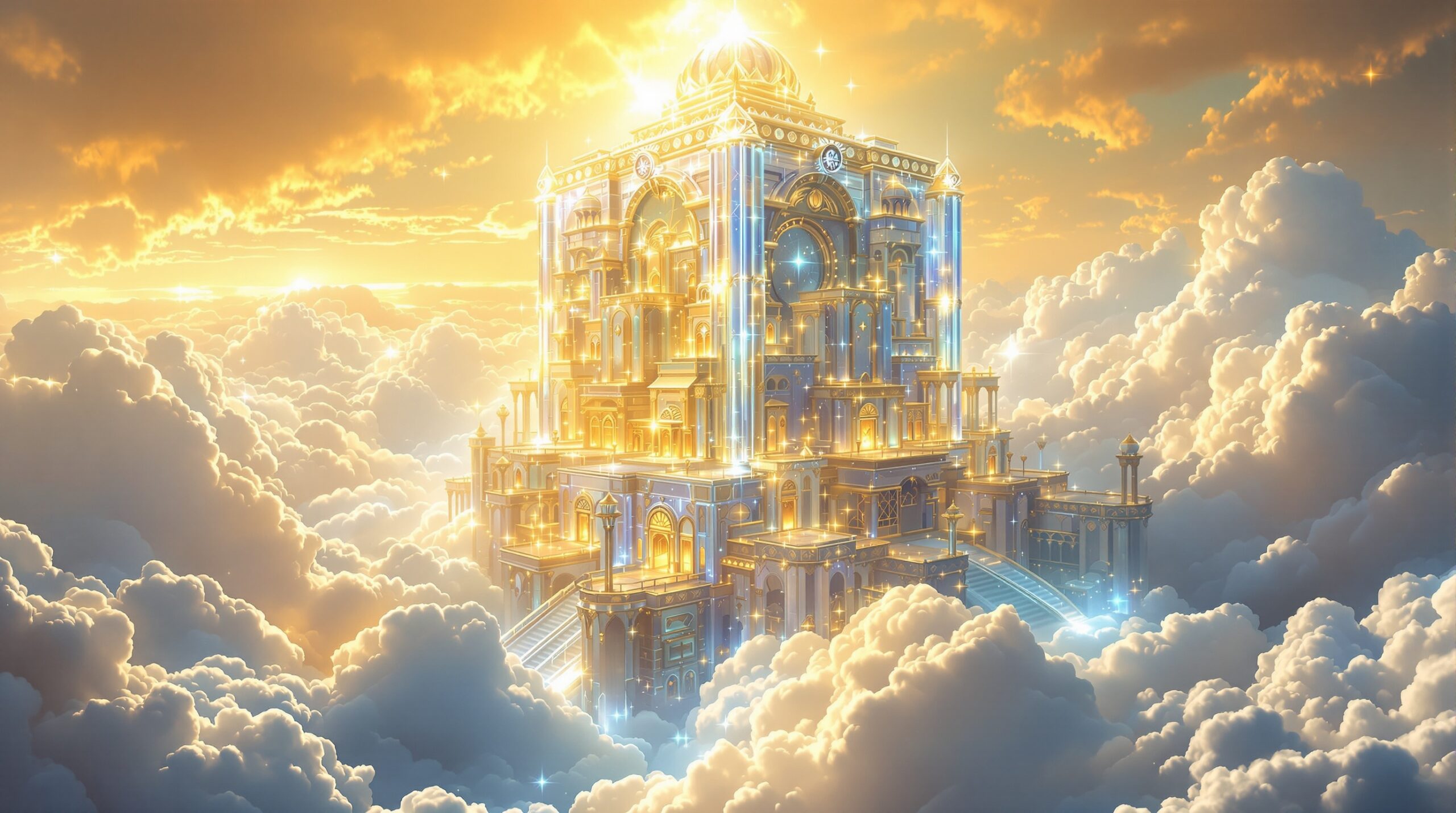
The New Jerusalem measures as a perfect cube: "twelve thousand furlongs. Its length, breadth, and height are equal" (NKJV Revelation 21:16). This equals approximately 1,400 miles in each direction, a staggering size that dwarfs any earthly city. To put this in perspective, the distance from Maine to Florida is about 1,500 miles. The New Jerusalem would be visible from incredible distances.
Cubic dimensions deliberately echo Solomon's Holy of Holies, which was also cubic (1 Kings 6:20). G.K. Beale explains the significance: "The whole city has now become the Holy of Holies. The entire city is now the temple where God's glorious presence dwells." Every street, every dwelling becomes sacred space where believers experience direct access to God.
The wall measures 144 cubits thick, approximately 216 feet (Revelation 21:17). The number 144 (12 x 12) represents the people of God multiplied: the twelve tribes of Israel and the twelve apostles united in a single divine community.
The Twelve Gates and Foundations
Revelation 21:12-14 describes twelve gates bearing the names of Israel's twelve tribes, with twelve foundations inscribed with the apostles' names. This architectural detail reveals profound theological truth about God's unified plan of salvation.
The gates represent access to the city. Naming them after Israel's tribes acknowledges God's covenant with His chosen people throughout the Old Testament. The foundations bearing the apostles' names establish the New Covenant Church. Together, they demonstrate that God's salvation plan encompasses all His people across all time. The Old and New Covenants represent unified stages of God's redemptive work culminating in the New Jerusalem.
Three gates face each direction (east, north, south, and west), symbolizing that salvation comes to people from every corner of the earth, fulfilling Isaiah's prophecy that salvation would reach to the ends of the earth (Isaiah 49:6).
Materials That Reveal Spiritual Reality
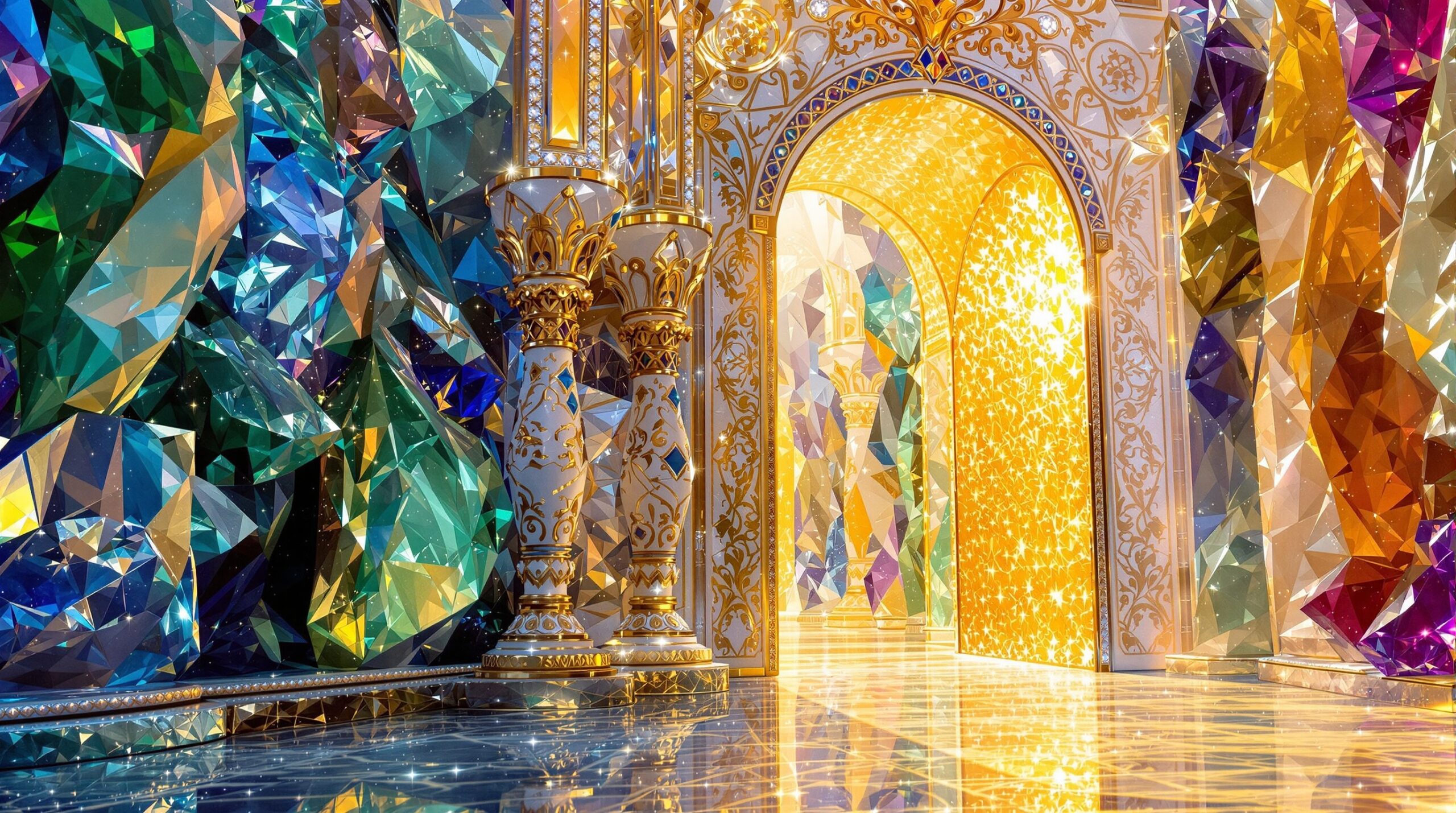
Revelation 21:18-21 catalogs the city's materials in remarkable detail. The wall is made of jasper, the city of pure gold "as pure as glass." Twelve foundations bear precious stones, each carrying spiritual significance:
Jasper represents God's glory (Revelation 4:3)
Sapphire, agate, emerald, onyx, ruby, chrysolite, beryl, topaz, turquoise, jacinth, and amethyst follow as the remaining eleven foundations, the variety reflecting the diversity of God's people unified in beauty
Pearls form each gate, with each gate made of a single pearl, speaking to the singular means of salvation through Christ's work on the cross
Gold so pure it becomes transparent forms the great street, symbolizing complete holiness where no impurity exists
Most significantly, "I saw no temple in it, for the Lord God Almighty and the Lamb are its temple" (NKJV Revelation 21:22). The temple system that mediated God's presence through priests and sacrifices becomes obsolete. Craig Keener notes that first-century readers would recognize this as the fulfillment of every temple's symbolic purpose: God dwelling directly with His people.
The New Jerusalem requires no temple because God's presence fills the entire city. Every street, every dwelling becomes holy ground where believers have direct access to their Creator.
Light Without Sun or Moon
Revelation 21:23-25 describes the city's illumination: "The city does not need the sun or the moon to shine on it, for the glory of God gives it light, and the Lamb is its lamp. The nations will walk by its light, and the kings of the earth will bring their splendor into it. On no day will its gates ever be shut, for there will be no night there."
God's glory provides the light. This connects to passages throughout Scripture where God's presence appears as brilliant light (Exodus 34:29-35). The Lamb, Jesus Christ, serves as the lamp, emphasizing His role in illuminating the eternal city.
The absence of night carries practical and symbolic meaning. Ancient cities closed their gates at night for protection against enemies. The New Jerusalem's gates remain perpetually open because no threat exists. The constant light represents the constant presence of God, removing all darkness, separation, and fear.
The River and Tree of Life Restored
Revelation 22:1-2 brings the narrative full circle: "Then the angel showed me the river of the water of life, as clear as crystal, flowing from the throne of God and of the Lamb. On each side of the river stood the tree of life, bearing twelve crops of fruit, yielding its fruit every month. And the leaves of the tree are for the healing of the nations."
These images deliberately echo Eden. Genesis 2 describes a river flowing through the garden and the tree of life. Sin blocked access to both. The New Jerusalem restores what was lost, with significant enhancement. The river now flows directly from God's throne, and the tree produces fruit continuously, twelve crops annually, one each month.
River of life: Pure water flows from God's throne, echoing Ezekiel 47:1-12's life-giving stream from the temple
Tree of life: Once barred after humanity's fall, now accessible, bearing twelve fruits monthly for nourishment
Healing complete: Tree leaves provide restoration for the nations, the curse of sin permanently reversed
The phrase "healing of the nations" indicates the complete wholeness and well-being of all peoples. The Greek word for "healing" (therapeia) carries the meaning of health and vitality, encompassing flourishing in perfect harmony.
Who Enters the New Jerusalem?
Revelation 21:7-8 provides clear criteria: "Those who are victorious will inherit all this, and I will be their God and they will be my children. But the cowardly, the unbelieving, the vile, the murderers, the sexually immoral, those who practice magic arts, the idolaters and all liars, they will be consigned to the fiery lake of burning sulfur. This is the second death."
The victorious are those who persevere in faith through trials. Their victory comes through Christ. God adopts them as His children, completing the relationship promised throughout Scripture (Romans 8:15-17).
The second group faces the second death in the lake of fire. This stark contrast shows the ultimate consequences of rejecting God. While God's mercy extends to all who turn to Him, His justice requires accountability.
Revelation 21:27 reinforces the entry criteria: "Nothing impure will ever enter it, nor will anyone who does what is shameful or deceitful, but only those whose names are written in the Lamb's book of life." This verse functions as both warning and promise. The New Jerusalem maintains absolute purity. No sin enters. No shame. No deception. Only those redeemed by Christ dwell in the eternal city.
This exclusivity is not arbitrary. It reflects the reality that sin and holiness cannot coexist. God's perfect dwelling place requires perfect holiness, available only through Christ's redemptive work. The warning applies to those who persist in rebellion. The promise extends to all who turn to Christ in faith.
The New Jerusalem in Revelation for Christians Today
For believers facing present suffering, Revelation 21:4's promise that God "will wipe away every tear" assumes current tears exist. This vision offers concrete comfort to Christians experiencing loss, persecution, illness, or grief. The promise centers on earth's transformation into God's dwelling place, with believers fully present in the renewed creation.
Inheritance comes with conditions. "He who overcomes shall inherit all things" (NKJV Revelation 21:7) connects future blessing to present faithfulness. Throughout Revelation, "overcoming" means maintaining faith in Jesus despite pressure to compromise. The vision calls believers to patient endurance, knowing their citizenship is secure.
Richard Bauckham observes, "Whereas the temple in Jerusalem restricted access to God's presence, requiring mediation, the New Jerusalem removes all barriers." This transforms how Christians view earthly struggles. Economic loss for faithfulness becomes wise investment. Social marginalization for Christian witness becomes identification with our true citizenship.
The vision also addresses the relationship between present creation and eternal hope. The city descends to "a new earth" (NKJV Revelation 21:1). God's commitment is to redeem creation. This calls Christians to environmental stewardship and cultural engagement, knowing earthly work has eternal significance.
Having studied Revelation verse by verse for years, I have come to see this vision as the anchor point for everything else in the book. The judgments, the trials, the cosmic conflict all converge on this restored creation where God dwells with His people. The New Jerusalem transforms how Christians face suffering today. Tears are temporary. The city is eternal. God Himself heals every wound caused by this fallen world.
The City's Purpose and Function
The New Jerusalem functions as both warning and comfort for believers navigating present trials. It warns that earthly security is temporary, exposing the fragility of material systems under divine judgment. It also demonstrates God's sovereignty over history, assuring suffering believers they will inherit a city beyond imagination. The city's descent reveals God's commitment to redeeming His creation.
Why This Vision Matters
The New Jerusalem in Revelation represents the ultimate fulfillment of God's redemptive plan. This vision describes earth's transformation into God's dwelling place, with believers fully present in the renewed creation. For believers navigating persecution, loss, or a broken world, this vision anchors hope in concrete reality: God wins, death loses, and we will dwell in unbroken fellowship with our Creator forever. Present stability is uncertain, yet God's faithfulness endures.
Conclusion
The New Jerusalem in Revelation 21-22 reveals where God's story has been heading since Genesis: a restored creation where heaven and earth unite, where God dwells permanently with His people, and where every consequence of sin is eliminated. This is the promised inheritance for all who overcome through faith in the Lamb.
As you face present struggles, let this vision recalibrate your perspective: your citizenship is secure, your tears are temporary, and your God is preparing a city beyond imagination. The same God who promises to bring history to its appointed conclusion will wipe away every tear from your eyes. Unlike Babylon's temporary glory, the New Jerusalem endures forever.
For a deeper verse-by-verse exploration of Revelation's symbols and structure, see Revelation Explained: Verse by Verse by Richard French.
Sources
Revelation 21:1-22:5 (complete New Jerusalem vision)
Genesis 2-3 (Eden imagery restored)
Exodus 25:8, 40:34-35 (tabernacle and God's dwelling)
1 Kings 6:19-20 (Holy of Holies dimensions)
Isaiah 60-65 (prophetic promises of Jerusalem's glory)
Ezekiel 40-48 (temple vision and river of life)
Zechariah 2:1-5 (measuring Jerusalem)
Beale, G.K. The Book of Revelation: A Commentary on the Greek Text. New International Greek Testament Commentary. Eerdmans, 1999.
Osborne, Grant R. Revelation. Baker Exegetical Commentary on the New Testament. Baker Academic, 2002.
Bauckham, Richard. The Theology of the Book of Revelation. New Testament Theology. Cambridge University Press, 1993.
Mounce, Robert H. The Book of Revelation. New International Commentary on the New Testament. Eerdmans, 1997.
Koester, Craig R. Revelation: A New Translation with Introduction and Commentary. Anchor Yale Bible. Yale University Press, 2014.