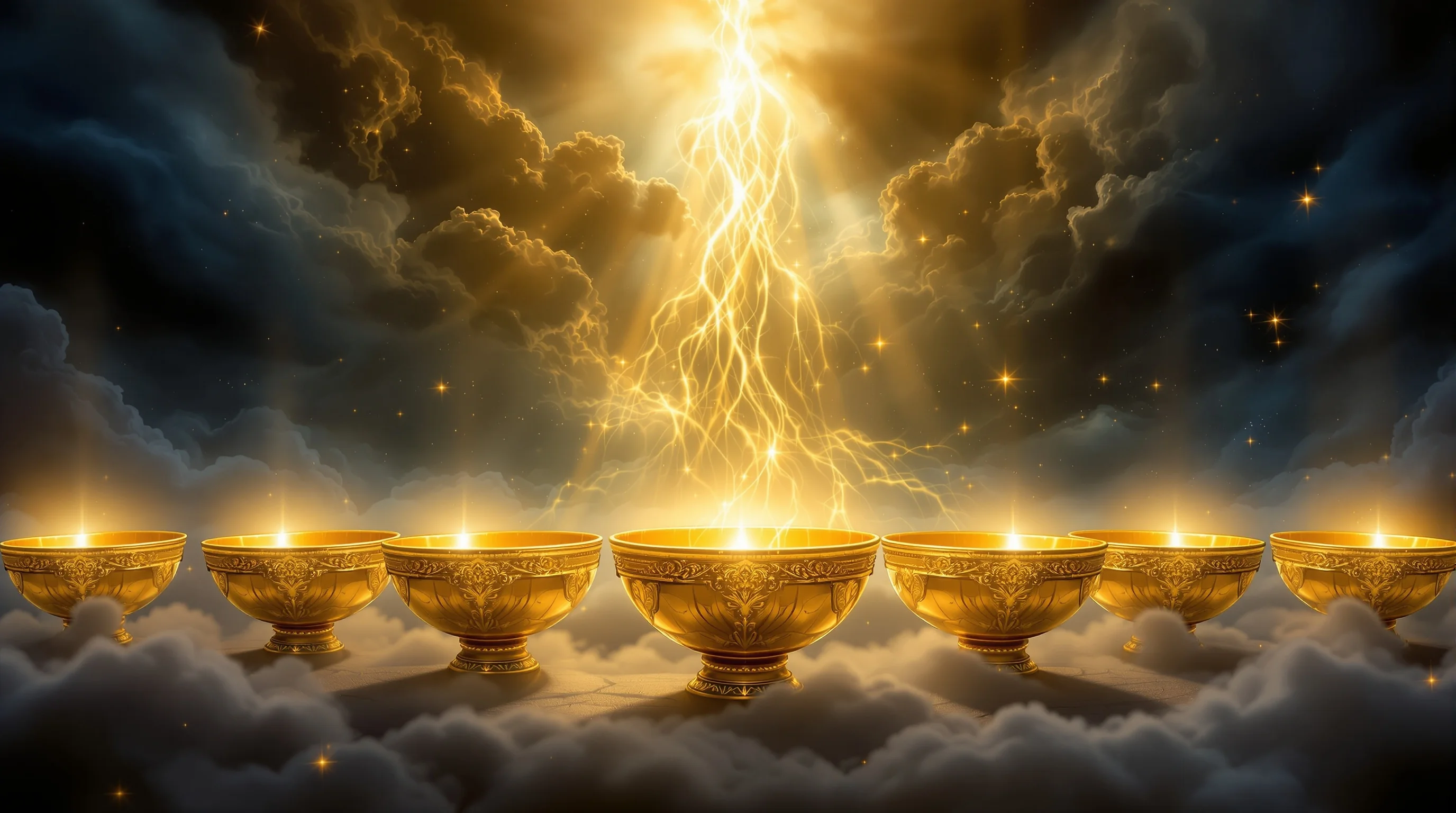
What is the verse-by-verse meaning of the seven bowls in Revelation 16?
The seven bowls of God's wrath in Revelation 16 represent the most severe judgments in Scripture—complete, unrestricted, and poured out in rapid succession upon an unrepentant world. Unlike the earlier seal and trumpet judgments that affected only one-third of creation, these final plagues strike with total devastation, echoing the Egyptian plagues that demonstrated God's power over Pharaoh. Maybe you've wrestled with these apocalyptic visions, feeling overwhelmed rather than encouraged by their intensity. That uncertainty is more common than you might think, and it's okay to approach these passages with both reverence and honest questions. This verse-by-verse exploration reveals what each bowl judgment means, why they fall on specific targets, and what they teach about God's justice and human rebellion.
Quick Answer: The seven bowls of Revelation are God's final, complete judgments poured out upon those who worship the beast—painful sores (16:2), seas turned to blood (16:3), rivers to blood (16:4), scorching heat (16:8-9), darkness on the beast's throne (16:10-11), the Euphrates dried for battle (16:12), and catastrophic earthquakes with hail (16:17-21).
Definition: The seven bowls of Revelation symbolize God's complete and unrestricted final judgments against persistent rebellion, demonstrating divine justice while vindicating persecuted believers.
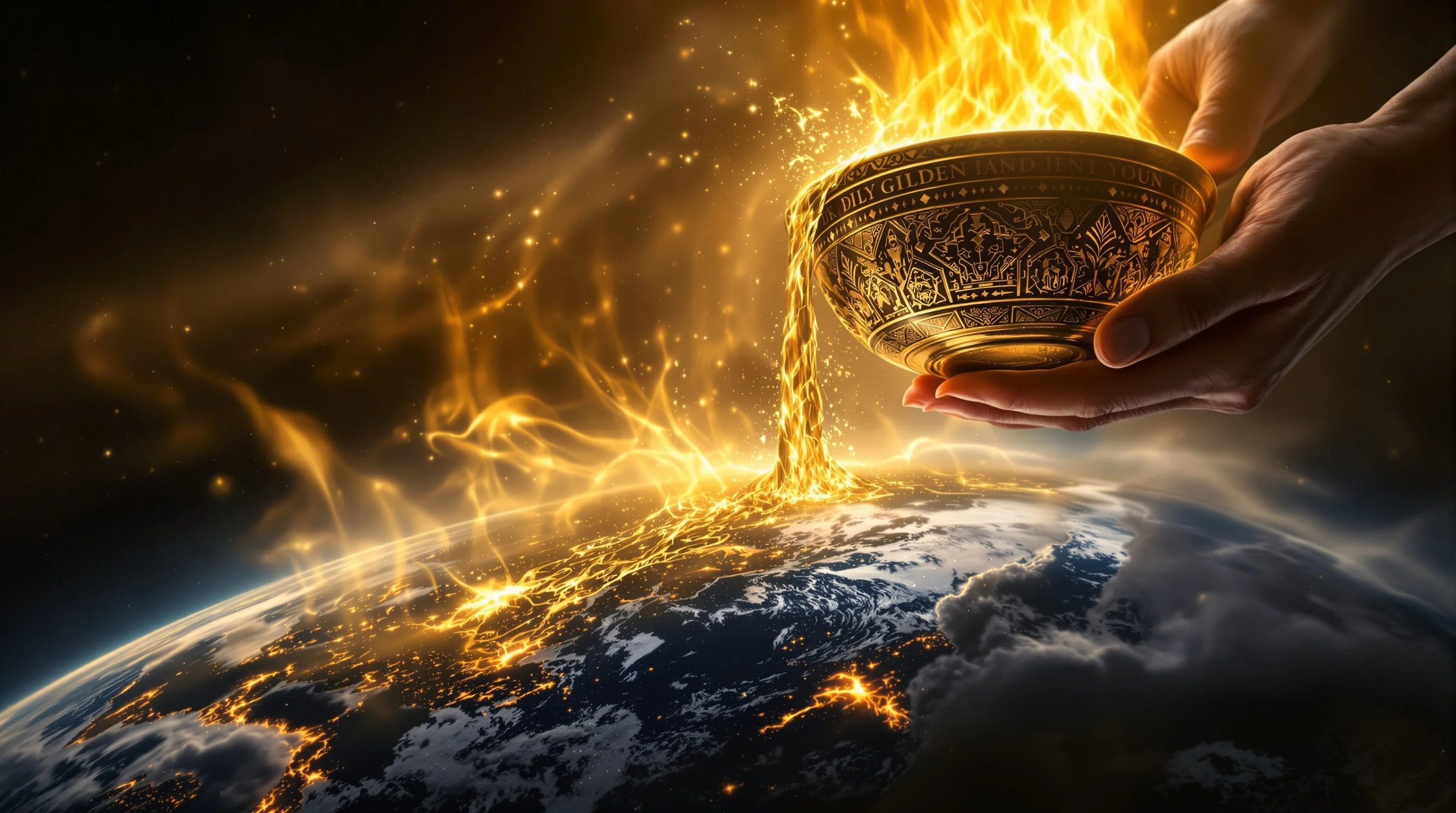
Key Scripture: "Then I heard a loud voice from the temple saying to the seven angels, 'Go and pour out the bowls of the wrath of God on the earth'" (NKJV Revelation 16:1)
Context: These judgments specifically target those bearing the mark of the beast, demonstrating that alignment with God's enemies brings divine consequences while vindicating persecuted believers.
These bowl judgments are not merely symbolic of hardship in general. They specifically represent God's systematic, complete justice against those who persist in rebellion despite repeated warnings. The sections that follow will examine each bowl's specific meaning, trace their Old Testament connections, and explore what this vision means for believers facing pressure to compromise with worldly systems today.
Key Takeaways
- The first four bowls strike earth, sea, rivers, and sun—targeting creation itself with complete devastation, not the partial judgments of earlier seals and trumpets
- Egyptian plague parallels establish that God judges blasphemous empires (like Rome) as He judged Pharaoh, vindicating His oppressed people
- Measure-for-measure justice appears in bowls two and three—those who shed the blood of saints now receive blood to drink, demonstrating God's proportional righteousness
- Persistent hardening marks the response to bowls four and five; despite recognizing God's power, people refuse to repent, echoing Pharaoh's rebellion
- Armageddon (bowl six) represents the final gathering of rebellious powers against God, not merely a geographic location but the culmination of human opposition to divine authority
The First Four Bowls: Judgments on Creation
The seven bowls of Revelation begin with systematic judgments on the created order, each targeting a specific domain that sustains human life. The command originates from God's heavenly temple (16:1), establishing that these are divine acts of justice, not random disasters or demonic attacks.
The first angel pours his bowl on the earth, causing "foul and loathsome sores" on those bearing the mark of the beast (16:2). The Greek term helkos describes festering ulcers, echoing the sixth Egyptian plague of boils (Exodus 9:8-11). This judgment specifically targets beast-worshipers, revealing that allegiance to God's enemies brings tangible physical consequences. G.K. Beale notes that this parallel to Egypt reminds readers that God judges blasphemous empires as He judged Pharaoh.
The second bowl turns the sea to blood "like that of a dead man," killing every living creature in it (16:3). Unlike the second trumpet which affected one-third of the sea (Revelation 8:8-9), this judgment is total, devastating maritime commerce and food supplies. Grant Osborne emphasizes that the completeness signals these are final judgments, not preliminary warnings.
Fresh water sources become blood in the third bowl, and an angel declares this judgment just: "For they have shed the blood of saints and prophets, and You have given them blood to drink. For it is their just due" (16:6). The Greek term axios emphasizes proportional justice—measure for measure. This demonstrates God's sovereignty over the beast and false prophet, vindicating the martyred saints. Even the altar responds in worship, affirming God's judgments are perfectly righteous (16:7).
The fourth bowl causes the sun to scorch people with intense heat, yet "they blasphemed the name of God who has power over these plagues; and they did not repent" (16:9). Recognition of God's power does not produce repentance (metanoeo—change of mind) without the Spirit's work. This pattern of hardening will repeat throughout the remaining bowls.
The Theological Mechanism of Divine Justice
The bowl judgments function as both warning and vindication. They warn that systems built on blasphemy and oppression carry the seeds of their own destruction, exposing the fragility of earthly power structures. Yet they also vindicate suffering believers by demonstrating God's sovereignty over even the most catastrophic events. The protection of oil and wine in earlier judgments hints that divine limits constrain even severe judgment.
The Fifth and Sixth Bowls: Darkness and Gathering
The final three bowls shift from creation-wide judgments to specific targets—the beast's throne, preparation for final battle, and cosmic upheaval. These judgments move beyond natural disasters to direct confrontation with rebellious power structures.
The fifth bowl plunges the beast's kingdom into darkness, causing people to gnaw their tongues in anguish (16:10-11). For the original audience facing Roman persecution, this promise that Rome's seemingly invincible throne would be darkened offered profound hope. Robert Mounce observes that "judgment does not automatically produce repentance. Apart from God's grace, even devastating judgment hardens rather than softens the rebellious heart." Despite pain, people "blasphemed the God of heaven" and "did not repent of their deeds."
The sixth bowl dries up the great Euphrates River "so that the way of the kings from the east might be prepared" (16:12). Three unclean spirits like frogs—from the dragon, beast, and false prophet—perform signs to gather "the kings of the earth and of the whole world" to "the battle of that great day of God Almighty" (16:14). David Aune notes that this gathering represents the culmination of human rebellion against divine authority.
The Meaning of Armageddon
The Hebrew term Har Megiddo (Mountain of Megiddo) references numerous Old Testament battles where God defeated Israel's enemies.
- Not merely geographic: Signifies final confrontation between God's kingdom and rebellious humanity
- Symbolic gathering: All earthly powers unite in opposition to the Lamb
- Divine victory assured: The location recalls God's past victories over Israel's oppressors (Judges 5:19; 2 Kings 23:29)
An important interlude appears: "Behold, I am coming as a thief. Blessed is he who watches, and keeps his garments" (16:15). This calls believers to spiritual alertness and moral purity while judgment unfolds around them. For more on how the seven seals connect to these final judgments, the progression shows increasing intensity throughout Revelation's structure.
The Seventh Bowl: "It Is Done!"
The final bowl brings the most catastrophic judgment, accompanied by the declaration that God's wrath is complete. This bowl targets the very atmosphere itself, affecting the air that sustains all life.
The seventh angel pours his bowl into the air, and a loud voice from the temple throne proclaims, "It is done!" (16:17). This echoes Jesus' cry from the cross ("It is finished," John 19:30) but here announces the completion of judgment rather than redemption's accomplishment. The voice originates from the temple, confirming divine authority behind these events.
Lightning, thunder, and "a great earthquake, such a mighty and great earthquake as had not occurred since men were on the earth" follow (16:18). The great city splits into three parts, Gentile cities fall, and Babylon receives "the cup of the wine of the fierceness of His wrath" (16:19). Islands flee, mountains disappear, and hailstones weighing about a talent (75-100 pounds) fall on people—echoing the seventh Egyptian plague (Exodus 9:13-35). Craig Keener emphasizes that "the bowl plagues represent the intensification and completion" of earlier judgments, with total rather than partial effect.
Human Response to Final Judgment
Even facing unprecedented catastrophe, humanity's response reveals complete hardness: "Men blasphemed God because of the plague of the hail, since that plague was exceedingly great" (16:21).
- Recognition without repentance: People acknowledge the plague's divine source
- Blame instead of submission: They curse God rather than surrender
- Confirming earlier pattern: Consistent with responses to bowls four and five (16:9, 11)
This pattern demonstrates that judgment alone cannot change hearts. The connection to seven trumpets shows escalating divine warnings, while the relationship to the seven seals reveals God's systematic approach to justice. For deeper verse-by-verse exploration of how these judgment cycles work together, Revelation Explained: Verse by Verse traces these Old Testament connections throughout each chapter.
Why This Vision Matters
The seven bowls of Revelation matter because they expose the illusion of worldly security and human self-sufficiency. Material systems are never ultimate, and political powers that demand ultimate allegiance will face divine judgment. This vision reminds believers that God's sovereignty extends over markets, governments, and human institutions. Present stability is not guaranteed, but God's faithfulness is.
Conclusion
The verse-by-verse progression of the seven bowls reveals God's systematic, just, and complete judgment on persistent rebellion. From painful sores to cosmic collapse, each bowl demonstrates divine sovereignty over creation and human systems. You can find comfort in knowing that the God who judged Pharaoh will judge all blasphemous empires, yet the persistent hardening warns that even devastating judgment cannot change hearts apart from God's grace. For you who face pressure to compromise with worldly systems, these visions offer hope: justice is coming. For deeper verse-by-verse exploration of Revelation's prophecies, see Revelation Explained: Verse by Verse by Richard French.
Sources
- Revelation 15:1-8; 16:1-21 (NKJV)
- Exodus 7:14-12:30 (Egyptian plagues)
- Joel 2:28-32 (Day of the LORD)
- Isaiah 34:1-4 (cosmic judgment)
- Zechariah 14:1-21 (final battle and plague)
- Beale, G.K. The Book of Revelation: A Commentary on the Greek Text. New International Greek Testament Commentary. Eerdmans, 1999.
- Osborne, Grant R. Revelation. Baker Exegetical Commentary on the New Testament. Baker Academic, 2002.
- Mounce, Robert H. The Book of Revelation. New International Commentary on the New Testament. Eerdmans, 1997.
- Keener, Craig S. Revelation. NIV Application Commentary. Zondervan, 2000.
- Koester, Craig R. Revelation: A New Translation with Introduction and Commentary. Anchor Yale Bible. Yale University Press, 2014.