
What the Bible Says About the Tree of Life in Revelation
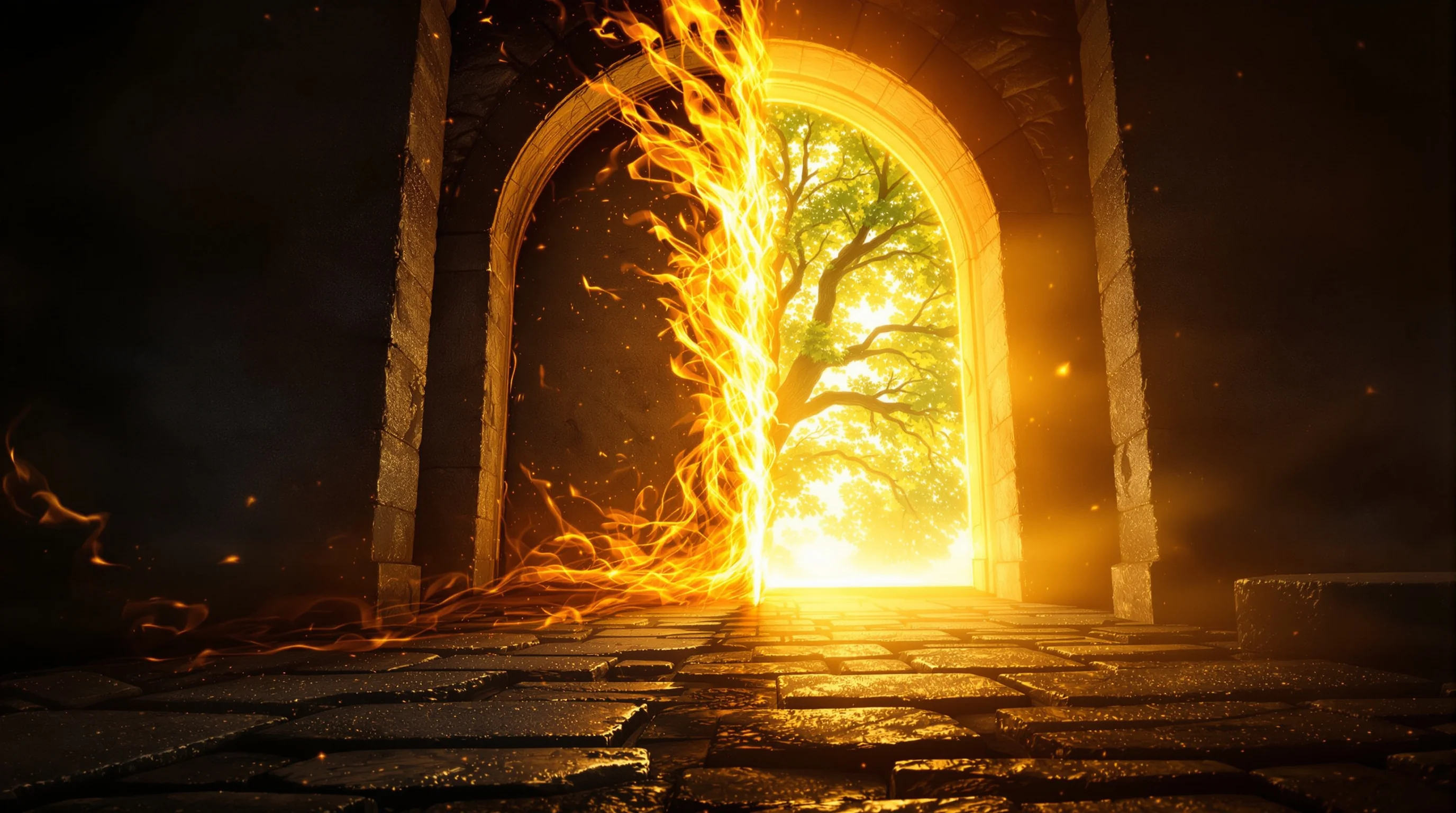
The tree of life appears three times in Revelation, and its placement is no accident. Opening as a promise to a struggling church in Ephesus, it unfolds as a central feature of the New Jerusalem, and closes as the inheritance of the faithful. What God blocked in Genesis 3:24 with cherubim and a flaming sword, Revelation promises will be fully and permanently restored. The tree of life in Revelation is one of Scripture's most theologically loaded symbols, connecting Eden's loss to eternity's restoration.
Maybe you've read these passages and wondered whether they're meant to be taken literally, or perhaps you've felt the weight of the imagery without quite knowing what to do with it. That uncertainty is worth sitting with. Faithful readers have wrestled with this imagery for two thousand years, and there's no shame in approaching it with honest questions. The tree of life in Revelation rewards careful attention, and this article examines what the Bible actually says about it, its Old Testament roots, and why it matters for Christians handling real life today.
Quick Answer: The tree of life in Revelation is a symbol of fully restored access to God and eternal life. Promised to overcomers in Revelation 2:7 and unveiled in the New Jerusalem in Revelation 22:2, it represents the complete reversal of the Edenic curse and the permanent reunion of God with redeemed humanity.
Definition: The tree of life in Revelation symbolizes restored access to God's presence and the fullness of eternal life, representing the complete reversal of humanity's exile from Eden and the permanent flourishing of all redeemed peoples under God's reign.
Key Scripture: "In the middle of its street, and on either side of the river, was the tree of life, which bore twelve fruits, each tree yielding its fruit every month. The leaves of the tree were for the healing of the nations." (NKJV Revelation 22:2)
Context: Revelation's tree of life fulfills the prophetic arc running from Genesis 2 through Ezekiel 47 to the final consummation of all things.
This vision carries the full weight of Scripture's longest story. The tree of life in Revelation functions as a narrative bracket: introduced as a covenant promise amid present struggle, then unveiled as a fully realized reality at the book's close. Its purpose is pastoral before it is prophetic, grounding believers in what God has secured rather than pointing only to a distant future. The sections that follow examine the tree's three appearances, trace its deep Old Testament roots, and consider what this symbol calls us to today.
Key Takeaways
- Edenic reversal: The tree of life in Revelation directly answers Genesis 3:24, where God barred access after the fall. Revelation 22:3 states plainly that the curse will end.
- Three appearances: The tree appears at Revelation 2:7 (promise to overcomers), 22:2 (description of the New Jerusalem), and 22:14 (beatitude for the faithful), forming a structural bracket across the book.
- Covenantal access: The Greek word exousia in Revelation 22:14 means "authority" or "right," indicating that access to the tree is a granted covenant privilege confirmed through faithfulness.
- Universal restoration: The leaves described as therapeia (healing) for the nations signal the complete flourishing of all redeemed peoples, reversing every dimension of the original curse.
- Relational symbol: The tree points to a Person before a place. Its deepest meaning is restored communion with God, not speculation about the eternal state's physical features.
Key Evidence
- Revelation 2:7: "To him who overcomes I will give to eat from the tree of life, which is in the midst of the Paradise of God." (NKJV) The Greek xylon zoes uses zoe for divine, eternal life, consistently pointing in John's writings to life in union with God.
- Revelation 22:2: The tree stands on both sides of the river flowing from God's throne, bearing twelve fruits monthly. Grant Osborne notes that the tree "is directly from Gen 2:9 and 3:22, 24... now in the eschaton it is returned to God's people" (Osborne, Revelation, BECNT, p. 773).
- Revelation 22:14: "Blessed are those who do His commandments, that they may have the right to the tree of life." (NKJV) The Greek exousia frames access as granted covenant authority, not earned merit.
- Ezekiel 47:12: Ezekiel's vision of a temple river flanked by perpetually fruiting trees with medicinal leaves forms the direct prophetic template for John's New Jerusalem, a connection G.K. Beale identifies as central to understanding the tree as representing God's own presence (Beale, The Book of Revelation, NIGTC, p. 1105).
- Genesis 3:24: God stationed cherubim with a flaming sword to guard the tree after the fall. Revelation's open gates directly reverse this barrier, completing the Bible's longest narrative arc.
Three Appearances of the Tree of Life in Revelation
The tree of life in Revelation marks the resolution of Scripture's oldest wound: exile from God's presence, fully reversed at the consummation. Each of its three appearances carries distinct weight, and reading them together reveals a carefully constructed theological argument woven across the book.
Revelation 2:7 introduces the tree as a covenantal reward: "To him who overcomes I will give to eat from the tree of life, which is in the midst of the Paradise of God." (NKJV Revelation 2:7). The Greek xylon zoes uses zoe for divine, eternal life, a word that in John's writings consistently points to life in union with God rather than mere biological existence. The promise is conditional in the best sense: an encouragement to persevere, not a threat.
Revelation 22:2 places the tree on both sides of the river flowing from God's throne, bearing twelve fruits monthly. The Greek therapeia, translated "healing," signals total restoration and abundance. Grant Osborne observes that the tree "is directly from Gen 2:9 and 3:22, 24... now in the eschaton it is returned to God's people" (Osborne, Revelation, BECNT, p. 773). The gathering of all nations under its leaves completes what the fall fractured.
The seventh and final beatitude of the book appears in Revelation 22:14: "Blessed are those who do His commandments, that they may have the right to the tree of life, and may enter through the gates into the city." (NKJV Revelation 22:14). The Greek exousia frames access as granted authority, a covenant gift confirmed through faithfulness rather than earned by human effort.
The Promise to Ephesus and Its Context
The Ephesus letter commends doctrinal vigilance but rebukes the church for leaving its first love (NKJV Revelation 2:4). The tree of life promise follows immediately as a motivational call to return to that original devotion.
- Letter structure: Each of the seven letters follows commendation, rebuke, call to repentance, and an overcomer promise, with each promise anticipating the New Jerusalem vision.
- Function: The Ephesus promise connects present spiritual struggle directly to eschatological reward, making the tree a living motivation for faithfulness now.
Understanding the Tree of Life in Its Biblical Context
The tree of life in Revelation is incomprehensible without its deep roots in the Hebrew Scriptures. Three streams feed into John's vision, and the original audience would have recognized each one immediately.
Genesis 2-3 provides the basic background. The tree first appears in Eden as associated with ongoing life in God's presence (NKJV Genesis 2:9). After the fall, God stationed cherubim with a flaming sword: "So He drove out the man; and He placed cherubim at the east of the garden of Eden, and a flaming sword which turned every way, to guard the way to the tree of life." (NKJV Genesis 3:24). Revelation's restoration of the tree resolves this basic tragedy. The guarded way becomes an open gate.
Ezekiel 47:12 forms the direct prophetic template for Revelation 22:2. Ezekiel's vision of a temple river flanked by perpetually fruiting trees with medicinal leaves runs structurally parallel to John's New Jerusalem. Jewish Christians steeped in the Hebrew Scriptures would have heard Revelation 22 as the fulfillment of Ezekiel's exilic hope. G.K. Beale observes that "the tree of life represents the presence of God himself... access to the tree is access to God" (Beale, The Book of Revelation, NIGTC, p. 1105). For readers wanting to trace how this imagery develops across Revelation's narrative, Revelation Explained: Verse by Verse examines each occurrence in its immediate context.
Israel's wisdom tradition enriched the image further. Proverbs 3:18 calls wisdom "a tree of life to those who take hold of her." (NKJV Proverbs 3:18). This means the tree carried associations of divine order and intimacy with God that extended well beyond physical immortality. A historical layer adds another dimension: the Greek paradeisos (Paradise) in Revelation 2:7 was originally a Persian term for a walled royal garden. In a world where Roman emperors built lavish garden estates as displays of power and favor, John's promise reframes true paradise as belonging entirely to God, a direct counter to imperial claims.
Healing of the Nations and Imperial Contrast
Rome claimed its empire brought peace and prosperity to all peoples. Revelation 22:2 answers that claim with a different vision entirely.
- Counter-claim: True healing for the nations flows from the Lamb's New Jerusalem, not Caesar's empire. The tree, not the throne of Rome, restores all peoples.
- Completeness: Revelation 22:3 immediately follows with "And there shall be no more curse" (NKJV Revelation 22:3), confirming the total reversal of Genesis 3:17 and every consequence of the fall.
Why the Tree of Life in Revelation Matters for Christians Today
The tree of life in Revelation is the Bible's answer to its own oldest question. What humanity lost in Eden through rebellion, God restores permanently in the New Jerusalem. Robert Mounce writes that the tree, "placed beyond human reach as a result of sin, now stands freely available to those who have been redeemed" (Mounce, The Book of Revelation, NICNT, p. 387). That movement from blocked to open is the arc of the entire biblical story, and Scripture invites readers to receive it as such.
This vision functions as both warning and comfort. It warns that present arrangements are temporary, that no earthly security competes with what God has prepared. It comforts by demonstrating that the curse has an end date, that God's faithfulness outlasts every season of suffering or compromise. For believers handling cultural pressure or spiritual weariness, the tree of life grounds hope in covenant promise rather than circumstance. You can explore how this connects to Revelation's broader vision of the New Jerusalem and what it means for the people of God.
The tree is never presented as automatic or passive. Revelation 2:7 connects it to overcoming; Revelation 22:14 connects it to keeping God's commandments. This is covenantal perseverance, not earned merit, as Grant Osborne notes when he distinguishes the "right" (exousia) to the tree as a granted covenant privilege rather than a wage (Osborne, Revelation, BECNT, p. 790). Those who remain in Christ demonstrate the reality of their union with the one who grants access to life. Perhaps you've wondered how grace and perseverance fit together here; that tension is real, and it's okay to find it challenging. Faithful readers have held that balance carefully for centuries.
Revelation 22:19 adds a warning dimension: those who distort God's word forfeit their part in the holy city. The tree's presence in the New Jerusalem carries an implicit reminder about what unfaithfulness forfeits. Consider also how the tree of life stands in contrast to the second death in Revelation, the two ultimate outcomes that frame the book's final appeal. At its deepest level, the tree of life in Revelation points to a Person before a place. Its meaning is restored communion with God.
Why This Vision Matters
The tree of life in Revelation is Scripture's most concentrated image of what redemption in the end achieves: full, unhindered access to God's presence for all who persevere. For believers today, it reframes every present suffering as temporary and every act of faithfulness as eternally significant. The New Jerusalem, with its river and its tree, is the destination toward which the whole story moves. Access to the tree is made permanent, secured by the covenant faithfulness of God rather than the fragility of human circumstance. You can explore what that restored creation looks like in Revelation's vision of the new heaven and new earth.
Conclusion
The tree of life in Revelation is a symbol of restored Eden, fulfilled prophecy, and permanent communion with God. It appears as promise, as vision, and as beatitude, forming a thread that runs from the book's opening letters to its final pages. Whatever pressures you face today, the tree stands as a covenant guarantee: the curse ends, the exile is over, and access is granted to all who overcome in Christ. That promise was written for you as much as for the churches of Asia Minor. For a deeper verse-by-verse exploration of Revelation's symbols and structure, see Revelation Explained: Verse by Verse by Richard French.
Sources
- Revelation 2:7; 22:1 - 5; 22:14; 22:19 (NKJV)
- Genesis 2:9; 3:17 - 24 (NKJV)
- Ezekiel 47:1 - 12 (NKJV)
- Proverbs 3:18; 11:30; 13:12; 15:4 (NKJV)
- Grant R. Osborne, Revelation, Baker Exegetical Commentary on the New Testament (Grand Rapids: Baker Academic, 2002)
- G.K. Beale, The Book of Revelation, New International Greek Testament Commentary (Grand Rapids: Eerdmans, 1999)
- Robert H. Mounce, The Book of Revelation, revised ed., New International Commentary on the New Testament (Grand Rapids: Eerdmans, 1998)
- David E. Aune, Revelation 17 - 22, Word Biblical Commentary, Vol. 52C (Nashville: Thomas Nelson, 1998)
- Colin G. Kruse, The Letters of John, Pillar New Testament Commentary (Grand Rapids: Eerdmans, 2000) - for background on Johannine use of zōē ("life") across the Johannine corpus