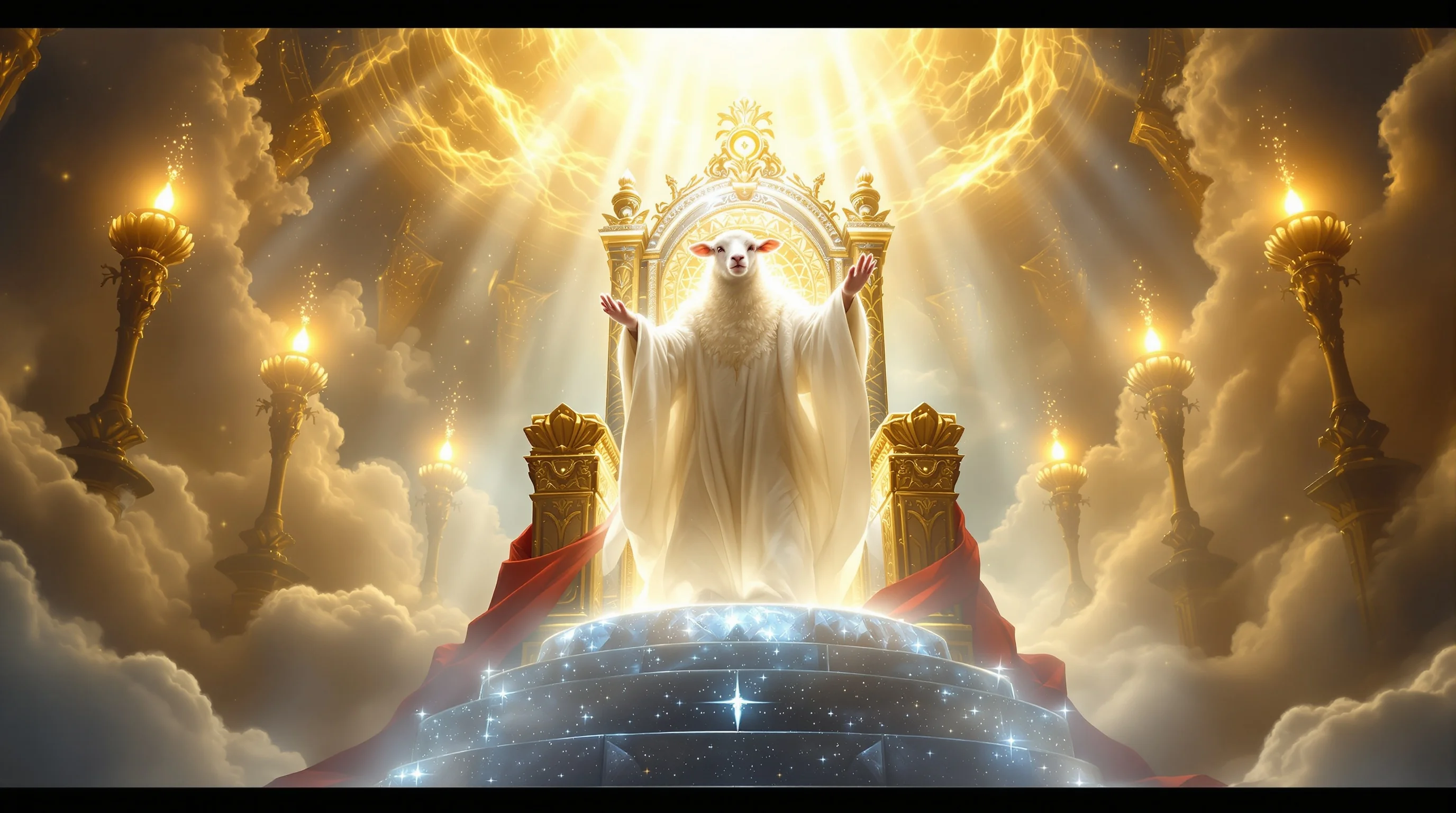
The central warrior of Revelation is not a conquering general. He is a slain Lamb, and that detail overturns every assumption the book's first readers brought to the subject of war in Revelation. G.K. Beale, in his NIGTC commentary, calls this inversion the book's controlling theological claim. From the opening seals through the final judgment, war appears as one of Revelation's most sustained themes, yet its meaning is consistently theological rather than military.
Across every vision, war in Revelation is a carefully structured argument about power, victory, and what it means to conquer. The visions span heaven and earth, from Michael's battle with the dragon in chapter 12 to Christ's final triumph in chapter 19, building toward a single clear declaration: the Lamb wins, and His people share in that victory through faithful witness.
Maybe you've encountered Revelation's war imagery and found it more unsettling than encouraging. Richard Bauckham, in The Theology of the Book of Revelation, notes that this reaction is common among modern readers who bring military assumptions to the text. This article examines what Scripture actually says about war in Revelation, how those visions fit their original context, and what they mean for Christians today.
Quick Answer: War in Revelation is a multi-layered theological theme encompassing the war in heaven (chapter 12), the beast's assault on the saints (chapter 13), Armageddon (chapter 16), and Christ's final victory (chapter 19). Across every vision, the Lamb conquers through sacrificial faithfulness, and believers overcome through testimony.
Definition: The war in Revelation symbolizes the cosmic conflict between God and evil, in which Christ conquers through sacrificial death and His people share in that victory through faithful witness rather than military force.
Key Scripture: "And they overcame him by the blood of the Lamb and by the word of their testimony, and they did not love their lives to the death." (NKJV Revelation 12:11)
Context: Revelation's war visions were written to sustain persecuted believers under Roman imperial pressure, not to provide a military blueprint or a calendar of future events.
This vision of war serves a pastoral purpose. Written for people who felt surrounded by invincible power, who watched fellow believers suffer and die, and who needed to know whether any of it meant anything, Revelation answers by pulling back the curtain on a cosmic conflict already decided in the Lamb's favor. The sections that follow examine how war unfolds across Revelation's major visions, how the original audience understood this imagery, and what it means for believers handling pressure and uncertainty today.
Key Takeaways
- War in heaven: Revelation 12:7-8 describes Michael's expulsion of Satan, establishing that earthly conflict against believers reflects a cosmic spiritual battle already decided in Christ's favor.
- The beast's warfare: Revelation 13:7 shows that earthly powers can inflict real suffering on the saints, but the repeated phrase "it was granted" places even this within God's sovereign boundaries.
- Armageddon: The gathering of kings in Revelation 16:16 draws on Old Testament battle imagery from Ezekiel 38-39 and Isaiah 63:1-6, pointing to final divine judgment rather than a conventional military campaign.
- Christ's victory: The rider of Revelation 19:11 conquers by the sword from His mouth, the Word of God, and His robe is dipped in His own blood before battle begins, confirming that His weapon is proclamation and His victory is sacrificial.
- The overcomers' weapon: Faithful testimony (Greek martyria) is the primary weapon Revelation assigns to believers, connecting their pattern of conquest with the Lamb's own sacrificial victory.
Key Evidence
- Revelation 12:7-8 (NKJV): "And war broke out in heaven: Michael and his angels fought with the dragon; and the dragon and his angels fought, but they did not prevail." This passage establishes the cosmic framework for all earthly conflict in the book.
- Revelation 12:11 (NKJV): "And they overcame him by the blood of the Lamb and by the word of their testimony." Beale (NIGTC) identifies this verse as the book's definitive statement on how believers participate in Christ's victory.
- Revelation 13:7 (NKJV): "It was granted to him to make war with the saints and to overcome them." The phrase "it was granted" signals divine sovereignty even over apparent defeat.
- Revelation 19:11-15 (NKJV): The rider's sword proceeds from His mouth and His robe is dipped in blood before battle begins, identifying the Word of God and atoning sacrifice as the instruments of final conquest.
- Isaiah 63:1-6: The winepress imagery of Revelation 14:19-20 and 19:15 draws directly on this Old Testament passage, grounding Revelation's war visions in Israel's prophetic tradition of divine judgment.

What Does Revelation Say About War in Heaven and on Earth?
War in Revelation moves from heaven to earth in a deliberate sequence. Satan, expelled from heaven and enraged (NKJV Revelation 12:12), empowers the beast to prosecute war against God's people, but both campaigns operate within God's sovereign oversight. The Greek word polemos, used in Revelation 12:7, signals a conflict of cosmic scope rather than individual combat, and what follows in that chapter reframes everything else in the book.
"And war broke out in heaven: Michael and his angels fought with the dragon; and the dragon and his angels fought, but they did not prevail, nor was a place found for them in heaven any longer." (NKJV Revelation 12:7-8). G.K. Beale, in his landmark commentary on Revelation, observes that chapter 12 functions as a structural hinge for the entire book, stepping back from the sequential visions to provide an interpretive central point. It answers the question every suffering believer asks: why do the saints face this? The answer is cosmic. A heavenly war is underway, and the persecution of believers is its earthly echo.
Satan's expulsion connects directly to Christ's redemptive victory in verse 11, establishing that spiritual war underlies and interprets every earthly conflict depicted across Revelation's visions. The beast's assault on the saints in chapter 13 flows from this directly. "It was granted to him to make war with the saints and to overcome them." (NKJV Revelation 13:7). That phrase "it was granted" is the theological load-bearing word. Even apparent defeat occurs within divinely permitted bounds, and the martyrdom of the saints connects with the Lamb's own pattern of victorious suffering rather than contradicting it.
For readers wanting to trace how this cosmic conflict shapes Revelation's entire narrative, the woman and the dragon in Revelation 12 offers a detailed examination of this central chapter.
The Four Horsemen and the Pattern of Earthly War
The seals of Revelation 6 establish war as the book's opening theme, rooted in Zechariah's horse visions and immediately familiar to first-century readers steeped in the Old Testament.
- Red horse: "Another horse, fiery red, went out. And it was granted to the one who sat on it to take peace from the earth." (NKJV Revelation 6:4). The Greek machaira, a combat sword, presents war as permitted judgment rather than accident.
- Cascade effect: Conquest produces famine, famine produces death, mirroring the ancient experience of military conflict and its human cost across generations.
Understanding War in Revelation in Its Original Context
John writes to seven churches in Roman Asia during a period of intense imperial pressure, most likely under Domitian (81-96 AD). For these believers, war was not abstract theology. Roman legions had destroyed Jerusalem in 70 AD within living memory, and the emperor was celebrated across Asia Minor through statues, coins, and public inscriptions as a near-divine military conqueror. The Pax Romana was maintained by the constant threat of overwhelming force, and Rome's invincibility felt total.
Craig Keener observes that John's first readers could not miss the contrast between Rome's celebrated military power and the Lamb's weapon of faithful witness. Revelation challenged its readers to see through the illusion of Roman invincibility to the deeper reality of Christ's sovereign reign. When Revelation 19:16 names the rider "King of Kings and Lord of Lords," the original audience recognized a direct counter-claim to imperial Roman titulature, a bold theological declaration that Caesar's military supremacy was provisional and temporary.
Old Testament background saturates every war vision in the book. The Armageddon gathering of Revelation 16:16 draws on the valley of Jezreel, site of decisive battles in Israel's history (NKJV Judges 5:19). The winepress imagery of Revelation 14:19-20 and 19:15 draws on Isaiah 63:1-6. Daniel 7:21-22 provides the framework for cosmic empires warring against the saints, with vindication coming through divine intervention rather than human military success. Taken together, these Old Testament echoes were designed to reorient persecuted believers who felt overwhelmed by Roman power, showing them that earthly military force operates within a larger cosmic story already decided in the Lamb's favor.
The Battle of Armageddon and Christ's Final Victory
Revelation 19:11 introduces the climactic war vision, deliberately echoing and superseding the first horseman of chapter 6 in ways the original audience would have recognized immediately.
- Weapon of conquest: "Now I saw heaven opened, and behold, a white horse. And He who sat on him was called Faithful and True, and in righteousness He judges and makes war." (NKJV Revelation 19:11). The rider's sword proceeds from His mouth, identifying the Word of God as the instrument of victory.
- Blood before battle: His robe is dipped in blood before combat begins, pointing to His own atoning sacrifice rather than enemy casualties, confirming that this victory was secured at the cross.
For a closer look at how Armageddon fits within Revelation's larger structure, see what Armageddon means in Revelation.
Why War in Revelation Matters for Christians Today
War in Revelation calls believers to the hardest kind of courage: faithful witness under pressure. The overcomers of Revelation 12:11 conquer by testimony (Greek martyria) and by not loving their lives. This is active, costly participation in a victory already secured, standing in sharp contrast to any reading of Revelation that treats its war imagery as endorsing military action, Christian nationalism, or fearful withdrawal from the world.
G.K. Beale notes that the sword from Christ's mouth in Revelation 19:15 portrays the Word of God as the means by which Christ conquers, with victory achieved through proclamation and the testimony of the saints rather than conventional warfare. Richard Bauckham identifies the slaughtered Lamb as the book's central image, with believers sharing in His victory through the same pattern of sacrificial faithfulness. Scholars across interpretive traditions, whether preterist, historicist, futurist, or idealist, share this common ground: Revelation's war visions call for faithful endurance, not a military blueprint.
The consistent theological vision across every war passage in Revelation is this: in a world full of violence and conflict, God's people are called to bear witness to the Lamb who conquered by dying, confident that His victory will one day be fully revealed. Bauckham writes that this call to witness is "the most powerful form of resistance" available to believers facing imperial pressure. Faithful readers have wrestled with it for two thousand years.
For a verse-by-verse look at how the four horsemen establish this theme from Revelation's opening pages, see the four horsemen of the Apocalypse explained. The chapter-by-chapter analysis in Revelation Explained: Verse by Verse also traces these Old Testament connections and their theological implications throughout the book.
Why This Vision Matters
Revelation's war visions were written for believers who felt surrounded by invincible earthly power, and they remain relevant for every generation facing the same pressure to compromise or despair. The book insists that the Lamb's victory is already accomplished, that faithful testimony is the weapon God has given His people, and that the final outcome is certain. Present suffering does not contradict God's sovereignty. It operates within it.
Conclusion
War in Revelation spans heaven and earth, from Michael's expulsion of Satan in chapter 12 to Christ's final victory in chapter 19. Across every vision, the weapon of true conquest is the Word of God and the faithful testimony of those who follow the Lamb. Revelation's war imagery was never designed to produce fear or fuel speculation. It was written to produce courage.
If you are facing pressure, loss, or uncertainty right now, Revelation's core declaration speaks directly to your situation: the Lamb who was slain has already conquered, and those who bear witness to Him share in that victory. Your faithful testimony, but quiet or costly, is the very weapon the book assigns to overcomers. For a deeper verse-by-verse exploration of these themes across Revelation's full arc, see Revelation Explained: Verse by Verse by Richard French.
Sources
- Revelation 6:1 - 8; 12:7 - 11; 13:7; 16:12 - 16; 19:11 - 21; 20:7 - 9 (NKJV)
- Daniel 7:21 - 22; Ezekiel 38 - 39; Isaiah 63:1 - 6; Zechariah 1:8 - 11; 6:1 - 8; Leviticus 26:25 (NKJV)
- G.K. Beale, The Book of Revelation: A Commentary on the Greek Text (New International Greek Testament Commentary), Eerdmans/Paternoster, 1999
- Richard Bauckham, The Theology of the Book of Revelation (New Testament Theology), Cambridge University Press, 1993
- Craig S. Keener, Revelation (NIV Application Commentary), Zondervan, 2000
- Robert H. Mounce, The Book of Revelation (New International Commentary on the New Testament), Eerdmans, revised edition 1997
- Grant R. Osborne, Revelation (Baker Exegetical Commentary on the New Testament), Baker Academic, 2002