What Is the Lake of Fire in Revelation?
The lake of fire appears five times across Revelation 19, 21, and its first appearance immediately swallows two of history's most powerful symbolic figures: the beast and the false prophet, cast alive into its flames (NKJV Revelation 19:20). Few images in Scripture provoke more questions or more misuse than this one. Understanding what the lake of fire actually is matters for how believers read Revelation's closing vision.
Maybe you've encountered this image and felt uncertain whether to take it literally, symbolically, or somewhere in between. That uncertainty is honest, and it's exactly where good interpretation begins. Faithful readers have wrestled with this passage for centuries, and there is no shame in approaching it with genuine questions. The lake of fire is Scripture's clearest statement on divine justice, and it deserves careful reading.
Quick Answer: The lake of fire is Revelation's term for the final, irreversible judgment of God against all evil. Scripture explicitly defines it as "the second death" (NKJV Revelation 20:14), the permanent destination of Satan, death, Hades, and all whose names are absent from the Lamb's Book of Life.
Definition: The lake of fire in Revelation symbolizes the final, irreversible judgment of God, explicitly identified as the second death, where Satan, death, Hades, and all unrepentant humanity are permanently separated from God's presence.
Key Scripture: "Then Death and Hades were cast into the lake of fire. This is the second death. And anyone not found written in the Book of Life was cast into the lake of fire." (NKJV Revelation 20:14, 15)
Context: The lake of fire functions as the culminating expression of divine justice, deliberately paired with the New Jerusalem as the two final destinations in Revelation's closing vision.
This vision is both sobering and pastoral. The lake of fire is Revelation's declaration that evil does not win, that every power opposing God arrives at a permanent end, and that the suffering of God's people is not the last word. The sections below examine the central point passages, the Old Testament roots of this imagery, and what this vision means for believers today.
Key Takeaways
- The second death: The lake of fire is the only image in Revelation given an explicit definition. Revelation 20:14 states plainly that it is "the second death," a separation beyond physical death.
- Sequential judgment: Three distinct castings appear in Revelation 20: the beast and false prophet, then Satan, then death, Hades, and unrepentant humanity. Each marks the permanent end of a specific threat to God's people.
- Old Testament roots: The fire-and-brimstone imagery draws directly from the destruction of Sodom (NKJV Genesis 19:24) and Isaiah's Tophet (NKJV Isaiah 30:33), connecting the lake of fire to a consistent biblical pattern of divine judgment.
- The Book of Life as the criterion: Entry into the lake of fire is determined by one specific factor: the absence of one's name from the Lamb's Book of Life (NKJV Revelation 20:15), making judgment and grace inseparable in Revelation's vision.
- Pastoral purpose: Robert Mounce cautions that the symbolism "should not be softened, but neither should it be read with wooden literalism detached from its apocalyptic context." (Mounce, NICNT, p. 380)
Key Evidence
- Explicit textual definition: Revelation 20:14 is the only passage in Revelation that defines its own imagery. The text states directly: "This is the second death," removing interpretive ambiguity about the lake of fire's meaning.
- Greek term analysis: The phrase limne tou pyros ("lake of fire") uses limne, a standing body of water, rather than a river or stream. G.K. Beale notes this language signals containment and permanence, not a passing judgment.
- Duration formula: The phrase eis tous aiōnas tōn aiōnōn ("forever and ever") applied to Satan's judgment in Revelation 20:10 is the same expression used for God's eternal reign in Revelation 11:15, anchoring the judgment's permanence to the same register as divine eternity.
- Old Testament pattern: Grant Osborne documents that the lake of fire imagery "takes the reader back through Sodom and Gomorrah, through Isaiah and Ezekiel, to a consistent biblical pattern of divine judgment on unrepentant wickedness." (Osborne, BECNT, p. 718)
- Structural pairing: Revelation 20:15 and 21:27 place the lake of fire and the New Jerusalem in deliberate contrast, with the Lamb's Book of Life as the sole criterion distinguishing the two destinations.

What the Bible Says About the Lake of Fire
The Greek term behind this image is limne tou pyros, literally "lake of fire." Limne denotes a standing body of water, a lake or pool, and the choice of that word over a river or stream carries weight. This is contained, fixed, permanent. Pyros is the genitive of pyr, fire. The lake of fire is not a passing flame.
Revelation 19:20 introduces the image directly: "Then the beast was captured, and with him the false prophet who worked signs in his presence, by which he deceived those who received the mark of the beast and those who worshiped his image. These two were cast alive into the lake of fire burning with brimstone." (NKJV Revelation 19:20). Counterfeit political power and religious deception meet a decisive, permanent end. The lake of fire is Scripture's only explicitly defined final judgment image, and Revelation 20:14 states its meaning plainly: it is the second death.
Revelation 20:10 then casts Satan into the same lake, with the duration stated as "forever and ever" (eis tous aiōnas tōn aiōnōn). That phrase appears elsewhere in Revelation to describe God's eternal reign (NKJV Revelation 11:15) and the worship of the living God (NKJV Revelation 4:9). The same expression anchors both divine eternity and this judgment's permanence. G.K. Beale observes that the second death represents "the ultimate fulfillment of every preceding judgment in Revelation," not an isolated event but the culmination of everything Revelation has been building toward.
Chapter 21:8 names those whose meros (allocated portion) is the lake of fire, beginning with the "cowardly" (deilois). These are those who abandoned their confession when faithfulness carried a cost, a pointed warning to the original audience facing imperial pressure.
The Three Castings in Revelation 20
Revelation 20 contains three distinct castings into the lake of fire, each escalating in scope and marking the permanent end of a specific threat.
- First casting: The beast and false prophet (NKJV Revelation 19:20), ending counterfeit political and religious power.
- Second casting: Satan himself (NKJV Revelation 20:10), ending the source of all deception.
- Third casting: Death, Hades, and unrepentant humanity (NKJV Revelation 20:14, 15), ending every remaining opposition to God.
Understanding the Lake of Fire in Its Biblical Context
This closing movement of Revelation (chapters 19, 21) presents a carefully staged sequence depicting the systematic defeat of every power that has opposed God. The three castings are not repetition for emphasis. Each marks a distinct and permanent removal, the text moving from the instruments of evil, to evil's source, to evil's final consequences.
Apocalyptic vision, the genre in which Revelation operates, uses symbolic imagery to point to genuine, weighty realities. The lake of fire is neither dismissed as mere metaphor nor read as flat literalism. Grant Osborne notes that this imagery "takes the reader back through Sodom and Gomorrah, through Isaiah and Ezekiel, to a consistent biblical pattern of divine judgment on unrepentant wickedness." (Osborne, BECNT, p. 718). The lake of fire does not appear without precedent. It is the canonical conclusion of a pattern of divine judgment running from Sodom through Isaiah to Daniel.
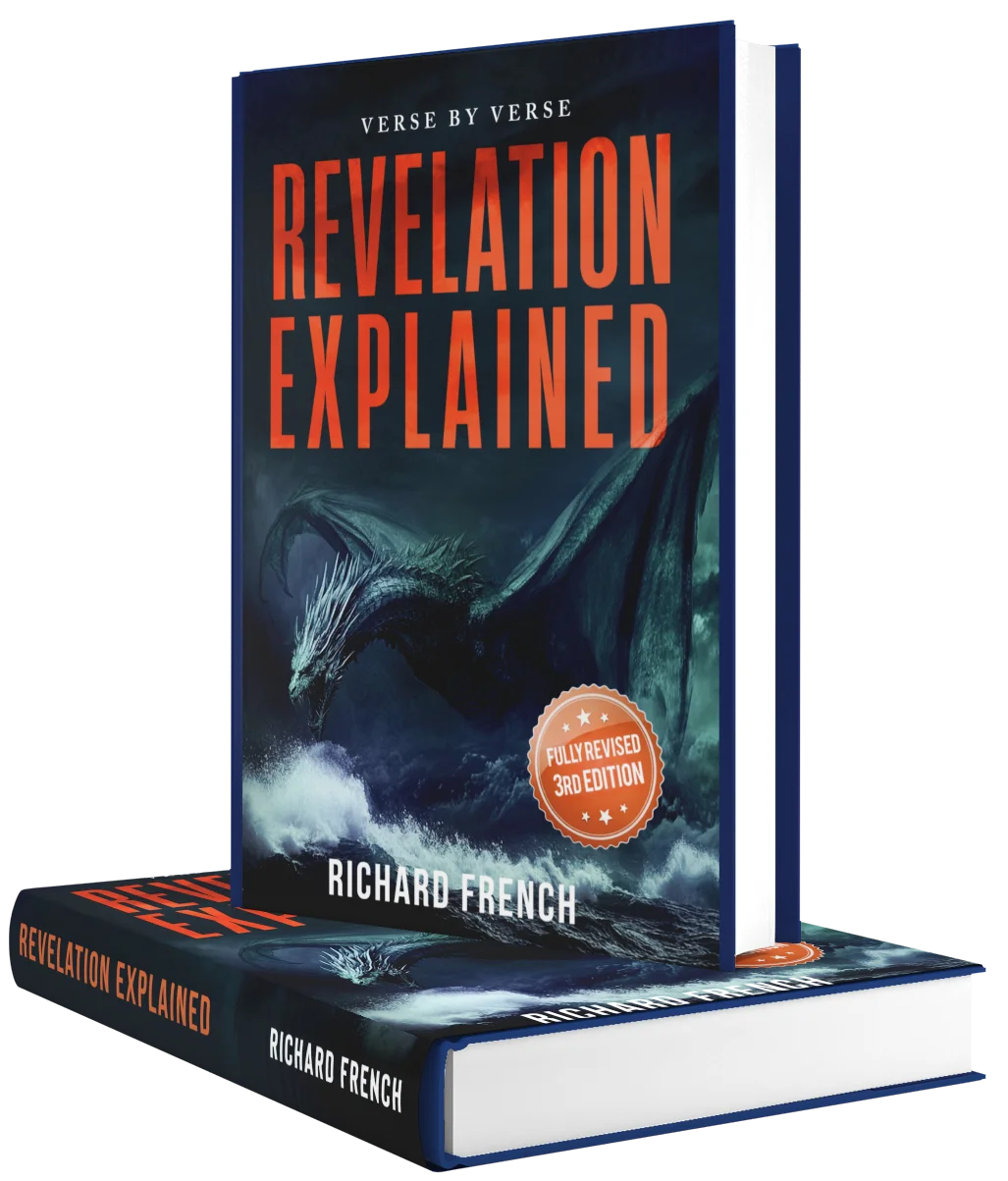
Fire-and-brimstone imagery originates in the destruction of Sodom and Gomorrah (NKJV Genesis 19:24), which established the defining image of complete, irreversible divine judgment throughout Scripture. Isaiah 30:33 describes Tophet with fire and brimstone kindled by "the breath of the LORD." Isaiah 66:24, quoted by Jesus in Mark 9:48, closes with the image of unquenched fire. Daniel 7:9, 11 shows a river of fire from the Ancient of Days and the beast given to burning flame, a direct precursor to Revelation 19:20. The original audience would have recognized this register immediately. For a detailed examination of how these Old Testament streams flow through Revelation's closing chapters, see the chapter-by-chapter analysis in Revelation Explained: Verse by Verse.
The Book of Life as the Decisive Criterion
The lake of fire cannot be understood apart from its structural pairing with the Lamb's Book of Life, the two final destinations in Revelation's vision set in deliberate contrast.
- The criterion: Absence from the Book of Life determines entry into the lake of fire (NKJV Revelation 20:15).
- The contrast: Revelation 21:27 pairs the two destinations directly: the New Jerusalem admits only those written in the Lamb's Book of Life. To understand the second death in Revelation fully, this pairing is essential.
- Old Testament root: The motif originates in Exodus 32:32, 33 and Daniel 12:1, where divine enrollment determines destiny.
Why the Lake of Fire Matters for Christians Today
Every system, power, and deception that has harmed God's people arrives at a permanent end in this vision. Justice is complete, not partial. For believers who have witnessed injustice or the apparent triumph of wickedness, this vision confirms that God's accounting is thorough and nothing is overlooked.
Consider the first-century context. Revelation was written during intensifying Roman imperial pressure, most likely under Domitian (81, 96 AD), when Christians faced economic exclusion and persecution for refusing emperor worship. The beast and false prophet were not abstract figures to these readers. They represented the crushing authority under which believers actually lived. The lake of fire carried immediate pastoral force: the powers that appeared invincible were not eternal. As David Aune documents in his commentary on Revelation's closing chapters, the vision's imagery would have functioned as both warning and assurance for communities under genuine threat.
Revelation 21:8 places "the cowardly" first in its list, and that placement matters. The warning against spiritual cowardice is the text's direct address to believers tempted to abandon their confession when faithfulness carries a cost. You can also explore the first resurrection in Revelation 20 to see how this judgment stands in contrast to the destiny of the faithful.
One misapplication deserves naming directly. The lake of fire is not a tool for assigning specific individuals to judgment. That belongs to God alone. Revelation 22:17 frames the same closing vision with an open invitation, keeping judgment and grace together in Revelation's final pages.
Why This Vision Matters
Standing as Revelation's most sobering image, the lake of fire is also the most final. No power, deception, or death itself holds permanent authority over God's purposes. For Christians today, this vision produces clarity: allegiance to the God whose purposes cannot be undone is the only allegiance that endures. You can read more about what Revelation says about the end of time to place this vision within Revelation's full scope.
Conclusion
The lake of fire is Revelation's term for final, irreversible divine judgment, explicitly defined by the text as the second death. It draws from a deep Old Testament tradition, appears in a carefully staged sequence across Revelation 19, 21, and stands in deliberate contrast to the New Jerusalem. God's justice is complete, His purposes for His people are unshakeable, and evil does not have the final word.
If these passages have felt unsettling or confusing, that honest wrestling is worth staying with. These images reward careful readers, and Robert Mounce's caution applies here: the symbolism "should not be softened, but neither should it be read with wooden literalism detached from its apocalyptic context." (Mounce, NICNT, p. 380). God's sovereignty over judgment and His open invitation in Revelation 22:17 stand together in Revelation's closing pages, and both carry weight for every reader. For a deeper verse-by-verse exploration of these passages and their place in Revelation's full narrative, see Revelation Explained: Verse by Verse by Richard French.
Sources
- Revelation 19:20; 20:10; 20:14 - 15; 21:8; 21:27 (NKJV)
- Genesis 19:24; Isaiah 30:33; Isaiah 66:24; Daniel 7:9 - 11; Jeremiah 7:31 - 32; Exodus 32:32 - 33; Daniel 12:1 (NKJV)
- Mark 9:48; Jude 7 (NKJV)
- G.K. Beale, The Book of Revelation: A Commentary on the Greek Text (NIGTC), Eerdmans, 1999
- Grant Osborne, Revelation (Baker Exegetical Commentary on the New Testament), Baker Academic, 2002
- Robert Mounce, The Book of Revelation (NICNT), Eerdmans, 1998
- David Aune, Revelation 17 - 22 (Word Biblical Commentary), Thomas Nelson, 1998
- G.B. Caird, The Language and Imagery of the Bible, Westminster Press, 1980 - for apocalyptic language and symbolism methodology