When the sixth seal breaks in Revelation 6, the entire cosmos convulses—the sun turns black, the moon becomes blood-red, stars fall from the sky, and every person from kings to slaves flees in terror, begging mountains to crush them rather than face “the wrath of the Lamb.” This passage presents one of Scripture’s most dramatic judgment scenes, yet many Christians struggle to understand what these cosmic disturbances mean and when they occur.
The sixth seal in Revelation is not merely symbolic poetry but a vivid portrayal of divine judgment that connects to centuries of prophetic tradition. It specifically represents God’s decisive intervention when earthly powers face accountability for their rebellion against His authority.
This article examines what the Bible reveals about the sixth seal in Revelation, exploring its vivid imagery, Old Testament roots, and urgent message for believers today.
Quick Answer: The sixth seal in Revelation (6:12-17) depicts cosmic disturbances and universal terror as God responds to the martyrs’ cry for justice, revealing that no earthly power can escape divine judgment when “the great day of His wrath” arrives.
Definition: The sixth seal in Revelation represents God’s cosmic-scale intervention in history, using apocalyptic imagery to reveal the moment when all earthly powers face divine accountability.
Key Scripture: “For the great day of His wrath has come, and who is able to stand?” (NKJV Revelation 6:17)
Context: This seal climaxes the first judgment sequence, drawing on Old Testament Day of the Lord prophecy to assure persecuted Christians of coming vindication.
Key Takeaways
- Cosmic upheaval: the sixth seal releases earthquakes, darkened sun, blood moon, falling stars, and displaced mountains signaling God's intervention
- Universal recognition: all humanity, from kings to slaves, acknowledges this as divine wrath, not random disaster
- The Lamb's paradox: Christ, the sacrificial victim, becomes the righteous judge whose wrath terrifies the wicked
- Prophetic fulfillment: the imagery draws directly from Joel, Isaiah, and other prophets describing the Day of the Lord
- Hope for believers: Revelation 7 answers "who can stand?" by showing God's sealed people protected through judgment
What the Sixth Seal in Revelation Reveals
The sequence begins with overwhelming force: "I looked when He opened the sixth seal, and behold, there was a great earthquake; and the sun became black as sackcloth of hair, and the moon became like blood" (NKJV Revelation 6:12). Six cosmic phenomena unfold in rapid succession—earthquake, darkened sun, blood-red moon, stars falling like unripe figs shaken from a tree, the sky receding like a rolled scroll, and mountains and islands displaced from their foundations.John’s original audience would immediately recognize this as Day of the Lord language from Joel 2:30-31 and Isaiah 34:4. Hebrew prophets consistently used cosmic disturbance imagery to communicate God’s decisive intervention in history, not necessarily literal astronomical events. When Isaiah described Babylon’s fall, he wrote of the sun being darkened and the moon not giving its light (Isaiah 13:10). Ezekiel used similar language for Egypt’s judgment (Ezekiel 32:7-8).
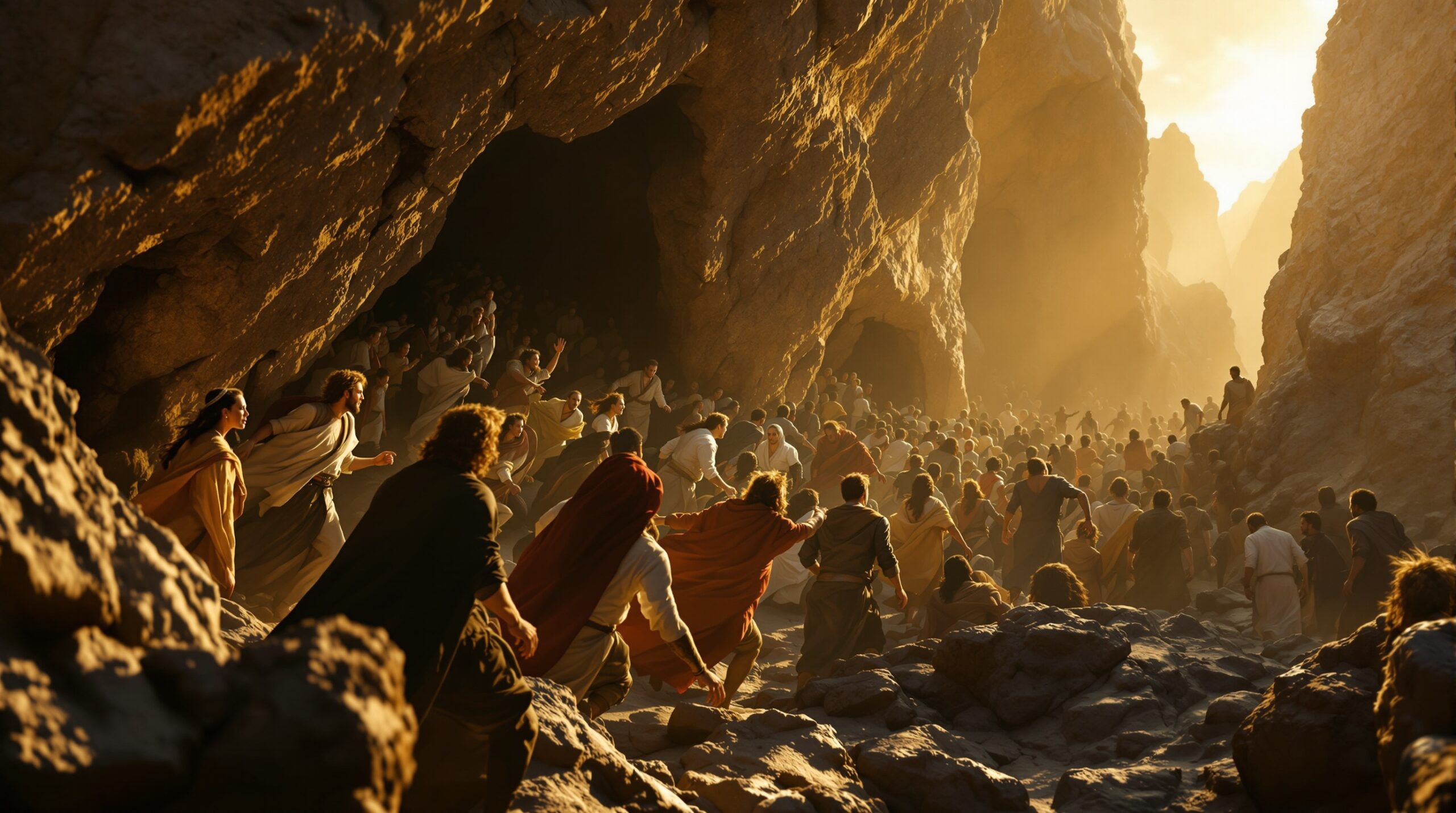
The text tells us humanity’s response reveals this isn’t natural disaster but recognized divine judgment: “the kings of the earth, the great men, the rich men, the commanders, the mighty men, every slave and every free man, hid themselves in the caves and in the rocks of the mountains” (NKJV Revelation 6:15). Seven categories of people emphasize universal accountability—no social status, wealth, or power provides immunity when God acts.
Scholars such as G.K. Beale note that the original readers would have recognized this as the Day of the Lord arriving to judge their persecutors, following consistent Old Testament prophetic usage of such language.
The sixth seal in Revelation demonstrates that when God’s judgment arrives, even the most powerful earthly rulers will recognize His authority and seek to hide from His presence rather than face accountability.
The Wrath of the Lamb Explained
The paradoxical phrase "wrath of the Lamb" (Revelation 6:16) intentionally combines sacrificial gentleness with judicial fury—the same Christ who died for sinners becomes the righteous judge. This isn't contradiction but completion. The Lamb who bore wrath on the cross now exercises righteous wrath against those who reject His sacrifice.Humanity cries to mountains: “Fall on us and hide us from the face of Him who sits on the throne and from the wrath of the Lamb!” (NKJV Revelation 6:16). This reveals tragic hardness—people prefer annihilation under rocks to facing God’s presence. Rather than seeking mercy from the One who offers it, they choose destruction. This shows that judgment confirms rebellion rather than producing it.
The rhetorical question “who is able to stand?” (NKJV Revelation 6:17) echoes Malachi 3:2 and Joel 2:11, connecting to centuries of prophetic tradition. The aorist tense “has come” suggests arrival of a definitive moment, not ongoing process. This is the moment when God’s patience reaches its appointed end.
According to Robert Mounce, the terror depicted is not merely physical but existential—humanity confronts the reality they have suppressed, correctly identifying the source of judgment but tragically preferring destruction to repentance.
Revelation 7 provides the essential answer: those sealed by God can stand—not through their worthiness but through God’s protective grace. The same judgment that terrifies the wicked becomes vindication for believers.
Why Martyrs Matter in This Context
The fifth seal (Revelation 6:9-11) showed martyred souls crying "How long, O Lord?" for justice. The sixth seal begins God's answer to that prayer. This connection assures persecuted Christians that God sees their suffering, remembers every injustice, and will vindicate His people. Divine judgment isn't arbitrary—it responds directly to the blood of the righteous shed by the wicked.Understanding the Sixth Seal's Symbolic Language
Old Testament prophets regularly used cosmic imagery for political upheaval rather than literal astronomical events. Isaiah 13:10 described Babylon's fall with darkened sun and moon. Ezekiel 32:7-8 used similar language for Egypt's judgment. This established apocalyptic vocabulary that John's readers would immediately recognize.The fig tree simile makes cosmic catastrophe tangible through Palestinian agricultural experience—what appears permanent becomes as vulnerable as unripe fruit in a storm. First-century Asia Minor Christians knew earthquake terror firsthand, having experienced devastating quakes in Laodicea (60 AD) and Sardis (17 AD). John takes their known fear and amplifies it to cosmic scale.
Whether understood as first-century judgment on Jerusalem or Rome, future tribulation events, or symbolic portrayal of God’s repeated intervention throughout history, the passage communicates inescapable divine accountability. The earthquake motif connects to biblical theophanies—Sinai quaked at God’s presence (Exodus 19:18), and prophets associated earthquakes with divine intervention (Ezekiel 38:19-20).
Grant Osborne observes that the earthquake and cosmic signs do not describe the final day itself but herald its approach, with the question of verse 17 answered in chapter 7 through literary structure that reveals God’s purpose: judgment on the wicked, protection for the righteous.
The sixth seal’s cosmic disturbances employ apocalyptic symbolism rooted in Old Testament prophetic literature to reveal God’s sovereign power over creation and His certain judgment of wickedness.
What Scholars Agree On
Despite different views on timing—whether past fulfillment, future events, or ongoing pattern—evangelical scholars agree on essential points: the passage depicts divine judgment, draws from Day of the Lord prophecy, shows universal human recognition of God's wrath, and connects to Christ's Olivet Discourse. The primary debate centers on when and how judgment occurs, not whether it reveals God's righteous response to evil.Why the Sixth Seal in Revelation Matters Today
This passage establishes the absolute certainty of divine judgment—every person will one day stand before God, regardless of earthly status, wealth, or influence. The text doesn't present this as manipulation but as reality requiring preparation. Modern believers need this sobering reminder that accountability is universal and inescapable.For those facing injustice or persecution, the sixth seal provides profound comfort. When wickedness seems to triumph, when powerful people oppress the vulnerable, when evil appears unchecked—this passage assures us that God sees, remembers, and will act. We don’t need to take vengeance ourselves because divine justice is certain.
The text warns against false security. Mountains and islands move in this vision, revealing that wealth, reputation, status, and earthly achievements provide no ultimate stability. What appears permanent proves temporary before God’s throne. Our security must rest in relationship with God through Christ, not in circumstances that can change overnight.
Modern Christianity sometimes presents Jesus exclusively as compassionate friend, neglecting His role as righteous judge. This passage corrects that imbalance without diminishing His love. Understanding “the wrath of the Lamb” should deepen our gratitude for salvation—we’ve been rescued from genuine wrath we deserve. As Paul writes, Jesus “delivers us from the wrath to come” (NKJV 1 Thessalonians 1:10).
For a detailed examination of this vision and its implications throughout Revelation’s narrative, see the chapter-by-chapter analysis in Revelation Explained: Verse by Verse.
The sixth seal reveals that Christ the Lamb—who bore God’s wrath in our place—becomes the only secure refuge when judgment arrives, transforming terror into hope for all who trust in Him.
Why This Vision Matters
The sixth seal matters because it answers the question every suffering believer asks: Is God in control when evil seems to win? The answer is yes. This vision warns that earthly power structures are temporary, but it comforts by showing that God's justice is certain. Present injustice is not permanent, but God's faithfulness is.Conclusion
The sixth seal in Revelation portrays the moment when heaven and earth convulse before the Lamb's throne, answering the martyrs' cry for justice with cosmic-scale judgment. No earthly power—whether ancient Rome or modern systems—can escape accountability when God intervenes in history. The vivid imagery of darkened sun, blood moon, and falling stars communicates that what appears permanent and stable proves temporary before divine authority.Yet the passage’s terrifying question “who is able to stand?” receives a hopeful answer in Revelation 7: those sealed by God stand secure, not through their own worthiness but through His grace. This judgment scene drives us to Christ, the Lamb whose wrath we need not fear because He bore that wrath for us on the cross.
For deeper verse-by-verse exploration of Revelation’s prophecies and their meaning for believers today, see Revelation Explained: Verse by Verse by Richard French.
Related topics: What is the seventh seal in Revelation, the four horsemen of the apocalypse, and the seven trumpets in Revelation.
Sources
- Revelation 6:12-17 (primary text)
- Revelation 7:1-17 (immediate context providing answer to 6:17)
- Joel 2:30-31 (Old Testament background for cosmic signs)
- Isaiah 34:4 (source for heavens rolled up as scroll)
- Isaiah 2:10-21 (people hiding in caves from the Lord)
- Matthew 24:29-30 (Jesus's use of cosmic disturbance language)
- Malachi 3:2 (rhetorical question about standing before the Lord)
- Hosea 10:8 (calling to mountains to fall on them)
- Luke 23:30 (Jesus applying this language to Jerusalem's judgment)
- Beale, G.K. The Book of Revelation: A Commentary on the Greek Text. New International Greek Testament Commentary. Eerdmans, 1999.
- Osborne, Grant R. Revelation: Baker Exegetical Commentary on the New Testament. Baker Academic, 2002.
- Mounce, Robert H. The Book of Revelation: The New International Commentary on the New Testament. Eerdmans, 1997.
- Theological lexicon research on Greek terms seismos, asteres, ouranos, apochorizo, ekrypsan, orge, and histemi
- Cross-referencing resources for Old Testament prophetic usage of cosmic disturbance imagery in Day of the Lord contexts