When John writes "there was no more sea" in Revelation 21:1, most modern readers assume he is describing the geography of heaven. Scholar Richard Bauckham calls this one of the most theologically loaded statements in all of Revelation, and he is right. The symbolism of the sea in Revelation reaches far deeper than oceanography. It carries centuries of meaning about chaos, divine power, and the completeness of God's redemptive work.
Maybe you have read through Revelation and felt the sea imagery wash past you without quite landing. That is a common experience, and it makes sense. The symbolic world John inhabits is not ours. Once you see what the sea meant to his original audience, though, the visions open up in ways that are both intellectually satisfying and pastorally rich. There is no shame in approaching these passages with honest questions. Faithful readers have wrestled with this imagery for centuries.
The sea in Revelation is a theological symbol carrying centuries of accumulated meaning about chaos, divine power, and the ultimate fate of everything that opposes God. This article traces that symbol from the beast's origin in Revelation 13 through the overcomers' victory in Revelation 15 to the sea's final abolition in Revelation 21.
Quick Answer: The symbolism of the sea in Revelation is a theological declaration about chaos, evil, and God's sovereign victory. The sea represents the origin of anti-divine power, the field of the dead, and everything opposed to God's order. Its abolition in the new creation signals the complete removal of every threat to God's people.
Definition: The sea in Revelation symbolizes primordial chaos and anti-divine power, functioning as the origin of the beast, the field of the dead, and everything opposed to God's order, before being permanently abolished in the new creation.
Key Scripture: "Now I saw a new heaven and a new earth, for the first heaven and the first earth had passed away. Also there was no more sea." (NKJV Revelation 21:1)
Context: The sea's symbolic arc moves from chaos and threat in Revelation 13 to complete abolition in Revelation 21, framing God's redemptive work as total and final.
This vision serves a purpose that is both cosmic and deeply personal. The sea imagery functions as a theological frame around Revelation's central conflict, showing readers that what appears as overwhelming disorder from a human vantage point is already tranquil before God's throne. For believers facing persecution, economic pressure, and loss, this reframe was the ground on which they stood. The sections that follow examine what the sea represents, how its Old Testament roots shaped first-century reading, and what this imagery means for Christians today.
Key Takeaways
- The sea as chaos: The sea in Revelation draws on Genesis 1 and Daniel 7, where primordial waters represent disorder and hostile power opposed to God's creative order.
- Origin of the beast: The beast rising from the sea in Revelation 13:1 identifies it as a creature of chaos and anti-creation power, echoing Daniel's vision of empires arising from chaotic waters.
- Already subdued in heaven: The glassy sea before God's throne in Revelation 4:6 shows that what churns as threat on earth is already tranquil and transparent from heaven's perspective.
- Victory over the sea: The overcomers in Revelation 15:2 stand on the sea of glass mingled with fire, elevated above the very element that symbolized threat and chaos.
- Total restoration: The abolition of the sea in Revelation 21:1 declares that chaos, death, and separation have been permanently removed from the new creation, completing the arc of redemption.

What the Symbolism of the Sea in Revelation Actually Means
The text places us at the sea's edge immediately in Revelation 13: "Then I stood on the sand of the sea. And I saw a beast rising up out of the sea, having seven heads and ten horns, and on his horns ten crowns, and on his heads a blasphemous name." (NKJV Revelation 13:1). The Greek word here is thalassa, and in Jewish apocalyptic literature it consistently carries connotations of dangerous, untamed depths. G.K. Beale notes that "the sea from which the beast arises is likely figurative, representing the nations in their chaotic rebelliousness against God, imagery derived from the Old Testament's use of the sea as representing hostile, evil kingdoms." The beast's emergence from the sea is a theological statement about its nature before it is anything else.
What makes this vision so carefully constructed is what John has already shown us before the beast appears. In Revelation 4:6, the throne room holds "a sea of glass, like crystal" (NKJV Revelation 4:6). The Greek word hualinos means transparent, still, glassy. From heaven's perspective, chaos is already subdued and serene. John shows us the heavenly reality first, then the earthly threat. That sequence is deliberate. Before we see what the sea produces, we see it already tamed before God's throne.
Revelation 15 then completes the arc: "those who have the victory over the beast, over his image and over his mark and over the number of his name, standing on the sea of glass, having harps of God." (NKJV Revelation 15:2). The overcomers stand on the very element that produced their enemy. They are not swallowed by it. Standing above it in triumph, they declare the sea's power broken. For a chapter-by-chapter examination of how this imagery develops, the verse-by-verse analysis of Revelation 13's two beasts traces the beast's characteristics in their immediate context.
The Arc from Beast to Victory
The sea's appearances in Revelation follow a deliberate literary movement from threat to triumph.
- Revelation 13: The sea produces the beast, the fullest expression of anti-God power in the book.
- Revelation 15: The overcomers stand on the sea, victorious over what it produced.
- Revelation 21: The sea is abolished entirely, completing the arc from chaos to new creation.
Key Evidence:
- G.K. Beale (NIGTC) identifies the sea in Revelation 13 as figurative for "the nations in their chaotic rebelliousness against God," rooted in Old Testament sea imagery.
- Grant Osborne (BECNT) observes that in Jewish apocalyptic literature the sea represented "the source of evil and chaos," making the beast's origin a theological marker of its anti-God nature.
- Craig Keener (NIVAC) notes that Rome called the Mediterranean Mare Nostrum, "Our Sea," giving the sea immediate political resonance for John's first-century readers in Asia Minor.
- Daniel 7:2-3 provides the direct literary background for beasts arising from chaotic waters, a pattern John's composite beast in Revelation 13 deliberately recapitulates.
Understanding the Sea's Old Testament Roots and First-Century Meaning
John's sea symbolism is inherited from centuries of Hebrew tradition. In Genesis 1, the primordial waters, the Hebrew tehom, represent unformed chaos that God's creative speech brings into order. Revelation's abolition of the sea in chapter 21 completes that creation narrative: chaos is not merely bounded and contained, it is ended. Grant Osborne observes that "the sea in Jewish apocalyptic represented the source of evil and chaos, and the beast appears from there to indicate its true nature as anti-God power."
Daniel 7:2-3 provides the most direct literary background. Daniel's four great beasts all arise from the sea, and John's beast in Revelation 13 is a composite of all four. An audience familiar with Daniel would have recognized this immediately, understanding the beast as complete imperial oppressive power in its most complete form. Isaiah 27:1 adds another layer, promising that God will punish "Leviathan the fleeing serpent" (NKJV Isaiah 27:1), the chaos monster of the deep. Revelation's dragon and beast imagery draws directly on that promise.
For first-century readers, the sea also carried immediate pastoral weight. Roman execution practices sometimes meant that Christians lost loved ones to the sea's depths with no burial. When Revelation 20:13 declares that "the sea gave up the dead who were in it" (NKJV Revelation 20:13), this was direct pastoral assurance: no death is beyond God's reach, no person forgotten. Craig Keener notes that the Roman Empire called the Mediterranean Mare Nostrum, "Our Sea," making it a symbol of imperial reach and economic dominance for John's readers in Asia Minor. The sea was their world's most visible emblem of Roman power, and Revelation's treatment of it was a direct theological counter-claim.
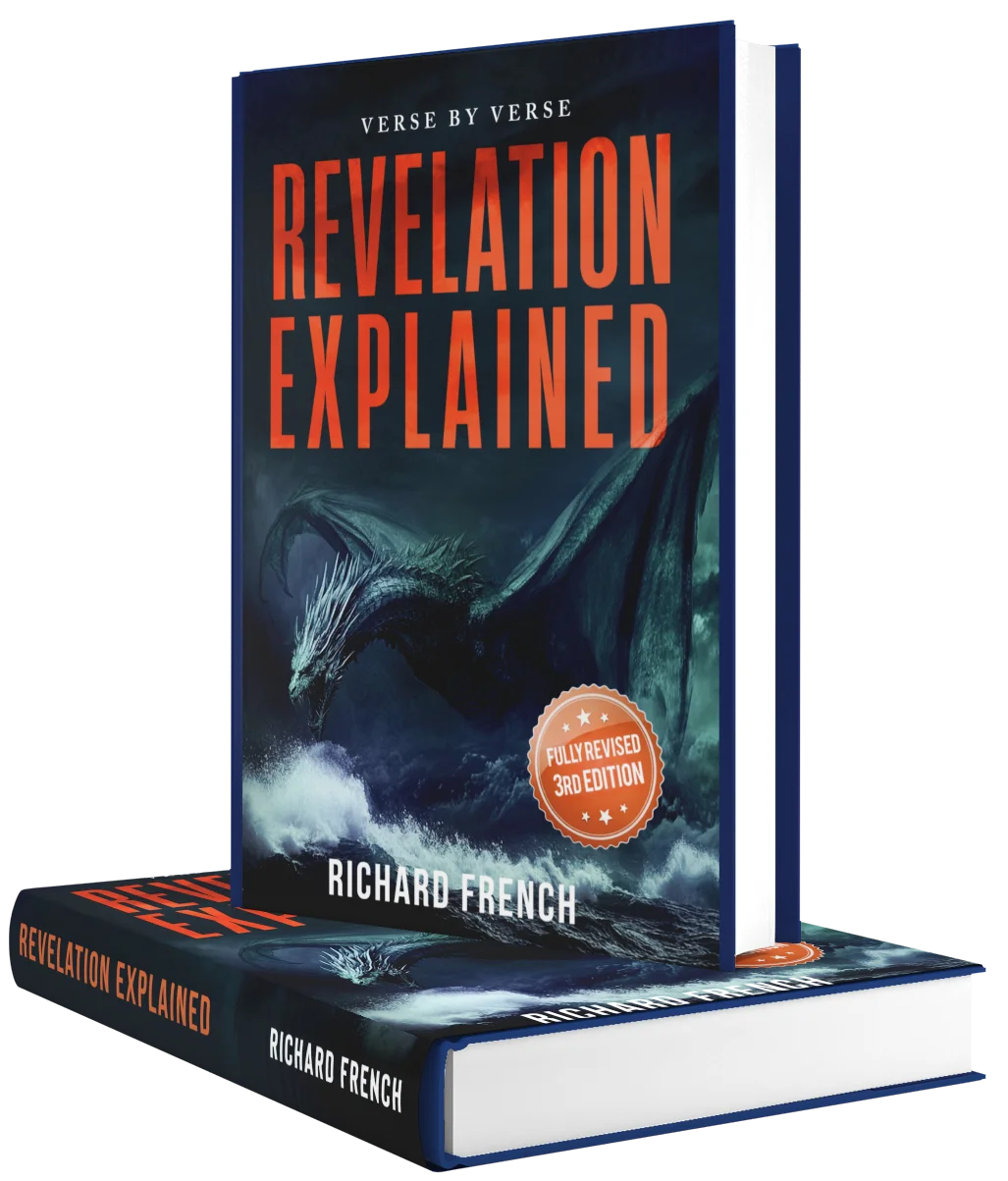
For readers wanting to trace how water imagery appears across Revelation's judgment visions, the examination of the seven trumpets covers the second and third trumpet judgments on the sea and rivers in detail. Revelation Explained: Verse by Verse by Richard French also traces these Old Testament connections through each chapter of the book.
The Imperial Cult Connection
The beast's blasphemous titles in Revelation 13 directly address first-century Roman imperial claims.
- Domitian's demands: Emperor Domitian required the title Dominus et Deus, "Lord and God," a direct usurpation of divine identity that John's readers faced daily.
- Sea as delegitimizing symbol: Locating the beast's origin in chaos strips imperial power of any legitimate divine claim. It arises from disorder, not from God's creative order.
- Audience recognition: For John's readers, the beast from the sea was present reality, not distant prophecy. They lived under its blasphemous demands.
Why the Symbolism of the Sea in Revelation Matters for Christians Today
The glassy sea of Revelation 4:6 reorients every believer's perspective on chaos. Whatever represents overwhelming disorder or seemingly unstoppable evil in our world is already subdued before God's throne. G.K. Beale describes this as the "chaos subdued" pattern running through Revelation's structure: the heavenly reality is shown first, the earthly threat second, so that readers always know which one is ultimate. Revelation's sea imagery invites grounded confidence in a sovereignty already declared before the beast visions even begin.
Perhaps you have faced circumstances that felt genuinely out of control, where the disorder seemed too large for any resolution. Revelation's sea imagery speaks directly into that experience. The throne room vision of Revelation 4 was given to readers under imperial persecution precisely so they could hold both realities at once: the chaos around them and the stillness before God's throne.
Revelation 20:13 carries specific pastoral weight for those grieving losses that feel incomplete. "The sea gave up the dead who were in it, and Death and Hades delivered up the dead who were in them." (NKJV Revelation 20:13). No person is forgotten. No death is too remote for God's accounting. For John's first readers who had lost loved ones to persecution and the sea's depths, this assurance that their grief had a resolution was concrete, not theological abstraction. That assurance holds for any believer today whose losses feel unresolved.
Powers built on chaos and blasphemy carry the seeds of their own undoing. What arises from disorder will return to disorder. The beast's origin in the sea already signals its end. Revelation 21:1 makes the declaration final: the sea is gone. Every threat the sea represented, chaos, death, separation, the origin of evil power, has been permanently removed from the new creation. For more on how Revelation's symbolic creatures embody this pattern of borrowed, doomed authority, the study of Wormwood's bitter waters offers a related angle on Revelation's water imagery and judgment.
Why This Vision Matters
Revelation's sea imagery transforms how believers face chaos and loss. God's sovereignty over the sea is the reality of heaven, declared in the throne room before the beast visions begin. Every Christian facing overwhelming circumstances reads Revelation's sea as a promise: chaos has an end, and God determines it. The glassy sea before the throne is the present heavenly reality that governs every earthly threat, not a future hope only. Its final abolition in Revelation 21 confirms that this sovereignty is permanent and complete.
Conclusion
The symbolism of the sea in Revelation traces a complete theological arc, from the origin of chaos and anti-divine power in Revelation 13, through the victory of the overcomers in Revelation 15, to the final abolition of everything the sea represented in Revelation 21. Taken together, these visions answer the question every believer asks when chaos feels overwhelming: Is God in control? The answer the text gives is yes, and it gives it before the beast even appears.
For you, reading this today, that arc is not abstract theology. No chaos in your life exceeds God's ordering. No loss falls outside his reach. No evil escapes his final defeat. The sea that once threatened is already still before his throne, and one day it will be gone entirely. Whatever you are facing right now, Revelation's water imagery was written for people in hard circumstances who needed to know that the stillness of heaven is more real than the storm around them. For a deeper verse-by-verse exploration of Revelation's imagery and symbols, see Revelation Explained: Verse by Verse by Richard French.
Sources
- Revelation 4:6; 4:11; 13:1; 15:2; 20:13; 21:1 (NKJV)
- Daniel 7:2 - 3; Genesis 1:2; Isaiah 27:1; 51:9 - 10; Ezekiel 28:2; Psalm 89:9 - 10; 93:3 - 4 (NKJV)
- G.K. Beale - The Book of Revelation: A Commentary on the Greek Text (New International Greek Testament Commentary, Eerdmans, 1999)
- Grant R. Osborne - Revelation (Baker Exegetical Commentary on the New Testament, Baker Academic, 2002)
- Richard Bauckham - The Theology of the Book of Revelation (Cambridge University Press, 1993)
- Craig S. Keener - Revelation (NIV Application Commentary, Zondervan, 2000)
- Robert H. Mounce - The Book of Revelation (New International Commentary on the New Testament, Eerdmans, revised 1997)